West Coast Customs Builds a Bel Air on a Tesla Model 3
West Coast Customs put a 1955 Chevy Bel Air body over a Tesla Model 3 platform, retaining the Tesla cabin, electric drivetrain and Supercharger access.
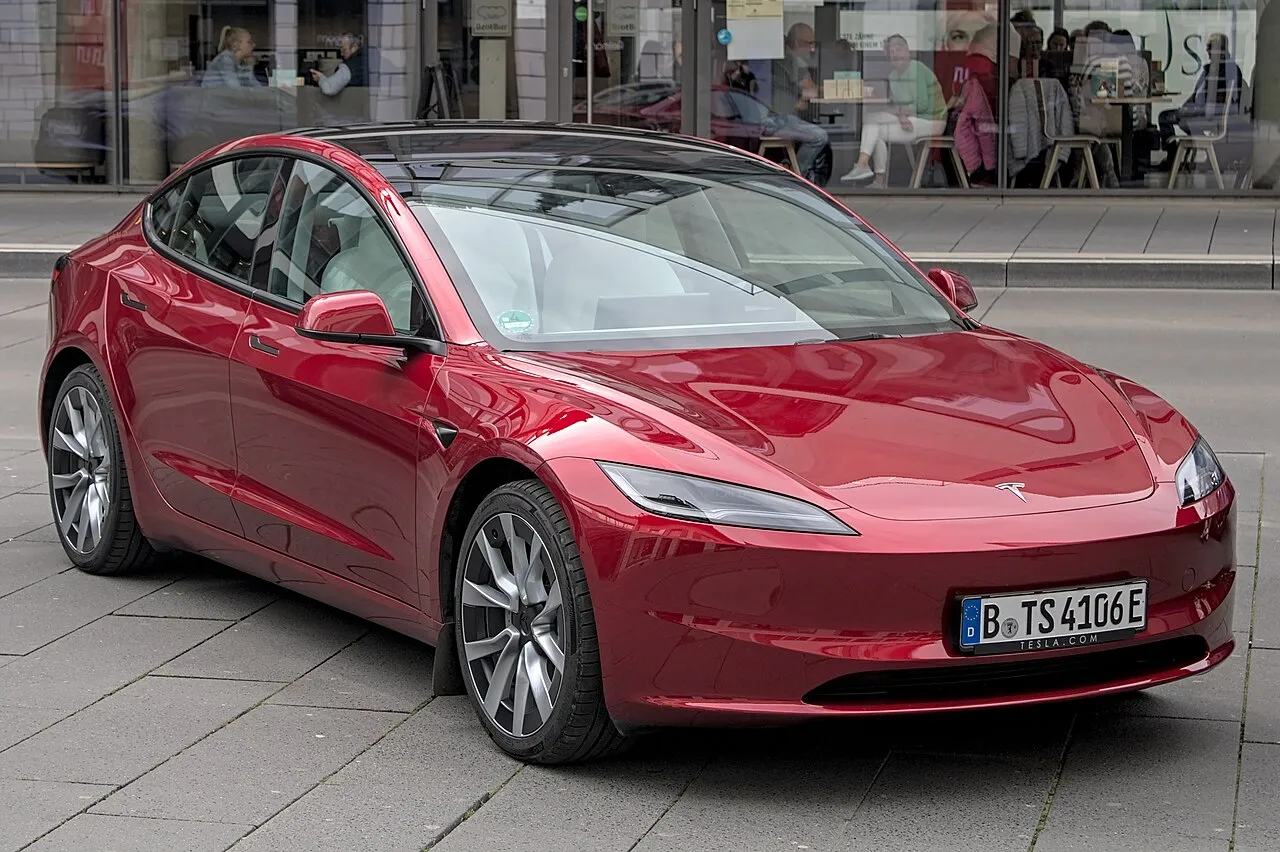
The short answer: West Coast Customs has completed Project B-Zero, a 1955 Chevrolet Bel Air body fitted over a Tesla Model 3 platform. According to Electrek, the build retains the Tesla interior and Supercharger access, making it a different approach from transplanting electric motors and batteries into a classic car.
West Coast Customs has completed an electric 1955 Chevrolet Bel Air by fitting its body over a Tesla Model 3 platform, according to Electrek. Called Project B-Zero, the custom car combines the Chevrolet’s familiar exterior with a Tesla cabin and Supercharger access. For enthusiasts considering an electric classic, its significance lies in how the conversion was done: the shop kept the Tesla’s underlying platform together and adapted the vintage body to fit it.
The Burbank shop built the car for longtime client Troy Swope, who wants to convert an entire collection to electric power, Electrek reports. The Bel Air is the first car in that effort. It is also West Coast Customs’ first use of a Tesla platform for this kind of body conversion, extending a method the shop has already used on gasoline-powered cars.
A Tesla platform beneath the Chevrolet body
According to Electrek, West Coast Customs founder and CEO Ryan Friedlinghaus chose against removing the Model 3’s motors and battery and installing them in the old Chevrolet. Instead, the team removed the Tesla body, retained the rolling platform and fitted the Bel Air shell over it. That decision made the Tesla the foundation of the finished car, with the Chevrolet supplying its exterior identity.
The distinction matters because an electric conversion can involve much more than choosing a motor and finding room for a battery. Electrek describes B-Zero’s approach as retaining Tesla’s battery thermal management, software, over-the-air updates and Supercharger access. Those systems remain part of the underlying vehicle instead of becoming separate components that the shop must integrate into the Chevrolet.
Electrek also reports that the approach retains the Tesla’s crash structure. That describes the construction method; it does not establish a crash-test rating for the completed B-Zero. The project involves substantial body changes, and the retained platform should be understood as one element of the build.
The wheelbase dictated the bodywork
The biggest fit problem was the distance between the wheels. According to Electrek, the 1955 Chevrolet has a 115-inch wheelbase, while the Model 3’s measures 113.2 inches. That 1.8-inch difference meant the classic body’s wheel openings could not simply be positioned over the Tesla platform without modification.
On earlier gasoline-powered projects, West Coast Customs could shorten or lengthen the newer vehicle’s frame to suit the older body, Electrek reports. Friedlinghaus explained that the Tesla’s battery occupies the floor, preventing the shop from taking the same approach here. The team therefore changed the Chevrolet body to accommodate the Tesla’s dimensions.
Specifically, the shop stretched the Bel Air’s rear wheel wells so the wheels would sit appropriately within the finished body, according to Electrek. This was a central compromise in the project: preserving the electric platform required reshaping part of the classic exterior. Friedlinghaus described the overall process as “tedious,” despite the apparent simplicity of placing one body over another vehicle.
A familiar exterior with a Tesla cabin
Swope wanted the exterior to look mostly like a stock Bel Air, Electrek reports. The original Chevrolet was red, and West Coast Customs retained that color while giving the finished car a satin finish and gloss black accents. The intent was to preserve the visual recognition of a 1955 Chevrolet even though the equipment underneath had changed substantially.
Opening the door reveals the other half of the project. According to Electrek, the shop retained the Model 3 interior, including its steering wheel and central touchscreen, and modified the cabin to fit the Chevrolet body. The result carries the Tesla layout into the classic car instead of recreating a period Chevrolet dashboard around electric controls.
The upholstery adds a separate layer of customization. Electrek reports that the seats feature black suede, white stitching in an octagonal pattern, and red accents. Friedlinghaus said the stitching pattern was borrowed from the Lamborghini Urus. A “B-Zero” script on the dashboard identifies the project.
Friedlinghaus described the desired reveal as seeing “a really nice Bel Air” from outside, then discovering a Tesla inside, according to Electrek. That contrast also extends to charging: he expects the Chevrolet-shaped EV to attract attention when it arrives at a Tesla Supercharger.
What Supercharger access establishes
According to Electrek, B-Zero can charge at Tesla Superchargers. That is a meaningful part of this particular conversion because access to the network accompanies the retained Tesla platform. Charging is therefore part of the finished project’s reported functionality, alongside its electric propulsion and Tesla cabin.
B-Zero’s battery capacity, driving range, charging speed and donor Model 3 trim have not been published. Its Supercharger access consequently does not establish how quickly it charges or how far it can travel between stops. Those are separate questions from whether the vehicle can use the network.
Production Model 3 ratings offer context for the donor vehicle family, but they do not establish B-Zero’s range. For the US-market 2027 Model 3, EPA ratings are 321 miles for RWD, 363 miles for Premium RWD, 346 miles for Premium AWD and 316 miles for Performance AWD. Those figures apply to the respective production sedans under the EPA test standard. None is a published rating for the custom Bel Air.
A different route from a component transplant
West Coast Customs has used the broader body-over-platform concept before. According to Electrek, its earlier projects have included an old GTO body over a newer GTO, an old Camaro over a newer Camaro, and an old Mustang over a newer Mustang. B-Zero applies that established shop method to an electric Tesla foundation.
Electrek contrasts the Bel Air with a 1966 Mustang converted by a Sacramento Tesla parts shop earlier in the same year. That project took about $40,000 and two years, with sections of a Model 3 floor grafted into the Mustang. Those figures describe the Mustang conversion; B-Zero’s cost and build duration have not been published.
The comparison illustrates two different construction choices. The Mustang project incorporated portions of the Tesla floor into the classic vehicle, while West Coast Customs kept the Tesla rolling platform and changed the Chevrolet body around it. Electrek also identifies S-Klub’s Model 3-based Mercedes 300SL as a closer parallel to the Bel Air’s approach.
The first step in a collection-wide plan
Swope’s electric collection plan gives B-Zero a role beyond a single custom commission. According to Electrek, West Coast Customs had previously built him a Chevelle with a large gasoline engine. The Bel Air marks the start of his intended shift to electric power across the collection, although subsequent conversions have not been announced.
Reaction to the completed Chevrolet has been mixed, Friedlinghaus said, with some people objecting to its electrification and others welcoming the result, according to Electrek. Swope’s response was positive: he described the car as easy to drive and said each trip feels like an event. For now, B-Zero demonstrates the completed combination of a classic Chevrolet exterior, a Tesla interior and an electric platform that retains Supercharger access.
Frequently asked questions
What is West Coast Customs’ Project B-Zero?
Project B-Zero is a 1955 Chevrolet Bel Air body fitted over a Tesla Model 3 rolling platform. According to Electrek, West Coast Customs retained the Tesla interior, including its steering wheel and central touchscreen.
Can the electric Bel Air use Tesla Superchargers?
Yes. Electrek reports that B-Zero retains Tesla Supercharger access. Its charging speed has not been published.
Why did West Coast Customs modify the rear wheel wells?
According to Electrek, the Bel Air’s 115-inch wheelbase differs from the Model 3’s 113.2-inch wheelbase. The shop stretched the Chevrolet’s rear wheel wells to accommodate the Tesla platform.
What is Project B-Zero’s driving range and price?
B-Zero’s driving range and build cost have not been published. Production Tesla Model 3 EPA range ratings do not establish the custom car’s range.
Who commissioned the electric Bel Air?
According to Electrek, longtime West Coast Customs client Troy Swope commissioned the car as the first step in a plan to convert his car collection to electric power.
Related stories
Tesla Model 3 vs. Model Y: Which Fits Your Routine?
The Model 3 sedan favors a lower, more traditional car shape; the Model Y crossover makes loading bulky cargo and helping passengers in and out easier.

Tesla App 4.63 Adds Google Maps, Preps Battery Warm-Up
Tesla’s latest app update switches iOS maps and prepares manual battery warming, with more changes to charging access, vehicle keys and owner referrals.
How to Check a Used Tesla Model 3’s Controls and Hardware
Check a used Tesla Model 3’s controls, cabin equipment and onboard hardware by matching vehicle records to its screens and an inspection before buying.