Hyundai IONIQ 5 vs Volkswagen ID.4 for Bulky Cargo
Neither SUV has a clear cargo winner from its exterior dimensions. Compare the opening, folded seats and load limits against the gear you actually carry.
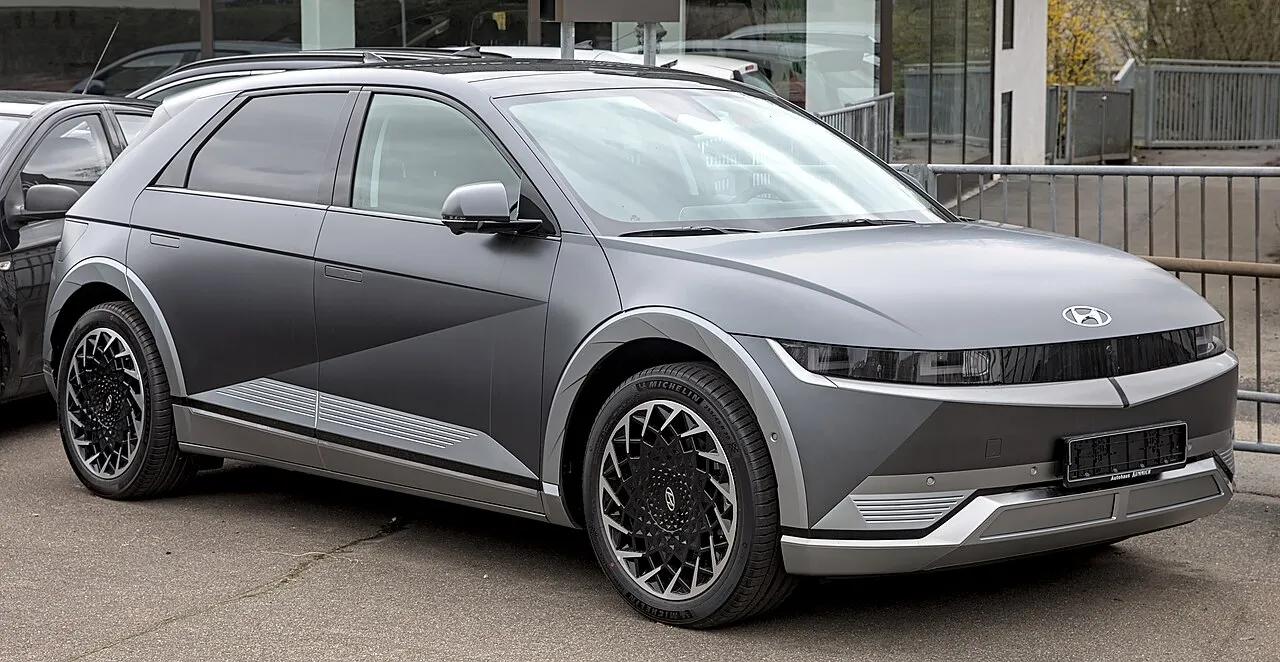
The short answer: Neither the Hyundai IONIQ 5 nor the Volkswagen ID.4 is a clear winner for bulky gear on the available figures. Choose the one whose cargo opening, folded-seat layout and carrying limits work for your specific load.
Neither the Hyundai IONIQ 5 nor the Volkswagen ID.4 is a clear winner for bulky gear on the available figures. Both are SUVs, but exterior size and driving range cannot establish whether a particular case, bicycle or piece of equipment will pass through the rear opening. The useful comparison is the path your gear must take: through the hatch, across any threshold and into the space created by the seats. Confirm the vehicle’s carrying limits separately before loading heavy items.
What the published figures can tell you
Exterior dimensions offer context for parking and maneuvering, but they are a poor substitute for cargo measurements. EVDB gives the European 2026 IONIQ 5 Long Range AWD a longer, wider and lower exterior than the European 2025 ID.4 Pro described by OpenEV Data and EVDB. Those differences do not reveal the width between interior trim panels, the shape of either hatch opening or the length available with seats folded. They also should not be treated as measurements of US vehicles.
| Vehicle and version | Market and model year | Figure and measurement or test standard | Source |
|---|---|---|---|
| IONIQ 5 Long Range AWD | Europe, 2026 | Length 4,655 mm; width 1,890 mm; height 1,605 mm; wheelbase 3,000 mm. Exterior dimensions; no range test standard applies. | EVDB |
| ID.4 Pro | Europe, 2025 | Length 4,584 mm; width 1,852 mm; height 1,642 mm; wheelbase 2,765 mm. Exterior dimensions; no range test standard applies. | OpenEV Data and EVDB |
| IONIQ 5 RWD | US, 2027 | 318 miles of rated range; EPA standard. | US EPA fueleconomy.gov |
| ID.4 RWD | US, 2026 | 291 miles of rated range; EPA standard. | US EPA fueleconomy.gov |
The EPA rows describe driving range, not cargo capacity. They concern different model years and particular rear-wheel-drive versions, while the dimensional rows concern European versions. Keep those distinctions in view when shopping: a range rating can help plan a trip with gear, but it cannot settle which SUV will hold that gear. None of these figures establishes an opening size, a folded-seat cargo length or a permissible load weight.
Start with the cargo opening
A bulky object has to pass through the hatch before interior volume matters. Its narrowest required dimension might be the width of a rigid case, the height of an appliance or the diagonal span of a frame. A box that seems small enough for the space inside can still catch on the opening’s sides or top edge. Compare the item with the usable opening, including any inward curves, rather than with the vehicle’s exterior width or height.
Check the lower edge as well. A high or awkward threshold changes how a heavy item must be lifted and tilted. The hatch’s shape affects whether a tall object can be rotated upright after crossing that edge. For a long object, look at the clearance from the opening to the front of the usable cargo area: getting its first end inside does not guarantee that the rest can follow the same path.
For either SUV, take the item’s dimensions to the vehicle, or use a rigid template that matches its largest cross-section. Try the intended loading direction with the hatch open. If the gear has handles, wheels or a fixed base, include them in the shape you check. A soft bag may compress around an opening; a hard case will not. That distinction can matter more than a small difference in exterior dimensions.
Check what folding the seats actually accomplishes
Folding a rear seat can create room for longer equipment, but the useful result depends on the shape of the space. Look for a step between the cargo floor and the folded seat, an upward slope, or a gap that could catch a wheel or case foot. Check the width at the seatbacks as well as near the hatch. Interior trim can narrow the route even when the floor area appears generous.
Plan around the passengers who will travel with the gear. A load that fits only after using the full rear-seat area is a different proposition from one that fits while preserving a rear passenger position. If you expect to carry both people and equipment, check the specific seat sections and positions in each vehicle under consideration. Do not assume that a single folded-seat photograph represents the arrangement you need.
Front-seat position matters for long loads, too. Place the front seats where the driver and passenger can sit comfortably before judging the space behind them. Moving a seat forward just to demonstrate that an object fits may leave too little room for the trip. Keep the object clear of the driver’s controls and sightlines, and make sure the hatch can close without pressing against the load.
Separate fitting the gear from carrying its weight
Passing the hatch test answers only a question about shape. A dense case or several pieces of equipment raise a separate question about weight. Check the carrying limit for the exact vehicle and configuration you are considering, then account for occupants and everything else traveling with the gear. Do not infer a payload allowance from the SUV body style, the size of the cargo area or a driving-range rating.
Think about where the load rests. A heavy object needs a stable position and a way to keep it from shifting during braking or a turn. Smaller pieces can move around a larger item, so consider how the whole load will be arranged rather than checking only its largest component. Confirm any securing points and instructions on the particular vehicle before relying on them. If the planned load needs external equipment, check that equipment and the vehicle’s applicable limits separately.
The route into the vehicle also matters for heavy gear. Consider whether the item can be lifted across the threshold without losing control of it, whether it needs to be rotated while partly inside and whether its weight can be handled safely at that angle. An item that fits geometrically may still be impractical to load regularly. This is especially relevant when the same equipment must be unloaded after a trip and loaded again for the return journey.
Use range as a trip-planning detail
The US EPA ratings in the table give a basis for comparing those particular versions’ rated range. They do not predict the range of a vehicle packed for a particular trip. Occupants, cargo weight, speed, weather and route conditions can affect the distance covered between charges. Treat the EPA figures as ratings for the identified versions, then leave room in a travel plan for the conditions in which the vehicle will be used.
Version choice also matters. US EPA fueleconomy.gov rates the 2027 IONIQ 5 AWD with 19-inch wheels at 290 miles, the AWD version with 20-inch wheels at 269 miles and the AWD Xrt at 259 miles. It rates the 2026 ID.4 AWD at 263 miles. These are EPA figures for named US versions and model years; they do not describe cargo openings or carrying limits. Check the rating attached to the version you are shopping rather than applying the rear-wheel-drive row to every vehicle with the same badge.
How to make the choice
Bring a short list of the items that cause the most difficulty: the widest rigid item, the tallest one, the longest one and the heaviest planned combination. Record their full dimensions, including protruding parts. At each SUV, follow the entire loading motion, confirm the hatch closes, check the remaining passenger space and find the applicable carrying limit. If transporting the item is a routine need, repeat the check in the seat arrangement you would use routinely.
Choose the IONIQ 5 if that check gives your gear a workable path through its opening and enough usable space and carrying capacity for the trip. Choose the ID.4 if it does the same job better for your particular items and passengers. Without verified cargo-opening, folded-seat and load-limit figures for the vehicles being compared, naming either one the universal winner would give shoppers more certainty than the measurements support.
Frequently asked questions
Which has the larger cargo opening, the Hyundai IONIQ 5 or Volkswagen ID.4?
A cargo-opening comparison cannot be established from the published figures here. Check the usable opening on the specific vehicles against your largest rigid item.
Does the IONIQ 5’s exterior size mean it holds more bulky gear?
No. The European exterior dimensions shown do not establish opening size, folded-seat shape or usable cargo space.
Can a rear seat be folded to fit a long item?
Check the seat arrangement and resulting space in the specific vehicle. The available figures do not establish a folded-seat cargo length for either SUV.
What are the US EPA range ratings for the rear-wheel-drive versions shown?
US EPA fueleconomy.gov rates the 2027 Hyundai IONIQ 5 RWD at 318 miles and the 2026 Volkswagen ID.4 RWD at 291 miles. Those ratings do not indicate cargo capacity.
Related stories

How to Choose an EV for Your Dog and Travel Gear
Compare an EV’s entry points, secure travel area, climate controls and cleanability with your dog and gear on hand before choosing a vehicle.

Chevrolet Blazer EV SS Earns Its Place in SS History
Car and Driver says the 615-hp Blazer EV SS is worthy of Chevrolet’s Super Sport badge, pairing quick acceleration with upgraded brakes and tires.

Nio Launches ES8 Mirror Black Edition 2.0 in China
Nio’s ES8 Mirror Black Edition 2.0 adds black-and-gold trim and starts at 434,800 yuan in China, while retaining the standard ES8’s core hardware.