What Everyday Use of the Tesla Cybertruck Requires
The Cybertruck's daily practicality depends on fitting its pickup body to your routes, parking and cargo needs. EPA and NRCan figures cover range and charging.

The short answer: The Cybertruck’s pickup layout can suit drivers who need an open cargo bed, but everyday access depends on whether its body fits their parking spaces, routes and loading habits. EPA and NRCan figures describe range and Level 2 charging time; they do not answer questions about dimensions, visibility or cargo-bed capacity.
The Tesla Cybertruck may work for everyday driving if its pickup layout matches your cargo needs and its size fits the places you regularly drive and park. The figures published by the US EPA and Natural Resources Canada cover rated range and Level 2 charging time, but they do not establish how easily the truck fits a garage, how well drivers can see around it, or how much cargo its bed holds. Those practical questions deserve as much attention as its electric range.
For US model years 2026 and 2027, EPA ratings list several Cybertruck configurations with rated ranges from 325 to 335 miles and Level 2 full-charge times from 11.7 to 12 hours. Natural Resources Canada lists 2026 AWD and Premium versions at 523 km of NRCan-rated range and 11.7 hours for a Level 2 full charge. These figures describe different markets and standards; the EPA and NRCan range ratings should be read separately.
Published range and charging figures
The table summarizes the versions and figures published by each named source. A full-charge time is a charging reference, not a promise that every household installation or charging session will take exactly that long. Actual charging depends on the vehicle, the charging equipment and the conditions of use.
| Market | Model year and version | Range and test standard | Level 2 full-charge time | Source |
|---|---|---|---|---|
| US | 2027 Dual Motor AWD | 325 mi, EPA | 12 hours | US EPA fueleconomy.gov |
| US | 2026 AWD | 325 mi, EPA | 11.7 hours | US EPA fueleconomy.gov |
| US | 2026 Dual Motor AWD | 325 mi, EPA | 12 hours | US EPA fueleconomy.gov |
| US | 2026 Long Range (20In Cyber Wheels), RWD | 335 mi, EPA | 12 hours | US EPA fueleconomy.gov |
| Canada | 2026 AWD | 523 km, NRCan | 11.7 hours | Natural Resources Canada |
| Canada | 2026 Premium | 523 km, NRCan | 11.7 hours | Natural Resources Canada |
Range matters within a daily routine
A rated range helps with planning, but it cannot tell you by itself whether a truck is convenient for your day. The useful question is how your usual driving, available charging and occasional longer trips fit together. A driver who can charge at home may begin many days with a full battery. Someone who relies on public charging needs to account for where charging is available and how it fits into the trip.
The US EPA figures put the listed 2026 versions at 325 or 335 miles, while the 2027 Dual Motor AWD is listed at 325 miles. These are EPA ratings for US versions. Canada's NRCan rating for its 2026 AWD and Premium versions is 523 km. The units and test standards differ, so the figures should not be treated as a direct comparison of vehicle performance across markets.
Real-world range can vary with driving speed, weather, terrain, load and use of heating or air conditioning. A pickup carrying cargo may also face different conditions from one driven without a load. These are general factors that affect electric-vehicle use; the ratings in the table do not predict a particular driver's results. For daily planning, leave room for conditions that can raise energy use and consider where charging is possible if a trip runs longer than expected.
Charging time is part of access
The published Level 2 full-charge times cluster around 11.7 to 12 hours. That makes the availability and location of charging relevant to everyday ownership. A driver with a suitable home charger can leave the vehicle connected during time it is already parked. Someone without home charging may need to arrange charging around work, errands or a dedicated stop.
The listed time refers to a full charge, while many drivers charge in smaller amounts as needed. The figures do not describe every charging setup or tell a buyer whether a particular garage, apartment building or workplace has compatible access. Before choosing any electric vehicle, it is useful to consider where it will be parked while charging and whether the equipment can be reached without blocking a walkway or vehicle route.
Pickup cargo changes how the truck is used
A pickup bed offers an open cargo area for objects that may be awkward to place inside a passenger cabin. That layout can be useful for bulky or dirty items, and it keeps cargo separate from the seating area. It also calls for a different loading routine: users need to place, arrange and secure items in the bed, and should consider how exposed cargo is to weather or unwanted access.
The figures here do not state the Cybertruck's bed length, width, volume, payload capacity or opening dimensions. Those measurements would help determine whether a particular item fits and whether the truck can carry a planned load. Without them, an owner should not assume that a bed's appearance answers questions about fit or capacity. For a purchase decision tied to specific equipment, furniture or work gear, check the relevant measurements and load limits for the exact version.
Everyday access also includes getting objects in and out. A high-sided pickup bed can require lifting items upward and reaching into the cargo area; the effort depends on the object, the bed design and the person's reach and strength. The available vehicle figures do not describe bed height, tailgate operation or any access aids. Those details are worth checking in person if frequent loading is central to the truck's role.
Size, visibility and parking need a practical check
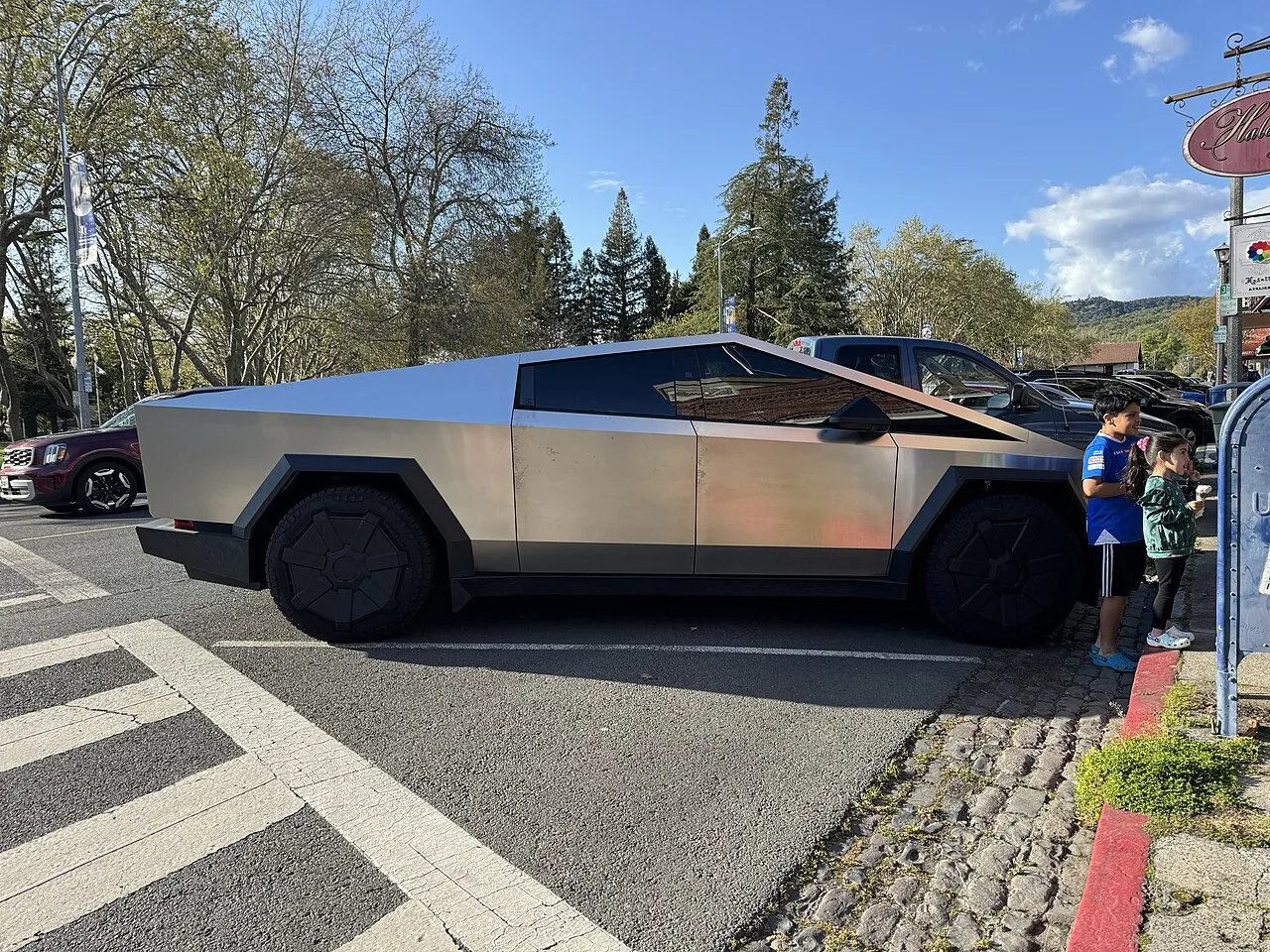
A vehicle's overall length, width and height affect whether it fits a garage, parking stall, driveway or tight street. Those dimensions are not stated in the figures above, so the range and charging table cannot establish whether a Cybertruck fits a particular space. Measure the usable space, including room to open doors, walk around the vehicle and reach storage or charging equipment. For a garage, account for objects that reduce clear width or depth, such as shelves and stored gear.
Parking also depends on the approach, not just the space itself. Narrow entrances, turns, ramps and neighboring vehicles can make a spot harder to use even when the vehicle's basic dimensions appear to fit. Drivers who regularly use older parking structures, compact residential garages or crowded curbside spaces should check the full vehicle dimensions against those locations. A paper comparison cannot show how comfortable a particular driver will feel maneuvering into the space.
Visibility is another individual and situational question. A driver's view can be affected by seating position, window area, mirrors, blind spots, passengers and cargo. The listed EPA and NRCan figures do not describe the Cybertruck's visibility, camera coverage or driver-assistance features. Before relying on it for dense traffic or frequent backing, assess the sightlines from the driver's seat and understand which mirrors or cameras are available on the version being considered. Cameras can assist with maneuvering, but drivers still need to monitor their surroundings.
Match the truck to repeated tasks
The Cybertruck's daily fit is a combination of parking access, charging access and cargo use. A buyer who needs an open bed and has a suitable place to park may find the pickup format useful. Someone who frequently navigates constrained garages or depends on precise cargo measurements needs information beyond the published range and charging figures summarized here.
Start with the routine rather than a single headline number. Consider where the truck will sleep, where it can charge, what it will carry, and how often it must turn or park in tight spaces. Then verify the exact version's dimensions, bed measurements, load limits and visibility equipment before committing. EPA and NRCan ratings provide a consistent reference for range within their respective markets and standards; they cannot substitute for checking whether the vehicle works in the places and tasks that make up everyday life.
Frequently asked questions
What range does the US EPA list for the Cybertruck?
EPA ratings list 325 miles for the US 2026 AWD and Dual Motor AWD versions and the 2027 Dual Motor AWD. The 2026 Long Range (20In Cyber Wheels), RWD version is listed at 335 miles.
What range does Natural Resources Canada list?
Natural Resources Canada lists 523 km of NRCan-rated range for the 2026 AWD and Premium versions.
How long does a Level 2 full charge take according to the listed figures?
The listed times range from 11.7 to 12 hours, depending on market year and version.
Do the published figures establish whether the Cybertruck will fit a garage?
No. The figures cover rated range and Level 2 full-charge time; they do not give the dimensions needed to check garage fit.
Related stories

How to Plan EV Charging When You Park on the Street
Street parking can work with EV ownership when you confirm local rules, identify dependable charging, and build a routine that fits where you park.

How to Confirm EV Charging Access in an Apartment Building
Before buying an EV, confirm who controls your parking space, whether charging is allowed, and what electrical work the building can support.
Used Cybertruck Asking Prices Rise After Tesla Production Cut
Used Cybertruck asking prices climbed after Tesla moved to end production and raised prices, while the cheapest listings and 2025 models show a different trend.