Tesla Holds U.S. EV Lead as Its Future Hinges on Competition
Tesla still accounts for more than half of U.S. EV sales, according to CleanTechnica, but a wider field of rivals and its autonomy plans could reshape that lead.
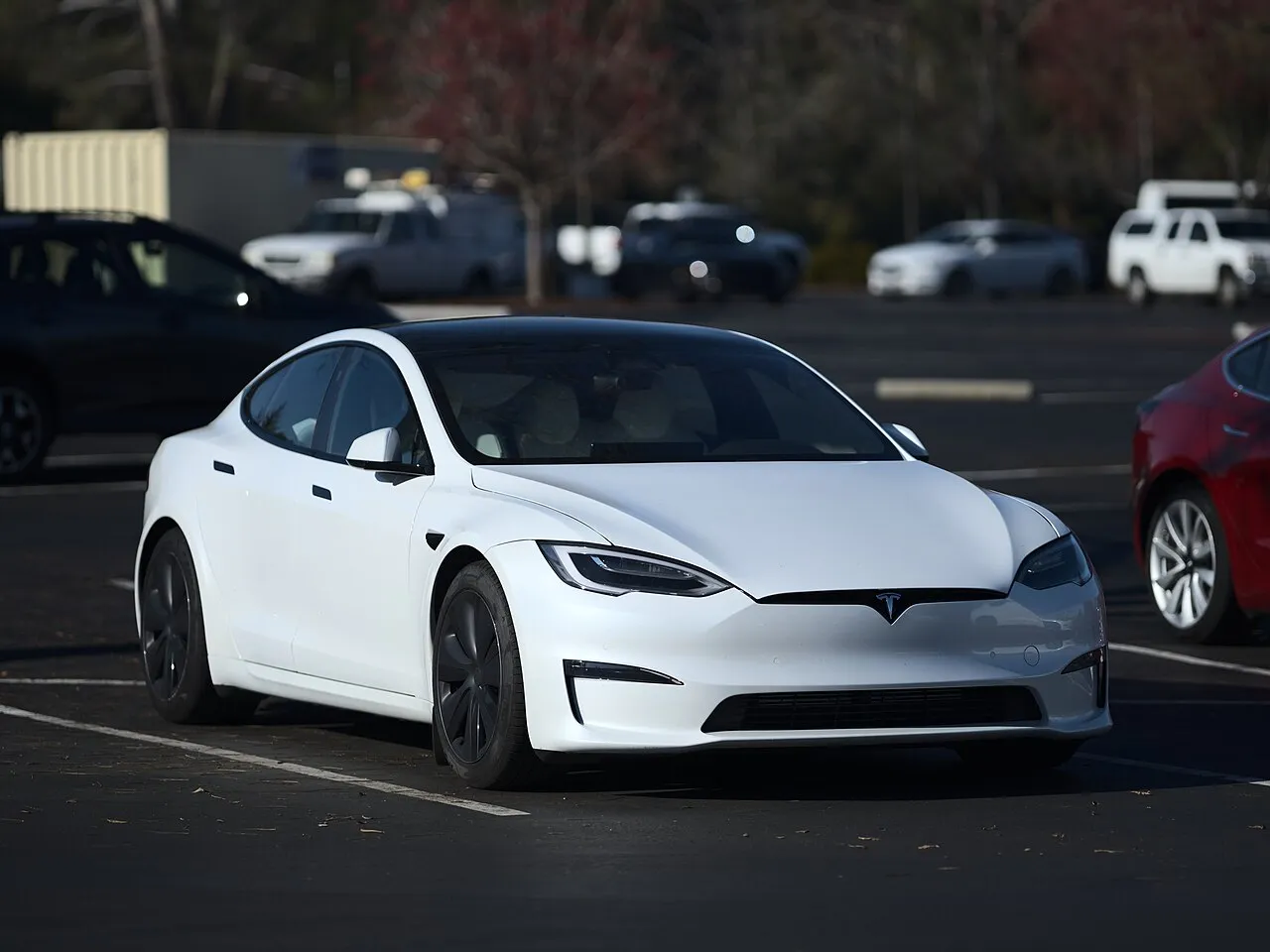
The short answer: According to CleanTechnica, Tesla remains the second best-selling battery-electric vehicle maker worldwide and holds more than half of U.S. EV sales. Its future share is uncertain as buyers gain more choices and its Full Self-Driving feature remains supervised.
Tesla still accounts for more than half of U.S. electric vehicle sales, according to CleanTechnica, even as buyers have more EVs to choose from. The outlet says Tesla’s U.S. share has fallen from about 80% to a little over 50%. For shoppers, that shift raises a practical question: whether Tesla’s position as a familiar EV choice will hold as competing models become more common. For the industry, it is a test of how much of an early lead an automaker can keep once the market grows beyond its first wave of buyers.
CleanTechnica ranks Tesla as the world’s second best-selling maker of battery-electric vehicles, behind BYD. It also reports that EVs account for 32% of new vehicle sales globally when plug-in hybrids are included, or 23% when counting only battery-electric vehicles. Those two shares describe different groups of vehicles. Together with the outlet’s U.S. figures, they frame a market in which Tesla remains a major seller while the number of alternatives continues to expand.
What Tesla’s market share shows
CleanTechnica describes a global market with hundreds of EV models, yet focuses its assessment of Tesla on the Model 3 sedan and Model Y SUV. The outlet’s central observation is that Tesla remains near the top of worldwide battery-electric sales despite that narrow focus. Its U.S. position is stronger still: more than half of EV sales, according to the outlet, compared with about 80% earlier in the market’s development.
A falling share does not, by itself, establish how many vehicles Tesla sold in either period. CleanTechnica’s figures describe Tesla’s portion of EV sales, and a company’s portion can change as the wider market changes. The figures do show that competing EVs account for a larger portion of U.S. sales than they did when Tesla held about 80%. CleanTechnica points to fewer EV competitors in the United States than in other markets and says Chinese EVs are effectively blocked from entering the U.S. market.
The outlet compares Tesla’s position with Apple’s in smartphones. CleanTechnica puts the iPhone at about 20% to 22% of the global smartphone market and around 58% of the U.S. market, while emphasizing Tesla’s recognizable brand and concentrated vehicle lineup. The comparison is a way to describe brand strength, not a forecast of Tesla’s future sales. It also crosses two different product markets, so the percentages do not measure the same buying decision.
For EV shoppers, the more immediate point is that a leading sales share says little about which vehicle fits an individual buyer. CleanTechnica argues that some U.S. buyers consider Tesla first because it is the EV brand they know. That familiarity can help explain why the company remains prominent, but the outlet also asks whether a broader selection of EVs will lead more shoppers to consider other automakers. Its market share figures establish the current lead and its decline from the earlier level; they do not settle where the share goes next.
The Model 3 and Model Y in the U.S.
The U.S. EPA ratings show how much variation exists within the two Tesla nameplates at the center of CleanTechnica’s analysis. For the 2027 model year in the U.S. market, EPA-rated Model 3 range runs from 316 miles for the Performance AWD to 363 miles for the Premium RWD. The sedan also has AWD and RWD versions with different ratings. The range attached to the Model 3 name therefore depends on the version a shopper chooses.
For the 2027 U.S. Model Y, EPA-rated range runs from 294 miles for the AWD to 355 miles for the Premium RWD. The EPA also rates the RWD at 321 miles, the Premium AWD at 327 miles, the Performance AWD at 306 miles and the L with 20-inch wheels at 328 miles. These are ratings for specific versions under the U.S. EPA standard. They give buyers a clearer view of the two Tesla models than a single range figure for either nameplate would.
| 2027 U.S. model | Version | EPA-rated range |
|---|---|---|
| Model 3 | Performance AWD | 316 miles |
| Model 3 | Premium RWD | 363 miles |
| Model Y | AWD | 294 miles |
| Model Y | Premium RWD | 355 miles |
Those ratings add context to CleanTechnica’s point about a concentrated lineup. Two nameplates can still offer substantially different EPA-rated ranges and a choice between rear-wheel drive and all-wheel drive. At the same time, trim choices within the Model 3 and Model Y are different from having additional vehicle models to consider. CleanTechnica’s question is whether Tesla’s brand and these choices can keep attracting buyers as the wider EV market offers more models.
The published figures for other markets use other test standards. Natural Resources Canada rates the 2026 Canadian Model 3 Premium AWD-I at 570 kilometers under the NRCan standard. For Europe, EVDB gives the 2026 Model 3 Premium AWD a 691-kilometer WLTP rating. Those figures describe different market versions tested under different standards. They should be read within their respective markets, rather than set against the U.S. EPA mileage as though all three ratings used one test.
How autonomy enters the sales question
CleanTechnica identifies Tesla’s Full Self-Driving, currently offered as “Supervised,” as another possible influence on future demand. The distinction matters: the feature described by the outlet is supervised today. CleanTechnica asks whether Tesla could eventually offer a consumer vehicle capable of hands-off, eyes-off driving and what that might mean for buyers. That is an open question in its analysis, not a capability established for the Model 3 or Model Y.
The outlet also raises the issue of who would be responsible for accidents if Tesla offered driving that no longer required the person in the car to supervise it. CleanTechnica does not report that Tesla has taken that step for owners using Full Self-Driving. A buyer considering the feature now should therefore distinguish its current supervised status from the potential future product the outlet discusses. The possibility of a later change cannot be treated as a feature available with a vehicle today.
According to CleanTechnica, Tesla operates robotaxis in a few cities and is ramping up Cybercab production. The outlet presents those activities as part of the background to its autonomy question. They do not establish when, or whether, a Tesla sold to an individual buyer will gain hands-off, eyes-off capability. CleanTechnica also notes that Tesla is nearly a decade behind Elon Musk’s targets for that capability, underscoring the uncertainty around timing.
CleanTechnica describes opposing views on Tesla’s chances of delivering such a feature, including doubts about its vision-only approach. The outlet does not resolve that debate. If Tesla eventually offered a substantially more capable consumer system, it could affect how shoppers weigh its cars against competing EVs; CleanTechnica raises that as a possibility. The current sales figures cannot show how much demand such a future feature would create, or whether competitors would offer comparable capabilities.
What happens next
The near-term measure is Tesla’s share as EV competition develops. CleanTechnica’s figures put that share above 50% in the U.S. and Tesla behind only BYD in worldwide battery-electric sales. Future sales shares would show whether Tesla holds those positions as buyers encounter more choices. The outlet offers no timetable for when competition might change its standing, so the present figures are a starting point rather than a projection.
Autonomy is the other unresolved part of the outlook. CleanTechnica links Tesla’s potential future advantage to whether Full Self-Driving advances beyond supervision, but its account establishes only the supervised status available now. For buyers comparing vehicles today, the U.S. EPA ratings describe concrete differences among Model 3 and Model Y versions. Tesla’s market lead is also concrete in CleanTechnica’s figures. Whether broader choice or a future driving feature changes that lead remains to be seen.
Frequently asked questions
What share of U.S. EV sales does Tesla hold?
More than 50%, according to CleanTechnica, down from about 80% earlier.
Where does Tesla rank in worldwide battery-electric vehicle sales?
CleanTechnica ranks Tesla second, behind BYD.
Is Tesla Full Self-Driving hands-off and eyes-off for owners?
CleanTechnica describes the current feature as “Supervised.” It discusses hands-off, eyes-off driving as a possible future capability.
What are the U.S. range ratings for the Model 3 and Model Y?
For the 2027 U.S. versions described here, EPA-rated range runs from 316 to 363 miles for the Model 3 and from 294 to 355 miles for the Model Y, depending on version.
Related stories

Tesla FSD v15 Reaches Older Model Ys Without Bumper Cameras
Tesla is extending FSD v15 to pre-refresh Model Ys without front bumper cameras, with early reports praising smoother driving but flagging visual lag.

Xiaomi Car and AI Division Loss Widens as Revenue Falls
Xiaomi’s car and AI division lost 3.4 billion yuan in Q3 as car revenue fell 19.9%. New range-extended SUVs led sales in their first full month.
Tesla FSD Raises Driver Ability Question After Surgery
A Tesla owner says supervised FSD got him to a gym after shoulder surgery. His account highlights a question for buyers: who can safely take over?