Tesla FSD Raises Driver Ability Question After Surgery
A Tesla owner says supervised FSD got him to a gym after shoulder surgery. His account highlights a question for buyers: who can safely take over?
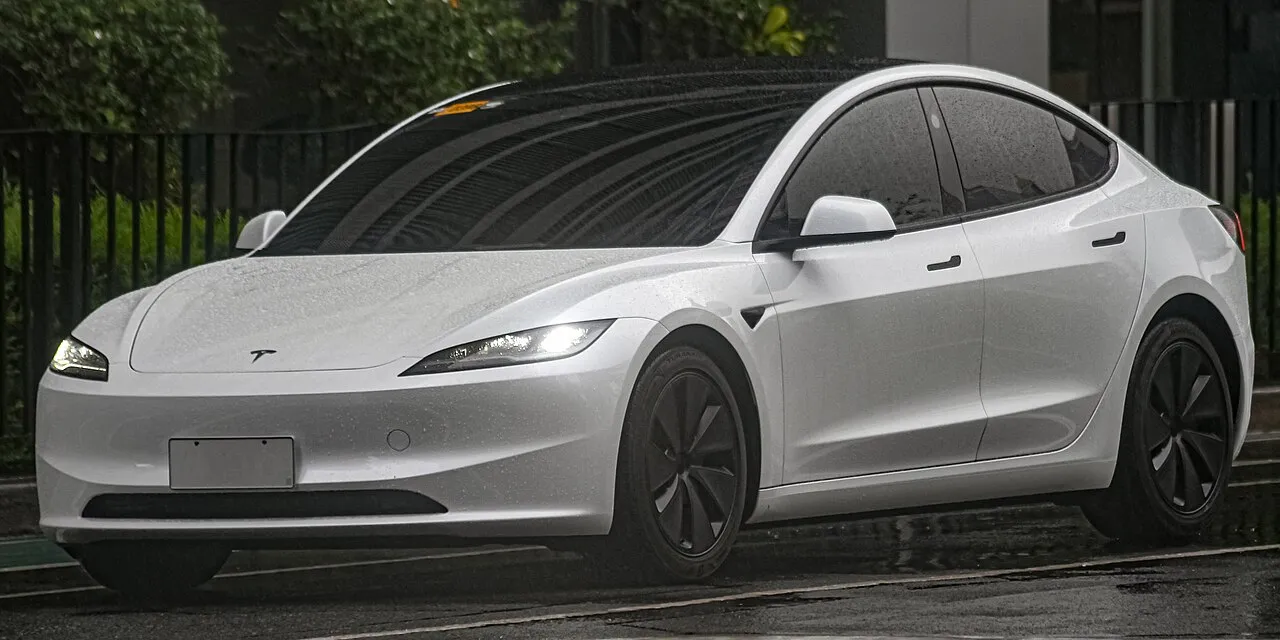
The short answer: A CleanTechnica contributor says Tesla Full Self-Driving (Supervised) took him to a gym two days after shoulder surgery without his intervention. The system still requires a legal, unimpaired driver who can supervise it and intervene immediately, according to the outlet.
A Tesla owner’s account of using Full Self-Driving (Supervised) shortly after shoulder surgery puts a difficult question in front of EV buyers: can a system that handles much of a trip help someone who finds driving physically difficult while still requiring that person to take control at any moment? According to CleanTechnica, contributor Arthur Frederick Hasler used FSD version 14 to travel to a gym two days after surgery, with his right arm in a sling. He says the Model Y drove from his garage to the destination and parked without him touching the steering wheel, brake or accelerator.
The account describes one trip, as reported by its driver. It does not establish that FSD can repeat that result on every route or that someone recovering from surgery can safely supervise it. CleanTechnica’s editor disagreed with the contributor’s broader argument: the editor wrote that intervening when an automated system needs help can be harder than driving the entire trip. For buyers considering FSD because driving is physically demanding, that distinction matters more than whether the car completed a particular journey without intervention.
What happened on the Model Y trip
Hasler wrote that he wanted to visit a fitness center with stationary bicycles shortly after shoulder replacement surgery. Driving with his right arm in a sling seemed difficult, and he considered asking his wife for a ride. Instead, according to his CleanTechnica account, he entered his Model Y and used a voice command to set the gym as his destination. He reported that FSD version 14 then drove out of the garage, completed the trip and parked.
His point was that assistance with steering and pedals could make a trip possible for someone who might otherwise decide against driving. He extended that argument to drivers with various physical limitations. But the reported outcome answers only what happened during his journey. It does not say how he would have handled an unexpected request to take over, or whether another driver with a different limitation could do so. Those questions are central because the system he used is explicitly described as supervised.
CleanTechnica’s article also contains a warning that an FSD user must be an unimpaired legal driver who can intervene in a fraction of a second if necessary. That warning applies even when the car is navigating, controlling its speed and parking. The driver’s hands and feet may be idle for much of a successful trip, but the account does not describe a system that removes the driver’s responsibility to respond when it cannot manage a situation.
Why the editor challenged the argument
In an editor’s note accompanying Hasler’s article, CleanTechnica’s editor disputed the idea that supervising FSD is necessarily easier than driving. The editor said that, in the editor’s experience, taking over when needed can be harder than simply driving. The editor’s position was that a person who cannot drive the trip independently should not rely on FSD to make it.
That disagreement is about the moment when assistance stops being enough. Hasler’s trip required no intervention, according to his account, so it did not test what he could have done if the car had needed him to act. The editor’s concern addresses that possibility directly. A driver considering FSD for a physical limitation has to assess the ability to supervise and take control, not just the effort of steering and operating the pedals during an uneventful trip.
The story also illustrates why the name Full Self-Driving can be confusing in this context. Hasler described the car handling the entire route without his input, yet CleanTechnica identified the feature as Full Self-Driving (Supervised) and warned that its user must be ready to intervene. A completed trip and a requirement for continuous supervision can both be true. The first describes what the car did on that occasion; the second describes what was required of its driver throughout.
How Hasler viewed the alternatives
Hasler compared Tesla’s system with Rivian’s driving assistance in his CleanTechnica article. He wrote that, based on his research, Rivian’s system could not yet take a driver from point to point through city streets and highways without intervention in the way he said his Tesla did. He had planned a visit to a Rivian demonstration center but did not describe completing that drive. His assessment of Rivian therefore came from research rather than a drive he reported taking.
He also contrasted the companies’ approaches to sensing. According to Hasler, Tesla relies on cameras for its automated driving approach, while Rivian uses 11 cameras and five radar sensors. Those details explain part of his interest in how the systems might develop, but his article does not establish how either would perform in a particular emergency or whether a different sensor arrangement would help a driver with a physical limitation. For a buyer, the immediate issue raised by his account remains the ability to supervise the system available today.
Hasler argued more broadly that Tesla’s driving software and Supercharger access made its vehicles attractive for electric travel across the United States. He also recommended choosing a Tesla with Hardware V4 for the driving technology he wanted, and wrote that Tesla began delivering vehicles with that hardware in mid-2023. Those are his assessments, according to CleanTechnica. A model name alone does not identify the hardware in an individual car; his argument concerns a particular hardware generation as well as the software he used.
What a buyer can separate from this account
FSD capability is only one consideration in choosing an EV. The vehicle in Hasler’s account was a Model Y, while he also discussed the Model 3 as a purchase option. For U.S. buyers comparing the vehicles, EPA ratings for the 2027 Model Y include 321 miles for the rear-wheel-drive trim and 327 miles for Premium AWD. U.S. EPA ratings for the 2027 Model 3 include 321 miles for the rear-wheel-drive trim and 346 miles for Premium AWD. These are EPA range ratings for specific U.S. trims; they do not measure FSD performance or a driver’s ability to supervise it.
Hasler mentioned a $99 monthly FSD charge after a promotional period and described temporary FSD and Supercharging offers tied to purchases at the time of his CleanTechnica article. Those terms were part of his account, not a guarantee for a later purchase. They also do not change the condition stated in the article’s warning: paying for the feature does not turn a supervised system into transportation for someone unable to intervene.
The account leaves buyers with a practical distinction. Hasler reported that FSD performed the driving tasks on a trip he expected to find difficult after surgery. CleanTechnica’s editor questioned whether a driver facing that difficulty could reliably take over if the system required it. Neither account reports an intervention during this journey, so the trip cannot settle that disagreement. It shows why people with physical limitations may value driving assistance, while the supervision requirement remains the deciding question for using it.
Frequently asked questions
Did the Tesla driver intervene during the trip?
According to his CleanTechnica account, he did not touch the steering wheel, brake or accelerator while FSD version 14 drove to the gym and parked.
Can FSD be used without a driver ready to take over?
CleanTechnica’s article warns that FSD (Supervised) requires an unimpaired legal driver who can intervene in a fraction of a second.
Why did CleanTechnica’s editor disagree with the contributor?
The editor argued that taking over when FSD needs help can be harder than driving the trip independently.
Which Tesla vehicle was used in the reported trip?
The contributor said he used a Tesla Model Y running FSD version 14.
Related stories

What Makes a Public EV Charger Accessible to More Drivers
Accessible public EV charging depends on reachable controls, usable connectors, clear space around the vehicle, and a route that supports different mobility needs.

Kia Confirms Rio-Sized Electric Hatchback for 2027
Kia says its first mass-market software-defined vehicle will be a B-segment electric hatchback due by the end of 2027, with a European launch expected in 2028.

Tesla FSD v15 Reaches Older Model Ys Without Bumper Cameras
Tesla is extending FSD v15 to pre-refresh Model Ys without front bumper cameras, with early reports praising smoother driving but flagging visual lag.