Hyundai Venue Is America’s Cheapest New Car at $22,200
With the Nissan Versa gone, the 2026 Hyundai Venue takes the low-price lead. Autoweek reports its SEL test car cost $24,440 before taxes and fees.
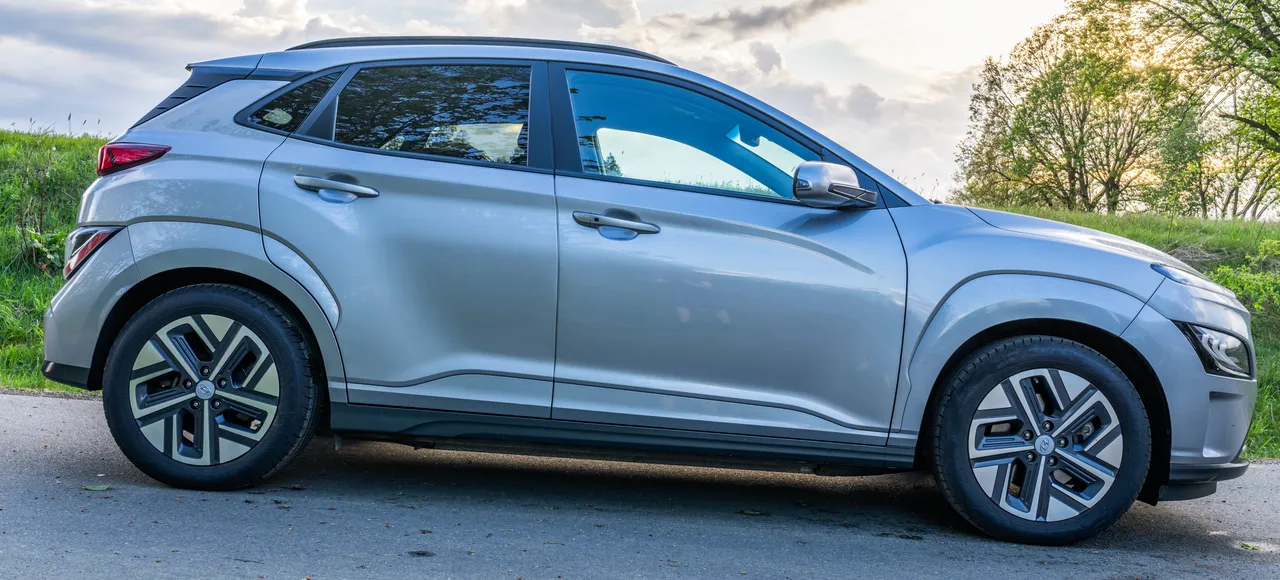
The short answer: According to Autoweek, the Hyundai Venue is now the least expensive new car sold in the United States, starting at $22,200 for the SE. Its tested 2026 SEL totaled $24,440 before taxes and fees.
The 2026 Hyundai Venue has become America’s least expensive new car after the Nissan Versa left the market at the end of the 2025 model year, according to Autoweek. The Venue starts at $22,200 for the SE, while the outlet’s SEL test car came to $24,440 before taxes and fees. Its low starting price puts it near the bottom of the new-car market, though buyers comparing it with electric vehicles will find that its 1.6-liter engine runs on gasoline and does not need charging.
That distinction matters in a market where a new car’s purchase price and its propulsion costs can point in different directions. Autoweek named the all-electric Chevrolet Bolt at $28,995 and the Slate Electric Pickup at $26,400 among the Venue’s higher-priced alternatives. The outlet did not provide energy-cost comparisons for those vehicles, so the figures establish purchase-price context only. The Venue’s appeal, as Autoweek describes it, is conventional, basic transportation at a low entry price, with a set of comfort and connectivity features that the outlet says would once have been unusual in an inexpensive car.
What the Venue costs
Autoweek reports that the Venue SE starts at $22,200 including destination. The publication’s test vehicle was a 2026 SEL in Ecotronic Gray. Its window sticker showed a $22,600 manufacturer’s suggested retail price before a $1,620 delivery charge and $240 for floor mats, bringing the reported total to $24,440. That is the vehicle’s price with those charges included, before the taxes and additional fees in Autoweek’s financing example.
To illustrate a possible monthly cost, Autoweek modeled a purchase in suburban Los Angeles. Its scenario assumed a 10.25 percent sales tax, $500 in title, registration and documentation fees, a 10 percent down payment of $2,444, and a financed balance of $25,001. At 5.5 percent interest over 48 months, the resulting payment would be $581 per month; at 6 percent over 60 months, it would be $483. These are the outlet’s example calculations, not universal financing terms. A buyer’s actual payment depends on the purchase price, taxes, fees, down payment, interest rate and loan length.
The price comparison in Autoweek’s report included several non-electric alternatives: the Kia K4 at $23,635 and Nissan Kicks at $24,365. It also named the Slate Electric Pickup and Chevrolet Bolt, at $26,400 and $28,995 respectively. Those figures give a snapshot of the entry-level choices cited by the outlet. The report does not provide equipment or financing comparisons for those models, so the prices alone do not show how their features or ownership costs differ.
Equipment and space in the SEL
Autoweek found that the SEL included a six-speaker audio system, Bluetooth, steering-wheel controls and four USB-C charging ports. It also had wireless phone charging and an 8.0-inch touchscreen audio system with wireless Android Auto and Apple CarPlay. Heated front seats and a six-way adjustable driver’s seat were among the comfort features. The outlet’s review presents these amenities as part of the case for the Venue as a usable everyday car even at the lowest end of the new-car price range.
The cabin has 91.9 cubic feet of passenger volume, according to Autoweek. Cargo capacity is 18.7 cubic feet behind the second row, increasing to 31.9 cubic feet when that row is folded flat. Those figures describe the Venue’s published interior measurements as reported in the review. They also put the small SUV’s practical use in clearer terms: its cargo area changes substantially when passengers give up the rear seats.
Autoweek says buyers who want a lower price can choose the SE, which starts at $22,200 including destination. The review does not itemize which SEL features are absent from the SE, so it does not establish the equipment trade-off between the two trims. The reported SEL price also reflects its specific options and charges, including floor mats, rather than the SE’s starting price.
Gas power and fuel economy
The Venue uses a 1.6-liter four-cylinder engine with dual port fuel injection, dual overhead camshafts and continuously variable valve timing, according to Autoweek. The engine produces 121 horsepower at 6,300 rpm and 113 pound-feet of torque at 4,500 rpm. It is paired with Hyundai’s continuously variable transmission, which the company calls an Intelligent Variable Transmission. Autoweek describes the transmission as simulating shifts.
Autoweek reports EPA fuel economy of 29 mpg in city driving, 33 mpg on the highway and 31 mpg combined. Those are gasoline economy figures, not electric range ratings. The Venue has no charging requirement because it is a gasoline-powered vehicle; the outlet makes that distinction while discussing the car’s efficiency. Autoweek also cites 0-to-60-mph times of 8.7 seconds from MotorTrend and Car and Driver. Those acceleration figures come from the two named outlets, rather than from Autoweek’s own reported measurements.
For a shopper weighing a low purchase price against the prospect of an electric vehicle, the Venue and the Bolt or Slate pickup in Autoweek’s comparison represent different kinds of ownership. The source gives prices for all three, but does not report comparable range, charging performance, fuel or electricity costs, or equipment. It therefore supports a price comparison, while leaving those other considerations unanswered.
Warranty and the case for buying new
Autoweek reports that Hyundai’s powertrain warranty runs for 10 years or 100,000 miles. The Venue also has a five-year or 60,000-mile new-vehicle warranty, a seven-year unlimited-mile anti-perforation warranty and five years of unlimited-mile roadside assistance. The outlet points to the warranty coverage as one consideration when comparing the new Venue with a used car. It does not provide warranty terms for the used cars or competing models that a buyer might consider.
In Autoweek’s week with the Venue, the reviewer used it for trips where a motorcycle was another option and chose the car most of the time, describing it as more comfortable in rain or snow. That account reflects the reviewer’s experience during the week, rather than a broader test of how the car performs in different climates. The review also characterizes the Venue as an entry-level car with amenities and passenger space, while noting its modest engine output and CVT.
What the low-price lead means
The Venue’s position depends on the field of new cars available at the time of Autoweek’s report. The outlet says the Nissan Versa’s departure after the 2025 model year left the Venue as the cheapest new car sold in the United States. That title is tied to the reported starting price and the models then on sale; it does not mean every Venue will cost $22,200 after taxes, fees and any selected options.
For EV buyers, the most relevant point is how the Venue’s price compares with the electric models named by Autoweek. At the prices in the report, the Bolt and Slate Electric Pickup cost more to buy than the Venue SE. The article does not establish whether those differences are offset by operating costs, incentives or other factors. It does show that the lowest new-car starting price in the United States belongs to a gasoline model, while the electric vehicles in the comparison begin at higher prices.
Autoweek’s report offers no announcement of a replacement for the Versa or a change to the Venue’s pricing. The next step for a prospective buyer is to check the price and equipment for the specific trim and vehicle being considered: the review’s $24,440 SEL total includes delivery and floor mats, while its $22,200 figure is the SE starting price with destination. For now, the Venue’s combination of a low entry price, gasoline power, basic technology features and Hyundai warranty coverage defines its place at the affordable end of the market.
Frequently asked questions
What is the starting price of the 2026 Hyundai Venue?
Autoweek reports that the Venue SE starts at $22,200 including destination.
How much did Autoweek’s Venue SEL cost?
The tested 2026 SEL totaled $24,440 before taxes and fees, including a $1,620 delivery charge and $240 for floor mats.
Is the Hyundai Venue electric?
No. It has a 1.6-liter gasoline engine and a continuously variable transmission.
What fuel economy does the Venue get?
Autoweek reports EPA ratings of 29 mpg city, 33 mpg highway and 31 mpg combined.
Related stories

EU EV Registrations Outpaced Gas and Diesel Cars in October
EU registrations of fully electric cars rose 61.4% in October, putting EVs ahead of gasoline and diesel combined as growth in Germany and France drove the jump.
Kia EV3 Loses Australian Buyers to BYD on Price and Features
A couple who considered Kia’s EV3 chose a BYD Atto 3 instead, weighing price, equipment, styling, dealer experience and concerns about long-term support.

IVECO BUS Adds Range and 15-Year Warranty Option to EV Buses
IVECO BUS is raising battery-pack capacity to 80 kWh across its electric bus ranges, with up to 100 km more range and an optional 15-year warranty.