Tesla China Sales Fall 66% as Shanghai Exports Climb
Tesla sold 8,817 cars in China in October as Shanghai exports rose, exposing a widening gap between domestic demand and the factory's wholesale growth.
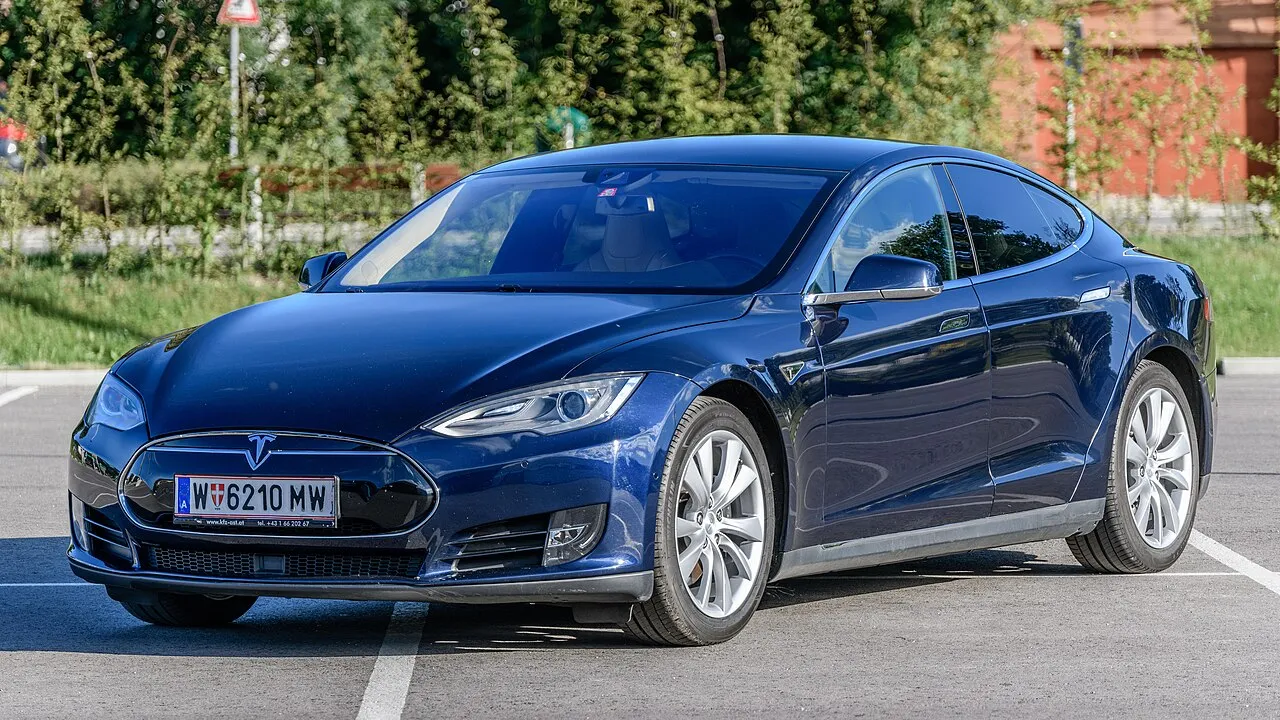
The short answer: Tesla's domestic China sales fell 66% year over year to 8,817 vehicles in October 2026, according to Electrek. Shanghai's wholesale shipments rose 10.3% because exports accounted for 59,012 of its 67,829 vehicles.
Tesla's sales to Chinese buyers fell 66% year over year to 8,817 vehicles in October 2026, even as shipments from its Shanghai factory increased, according to Electrek. The split matters for the company's position in China: rising factory shipments masked a sharp domestic decline, while exports took an increasingly important role in keeping vehicles moving.
Citing China Passenger Car Association figures, Electrek reported that Tesla China wholesaled 67,829 vehicles during October, up 10.3% from a year earlier. Of those, 59,012 went overseas. Domestic sales were the lowest since July 2022, when the Shanghai plant was partly shut for production-line upgrades. Electrek reported that the factory operated normally this October.
Exports explain the growth in factory shipments
The October figures measure two different parts of Tesla's business. Wholesale shipments cover vehicles leaving its China operation for both domestic and overseas markets. Sales to Chinese buyers capture only the domestic portion. In this case, the larger wholesale total increased while the domestic component contracted, making the distinction essential to understanding the month's performance.
Exports represented about 87% of October's wholesale shipments, according to Electrek, and increased 66% from a year earlier. That left fewer than one in seven vehicles in the total for Chinese buyers. The overseas business therefore explains how Tesla could record growth in Shanghai shipments during a month when its sales inside China fell sharply.
The Model Y accounted for most of the domestic volume. Electrek, citing CnEVPost, reported 7,807 Model Y sales and 1,010 Model 3 sales. The SUV consequently carried the bulk of Tesla's October business in China, while the sedan contributed a much smaller share of an already reduced monthly total.
A quarterly pattern, with a deeper October decline
Tesla's delivery schedule helps explain some of the change from September. According to Electrek, the company typically prioritizes exports early in each quarter, then shifts toward domestic deliveries near the quarter's end. September promotions and the rush to complete quarterly deliveries also brought some purchases forward, contributing to the subsequent slowdown.
Domestic sales fell 86% from September's 64,837 vehicles, Electrek reported. That comparison spans the end of one quarter and the beginning of another, so it reflects the delivery cycle as well as changes in demand. The year-over-year October comparison offers another perspective because it compares the same point in Tesla's quarterly schedule.
That comparison also shows a substantial decline. Electrek reported domestic October sales of 40,485 vehicles in 2024, followed by 26,006 in 2025 and 8,817 in 2026. The latest result extends a decline across three successive Octobers, rather than representing only a fall from an unusually busy September.
Electrek also reported that October's domestic volume was less than half the previous lowest first month of a quarter in 2026. The outlet argued that the usual delivery cycle does not fully explain the scale of the drop. That is an assessment of the sales pattern; the monthly totals alone do not establish how much of the decline came from delivery timing versus weaker demand.
China's wider market also slowed
Tesla's setback came during a difficult month for the broader Chinese vehicle market. Preliminary CPCA figures cited by Electrek put October new-energy vehicle retail sales at 1.148 million, down 10% year over year. The overall passenger-car market fell 25%. Tesla's reported 66% domestic decline was steeper than either market measure.
Electrek linked the wider slowdown to changes in purchase support. Beijing is phasing out trade-in subsidies, and the new-energy vehicle purchase-tax exemption was cut in half on January 1, according to the outlet. Those changes form part of the backdrop to October's weaker market, although they do not separately quantify the effect on Tesla.
Against the preliminary new-energy vehicle retail total, Tesla's October domestic sales amounted to roughly 0.8% of the market, according to Electrek. That is a snapshot of one month, shaped in part by Tesla's export-heavy schedule. It nevertheless shows how small its domestic contribution became during October relative to the broader market.
Other manufacturers reported substantially larger October volumes. Electrek reported more than 50,000 deliveries for Xiaomi, which began delivering cars in 2024, and 106,127 for Leapmotor, up 51%. BYD delivered 490,168 vehicles, though that figure includes exports. BYD's total therefore cannot be treated as a direct measure of its Chinese domestic sales alongside Tesla's 8,817.
The decline extends beyond one month
The cumulative figures make October more consequential than an isolated monthly setback. Tesla sold 389,905 vehicles in China from January through October, down 15% from 458,710 over the same period a year earlier, according to Electrek. The outlet described that as Tesla's lowest January-to-October domestic total in at least four years.
Through September, Tesla's China sales had been down 11.9%, Electrek reported. Adding October widened the decline to 15%, showing how a weak month can materially change the picture even late in the year. The outlet also put the January-to-October result about 22% below the corresponding 2024 peak, a gap of roughly 110,000 vehicles.
Exports moved in the opposite direction. Shanghai shipped 420,984 vehicles overseas through October, an increase of 101%, according to Electrek. Cumulative exports therefore exceeded domestic sales. Electrek reported that the balance had been very different a year earlier, when sales inside China surpassed exports by more than two to one.
That reversal changes how Shanghai's performance should be read. Strong overseas shipments demonstrate demand for its output outside China, but they do not offset the domestic decline when measuring Tesla's position with Chinese buyers. The factory's combined volume and the company's local market performance answer different questions, even though both involve the same production base.
An export tax change adds a deadline
The growing reliance on overseas shipments also comes ahead of a policy change. According to Electrek, Beijing will reduce the value-added tax export rebate on EVs from 13% to 9% on April 1, 2027. The applicable rate will depend on the customs declaration date, creating a deadline relevant to automakers' export schedules.
Electrek interpreted October's increase in exports as consistent with manufacturers moving shipments ahead of that reduction. The timing offers a possible explanation for the overseas surge, but it does not establish that every additional exported Tesla was shipped because of the rebate change. The confirmed elements are the reported export increase and the approaching lower rebate rate.
November and December will test the rebound
The next two months will provide a clearer view of whether October mainly reflected scheduling or a deeper domestic weakness. After a weak October in 2025, Tesla delivered 73,145 vehicles in China in November and 93,843 in December, according to Electrek. Those results offer concrete reference points for the remainder of 2026.
A similar recovery would support the view that quarterly delivery timing played a substantial role in October's result. A weaker finish would leave Tesla facing a larger question about domestic demand while Shanghai depends more heavily on exports. For now, the reported figures show both developments at once: higher factory shipments overall and a sharply diminished share going to buyers in China.
Frequently asked questions
How many vehicles did Tesla sell in China in October 2026?
Tesla sold 8,817 vehicles to Chinese buyers, down 66% year over year, according to Electrek's account of CPCA figures.
Why did Tesla China's wholesale shipments rise while domestic sales fell?
Wholesale shipments include exports. According to Electrek, Tesla China shipped 67,829 vehicles in October, including 59,012 exports, leaving 8,817 for the domestic market.
Which Tesla model accounted for most of October's China sales?
The Model Y accounted for 7,807 domestic sales, compared with 1,010 for the Model 3, according to Electrek, citing CnEVPost.
How were Tesla's China sales performing through October?
January-to-October domestic sales totaled 389,905 vehicles, down 15% from 458,710 a year earlier, according to Electrek. Shanghai exports rose 101% to 420,984 over the same period.
What export rebate change is approaching in China?
According to Electrek, China's EV value-added tax export rebate will fall from 13% to 9% on April 1, 2027, with the rate determined by the customs declaration date.
Related stories

Tesla FSD v15 Reaches Older Model Ys Without Bumper Cameras
Tesla is extending FSD v15 to pre-refresh Model Ys without front bumper cameras, with early reports praising smoother driving but flagging visual lag.
Tesla FSD Raises Driver Ability Question After Surgery
A Tesla owner says supervised FSD got him to a gym after shoulder surgery. His account highlights a question for buyers: who can safely take over?

China EV Share Hits 68% in October as Small Cars Lead
Plug-in cars reached 68% of China's October market as overall sales fell 27%. Small EVs topped the rankings, while Tesla's China sales weakened.