Kia’s First Electric Van Finds a Modern Successor in PV5
Kia’s electric-vehicle history began with a marathon support van in 1986. Its PV5 returns the brand to electric vans as its passenger-car lineup expands.
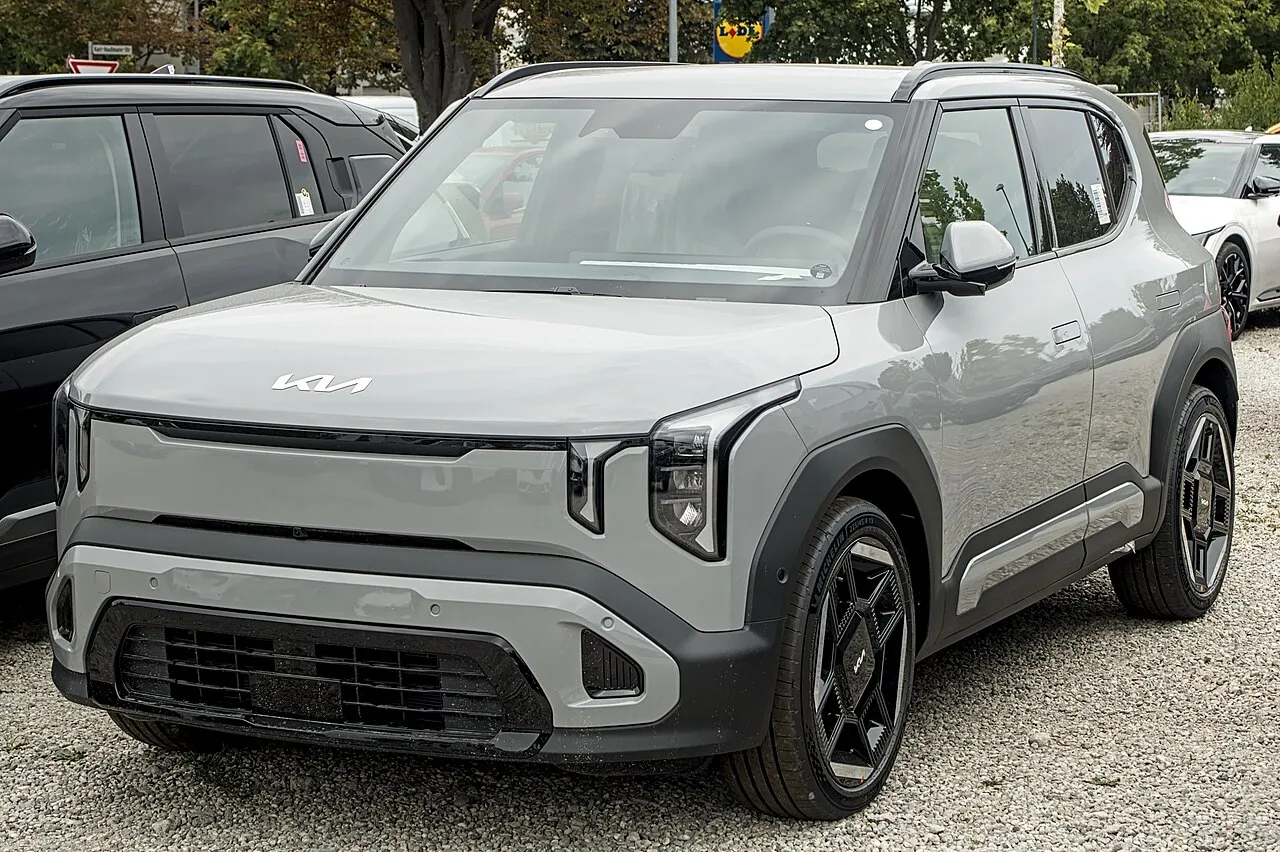
The short answer: Kia’s first EV was a Besta van converted for marathon support at the 1986 Asian Games, according to InsideEVs. Forty years later, the PV5 brings electric vans back into a much broader Kia EV lineup, although it is unavailable in the United States and Canada.
Kia is marking 40 years of electric-vehicle development with a connection between its earliest experiment and its current business: both involve vans. According to InsideEVs, the company’s first EV was a Besta converted for the 1986 Asian Games. Today, the PV5 brings Kia back to electric commercial vehicles alongside a passenger-car lineup that extends across several sizes and markets.
For American buyers, that history also highlights a limit on the choices available locally. InsideEVs reports that the PV5 is on sale across much of the world but remains unavailable in the United States and Canada. The outlet also identifies the EV2, EV4 and EV5 as models absent from Kia’s U.S. range, even as they broaden its electric offerings elsewhere.
A van built around a specific job
The original Besta EV had a narrowly defined assignment. Organizers of the 1986 Asian Games needed a vehicle to accompany marathon runners while carrying timekeeping and camera equipment, according to InsideEVs. It had to maintain the runners’ pace without exposing them to exhaust fumes. An electric drivetrain addressed that requirement directly.
Kia took out the Besta’s 2.0-liter diesel engine and installed an electric motor and 35 kWh of batteries, InsideEVs reports. The conversion turned an existing van into a support vehicle suited to an event where the absence of tailpipe emissions mattered. Its purpose was to complete the marathon assignment while accommodating the equipment needed to record and time the race.
According to InsideEVs, the battery held enough energy for the full marathon on one charge. That establishes what the vehicle could accomplish in its intended role, although it does not establish a range rating under a modern certification procedure. The Besta’s achievement was completing a particular working assignment, decades before Kia developed a broad retail EV business.
The underlying van was also significant in Kia’s history. InsideEVs describes the Besta as the company’s first self-developed van, replacing the Mazda-based Bongo it had previously manufactured. The electric conversion therefore combined a new vehicle program with an early effort to replace diesel propulsion. Kia says it was South Korea’s first EV, according to the outlet.
From an event vehicle to commercial production
The next milestones came gradually. According to InsideEVs, the Pride EV hatchback became Korea’s first electric vehicle certified for commercial sale in 1993. That was a different step from building an event support vehicle, but it still did not amount to a full series-production program. Commercial certification and production at scale arrived at separate points in Kia’s development.
The Pride was related to a gasoline car Americans knew as the Ford Festiva, InsideEVs reports. Its electric version used a 17.4 kWh battery and carried solar panels. According to the outlet, Kia claimed those panels could add almost 10 miles of range. That figure was a company claim about the solar contribution, rather than an EPA, WLTP or NRCan vehicle range rating.
Kia’s first series-production EV arrived with the Ray EV in 2011, according to InsideEVs. The Soul EV followed in 2014 and became the company’s first electric model for the U.S. market. Those milestones distinguish three stages of the same history: a purpose-built conversion, a car certified for commercial sale, and an electric model entering series production.
InsideEVs places the Niro EV four years after the Soul EV and describes the intervening period as a substantial expansion in driving range. The broader significance is the move toward electric passenger cars capable of handling more everyday driving needs. Kia’s development was no longer centered only on a specialized assignment such as supporting a sporting event.
The PV5 brings the story back to vans
The PV5 makes the Besta connection relevant to Kia’s present product strategy. According to InsideEVs, Kia has returned to electric commercial vehicles 40 years after that first conversion. The historical link is the vehicle’s role: a van using electric propulsion to perform useful work. The PV5 now sits alongside passenger EVs rather than standing alone as an early demonstration.
Its availability also shows why Kia’s global electric lineup cannot be treated as a single shopping menu. InsideEVs reports that the PV5 is sold in much of the world, with the United States and Canada excluded. Its arrival elsewhere therefore expands Kia’s commercial-vehicle business without creating an equivalent purchase option for North American customers.
The outlet reports that EVs account for 37% of Kia’s sales in the United Kingdom. That share gives a concrete measure of their importance in one national market. It is a UK sales figure, rather than a measure of Kia’s worldwide business or U.S. demand, but it shows how far electric models have moved into the brand’s sales mix there.
Passenger EVs show the breadth of the expansion
The UK-market 2026 EV2 illustrates the smaller end of Kia’s current electric range. The Air version has a 61.0 kWh gross battery capacity and a 444-kilometer WLTP range rating. It combines front-wheel drive with a 100 kW motor and an 11 kW AC charging capability. Its published DC charging time from 10% to 80% is 30 minutes.
Other UK EV2 versions show that battery capacity alone does not determine the certified range. The GT-Line and GT-Line S also have 61.0 kWh gross batteries, with WLTP ratings of 421 and 415 kilometers, respectively. The First Edition uses a smaller 42.2 kWh gross battery and has a 314-kilometer WLTP rating, with a published 10%–80% DC charging time of 29 minutes.
Those figures describe UK versions and use the WLTP procedure. They are useful for understanding the choices within that market, including the differences between trims sharing the same battery capacity. They do not establish an EPA range for an American EV2, which InsideEVs identifies as absent from the U.S. lineup.
The EV4 adds another example of how market and trim affect the figures buyers encounter. Natural Resources Canada rates the Canadian-market 2026 Light at 391 kilometers, the Wind at 552 kilometers, the Wind Premium at 515 kilometers and the GT-Line at 488 kilometers. All four have a published motor output of 150 kW.
Natural Resources Canada also gives Level 2 full-charge times of 5.9 hours for the EV4 Light, 8.1 hours for both Wind versions and 9.1 hours for the GT-Line. These are full-charge figures for Canadian versions. They describe a different charging measure from the EV2’s partial-charge DC times, so they should not be read as a direct comparison of charging speed.
The European-market EV5 extends the picture to another SUV. According to EVDB, the 2025 Air has an 84 kWh gross battery, 77.4 kWh of usable capacity and a 590-kilometer WLTP range rating. The GT-Line carries the same battery capacities and a 580-kilometer WLTP rating. Both have 160 kW of power, 11 kW AC charging and a published DC peak of 200 kW.
A broader business with regional boundaries
Together, those vehicles show the distance between Kia’s marathon support van and its current electric business. The Besta was built to solve one operational problem. The modern range spans passenger cars, SUVs and a commercial van, with different batteries, charging capabilities and market availability. For U.S. buyers, the next question is which of those overseas choices will eventually reach American showrooms. For now, according to InsideEVs, the PV5, EV2, EV4 and EV5 remain outside Kia’s U.S. offering.
Frequently asked questions
What was Kia’s first electric vehicle?
According to InsideEVs, Kia’s first EV was a Besta van converted for the 1986 Asian Games. It carried timekeeping and camera equipment alongside marathon runners without producing exhaust fumes.
How large was the Kia Besta EV’s battery?
InsideEVs reports that the converted Besta used 35 kWh of batteries, with enough energy to complete its marathon support assignment on one charge.
When did Kia begin series production of EVs?
According to InsideEVs, Kia’s first series-production electric model was the Ray EV in 2011. The Soul EV followed in 2014 as the company’s first EV for the U.S. market.
Is the Kia PV5 available in the United States?
According to InsideEVs, the PV5 is on sale in much of the world but is unavailable in the United States and Canada.
How much of Kia’s UK sales comes from EVs?
InsideEVs reports that electric vehicles account for 37% of Kia’s UK sales. That figure applies to the UK market.
Related stories
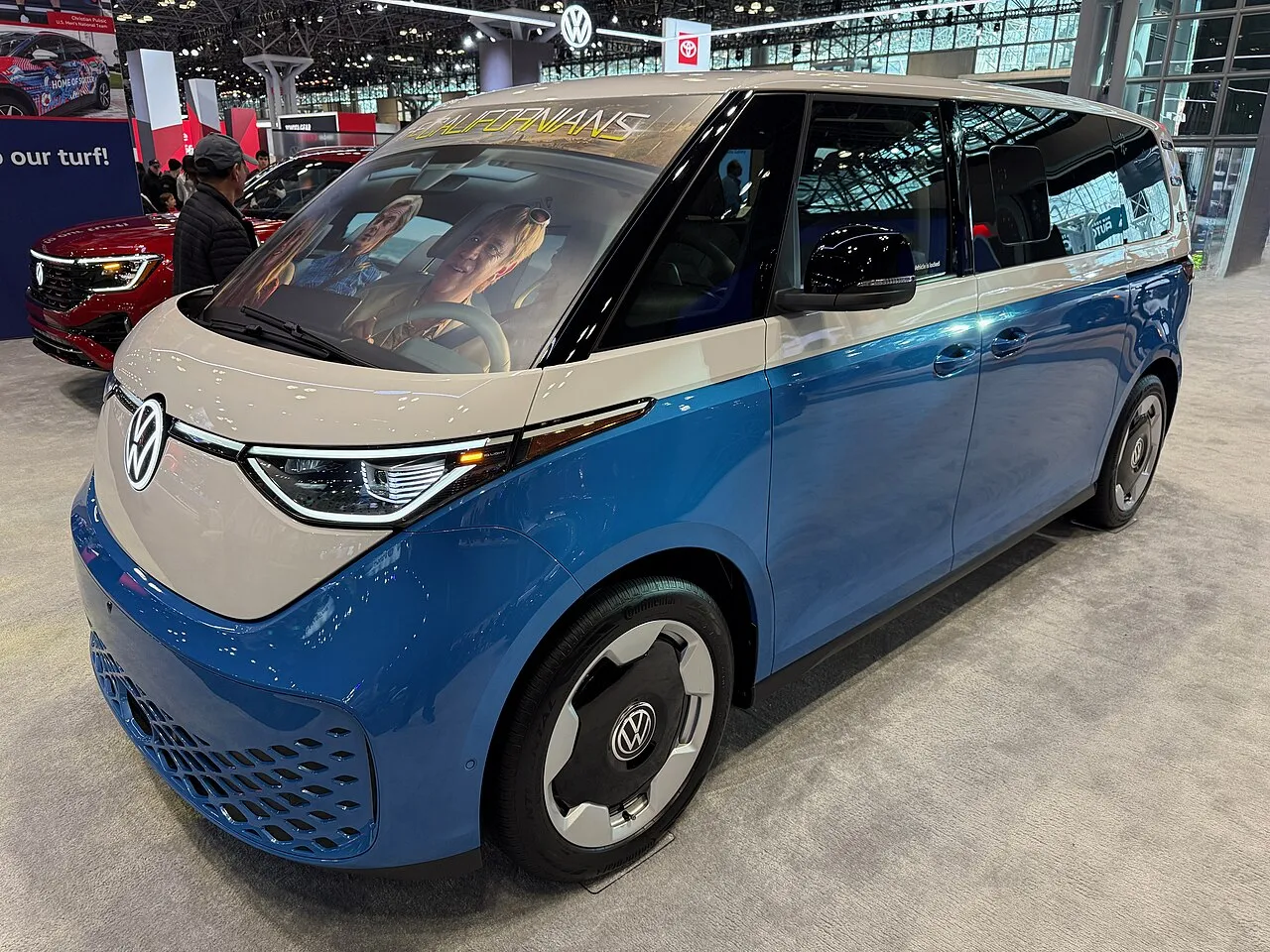
How the Volkswagen ID. Buzz Works for Everyday Use
The ID. Buzz pairs a van-like cabin with an electric drivetrain. Here is how its layout can shape passenger access, parking, cargo use and daily trips.
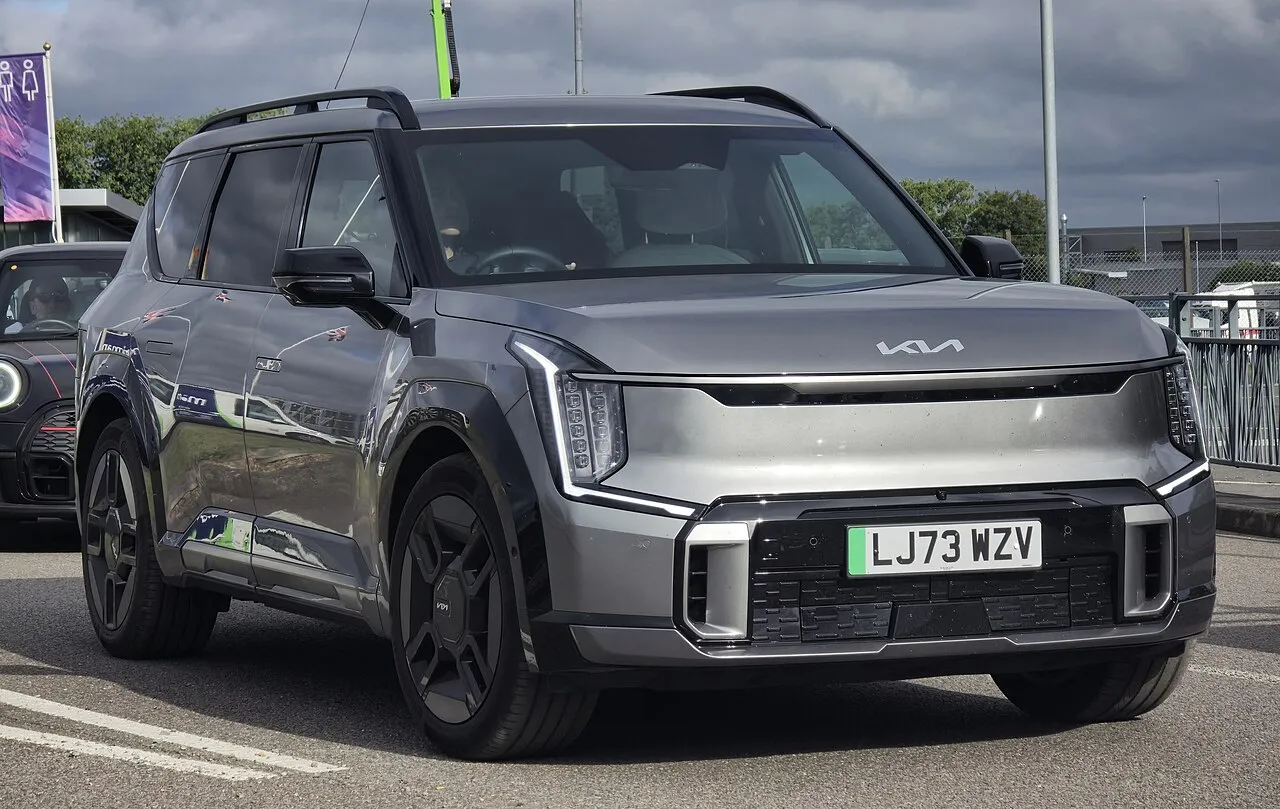
Kia EV9 vs. Volkswagen ID. Buzz: Which Fits a Large Family?
The EV9 offers three rows in an SUV, while the ID. Buzz brings minivan-style access. Compare family seating, cargo flexibility and published range.
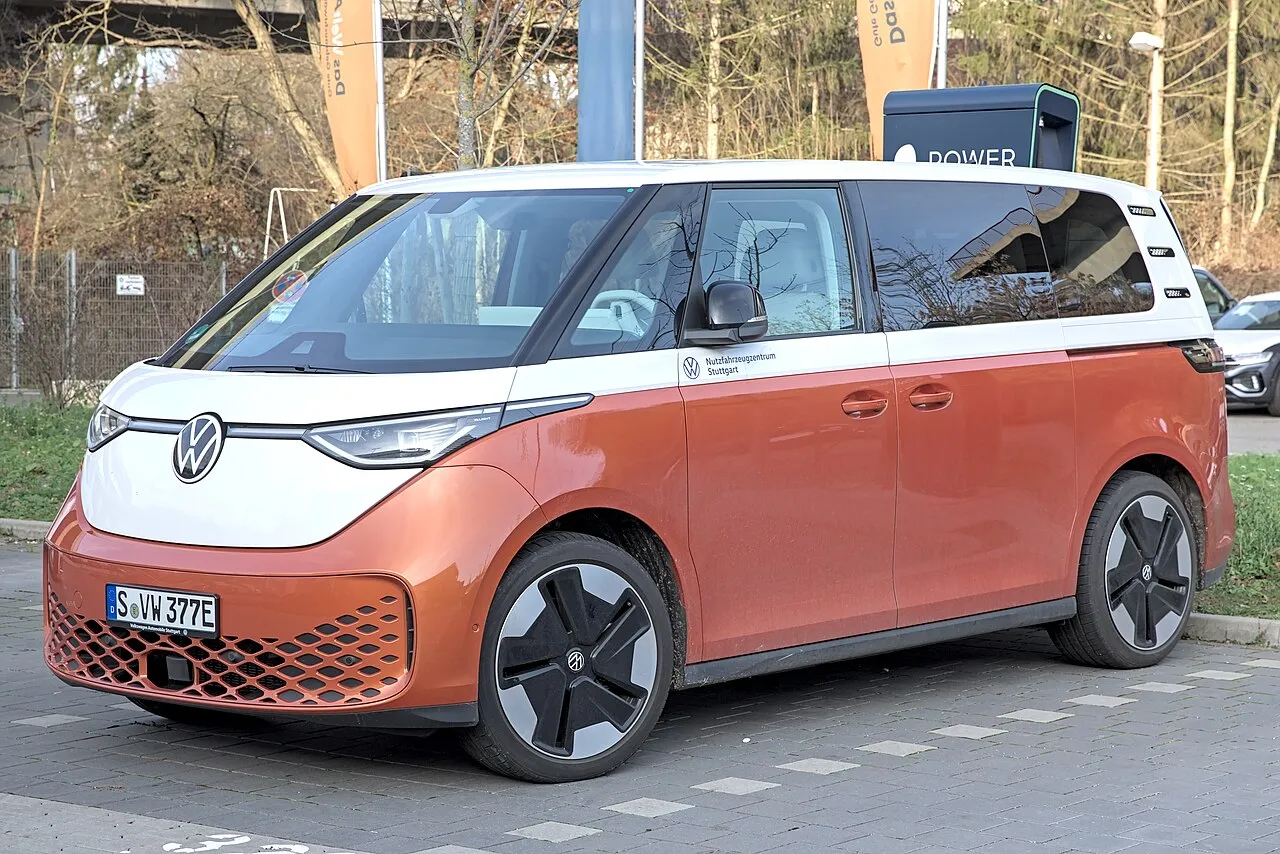
Volkswagen Starts Long-Wheelbase ID. Buzz Cargo Production
Volkswagen has begun building a longer ID. Buzz Cargo in Hanover, adding cargo space, all-wheel drive and greater towing capacity for commercial buyers.