Kia EV9 vs. Volkswagen ID. Buzz: Which Fits a Large Family?
The EV9 offers three rows in an SUV, while the ID. Buzz brings minivan-style access. Compare family seating, cargo flexibility and published range.
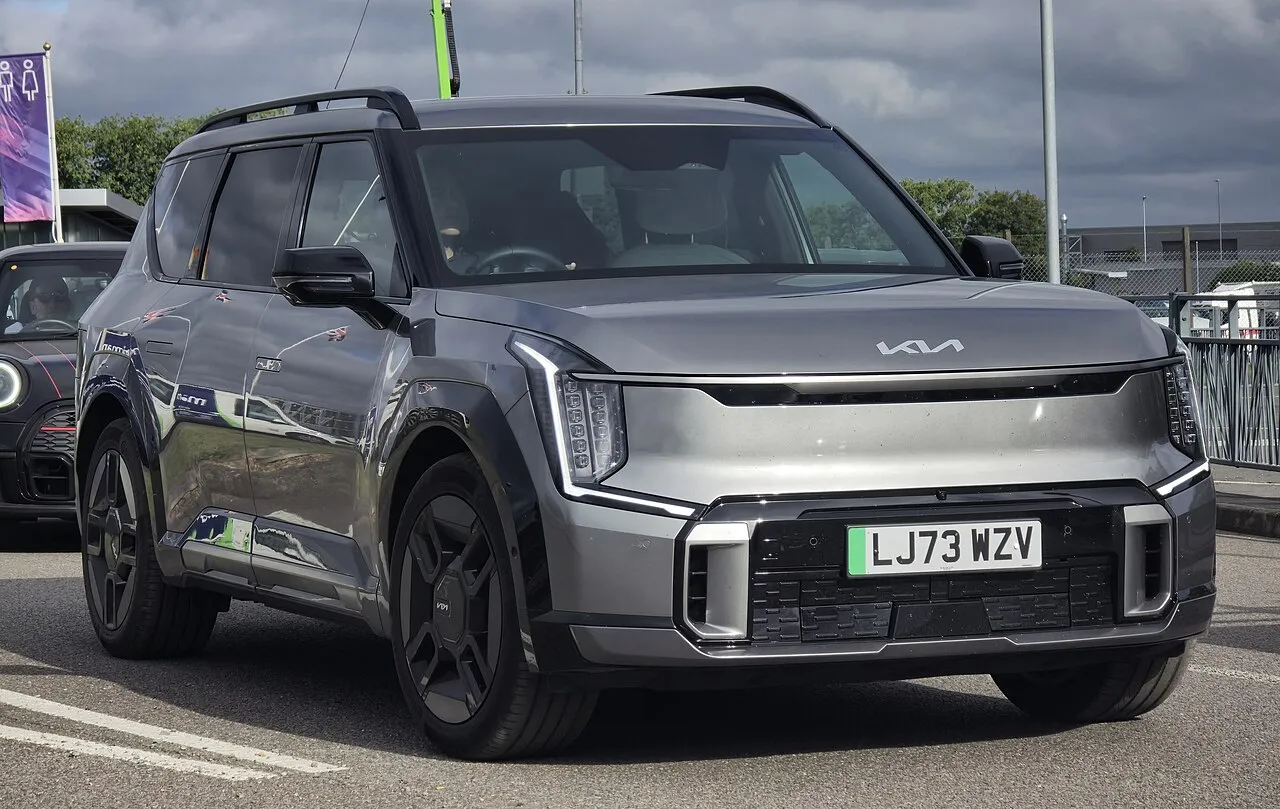
The short answer: Choose the Kia EV9 if you want a three-row SUV and a wider range of U.S. EPA-rated configurations. Choose the Volkswagen ID. Buzz if its van layout and easier cabin access suit your family’s daily loading and seating needs; compare the model year and market carefully because the published range figures use different tests.
For a large family, the Kia EV9 is the stronger fit if you want a three-row SUV, while the Volkswagen ID. Buzz is the more natural choice if a van’s cabin access and people-moving layout matter most. The decision turns on how often passengers climb into the third row, how you load child seats and bulky items, and which vehicle’s seating arrangement works for your household.
Range figures can help narrow the choice, but they do not settle it. U.S. EPA ratings, Canadian NRCan ratings and European WLTP figures use different test standards and apply to different model years and versions. Treat each rating as a comparison within its own market and standard.
Seating and passenger access
The EV9 is an SUV with three rows. That gives families a familiar arrangement for carrying several passengers while keeping the vehicle’s overall form closer to a conventional SUV. The exact seat configuration and access features depend on the version sold in a given market, so shoppers should confirm the local model’s cabin layout before deciding.
The ID. Buzz is a van or multipurpose vehicle, a shape that naturally prioritizes room for people and movement through the cabin. For a family that frequently loads children into rear seats, the van format may make getting in and out feel more straightforward than climbing through an SUV. Its tall body can also make the cabin feel more open, though the actual seating arrangement varies by market and version.
Neither body style guarantees that a child seat will fit well in a specific position. Bring the seats your family uses and check how they install, whether buckles remain reachable, and whether passengers can reach the rearmost row without moving another seat in a way that disrupts the family routine. Also check whether the adult who usually helps children can stand comfortably beside the open doors in the places where the vehicle will be parked.
How the two body styles affect daily use
The EV9’s SUV shape can suit households that want a commanding, familiar driving position and an enclosed cargo area behind the passenger compartment. It may be easier to fit into an existing SUV-oriented routine, but third-row use and access deserve close inspection if that row will carry passengers every day.
The ID. Buzz’s van form puts access and passenger space at the center of its identity. A sliding-door layout, where fitted, can be especially useful in tight parking spaces because it does not require the same outward swing as a conventional passenger door. Confirm the door arrangement on the exact vehicle and check it in the places you park most often; market equipment and trim details matter.
Family use is not only about how many people can sit inside. A stroller, sports gear, groceries and luggage all compete for room. Ask whether you can keep the seats in the positions your family needs while carrying the items you normally bring. If using every passenger seat leaves too little space for the day’s cargo, a vehicle can be technically large yet impractical for that particular household.
Cargo flexibility: test the combinations you need
For either vehicle, check cargo space in at least two configurations: all intended passenger seats in use, and the rearmost seating area folded or otherwise adjusted. Then try the awkward items, not just easily stacked bags. A stroller, folded wagon, instrument case or sports equipment can expose access and shape constraints that a simple volume figure would not explain.
Pay attention to the load opening and the distance from the ground to the cargo floor. A low, broad opening can make repeated loading easier, while a high lift-over can be tiring with heavy or bulky objects. Check whether the cargo floor is level when seats move, whether loose items can be secured, and whether the rear seats can be changed without unloading everything first.
The EV9 and ID. Buzz have different silhouettes, but those shapes alone do not establish which one carries more in every family configuration. No cargo-volume figures are included in the published figures below, so a direct volume ranking is not possible here. A hands-on check with your normal seats and cargo is the useful next step.
Published range and charging figures
The U.S. EPA rates the 2027 EV9 Long Range RWD at 305 miles, compared with 283 miles for the Long Range AWD and 280 miles for the Long Range AWD GT-Line. Its Standard Range RWD is rated at 230 miles. The U.S. EPA rates the 2025 ID. Buzz at 234 miles in the RWD version and 231 miles in the 4Motion AWD version.
Those are U.S. ratings for different model years. The EPA figures put the listed 2027 EV9 Long Range RWD above the listed 2025 ID. Buzz versions, but they do not establish what every version will achieve on a family trip. Weather, speed, passenger load, cargo and driving conditions affect real-world range.
Charging figures also need context. For the U.S. vehicles, the listed Level 2 full-charge times run from 8.1 to 10.7 hours for the 2027 EV9 versions and are 9 hours for the 2025 ID. Buzz versions. These are published full-charge times; they do not describe how long a typical partial recharge takes or establish a direct public fast-charging comparison.
Canadian figures below are NRCan ratings for 2026 EV9 versions and 2025 ID. Buzz versions. European figures are WLTP ratings for 2025 vehicles. Because NRCan and WLTP are different standards from the EPA, those kilometre ratings should not be converted into an apples-to-apples ranking against U.S. EPA miles.
Published figures by market and version
| Vehicle and version | Market and model year | Rated range and test standard | Level 2 full-charge time | Source |
|---|---|---|---|---|
| Kia EV9 Long Range AWD | U.S., 2027 | 283 mi, EPA | 10.7 hours | US EPA fueleconomy.gov |
| Kia EV9 Long Range AWD GT-Line | U.S., 2027 | 280 mi, EPA | 10.5 hours | US EPA fueleconomy.gov |
| Kia EV9 Long Range RWD | U.S., 2027 | 305 mi, EPA | 10.7 hours | US EPA fueleconomy.gov |
| Kia EV9 Standard Range RWD | U.S., 2027 | 230 mi, EPA | 8.1 hours | US EPA fueleconomy.gov |
| Volkswagen ID. Buzz RWD | U.S., 2025 | 234 mi, EPA | 9 hours | US EPA fueleconomy.gov |
| Volkswagen ID. Buzz 4Motion AWD | U.S., 2025 | 231 mi, EPA | 9 hours | US EPA fueleconomy.gov |
| Kia EV9 Wind | Canada, 2026 | 491 km, NRCan | 10.7 hours | Natural Resources Canada |
| Kia EV9 Land AWD | Canada, 2026 | 455 km, NRCan | 10.7 hours | Natural Resources Canada |
| Kia EV9 Land AWD GT-Line | Canada, 2026 | 451 km, NRCan | 10.5 hours | Natural Resources Canada |
| Kia EV9 GT | Canada, 2026 | 418 km, NRCan | 10.8 hours | Natural Resources Canada |
| Kia EV9 Light | Canada, 2026 | 370 km, NRCan | 8.1 hours | Natural Resources Canada |
| Volkswagen ID. Buzz Pro | Canada, 2025 | 377 km, NRCan | 9 hours | Natural Resources Canada |
| Volkswagen ID. Buzz Pro 4Motion | Canada, 2025 | 372 km, NRCan | 9 hours | Natural Resources Canada |
| Kia EV9 Air RWD | Europe, 2025 | 563 km, WLTP | Not published | EVDB |
| Kia EV9 GT AWD | Europe, 2025 | 490 km, WLTP | Not published | EVDB |
| Volkswagen ID. Buzz Cargo | Europe, 2025 | 423 km, WLTP | Not published | OpenEV Data |
| Volkswagen ID. Buzz GTX | Europe, 2025 | 462 km, WLTP | Not published | EVDB |
| Volkswagen ID. Buzz Pro | Europe, 2025 | 423 km, WLTP | Not published | OpenEV Data |
| Volkswagen ID. Buzz Pro S | Europe, 2025 | 487 km, WLTP | Not published | EVDB |
European figures identify a Cargo version of the ID. Buzz alongside passenger versions, so the Cargo entry should not be treated as a family-passenger alternative. The table also includes European trims and Canadian versions that may not match the vehicles sold in the United States. Confirm the local model year, trim and seating configuration before using a rating to compare vehicles on a purchase shortlist.
Which one should a large family choose?
Choose the EV9 if your priorities point to an SUV: three rows in that format, a broad set of U.S. EPA-rated configurations, and a higher EPA range rating for the listed Long Range RWD version than for the listed ID. Buzz versions. The AWD and RWD choices also let shoppers weigh traction needs against the range rating of a particular trim.
Choose the ID. Buzz if the van layout is the better answer to your daily routine. Ease of reaching the rear cabin, repeated child-seat loading and moving passengers through the vehicle may matter more than a range difference on paper. Its EPA rating is close to the EV9 Standard Range RWD, while the EV9 Long Range versions have higher EPA ratings in the listed U.S. model years.
Before choosing, sit in every row, install the family’s child seats, and load the cargo that usually travels with everyone. That practical check can reveal whether the EV9’s SUV layout or the ID. Buzz’s van form is the more useful fit for the way your family actually uses a vehicle.
Frequently asked questions
Which has the higher U.S. EPA range rating?
Among the listed U.S. versions, the 2027 Kia EV9 Long Range RWD is rated at 305 miles by the EPA. The 2025 Volkswagen ID. Buzz is rated at 234 miles for RWD and 231 miles for 4Motion AWD.
Are the Canadian and European range ratings directly comparable with U.S. ratings?
No. The Canadian figures use NRCan, European figures use WLTP, and U.S. figures use EPA. Compare ratings within the same test standard and market.
Which vehicle is easier for family access?
The ID. Buzz’s van layout may make rear-cabin access more convenient for frequent passenger loading. Check the specific market version and try the seating arrangement with your family.
Which has more cargo space with all seats in use?
A direct cargo-volume comparison is not available here. Try both vehicles with the intended passenger seats in use and load the stroller, bags or other bulky items your family regularly carries.
Related stories

How to Choose an EV When It’s Your Household’s Only Car
Compare home charging, everyday range flexibility, and service access to find an EV that can handle your household’s needs without a backup car.

How to Check Whether an EV Can Carry a Roof Tent
Compare an EV’s roof-load limit, approved mounting points and tent hardware before buying. Then account for added wind resistance, noise and energy use.

Gross vs. Usable EV Battery Capacity, Explained
An EV’s gross battery capacity describes its full energy reserve; usable capacity is the portion the driver can draw on. Here’s how to compare the terms.