German Economist Floats Selling Volkswagen to Chinese Buyers
Moritz Schularick says Germany should consider selling Volkswagen while keeping production at home. No buyer, offer or takeover talks have been reported.
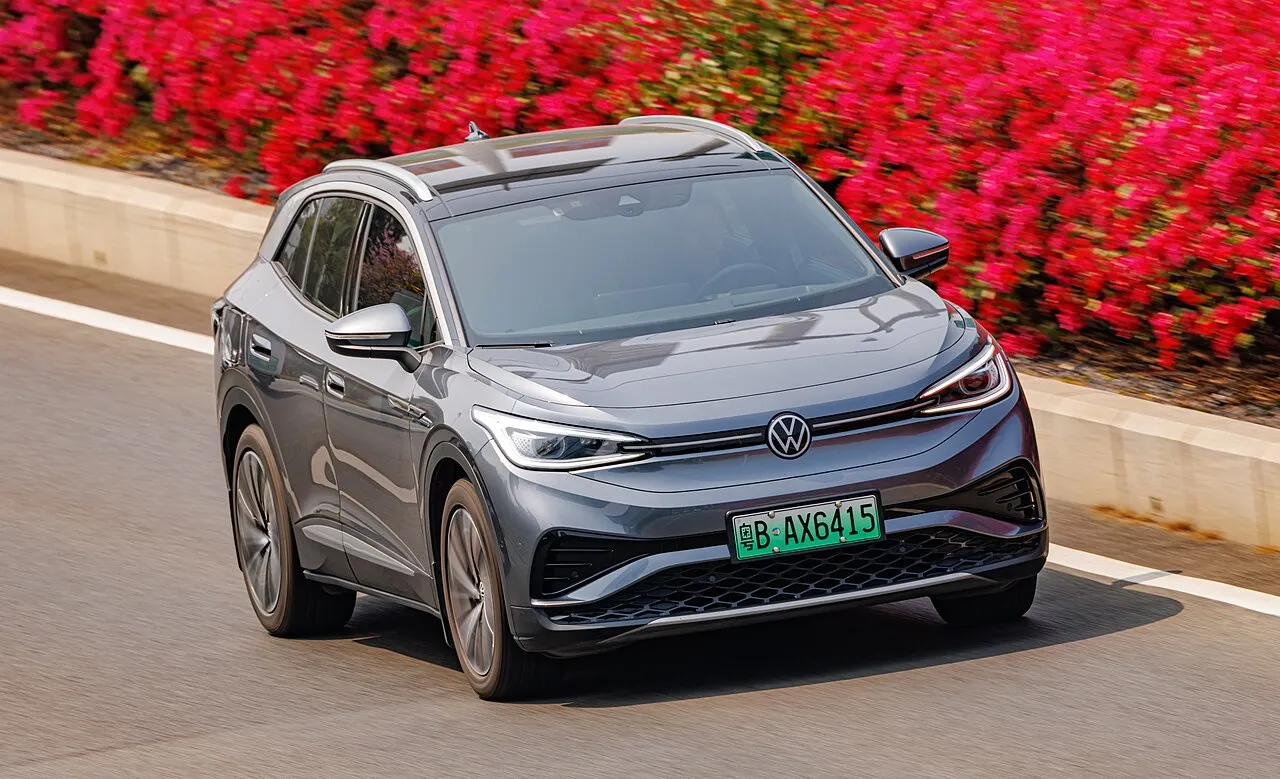
The short answer: German economist Moritz Schularick suggested that Germany sell Volkswagen Group to Chinese buyers while keeping production in Germany. The proposal is theoretical; no offer or takeover talks have been reported.
German economist Moritz Schularick has suggested selling Volkswagen Group to Chinese buyers while Germany can still secure value from the company, arguing that production should remain in Germany regardless of ownership. The proposal is theoretical: no buyer has been named, and no offer or takeover talks have been reported.
Schularick, president of the Kiel Institute for the World Economy, made the remarks at a conference in Berlin on November 24, according to CarNewsChina. The conference was hosted by Germany’s economy ministry, the BDI industry federation and the IG Metall union. Michael Jansen, head of Volkswagen’s Berlin office, was in the audience, the outlet reported.
The suggestion raises a question for Germany’s auto industry: whether preserving factories and production at home could be separated from keeping Volkswagen under German ownership. Schularick’s remarks focus on that distinction. He argued that the location of production mattered most, whoever owned the company. He did not identify a potential buyer during the Berlin event.
Schularick’s proposal and the response
In an earlier interview with Süddeutsche Zeitung, Schularick predicted that a Chinese automaker would probably buy Volkswagen and named BYD as an example, according to CarNewsChina. That was a prediction, not an announcement of a proposed transaction. The outlet reported no offer, negotiations or named prospective buyer.
Schularick also outlined conditions he believes could shape Chinese automakers’ expansion in Europe. He said they should build a large share of the cars they sell in Europe at factories in Europe. He suggested that local production could be made a condition for subsidies. He also said Europe could require Chinese automakers to form joint ventures with local companies, similar to the requirements China imposed on foreign automakers for many years.
His comments do not describe an adopted European policy. They are proposals about how governments might connect access to support or the European market with local manufacturing and partnerships. The report does not say that Germany or the European Union has decided to impose these conditions.
German auto industry researcher Stefan Bratzel rejected the idea of selling Volkswagen, telling WirtschaftsWoche that a sale would amount to Germany giving up on its car industry, according to CarNewsChina. Bratzel argued instead for German and Chinese automakers to work together as equal partners. The two positions point to different ways of responding to competition: a change in ownership alongside domestic production, or continued German ownership paired with cooperation between automakers.
Volkswagen’s history with Chinese partners
Volkswagen has worked with Chinese companies for decades. According to CarNewsChina, it signed its first Chinese joint venture agreement with SAIC in 1984. That business became SAIC-Volkswagen. Volkswagen partnered with FAW in Changchun in 1991, forming FAW-Volkswagen, and established an electric vehicle joint venture with JAC in 2017. That business is now called Volkswagen Anhui.
The history also reflects how rules for foreign automakers in China have changed. From 1994, foreign carmakers seeking to build cars in the country had to work with a local partner, and their ownership of a joint venture was capped at 50%. China lifted the ownership cap for electric carmakers in 2018. Tesla became the first automaker to open a plant in China without a local joint venture partner when its Shanghai factory began production in 2019, CarNewsChina reported.
Volkswagen’s current cooperation in China includes a partnership with Xpeng. In July 2023, Volkswagen agreed to buy a 4.99% stake in the Chinese automaker for about $700 million; the deal closed on December 6 that year, according to CarNewsChina. Five electric vehicles Volkswagen builds in China use an electronics system the companies developed together, the outlet reported.
One of those vehicles, the ID. Aura T6 electric SUV, was the Volkswagen brand’s best-selling all-electric car in China in October, with more than 12,000 deliveries. It accounted for more than 12,000 of the brand’s new energy vehicle deliveries that month, according to CarNewsChina. The outlet described Volkswagen’s October new energy vehicle total as including electric cars and plug-in hybrids.
Sales show pressure and a monthly high
Volkswagen Group’s broader results in China were weaker over longer periods. The group delivered 405,800 vehicles in China in the third quarter, down 38.5% from the same period a year earlier, according to CarNewsChina. Across the first nine months of 2026, deliveries fell 30.2% to 1,378,800 vehicles.
October brought a sharper result for Volkswagen’s electrified vehicles. The brand delivered more than 28,000 new energy vehicles in China, a monthly record for its electric cars and plug-in hybrids combined. That was a 346.9% increase from a year earlier, CarNewsChina reported. The outlet attributed more than 12,000 of those deliveries to the ID. Aura T6.
The monthly record sits alongside the declines in the group’s quarterly and nine-month totals. These figures cover different periods and vehicle categories: the group totals include Volkswagen’s deliveries across its brands, while the October record concerns the Volkswagen brand’s electric cars and plug-in hybrids. The reported October growth does not erase the broader delivery declines, and the figures do not establish what future sales will be.
New China models and technology partnerships
Volkswagen’s China business is continuing to introduce locally developed vehicles. CarNewsChina reported that the FAW-Volkswagen joint venture launched the Jetta M6 electric sedan the month before its November 27 report. Its starting price was 79,800 yuan, or about $11,900, and the top 555 Ultra version was priced at 99,800 yuan, or about $14,900.
The Jetta M6 uses a chip from China’s Horizon Robotics to support route-following on city streets and highways. It can also park automatically, according to CarNewsChina. The report does not give an electric range or identify a test standard for the model, so no range figure is included here.
Another locally developed vehicle is the ID. Era 5S, a plug-in hybrid sedan from the SAIC-Volkswagen joint venture. CarNewsChina reported a starting price of 120,000 yuan, or about $18,000. The vehicle uses driving software from Carizon, Volkswagen’s joint venture with Horizon Robotics. The outlet said the system allows the car to park and navigate in a city while a driver supervises.
These examples show Volkswagen working with Chinese partners on vehicles, electronics and driving software while the company faces falling China deliveries over the first nine months of 2026. They also help explain why the debate over ownership is tied to industrial cooperation and production, not only to who controls the company. Schularick’s proposal would put Chinese ownership alongside a condition that production remain in Germany; Bratzel’s alternative is cooperation between German and Chinese automakers as equal partners.
What happens next
CarNewsChina reported no move toward a Volkswagen sale. Schularick’s comments remain a theoretical suggestion, and his Berlin remarks did not name a buyer. The outlet also reported no offer or takeover talks. The reported positions from Schularick and Bratzel therefore describe competing views on Germany’s industrial future, rather than competing bids for Volkswagen.
For now, the concrete developments in the report are Volkswagen’s existing Chinese partnerships, its locally developed models and its mixed delivery picture: sharp declines in group deliveries over the first nine months of 2026, alongside a record October for the brand’s electric cars and plug-in hybrids. Whether Volkswagen changes ownership, and whether Europe adopts any of Schularick’s proposed local-production or joint-venture conditions, was not reported.
Frequently asked questions
Did Schularick name a buyer for Volkswagen?
He did not name a buyer at the Berlin conference. In an earlier interview, he predicted that a Chinese automaker would probably buy Volkswagen and cited BYD as an example.
Is Volkswagen facing a takeover offer?
No offer or takeover talks have been reported. Schularick’s suggestion is theoretical.
What conditions did Schularick propose for Chinese automakers in Europe?
He said they should build a large share of the cars they sell in Europe at European factories, suggested tying subsidies to local production, and proposed requiring joint ventures with local companies.
How did Volkswagen’s China deliveries perform?
Volkswagen Group deliveries in China fell 30.2% to 1,378,800 in the first nine months of 2026. The Volkswagen brand delivered more than 28,000 electric cars and plug-in hybrids in October, a monthly record and a 346.9% year-over-year increase.
Related stories

Nio Launches ES8 Mirror Black Edition 2.0 in China
Nio’s ES8 Mirror Black Edition 2.0 adds black-and-gold trim and starts at 434,800 yuan in China, while retaining the standard ES8’s core hardware.

Nissan NX7 PHEV Launches in China With 325-Km CLTC EV Range
Dongfeng Nissan has launched the NX7 plug-in hybrid in China, with up to 325 km of CLTC electric range, a 40.95-kWh battery and three trims.

Zeekr 8X Electric SUV Emerges in China Filing
A Chinese regulatory filing points to a battery-electric Zeekr 8X with dual-motor all-wheel drive, while its range, price and Australian plans remain unknown.