JLR Loses $553,850 Penalty Claim Against BYD in Dutch Court
A Dutch court rejected JLR’s $553,850 penalty claim against BYD and lifted an evidence seizure, while separate vehicle design infringement cases continue.
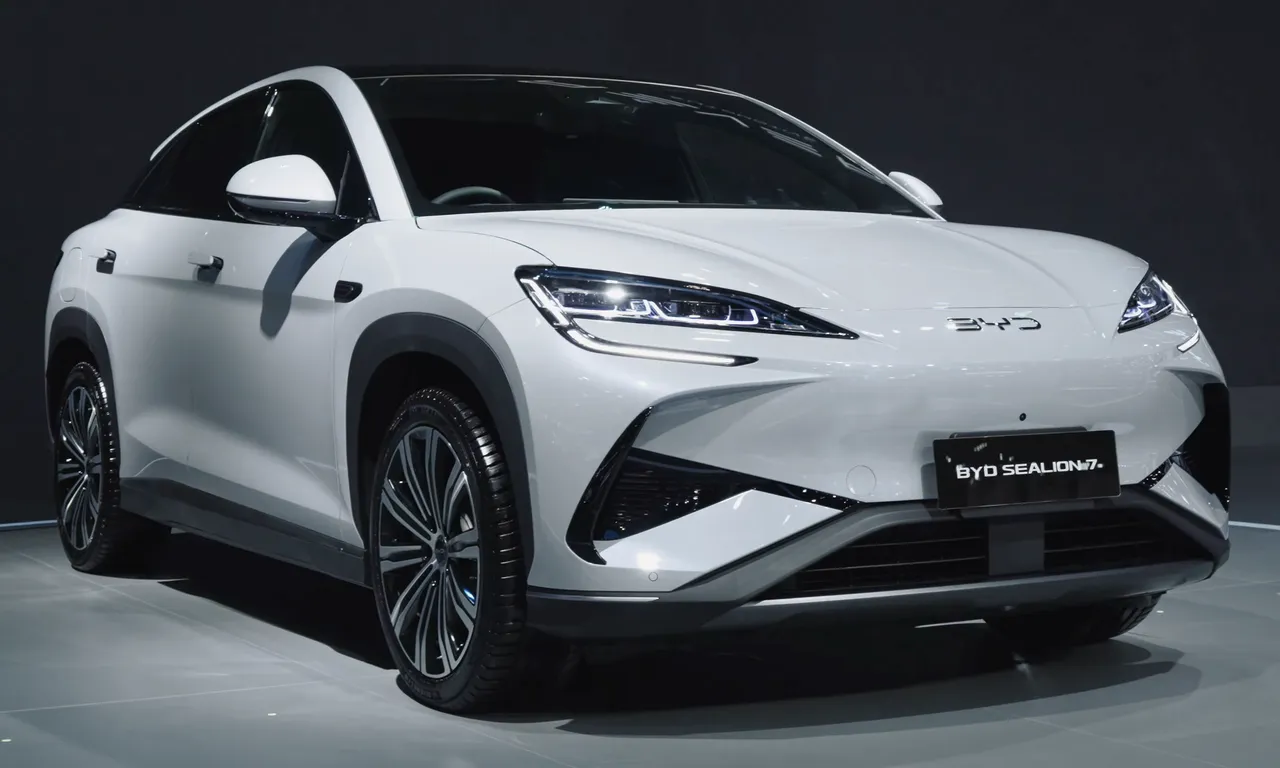
The short answer: The District Court of The Hague rejected JLR’s claim for $553,850 in penalties after finding that BYD had met its cooperation obligations during an evidence seizure. The court also lifted the seizure, but it did not decide whether the BYD Ti 7 infringes JLR’s intellectual property.
Jaguar Land Rover’s attempt to collect $553,850 in penalties from BYD over an evidence seizure in the Netherlands has failed, according to CarNewsChina. The District Court of The Hague found that BYD had met its cooperation obligations and separately lifted the seizure. The decision resolves a dispute over access to company records, while leaving the underlying vehicle design infringement claims before the courts.
For the industry, the distinction matters: this ruling addresses how JLR sought and preserved evidence in its dispute involving the BYD Ti 7. It does not determine whether the SUV infringes JLR’s intellectual property. According to CarNewsChina, separate proceedings involving EU-registered designs, copyright and slavish imitation remain active in two Dutch courts.
A corrective judgment on November 12 confirmed that JLR must pay BYD $28,110, or €25,376.57, in legal costs. JLR did not oppose that correction, CarNewsChina reported. The rejected penalty demand was €500,000, which the outlet converted to $553,850.
Why the court rejected the penalty demand
The dispute centered on an August 24 evidence seizure at BYD’s office in Hoofddorp. Bailiffs sought employee laptops, access to local storage, Microsoft cloud records and Tencent WeCom messages. According to CarNewsChina’s account of the judgment, the court examined what BYD could do, what assistance it offered and whether the bailiffs clearly documented requests that remained unmet.
At 12:20 p.m., the bailiffs asked BYD employees to hand over their laptops. Four employees arrived with laptops at 3:10 p.m. The court noted that the original seizure order had set no deadline for handing over physical storage devices. That absence mattered to the assessment of whether the timing amounted to a failure to comply.
The bailiffs also sought access to a Synology network-attached storage device. According to CarNewsChina, the device was physically present at the office, meaning the bailiffs could have seized it directly. The court found that BYD was not obliged to grant access to a Synology account.
These findings formed part of a broader problem with the penalty claim: the bailiffs’ reports did not clearly establish what additional actions BYD had been asked to take or give reasonable deadlines for those actions. The court therefore found that the reports did not demonstrate a compliance failure that would trigger the penalties JLR sought, according to CarNewsChina.
Cloud access required help from China
Access to Microsoft 365 involved a different practical issue. BYD’s local employee could not independently grant access through Microsoft Purview and needed assistance from the company’s IT team in China. A China-based employee granted access at 5:15 p.m. on August 24, CarNewsChina reported.
Microsoft access was temporarily restricted on August 27 and 28, but BYD restored it promptly, according to the report. The court considered the company’s efforts to involve its China-based IT staff rather than treating the Dutch employees as able to administer every cloud service themselves.
Tencent WeCom presented another limitation. BYD handed over login codes and passwords that allowed the bailiffs to enter the accounts. Those credentials did not, however, enable them to export or preserve messages. According to CarNewsChina, the court found that BYD had fulfilled its obligation by making the available credentials accessible.
The judgment thus distinguished between access that BYD could enable and functions the platform did not make available through those credentials. The inability to export WeCom messages did not establish that BYD had withheld the access information it possessed. Together with the shortcomings in the bailiffs’ reports, these circumstances supported the rejection of JLR’s penalty demand.
Why the evidence seizure was lifted
The court separately concluded that the evidence seizure was unnecessary for JLR’s EU-registered design claims, CarNewsChina reported. JLR had argued that the records could help calculate potential damages. Its stated purpose was therefore to assess the financial consequences of alleged infringement, rather than establish whether the Ti 7 infringed its designs.
That argument faced a central obstacle: the parties agreed that BYD had neither offered nor sold the Ti 7 in the European Union. According to CarNewsChina, the court found that the possibility of future sales had not yet caused financial damage.
The report identifies Article 194 of the Dutch Code of Civil Procedure as the relevant rule. An evidence request under that provision must relate to an existing legal relationship. A possible future infringement claim was insufficient to justify the request in this instance.
The seized records were held by a judicial custodian; their seizure did not automatically give JLR access to inspect them. When the court lifted the seizure, it also ended that custody under Article 860(2). JLR was ordered to arrange for destruction of the seized data, according to CarNewsChina.
The two outcomes address different questions. The penalty decision concerned whether BYD had failed to cooperate during the seizure. The decision lifting the seizure concerned whether retaining that evidence was justified for the purpose JLR advanced. Neither ruling settled the underlying allegation about the vehicle’s design.
The Ti 7 and the unresolved design claims
According to CarNewsChina, the remaining proceedings cover EU-registered design claims in The Hague and claims of copyright infringement and slavish imitation in Rotterdam. Both BYD entities involved have a Dutch presence: BYD Nederland B.V. is based in Hoofddorp, where the seizure occurred, while BYD Europe B.V. is registered in Schiedam.
The vehicle at the center of the dispute is the BYD Ti 7. CarNewsChina describes the UK-bound export version as a three-row, seven-seat SUV measuring 5,146 millimeters long, 1,995 millimeters wide and 1,865 millimeters high, with a 2,920-millimeter wheelbase.
The outlet distinguishes that export version from the domestic five-seat Fang Cheng Bao Tai 7, which measures 4,999 millimeters long. It reports the same width, height and wheelbase for the domestic model. The difference in length and seating configuration is relevant when identifying which version is being discussed.
For context, CarNewsChina reports that the Land Rover Defender 110 measures 5,018 millimeters long including its spare wheel, 2,008 millimeters wide with its mirrors folded and 1,967 millimeters high, with a 3,022-millimeter wheelbase. These exterior measurements describe the vehicles’ size; they do not establish infringement or resolve the legal claims.
JLR’s financial backdrop and what remains ahead
The dispute comes alongside financial pressure at JLR. Citing the company’s second-quarter results, CarNewsChina reported an after-tax loss of $573 million, or £451 million, for the three months ended September 30, 2026. That compared with a loss of $710 million, or £559 million, a year earlier. The latest result included $673 million, or £530 million, in exceptional items.
JLR’s retail sales in China fell 40.6% year over year to 6,300 vehicles. According to CarNewsChina, the company attributed much of that decline to the end of local production at its Chery Jaguar Land Rover joint venture in June 2026.
Those business results provide context for JLR’s position, but the legal outcome remains specific: the penalty claim failed, the evidence seizure was lifted and the underlying infringement cases continue. The courts in The Hague and Rotterdam still have the separate intellectual property claims before them, according to CarNewsChina.
Frequently asked questions
Why did JLR’s $553,850 penalty claim against BYD fail?
According to CarNewsChina, the court found that BYD had met its cooperation obligations. The bailiffs’ reports also failed to clearly document additional requests or reasonable compliance deadlines that could establish a breach.
Did the court decide that the BYD Ti 7 does not infringe JLR’s designs?
No. The ruling addressed the penalty claim and evidence seizure. Separate EU-registered design proceedings in The Hague and copyright infringement and slavish imitation proceedings in Rotterdam remain active, according to CarNewsChina.
Why was the evidence seizure lifted?
According to CarNewsChina, JLR sought the records to calculate potential damages, but the parties agreed that BYD had not offered or sold the Ti 7 in the EU. The court found that a possible future infringement claim was insufficient to justify the evidence request.
What happened to the seized records?
The records were held by a judicial custodian rather than automatically opened to JLR for inspection. According to CarNewsChina, the court ended that custody and ordered JLR to arrange for destruction of the seized data.
How much must JLR pay BYD in legal costs?
A November 12 corrective judgment confirmed legal costs of €25,376.57, reported by CarNewsChina as $28,110. JLR did not oppose the correction.
Related stories
BYD Adds Storage at Busy Flash-Charging Stations in China
BYD is adding storage cabinets at busy flash-charging sites, but the fix may only delay slower charging where demand stays above the grid’s supply.

Peter Warren Cuts 200 Jobs as Australian EV Market Shifts
Australian dealer group Peter Warren Automotive says it cut about 200 jobs and expects losses of up to A$11.5 million amid shifting demand and tighter margins.
BYD Enters Exclusive Talks to Buy Ineos’s French Factory
BYD is negotiating to acquire Ineos Automotive’s Hambach plant in France, while Ineos plans to move Grenadier and Quartermaster production to the US by 2028.