BYD Adds Storage at Busy Flash-Charging Stations in China
BYD is adding storage cabinets at busy flash-charging sites, but the fix may only delay slower charging where demand stays above the grid’s supply.
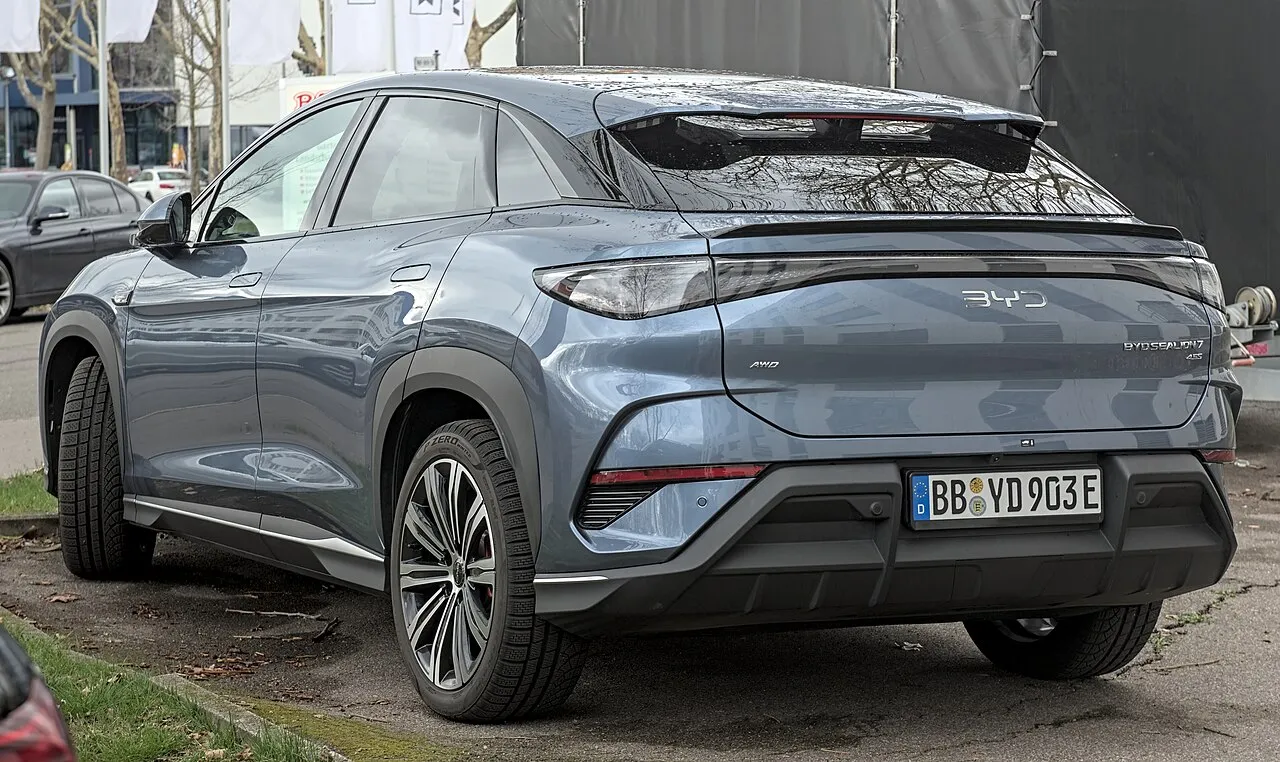
The short answer: BYD is adding energy-storage cabinets at some busy flash-charging stations to help maintain high charging speeds during peak demand. The added storage can extend fast service, but it cannot prevent a slowdown when demand stays above the power the grid connection can provide.
BYD is adding energy-storage cabinets at some of its busiest flash-charging stations in China after drivers reported that peak-time demand can slow the company’s headline-grabbing charging service. The cabinets can help a site deliver high power for longer when several cars arrive together, but they cannot keep up that pace indefinitely if the grid connection supplies less energy than drivers are using.
That distinction matters for owners choosing a car around short charging stops, and for the wider industry as it builds high-power charging networks. BYD says its second-generation Blade Battery and Flash Charging system can charge a car from 10% to 70% in five minutes and from 10% to 97% in nine minutes. According to CarNewsChina, drivers have reported that some busy stations run short of stored energy at peak times, causing charging to fall back to a slower rate.
How BYD’s flash-charging stations work
BYD launched its second-generation Blade Battery and Flash Charging system on March 5. The company says its system can charge from 10% to 70% in five minutes and from 10% to 97% in nine minutes. BYD also says that at temperatures of minus 20°C and minus 30°C, a charge from 20% to 97% takes 12 minutes. Those are company claims reported by CarNewsChina.
Each charging gun can deliver up to 1,500 kW at 1,000 volts, according to CarNewsChina. Few grid connections can provide that much power on demand. BYD CEO Wang Chuanfu has acknowledged that charging at those speeds would strain the grid and said on-site energy storage is the answer, the outlet reported.
At many sites, the flash chargers operate as a “station within a station” at an existing public charging location. The grid connection gradually recharges battery cabinets on site. When a car plugs in, those cabinets release stored energy in a short, high-power burst. In this way, the storage buffers the difference between the power the grid can provide steadily and the much higher power a car may draw briefly.
The buffer has a limit. CarNewsChina reports that once the cabinets are depleted, partner-built BYD stations must maintain at least 300 kW of output. That is still fast charging, but it is below the power needed to sustain BYD’s nine-minute claim. The site then relies on the grid connection rather than stored energy to serve cars.
Why peak demand can outpace the buffer
The storage system is designed to recharge while cars are charging, so a station should not run out of stored energy as long as the grid supplies at least as much power over time as drivers draw from the system. If average demand stays above grid supply, the batteries lose charge. More storage can postpone the slowdown, but it cannot remove that underlying limit.
CarNewsChina cites a teardown estimating that when two cars charge at full power at the same time, the grid supplies about 560 kW while the storage provides the other 1,540 kW. At that combined rate, the outlet says, the buffer would last about 14 minutes. The example illustrates why a station can deliver an impressive peak rate for a short period while still depending on a more modest grid connection to replenish its energy.
The host site can also affect how quickly the cabinets refill. In one example reported by CarNewsChina, a BYD 1,500 kW charger was installed at a location where a 120 kW TELD charger was recharging the storage. The BYD cabinets shared a transformer with the host site’s own fast chargers. If those chargers are busy at the same time, they leave less power available to refill the BYD storage.
That timing matters because vehicle charging demand often rises and falls. Evening commutes and weekend afternoons can create short peaks followed by quieter periods. If demand eases later, the grid can recharge the cabinets before the next rush. In that pattern, a larger buffer can help a station serve more cars at high speed before falling back.
More cabinets help some sites more than others
CarNewsChina estimates that doubling the example site’s buffer to about 680 kWh would extend full-speed service from 80 minutes to roughly two and a half hours. That added capacity would give the station more room to handle a prolonged rush. It would not change how much electricity the grid can deliver once the cabinets need to be refilled.
The outlet says a 300 kW grid connection running for 24 hours can supply about 7,200 kWh, enough for roughly 100 full sessions a day. For sites with quieter periods, the daily energy supply may be sufficient even if a short rush briefly exceeds it. In that case, storage can shift energy from the quiet hours into the busy ones.
The calculation changes at locations with near-continuous demand. Highway service areas during holidays and hubs used by taxis or ride-hailing fleets may see cars arriving for hours. If average demand remains above the grid connection’s supply, the storage eventually drains. Adding cabinets would delay that point, but once they are empty, the connection sets the available power.
CarNewsChina reports that according to Yicai, a flash-charging vehicle owner shared a charging experience during this year’s National Day holiday. The report said charging was slower at highway service areas, where ultra-fast charging was needed, while urban stations could achieve flash-charging speeds. The account highlights the gap between a station’s advertised peak capability and the speeds it can sustain under heavy demand.
The grid connection remains the constraint
Storage only helps if the grid has enough spare capacity to recharge it. CarNewsChina says a site with eight quiet hours and a 300 kW connection could put back at most about 2,400 kWh during that period. Storage capacity beyond what can be refilled in the available quiet time would not be fully ready for the next peak, the outlet reports.
For the busiest sites, the longer-term options described by CarNewsChina are a larger transformer or more stations to spread demand. BYD’s sites use transformers of up to 630 kVA, according to the outlet. Both approaches take more time and cost more than adding cabinets, while extra storage can be a quicker fix at stations that have busy periods followed by enough quiet time to recharge.
The same tension between peak capability and sustained service appears elsewhere in fast refueling. CarNewsChina notes that Nio battery-swapping stations can still develop queues at motorway service areas during busy Chinese holiday periods, even though a swap is quicker than charging. A fast service at one vehicle does not by itself guarantee that a site can serve an unlimited stream of vehicles at the same pace.
BYD’s new cabinets may improve service at busy sites where demand comes in short bursts. At locations that stay busy for hours, the grid connection will still determine how quickly the network can replenish its energy. CarNewsChina says owners will be watching how the stations perform during next year’s Spring Festival travel rush, when sustained holiday traffic could test both the storage and the underlying power supply.
Frequently asked questions
How fast does BYD say its Flash Charging system can charge?
BYD says it can charge from 10% to 70% in five minutes and from 10% to 97% in nine minutes. At minus 20°C and minus 30°C, BYD says a 20% to 97% charge takes 12 minutes.
Why can a BYD flash charger slow down at busy times?
The station uses on-site batteries to supplement the grid. If cars draw energy faster than the grid can refill the storage, the cabinets can run low and the station falls back to a slower output.
Would adding more storage prevent every slowdown?
No. More storage can extend high-power service during a peak, but it cannot overcome a grid connection that supplies less energy than the station uses for hours.
What longer-term fixes does CarNewsChina describe?
The outlet describes installing a larger transformer or building more stations to spread demand. It says both options take longer and cost more than adding storage cabinets.
Related stories

Milence Urges Europe to Use the Grid Smarter for Truck Charging
Milence says shared grid connections, battery storage and local renewables could speed up electric truck charging while Europe expands its power network.

Why EV Fast Chargers Reduce Power During a Session
Public fast chargers can lower output when equipment heats up, the site reaches an electrical limit, or protection controls respond. Here is how those limits work.

How EV Charging Sites Divide Power Among Cars
EV chargers share a site’s electrical limit through a controller that adjusts each unit’s output as demand changes. Here’s why charging speeds can shift.