BYD Tops 10,000 Japan Sales as Racco Takes on Nissan
BYD has passed 10,000 passenger-car sales in Japan as its Racco electric kei car gains buyers and challenges the Nissan Sakura on price and battery capacity.
The short answer: BYD has surpassed 10,000 cumulative passenger-car sales in Japan, according to InsideEVs, with its Racco electric kei car helping attract customers across the brand. The Racco sold 607 units in October against the Nissan Sakura’s 878, while offering lower starting prices before subsidies.
BYD has passed 10,000 cumulative passenger-car sales in Japan, according to InsideEVs, as its small Racco electric kei car helps the Chinese automaker attract buyers in a market dominated by domestic brands. The milestone covers BYD’s entire Japanese passenger-car lineup, but the Racco is giving the company a direct challenger to the Nissan Sakura, Japan’s best-selling electric car.
For Japanese EV buyers, the competition brings a choice involving price, battery capacity, range and everyday practicality. The Racco starts below the Sakura before government incentives and offers larger batteries in both versions described by InsideEVs. Nissan retains an important advantage, however: a larger subsidy that can reverse the purchase-price comparison.
A small car built around Japanese preferences
The Racco follows the familiar kei-car formula with a tall body, a tiny footprint and sliding rear doors. According to InsideEVs, it is the first kei car from a non-Japanese automaker. Its significance for BYD goes beyond adding another electric model: it gives the brand a vehicle designed specifically around the preferences of Japanese buyers.
That approach puts BYD into direct competition with established domestic manufacturers on a distinctly local kind of vehicle. The Racco’s boxy shape emphasizes practicality, while its rear-door arrangement provides a visible distinction from the Sakura, which uses conventional rear doors. Price and battery size therefore are only part of the comparison between the two EVs.
The early response suggests that the concept has attracted attention. InsideEVs reports that the Racco launched on July 28 and received 1,002 orders within two weeks, the fastest initial order intake of any BYD model in Japan. By the end of August, orders had reached approximately 1,500.
Those figures measure orders, so they should be read separately from the monthly sales totals now emerging. They nevertheless show that the Racco brought an immediate increase in customer interest. Its opening performance also gives BYD a stronger foothold in a vehicle category closely associated with Japan’s own manufacturers.
October sales put the Racco within reach of Sakura
The Racco recorded 607 sales in October, compared with 878 for the Nissan Sakura, according to InsideEVs. That put the BYD at almost 70% of its rival’s monthly volume. Racco sales also rose 37% from September, showing growth after the initial launch period.
The comparison matters because the Sakura is an established leader. InsideEVs reports that it was Japan’s best-selling electric car for a fourth consecutive year in 2025. BYD is therefore measuring its new entrant against a model with a sustained record at the top of the country’s EV market.
October’s results still left Nissan ahead. One month in which the Racco approached seven sales for every 10 Sakuras does not establish that BYD will take the annual lead. It does show that the newcomer has already reached a meaningful proportion of the incumbent’s volume, making their future monthly results a useful measure of the competition.
The distinction between momentum and leadership is important here. The Racco’s month-over-month increase and strong early orders indicate growing interest, while the Sakura’s larger October total demonstrates its continuing sales advantage. Both points can be true without treating an encouraging launch as a settled change in the market hierarchy.
Lower sticker prices and larger batteries
According to InsideEVs, the entry-level Racco starts at ¥2.145 million in Japan with a 22.4-kWh battery. Its Japanese WLTC-rated range is 130 miles, or 210 kilometers. The Sakura starts at ¥2.449 million with a 20-kWh battery and a reported Japanese WLTC range of 112 miles, or 180 kilometers.
The longer-range Racco costs ¥2.398 million and has a 35.8-kWh battery, with a Japanese WLTC-rated range of 199 miles, or 320 kilometers, according to InsideEVs. Even that version carries a lower sticker price than the entry-level Sakura. These are Japanese-market prices and range ratings; the range figures are not EPA estimates.
| Japan-market model | Price before subsidies | Battery capacity | Japanese WLTC range |
|---|---|---|---|
| BYD Racco, entry version | ¥2.145 million | 22.4 kWh | 130 miles / 210 km |
| BYD Racco, longer-range version | ¥2.398 million | 35.8 kWh | 199 miles / 320 km |
| Nissan Sakura, entry version | ¥2.449 million | 20 kWh | 112 miles / 180 km |
The sticker-price comparison gives BYD a clear point of appeal: buyers can choose its larger battery option while remaining below the Nissan’s starting price. That makes the Racco competitive both as an entry purchase and as an option for shoppers who place more weight on rated driving range.
Government support complicates that calculation. InsideEVs reports that the Sakura qualifies for a larger subsidy, which can make it cheaper to buy despite its higher sticker price. The Racco’s advantage before incentives therefore does not establish which car will cost an individual buyer less after subsidies.
Buyers favor the top trim
Early Racco customers have shown a strong preference for the upper end of the range. Roughly 80% chose the range-topping 300 Premium, according to InsideEVs. The order mix shows that the lowest starting price has not been the sole draw for buyers entering BYD’s Japanese showrooms.
That is a useful distinction when assessing the launch. A lower entry price can attract attention, but most early customers chose the premium trim. The result points to demand for the Racco beyond its role as the least expensive option in the comparison, although the trim mix alone does not establish which features drove each purchase.
The effect extends across BYD’s lineup
BYD credited the Racco with helping its Japanese lineup achieve record monthly orders in August, according to InsideEVs. Customers who arrived to see the kei car also discovered the company’s other vehicles. The Racco is consequently serving as both a product in its own right and a reason for shoppers to encounter the wider brand.
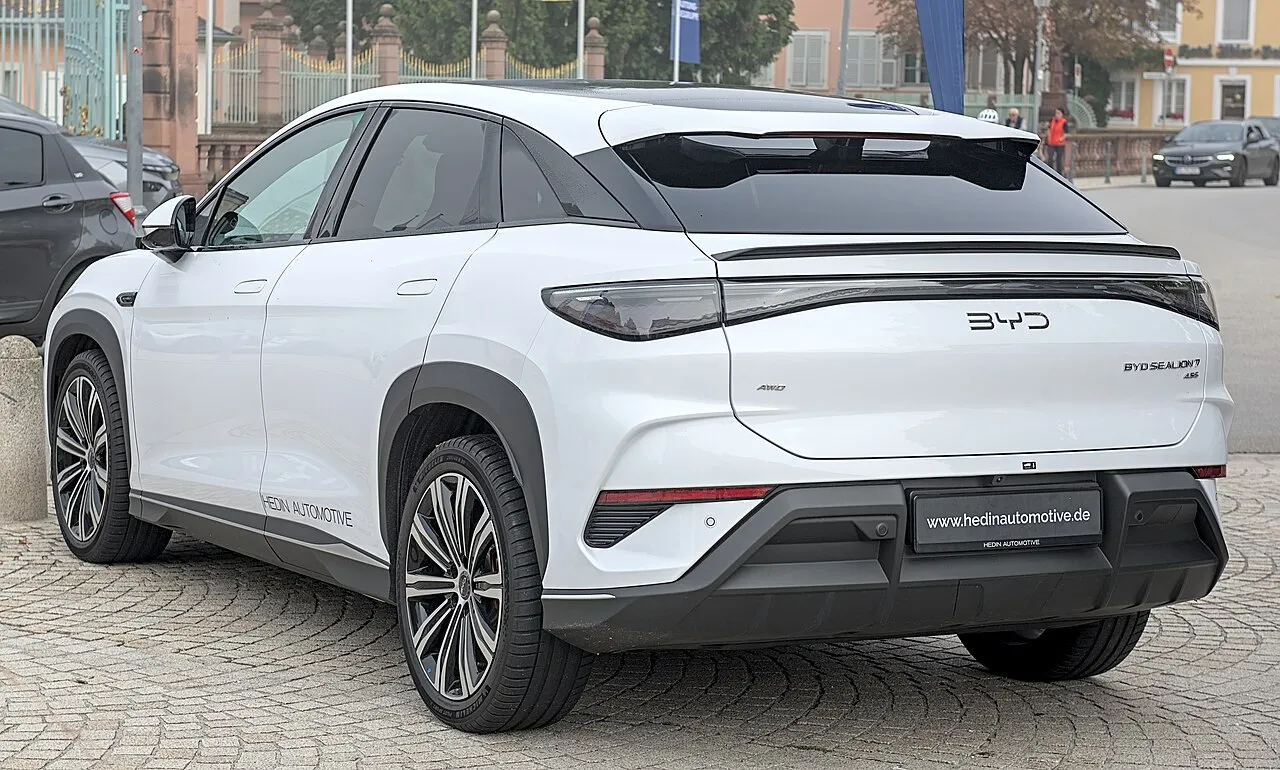
BYD offers six passenger-car models in Japan. Five are fully electric: the Racco, Dolphin hatchback, Seal sedan, Atto 3 crossover and Sealion 7 SUV. The sixth is the Sealion 6 SUV, a plug-in hybrid combining a gasoline engine with electric propulsion. According to InsideEVs, the lineup contains no gasoline-only cars or conventional hybrids without a plug.
That breadth helps explain why the 10,000-sales milestone should not be read as a Racco total. It reflects the combined business of the Japanese passenger-car range. The kei car’s contribution is its own sales plus the additional attention BYD says it has brought to the other models.
What the next sales results will show
BYD’s Japanese deliveries began in January 2023. InsideEVs reports that reaching the first 5,000 sales took roughly two and a half years, while the next 5,000 took about 15 months. Those intervals indicate a faster pace as the company built its presence.
The next question is whether the Racco can sustain its early momentum and narrow the Sakura’s lead over a longer period. Its lower prices before subsidies, larger batteries and sliding rear doors give buyers concrete reasons to consider it. Nissan’s subsidy advantage and higher October sales keep the contest open as BYD seeks to turn launch interest into a lasting position in Japan.
Frequently asked questions
Has BYD sold 10,000 Racco EVs in Japan?
No. According to InsideEVs, BYD’s 10,000 cumulative sales cover its entire Japanese passenger-car lineup, rather than the Racco alone.
How do Racco sales compare with the Nissan Sakura?
InsideEVs reports that the Racco sold 607 units in October against 878 for the Sakura. Racco sales were almost 70% of the Nissan’s volume and increased 37% from September.
How much does the BYD Racco cost in Japan?
According to InsideEVs, the entry version starts at ¥2.145 million before subsidies, while the longer-range version costs ¥2.398 million. The Nissan Sakura starts at ¥2.449 million but benefits from a larger government subsidy.
What is the BYD Racco’s rated range?
InsideEVs reports Japanese WLTC-rated ranges of 130 miles (210 kilometers) for the 22.4-kWh version and 199 miles (320 kilometers) for the 35.8-kWh version. These are not EPA range estimates.
Does BYD sell only fully electric cars in Japan?
No. According to InsideEVs, BYD offers five fully electric passenger models and the Sealion 6 plug-in hybrid in Japan. Every model has a charging port.
Related stories

Xiaomi Car and AI Division Loss Widens as Revenue Falls
Xiaomi’s car and AI division lost 3.4 billion yuan in Q3 as car revenue fell 19.9%. New range-extended SUVs led sales in their first full month.
U.S. Used EV Sales Rise in October as Tesla Loses Ground
Used EV sales rose in October as Tesla volumes fell and Chevrolet gained ground, giving U.S. buyers more choices while average asking prices edged lower.
Tesla Holds U.S. EV Lead as Its Future Hinges on Competition
Tesla still accounts for more than half of U.S. EV sales, according to CleanTechnica, but a wider field of rivals and its autonomy plans could reshape that lead.