Volvo Marks 50 Years From the Elbil to the EX60
Volvo is marking 50 years since its experimental Elbil with a look at the EX60, tracing changes in range, charging, vehicle design and safety.
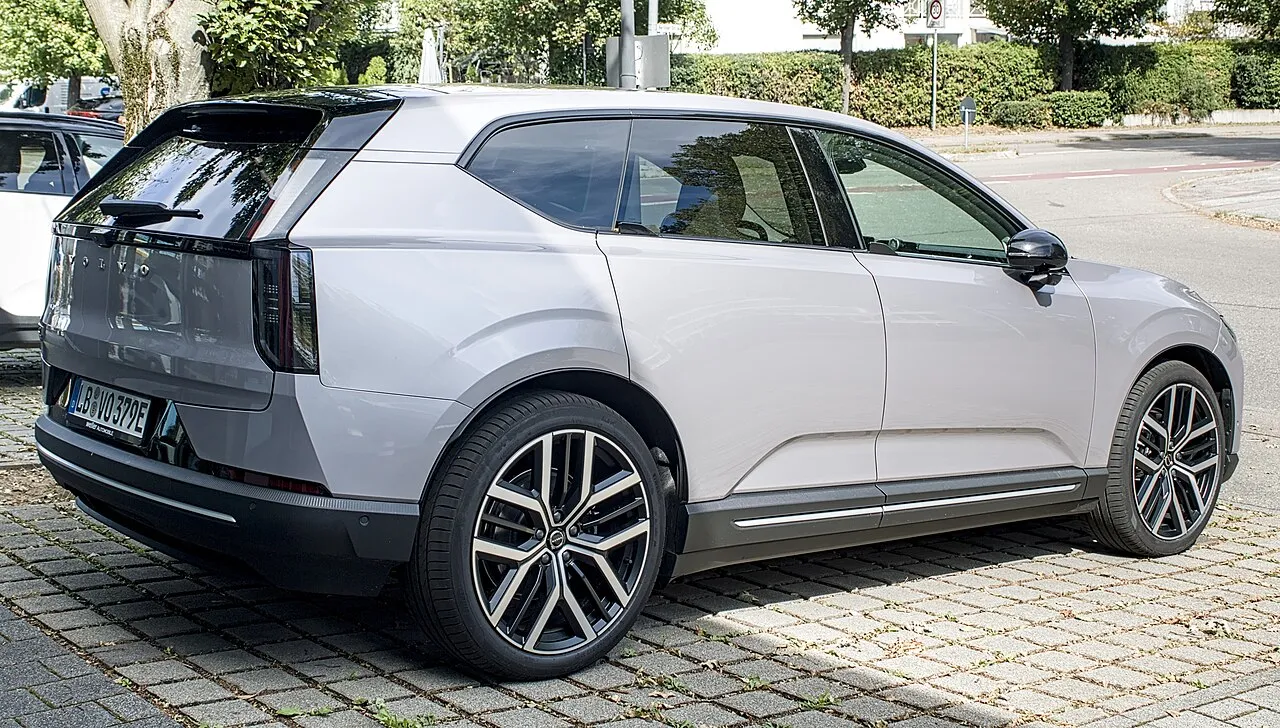
The short answer: Volvo is marking the 50th anniversary of its 1976 Elbil electric prototype by comparing it with the EX60, its latest electric SUV. The two vehicles illustrate advances in range, charging, vehicle architecture and safety over five decades.
Volvo is marking 50 years of electric vehicle development by comparing its experimental 1976 Elbil with the EX60, its latest electric SUV. According to Electric Cars Report, the anniversary highlights how far battery range, charging, vehicle design and safety technology have advanced, while Volvo presents practical mobility and occupant protection as continuing priorities.
The comparison spans a four-seat prototype with a reported range of about 31 miles and a recharge time of around 10 hours, and an EX60 P12 AWD rated for up to 503 miles under the WLTP test standard. Electric Cars Report also says the EX60 can add up to 211 miles of range in 10 minutes when connected to a 400-kilowatt DC fast charger, under suitable charging conditions. These figures describe different vehicles and eras; the EX60 range is a WLTP rating, not a US EPA result.
Two prototypes explored electric mobility
Volvo unveiled the orange Elbil in November 1976. Electric Cars Report says only two examples were produced, with some project funding from the Swedish state. The four-seat car was designed for urban transportation, an early exploration of how an electric vehicle could serve everyday short trips.
The second prototype took a different form. Finished in butter yellow, it was a two-seat electric delivery vehicle with a sliding door, developed for employees of Televerket, Sweden’s former state-owned telecommunications authority. Its intended work was short-distance delivery around Gothenburg without local emissions, according to Electric Cars Report.
The orange Elbil used 12 six-volt lead-acid batteries and had an approximate range of 31 miles. A full recharge took around 10 hours. Its 9.5-kilowatt motor was integrated with the rear axle and paired with a specially developed continuously variable transmission. Electric Cars Report reports a top speed of 43 mph, figures that fit the prototype’s stated purpose of short urban journeys.
Weight reduction was part of the early engineering approach. The Elbil’s bonnet and tailgate used glass-fiber-reinforced plastic, while its doors and roof panels were aluminum. Electric Cars Report puts the vehicle’s weight at about 1,200 kilograms. These materials and components belong to a much simpler vehicle than a current electric SUV, but the prototype already reflected attention to efficient packaging and practical use.
The EX60 brings a different scale of range and power
Electric Cars Report describes the EX60 as the first Volvo built on the company’s SPA3 modular electric vehicle architecture. The outlet says the platform incorporates cell-to-body battery integration and mega-casting manufacturing techniques. Volvo has also developed the EX60’s next-generation electric motors in-house, with three powertrain configurations.
The outlet reports that the P6 produces 374 horsepower, the P10 produces 510 horsepower, and the P12 produces 680 horsepower. It describes the P12 AWD as capable of up to 503 miles on a charge under WLTP. That figure should be read as a European test-standard rating. For US buyers, published 2027 EPA figures in the background for this story give the P6 Electric a rating of 307 miles and the P10 AWD Electric 330 miles. The P6 is rear-wheel drive in the US version, while the P10 is all-wheel drive. A P10 with 22-inch wheels is rated at 312 miles, and a P6 with 22-inch wheels at 295 miles, also under EPA testing.
The US EPA range ratings are distinct from the WLTP figures reported for European EX60 versions. For example, the European P12 AWD is rated at 810 kilometers under WLTP, while the US P6 and P10 figures are EPA ratings for their respective versions. Test standards and vehicle configurations differ, so those numbers are not directly comparable.
Charging also marks a change from the Elbil’s roughly 10-hour recharge. Electric Cars Report says the EX60 can recover up to 211 miles in 10 minutes on a 400-kilowatt DC fast charger, if charging conditions are suitable. The European vehicle background gives the EX60 P12 AWD a peak DC charging rate of 370 kilowatts. In the US, EPA records put a Level 2 full charge at eight hours for the P6 and nine hours for the P10. Those Level 2 times describe home or other AC charging, while the outlet’s 10-minute claim refers to DC fast charging; the figures cover different charging setups.
Safety connects the prototype and the SUV
Electric Cars Report points to safety as a thread between the two vehicles. The outlet says all seats in the Elbil had three-point safety belts, which Volvo had introduced as standard equipment in 1959. Its bright orange finish also improved visibility on the road, according to the report.
The EX60 brings a larger set of safety systems. Electric Cars Report reports that it uses a multi-adaptive safety belt designed to personalize protection for front-seat occupants. The outlet describes the system as a world first and says it was recognized as one of TIME’s Best Inventions of 2025. The belt works with advanced restraint systems and a passenger safety cage reinforced with boron steel.
The EX60 also has Volvo’s Connected Safety technology. According to Electric Cars Report, it uses shared vehicle data to provide real-time warnings about hazards including roadworks, accidents and vulnerable road users. The outlet says additional capabilities can be delivered through over-the-air software updates. That extends the safety story beyond the physical structure and restraints, making connected systems and software part of the vehicle’s protection features.
Volvo frames the anniversary as a continuing effort
Nicole Melillo Shaw, managing director of Volvo Car UK, described the Elbil as evidence that the company explored electric technology before EVs became mainstream, according to Electric Cars Report. She presented the EX60 as a measure of progress in range, charging performance and safety innovation.
The anniversary comparison is also a way for Volvo to connect an experimental project to its current electric vehicle strategy. The Elbil’s lead-acid batteries, limited range and slow recharge reflect the constraints of the prototype described by the outlet. The EX60, by contrast, combines a modular electric platform, lithium-ion batteries, multiple motor configurations, fast charging and connected safety functions.
Electric Cars Report says the EX60 P12 AWD’s battery and charging capabilities represent the latest chapter in Volvo’s electrification effort. Published background figures also show how the EX60 is presented across markets: US EPA ratings are available for the P6 and P10, while the European P12 AWD has a WLTP rating. For buyers, the market and test standard matter when interpreting a range claim; the 503-mile WLTP figure is not the US rating for the EX60.
Volvo’s account of the Elbil and EX60 places the company’s electric work across five decades, from a small urban prototype and a delivery vehicle to a contemporary SUV with multiple powertrain choices. The source report offers a historical comparison rather than a direct test of the two vehicles. Its central point is the contrast in what the technology can do: the early prototype was intended for short local trips, while the EX60 is designed around longer range, faster charging and more extensive safety systems.
Frequently asked questions
What was Volvo’s Elbil?
The Elbil was an experimental electric prototype unveiled in November 1976. The orange version had four seats, lead-acid batteries and an approximate range of 31 miles.
How many Elbil prototypes were made?
Electric Cars Report says Volvo produced two examples: an orange four-seat urban prototype and a butter-yellow two-seat delivery vehicle with a sliding door.
What is the EX60’s US EPA range?
The 2027 EX60 P6 Electric is rated at 307 miles and the P10 AWD Electric at 330 miles under EPA testing. Versions with 22-inch wheels are rated at 295 and 312 miles, respectively.
How does Volvo describe the EX60’s safety technology?
Electric Cars Report says the EX60 includes a multi-adaptive safety belt, a passenger safety cage reinforced with boron steel, Connected Safety hazard warnings and features that can be added through over-the-air updates.
Related stories

What EV Owners Should Know About Collision Repairs
EV collision repairs can require high-voltage isolation, trained technicians and model-specific procedures. Know what to ask before choosing a repair shop.

Driving an EV on Ice: Smooth Inputs and Safer Stops
Learn how to accelerate, brake, steer and manage regenerative braking on icy roads, while keeping enough space to respond when traction is limited.

How EVs Recognize a Bad Sensor and Choose a Safe Response
EV control systems check sensor readings against expected ranges and other signals. When confidence falls, they may limit functions, switch inputs or warn the driver.