Volvo EX40 or EC40? How Roof Shape Affects Daily Use
Compare the Volvo EX40 and EC40 for rear-seat comfort, bulky luggage, rearward visibility and rated range, with the key differences explained for shoppers.
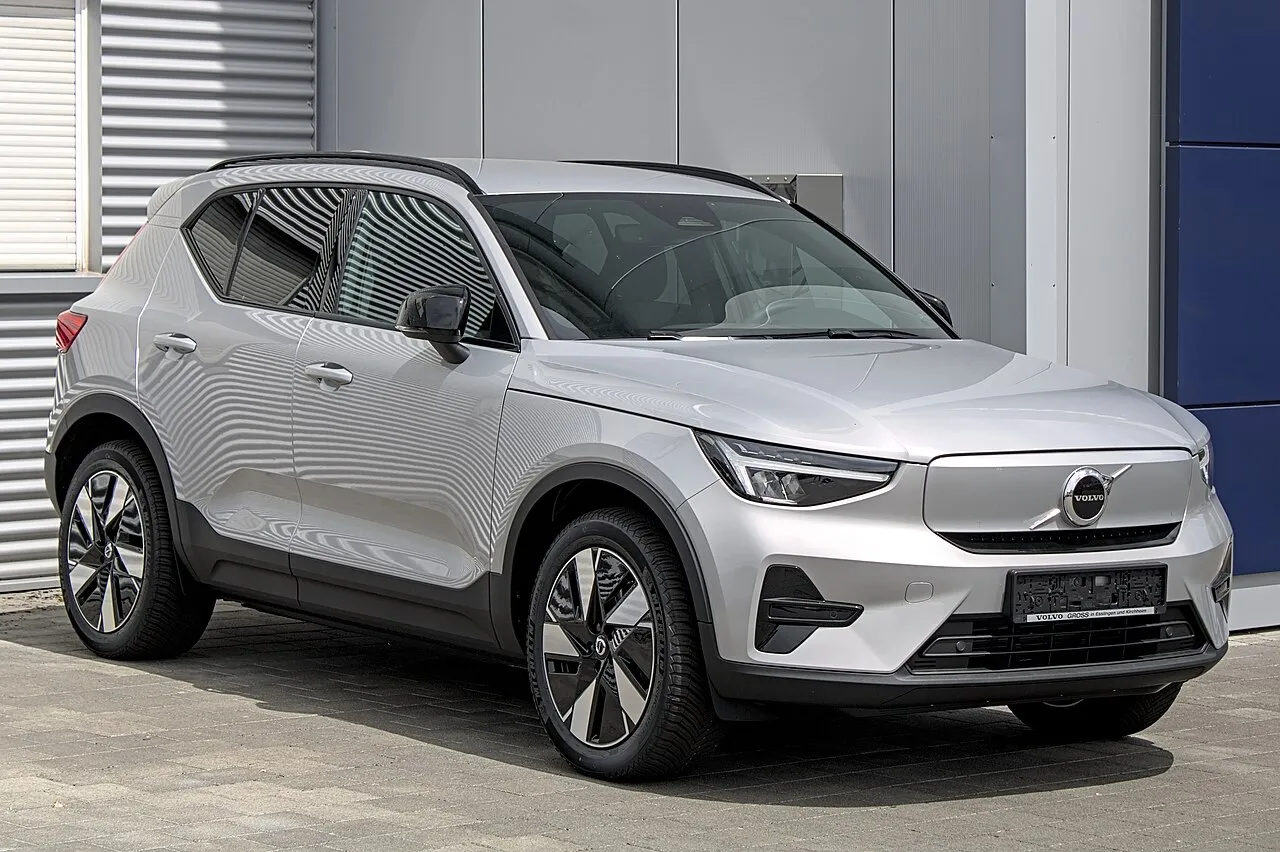
The short answer: The Volvo EX40’s more upright rear shape is the practical starting point for shoppers prioritizing rear headroom, bulky luggage and rearward visibility; the EC40’s sloping roof makes checking those areas especially important. The EC40 has slightly longer EPA-rated range in the comparable US versions, but range ratings alone cannot establish how much the roofline improves efficiency.
The Volvo EX40 is the practical starting point if rear-seat comfort, tall luggage and rearward visibility lead your shopping list. The EC40’s sloping roof puts more emphasis on shape, making passenger clearance and cargo fit particularly important to check. Its comparable US versions have slightly longer EPA-rated range, but that does not establish how much of the difference comes from the roof.
The useful comparison separates body shape from the rest of the vehicle. A descending roof can affect the space above passengers and luggage, while the rear window’s shape influences the view behind. Published range also reflects battery capacity, drivetrain and other factors. Choosing between these Volvos means weighing those effects without treating a range advantage as proof of an aerodynamic advantage.
Rear headroom depends on where the roof slopes
A roofline matters most where it intersects with the people using the back seat. Maximum exterior height cannot tell you how much clearance a particular passenger will have above their head. Seat height, cushion shape, headliner design and the position of the passenger beneath the roof all contribute to usable space.
The EC40’s descending roof makes the rear seating area a priority during a showroom visit. Have regular passengers sit naturally with their backs against the seatbacks. Someone who fits only by sliding forward or leaning inward may find the arrangement less comfortable over a longer journey. Check clearance beside the head as well as directly above it.
The EX40’s more upright shape is a sensible starting point for frequent rear passengers, but it still deserves the same fit check. Different torso lengths and seating postures can produce different results even among people of similar height. Neither a silhouette nor an exterior dimension settles the question of personal comfort.
Access deserves attention too. Getting into the rear seat requires moving through the door opening before settling beneath the roof. For families, that also means checking the movement needed to help a child into a car seat. Static headroom and ease of entry are related considerations, but they are separate parts of everyday use.
The luggage opening matters as much as cargo space
For bulky luggage, consider the entire path from the ground into the cargo area. An object must pass through the hatch opening, fit inside and leave enough room for the hatch to close. A load that sits comfortably on the floor can still interfere with the sloping glass or interior trim when the hatch comes down.
This is where a more upright rear shape can be useful. It generally leaves more flexibility for tall objects near the back of the load area. With a descending roof and hatch, the space available higher up can narrow sooner. That distinction matters more for a rigid crate or upright suitcase than for soft bags that can change shape.
Bring the item that is hardest to accommodate: a stroller, mobility aid, pet carrier or regularly used suitcase. Check it with the rear seats in the position you actually need. Folding the seats may solve an occasional transport problem, but it does not answer whether the same load fits when passengers occupy the back seat.
Close the hatch carefully and confirm clearance without forcing it against the load. Also consider whether the item can be secured appropriately. The practical advantage of a cargo area comes from accommodating your belongings safely and conveniently, rather than simply accepting them with the hatch open.
Rearward visibility needs a separate check
A sloping rear window changes the geometry of the view through the interior mirror. Usable visibility also depends on the window opening, rear pillars, head restraints and the driver’s seating position. Roof shape is therefore a reason to examine the view closely, rather than a substitute for assessing it.
Set the driver’s seat and mirrors before comparing the vehicles. Look through the interior mirror, then assess the rear corners through the side mirrors and with a shoulder check. If rear passengers are a regular part of your driving, evaluate the view with those seats occupied. Their presence can change what remains visible through the rear glass.
Any camera system fitted to the vehicle should be evaluated separately from the direct view. A camera image can help with particular maneuvers, but its field of view and display presentation differ from looking through a window. Consider both how easily you can judge nearby obstacles and how naturally you can monitor traffic behind.
What the published range figures actually show
The table keeps each comparison within the same market, model year and range test standard. US figures come from US EPA fueleconomy.gov; Canadian figures come from Natural Resources Canada. European figures come from OpenEV Data and EVDB. The WLTP label applies to European range ratings; battery capacities are separate figures attributed to the same named source.
| Market, model year and range standard | Version | Volvo EX40 | Volvo EC40 | Source |
|---|---|---|---|---|
| US, 2026, EPA | RWD | 296 miles | 298 miles | US EPA fueleconomy.gov |
| US, 2026, EPA | Twin AWD | 260 miles | 268 miles | US EPA fueleconomy.gov |
| Canada, 2026, NRCan | 185 kW version | 476 km | 480 km | Natural Resources Canada |
| Canada, 2026, NRCan | Twin, 300 kW version | 418 km | 431 km | Natural Resources Canada |
| Europe, 2025, WLTP | Base | 425 km; 69 kWh usable battery | 420 km; 69 kWh usable battery | OpenEV Data |
| Europe, 2025, WLTP | Base Twin Motor | 418 km; 69 kWh usable battery | 413 km; 69 kWh usable battery | OpenEV Data |
| Europe, 2025, WLTP | Single Motor Extended Range | 515 km; 75 kWh usable battery | 590 km; 79 kWh usable battery | EVDB |
For American shoppers, the EPA comparisons are the most directly relevant. The EC40 has the longer rating in both the rear-wheel-drive and Twin all-wheel-drive pairings. Natural Resources Canada also reports longer range for the corresponding EC40 versions. Those Canadian ratings remain separate comparisons under NRCan; they should not be treated as interchangeable with EPA results.
The European examples show why the roofline cannot explain every range result. OpenEV Data’s base and Base Twin Motor WLTP figures favor the EX40, while EVDB’s Single Motor Extended Range figures favor the EC40. In that EVDB comparison, the EC40 also has greater usable battery capacity. The range gap therefore cannot be assigned entirely to body shape.
Longer range does not prove greater efficiency
Range describes how far a vehicle travels under a defined test procedure. Energy consumption describes how much energy it uses over a distance. A larger usable battery can extend range without improving efficiency, while changes in drivetrain, tires, weight and aerodynamic drag can also affect the result.
A sloping roof can influence airflow, but the full body determines aerodynamic behavior. The published range comparisons do not isolate the roof’s contribution. They support a statement about rated driving distance for particular versions, rather than a quantified claim about energy saved by choosing the EC40.
Choose the EX40 first if accommodating rear passengers and awkward luggage drives the decision. Consider the EC40 if its shape appeals and your passengers and belongings fit comfortably. For either model, use the rating for the exact market and version you intend to buy, then give the everyday fit checks enough weight to influence the purchase.
Frequently asked questions
Which has longer EPA-rated range, the Volvo EX40 or EC40?
For US model-year 2026 versions, US EPA fueleconomy.gov rates the EC40 RWD at 298 miles and the EX40 RWD at 296 miles. The EC40 Twin AWD is rated at 268 miles, compared with 260 miles for the EX40 Twin AWD.
Does the EC40’s longer range prove its roof is more efficient?
No. Rated range reflects battery capacity and energy consumption under a particular test procedure. The range figures do not isolate the roofline’s aerodynamic contribution.
What should shoppers check when comparing rear-seat comfort?
Have regular passengers check head clearance in a natural seating position, including clearance beside their heads. Also assess how easily they can enter and exit through the rear doors.
Why does the hatch opening matter for luggage?
A bulky object must pass through the opening and leave clearance for the hatch to close. Sloping rear glass can restrict space above a load even when it fits on the cargo floor.
Do European range ratings always favor the EC40?
No. For European model-year 2025 versions, OpenEV Data’s WLTP ratings favor the EX40 in the Base and Base Twin Motor comparisons. EVDB’s Single Motor Extended Range ratings favor the EC40, which also has greater usable battery capacity in that comparison.
Related stories

How to Choose an EV When It’s Your Household’s Only Car
Compare home charging, everyday range flexibility, and service access to find an EV that can handle your household’s needs without a backup car.

How to Check Whether an EV Can Carry a Roof Tent
Compare an EV’s roof-load limit, approved mounting points and tent hardware before buying. Then account for added wind resistance, noise and energy use.

Gross vs. Usable EV Battery Capacity, Explained
An EV’s gross battery capacity describes its full energy reserve; usable capacity is the portion the driver can draw on. Here’s how to compare the terms.