Tesla’s Next Product Test Comes After the Cybertruck
CleanTechnica says Tesla is nearing the end of Cybertruck production. Its assessment puts the focus on whether the Cybercab can become a successful new product.
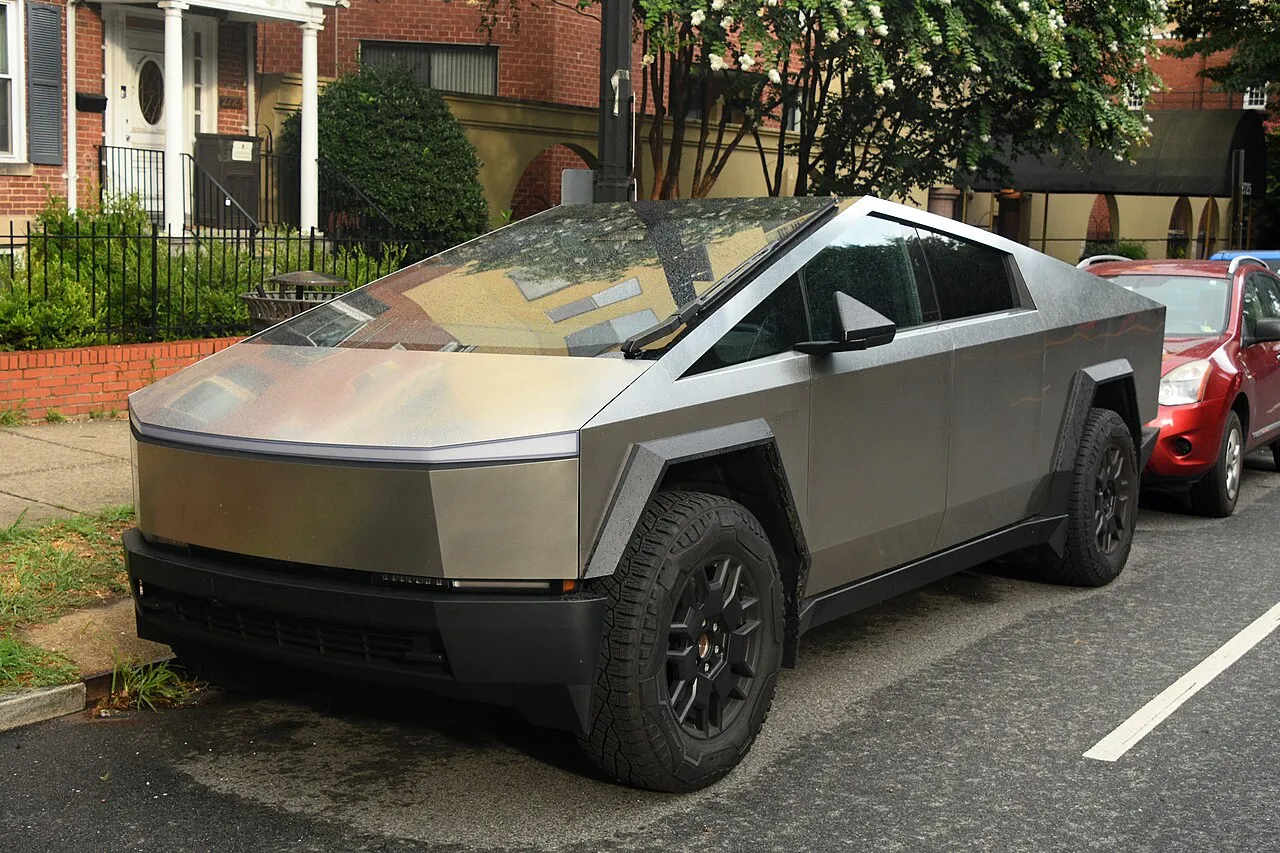
The short answer: According to CleanTechnica, Tesla is about to end Cybertruck production, while the Cybercab is now in production. The outlet argues that the Cybercab’s commercial success remains unproven.
Tesla is about to end Cybertruck production, according to CleanTechnica, turning attention to a question that matters beyond one electric pickup: what new product can the company turn into a lasting business? The outlet says the Cybercab is now in production, but its success remains to be seen. For EV buyers, the distinction is practical. A vehicle reveal or the start of production says little by itself about how widely a model will be delivered or whether it will meet the expectations set before launch.
CleanTechnica frames the Cybertruck as a break from Tesla’s earlier run of successful cars. It argues that the company has had no significant, successful new product launch since JB Straubel stepped down as chief technology officer in July 2019. That is the outlet’s assessment, rather than a measure established by a sales threshold. Tesla has continued to update vehicles and energy storage products during that period, as CleanTechnica also acknowledges. The sharper question is whether a newly introduced product can follow the Model 3 and Model Y in becoming central to the business.
What the Cybertruck tells us
The Cybertruck was unveiled in November 2019, and deliveries began more than four years later, according to CleanTechnica. The outlet says Tesla had aimed for annual sales of 250,000 trucks, with a goal of eventually reaching 500,000. It describes actual production as a small fraction of the target and says the truck arrived at roughly twice its originally expected price and with roughly half its expected range. Those price and range comparisons are CleanTechnica’s characterization; the outlet does not establish a current trim, price or range rating for a buyer to use as a shopping comparison.
Those differences help explain why the truck is central to the outlet’s argument. A high production ambition indicates what Tesla hoped the pickup could become, while a long interval between unveiling and deliveries delayed the chance to find out whether buyers would accept the finished vehicle. CleanTechnica considers the outcome a failure and reports that production is nearing its end. Its account does not give a firm end date, a final production total or a verified financial result for the program.
The outlet also cautions, in effect, against treating early interest as firm demand. It says a Cybertruck reservation required a refundable $100 deposit. It further reports that Elon Musk told prospective customers a reservation would lock in a $6,000 lifetime price for Full Self Driving. Both details matter when interpreting reservation counts: making a refundable deposit under those terms required a different commitment from buying the finished truck at its eventual price. CleanTechnica does not establish how many reservation holders ultimately purchased one.
The timing offers another point of comparison within Tesla’s own history. According to CleanTechnica, Model Y deliveries began in January 2020, less than a year after its March 2019 unveiling. Cybertruck deliveries, by contrast, began more than four years after its November 2019 reveal. The two vehicles addressed different markets, so the intervals alone cannot explain their sales outcomes. They do show why an unveiling is only an early step toward establishing a new vehicle in the market.
The vehicles behind Tesla’s current position
CleanTechnica traces Tesla’s earlier growth through the Model S, Model X, Model 3 and Model Y. It describes the Model S as a well received sedan, the Model X as a larger vehicle with a third row and distinctive doors, and the Model 3 as a major commercial launch. The Model Y brought a crossover body style to a vehicle the outlet says shared much with the Model 3. According to CleanTechnica, the Model Y later became the highest selling vehicle model of any kind in multiple years.
That history gives context to the question facing the Cybercab. Tesla already has established vehicles serving different kinds of buyers. The Model 3 is a sedan, while the Model Y is an SUV. The US EPA’s 2027 ratings show how much choice exists within those established nameplates: the Model 3 Premium RWD is rated at 363 miles of EPA range, and the Model 3 Performance AWD is rated at 316 miles. For the 2027 Model Y, the EPA rates the Premium RWD at 355 miles and the AWD at 294 miles. These are US ratings for specific model year 2027 trims, rather than promised figures for a future Tesla product.
The EPA figures also put CleanTechnica’s criticism of the Cybertruck’s changed expectations in perspective without creating a false comparison. They show the kind of trim specific, published range information available for Tesla’s established cars. They do not establish what range Tesla originally promised for the Cybertruck or what range a Cybercab will offer. A prospective buyer assessing either newer vehicle would need figures for the particular version and market, alongside its actual price and availability.
The older Model S remains another example of a defined product line. For the US market, the EPA rates the 2026 Model S at 410 miles and the 2026 Model S Plaid at 368 miles; the Plaid with 21 inch wheels is rated at 309 miles. Those differences within one nameplate illustrate why a broad claim about a model’s range can conceal consequential variation. They also keep the current discussion grounded in vehicles with published US EPA ratings rather than assumptions about Tesla’s next launch.
Where Straubel fits into the timeline
Straubel left the CTO role in July 2019, according to CleanTechnica. The Model Y had been unveiled that March, while Tesla’s Megapack energy storage product launched in July. The Cybertruck reveal came in November, after his departure. CleanTechnica points to this sequence in arguing that Tesla’s record of major new launches changed around the same time. It also notes that Straubel remains on Tesla’s board.
The chronology does not show who made any particular Cybertruck decision or establish that Straubel’s departure caused the outcome. CleanTechnica itself raises questions about his influence over product development and his relationship with Musk without resolving them. According to the outlet, Tesla said Straubel left the CTO position so he could spend more time on Redwood Materials. The available account does not establish whether a different leadership arrangement would have produced a different pickup or a different product schedule.
There is a further timing wrinkle in treating every subsequent launch as work that began after Straubel left. CleanTechnica notes that the Semi was unveiled in November 2017 and says Musk attributed its long delay to battery supply. The Model Y was also unveiled before Straubel stepped down, even though its deliveries began afterward. These dates make the outlet’s broader point about the pace and results of Tesla’s product development clearer, while limiting what can be concluded about any one executive’s role.
What comes next for the Cybercab
CleanTechnica says the Cybercab has been developed, unveiled and entered production. It calls the vehicle the next test of whether Tesla can deliver a significant, successful new product. Production is an important milestone, but the outlet does not establish a delivery total, buyer uptake or financial result for the Cybercab. Those outcomes would be needed to judge whether it becomes a durable business alongside Tesla’s existing cars.
The outlet also says Tesla has not unveiled the smaller, cheaper consumer car it discusses as a possible addition to the lineup. It describes a more basic Model 3 instead. That distinction matters for buyers watching Tesla’s next steps: a lower cost version of an established sedan and an entirely new vehicle would answer different needs. CleanTechnica does not give a launch date, price or range for a new compact consumer model.
For now, the reported approach of the Cybertruck’s production end and the Cybercab’s move into production define the transition. CleanTechnica’s verdict on the pickup is strongly negative, while its verdict on the Cybercab is still open. The next evidence will be what Tesla actually delivers from the new program and whether it establishes the sustained demand that the outlet says distinguished the Model 3 and Model Y.
Frequently asked questions
Is Tesla ending Cybertruck production?
CleanTechnica reports that Tesla is about to end Cybertruck production. Its account does not give a firm end date.
Is the Tesla Cybercab in production?
Yes. CleanTechnica says the Cybercab is now in production, but says it is too soon to judge its commercial success.
When did JB Straubel leave Tesla’s CTO role?
According to CleanTechnica, Straubel stepped down as Tesla’s chief technology officer in July 2019. The outlet says he remains on Tesla’s board.
What range does the US EPA rate the 2027 Tesla Model Y Premium RWD for?
The US EPA rates the 2027 Model Y Premium RWD at 355 miles of range.
Related stories

Tesla FSD v15 Reaches Older Model Ys Without Bumper Cameras
Tesla is extending FSD v15 to pre-refresh Model Ys without front bumper cameras, with early reports praising smoother driving but flagging visual lag.
Tesla Offers Cybertruck Owners Refunds for PCS Repairs
Tesla is offering parts, labor and tax refunds to some 2024 and 2025 Cybertruck owners who paid to replace a failed power conversion system.
Tesla FSD Raises Driver Ability Question After Surgery
A Tesla owner says supervised FSD got him to a gym after shoulder surgery. His account highlights a question for buyers: who can safely take over?