Kia PV5 Electric Van Finds Buyers in Australia, Faces US Tariff
Kia's PV5 has sold 496 units in Australia since its May launch, according to CleanTechnica, while a 25% US import tariff complicates an American debut.
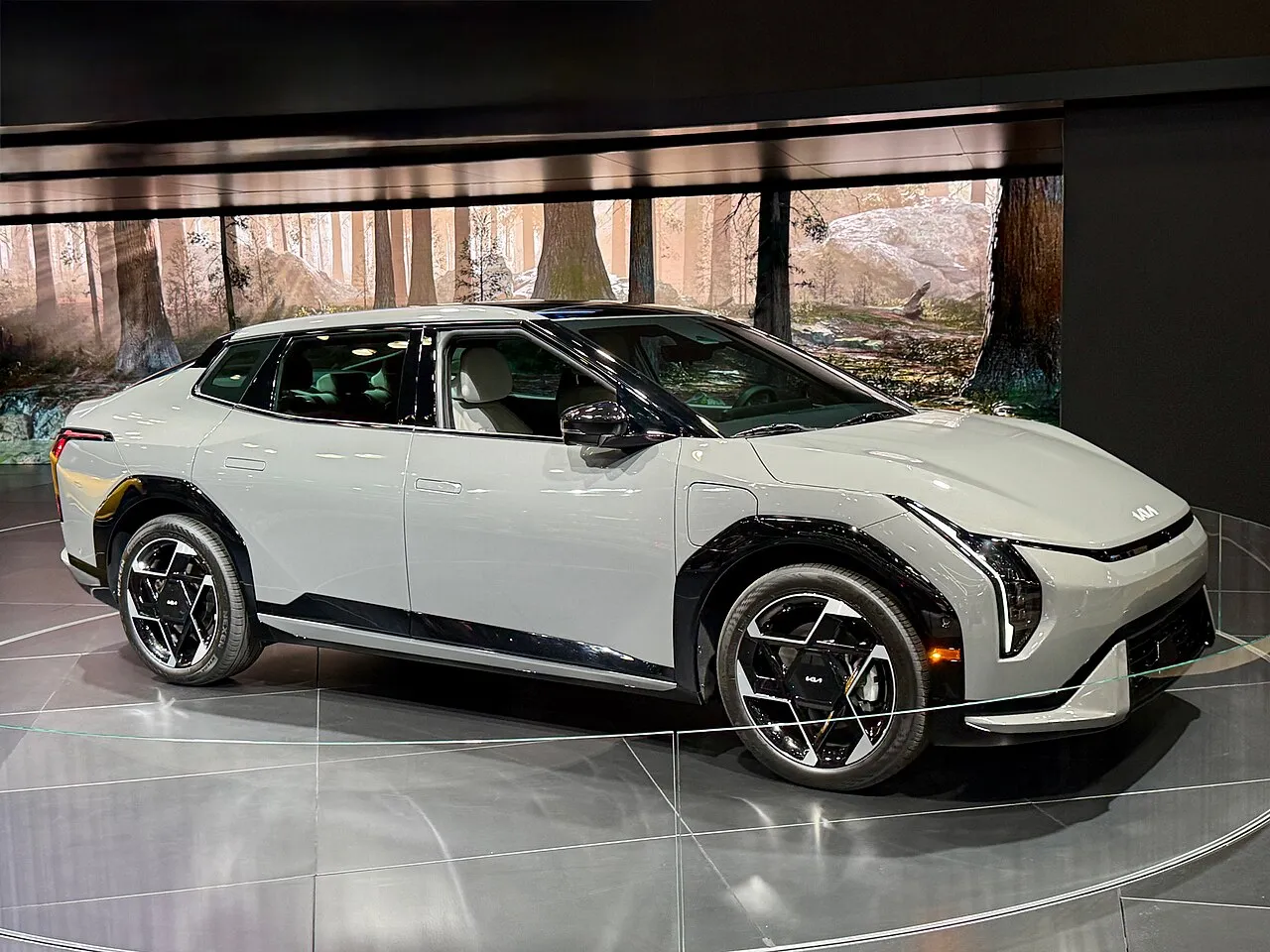
The short answer: The Kia PV5 is on sale in Australia, where 496 have sold since its May launch, according to CleanTechnica. A 25% US import tariff on commercial vans makes a US launch financially difficult.
Kia’s PV5 electric van is beginning to reach Australian buyers, with 496 sold since its May launch, according to CleanTechnica. For businesses considering a move away from diesel, the PV5 offers a purpose-built cargo area, a stated 416 km range and a price that the outlet says is close to comparable diesel vans. Its arrival also highlights a divide between markets: Kia builds the PV5 in South Korea, and CleanTechnica says a 25% US import tariff on commercial vans makes an American launch financially difficult.
The Australian sales count is a measure of early interest, though it does not show how buyers are using every van. CleanTechnica saw one PV5 awaiting conversion into a camper, while the outlet also spoke with a dealer who had delivered five vans. Those examples show that the PV5 is reaching buyers with different plans, from work use to a private conversion. For fleet operators, the more consequential questions are how much it can carry, whether its range covers a working day and how its purchase price fits the budget.
What the PV5 offers a delivery business
CleanTechnica reports more than four cubic meters of cargo capacity and enough floor space for two euro pallets. The PV5 can carry up to 740 kg, according to the outlet. Those are separate limits: the amount of room available does not mean every cargo load will fall within the van’s payload allowance. A business moving bulky, relatively light goods has a different requirement from one carrying dense equipment, even if both loads fit through the doors.
Access is part of the PV5’s working appeal. Sliding doors on both sides give drivers a choice of entry point, while rear barn doors open to 180 degrees. CleanTechnica reports a 419 mm load height, a step and grab handles. For a driver repeatedly collecting or dropping off parcels, the height of the cargo floor and the way the doors open can matter as much as the van’s overall capacity. Floor tie-downs help secure goods, and the outlet reports padding on the rear doors and inside the cargo area.
The van measures 4,695 mm long, 2,255 mm wide and 1,899 mm tall, with a 2,995 mm wheelbase, according to CleanTechnica. Those dimensions give buyers a starting point for checking parking spaces and work sites. The cargo volume, payload and door arrangement then help determine whether a particular route or set of tools fits the vehicle. CleanTechnica also reports that the PV5 is front-wheel drive.
Inside, the outlet describes storage around the dashboard, a phone slot, a wireless phone charger and steering-wheel buttons that can be customized for shortcuts. It also reports electric lumbar support for the driver and a 360-degree camera. These features may be useful to someone spending hours in a van and making frequent stops, but the cargo requirements remain the first check for a business choosing a working vehicle.
CleanTechnica says the PV5 has vehicle-to-load capability and a power point in the back, and that an adapter came with the van it examined. That gives a buyer a reason to consider how electrical equipment might be used at a job site. The outlet also reports standard assistance features including blind-spot collision avoidance, navigation-based adaptive cruise control, lane-keep assist, lane centering with hands-on detection and parking collision avoidance assist.
Range, charging and a real delivery route
CleanTechnica reports a stated range of 416 km for the PV5 and a 71.2 kWh nickel cobalt manganese lithium-ion battery. The outlet says range will vary with driving style and load, a pertinent qualification for a cargo van whose daily weight and route can change. Its report does not identify a test standard for the 416 km figure, so that number is best read as a stated figure rather than a direct comparison with an EPA-rated US vehicle.
A delivery driver identified as Ray told CleanTechnica about his experience after replacing a diesel van with a PV5. He mainly drove suburban routes and did not plan to use the van on the highway. According to the outlet, he had been concerned about charging and regenerative braking, but became comfortable with charging at home. He also reported that the van handled uphill driving without difficulty. His account illustrates one use case; the demands of a route with different distances, loads or charging access would need to be assessed separately.
CleanTechnica says the PV5 supports fast charging, which gives drivers an option when they need to charge away from home. It does not give a charging-time figure. The outlet also notes that the regenerative braking setting returns to its lowest level when the van is restarted. A driver who prefers another setting would therefore have to select it again. For a vehicle used throughout a workday, that is a small but recurring part of the driving routine.
The dealer CleanTechnica interviewed told the outlet that a 2027 model would have a 420 km range. That is a salesperson’s account of a future model, separate from the 416 km stated figure the outlet reports for the current van. Businesses making a purchase decision now have the current figure to consider alongside their own route lengths and charging arrangements.
Price and the Australian opportunity
CleanTechnica puts the Australian PV5 price at AU$56,000 before on-road costs. It describes that as roughly the price of comparable diesel vans, including the Ford Transit and Toyota HiAce. That comparison concerns the purchase price; it does not establish what any particular operator will spend over the vehicle’s working life. Fuel, charging, servicing and the amount of driving all affect that calculation, and the outlet does not give a cost-per-kilometer estimate.
Julie Delvecchio, CEO of the Electric Vehicle Council, called the lack of affordable electric vans in Australia “the single biggest unclaimed opportunity left,” according to CleanTechnica. The PV5’s entry gives buyers another vehicle to examine in that segment. Its early sales figure suggests some demand, while the report’s example of a van headed for camper conversion shows why a sales total alone cannot indicate how many are already doing delivery work.
The PV5 was named 2026 International Van of the Year, CleanTechnica reports. For a buyer, that recognition is background to a more practical assessment: whether the load space, 740 kg payload and access points suit the work, and whether charging can be fitted around the route. CleanTechnica also reports a 165,000 km battery warranty. The outlet mentions possible electric-vehicle subsidies in Australia but does not give an amount that can be applied to the stated price.
Why a US launch is difficult
The same van faces a different commercial calculation in the United States. According to CleanTechnica, Kia builds the PV5 in South Korea and classifies it as a commercial vehicle. The outlet says that puts it under the 25% US import tariff on light trucks and commercial vans, making a launch financially difficult. That tariff is a barrier to offering the Australian product to American buyers at a comparable price.
CleanTechnica does not report a US launch date or price. For now, American fleet buyers cannot use the Australian price to determine what a PV5 would cost them, while Australian buyers have a vehicle on sale that they can assess against their routes and cargo. The next concrete sign of the PV5’s place in the market will be whether its early Australian sales turn into broader working-van adoption. A US debut remains uncertain under the import tariff described by CleanTechnica.
Frequently asked questions
How many Kia PV5 vans have sold in Australia?
According to CleanTechnica, 496 have sold since the PV5 launched there in May.
How much does the Kia PV5 cost in Australia?
CleanTechnica reports a price of AU$56,000 before on-road costs.
What are the Kia PV5’s stated range and payload?
CleanTechnica reports a stated range of 416 km and a payload of up to 740 kg. It does not identify a test standard for the range figure.
Why is a US launch difficult?
According to CleanTechnica, the South Korean-built PV5 faces a 25% US import tariff on light trucks and commercial vans.
Related stories
How the Volkswagen ID. Buzz Works for Everyday Use
The ID. Buzz pairs a van-like cabin with an electric drivetrain. Here is how its layout can shape passenger access, parking, cargo use and daily trips.

GWM Haval H7 PHEV Undercuts Toyota RAV4 PHEV in Australia
GWM’s Haval H7 PHEV pairs a lower Australian starting price with more power and claimed electric range, while Toyota counters with safety features and fuel economy.

Leapmotor B10 Design LR Joins Australia’s Amber V2G Program
The Leapmotor B10 Design LR can now send stored power to homes or the grid through Amber, with warranty support subject to operating conditions.