Kia EV3 or Volvo EX30: Which Compact EV Fits?
The Kia EV3 offers more EPA range, while the Volvo EX30 counters with varied powertrains. Compare space, charging and versions before choosing.
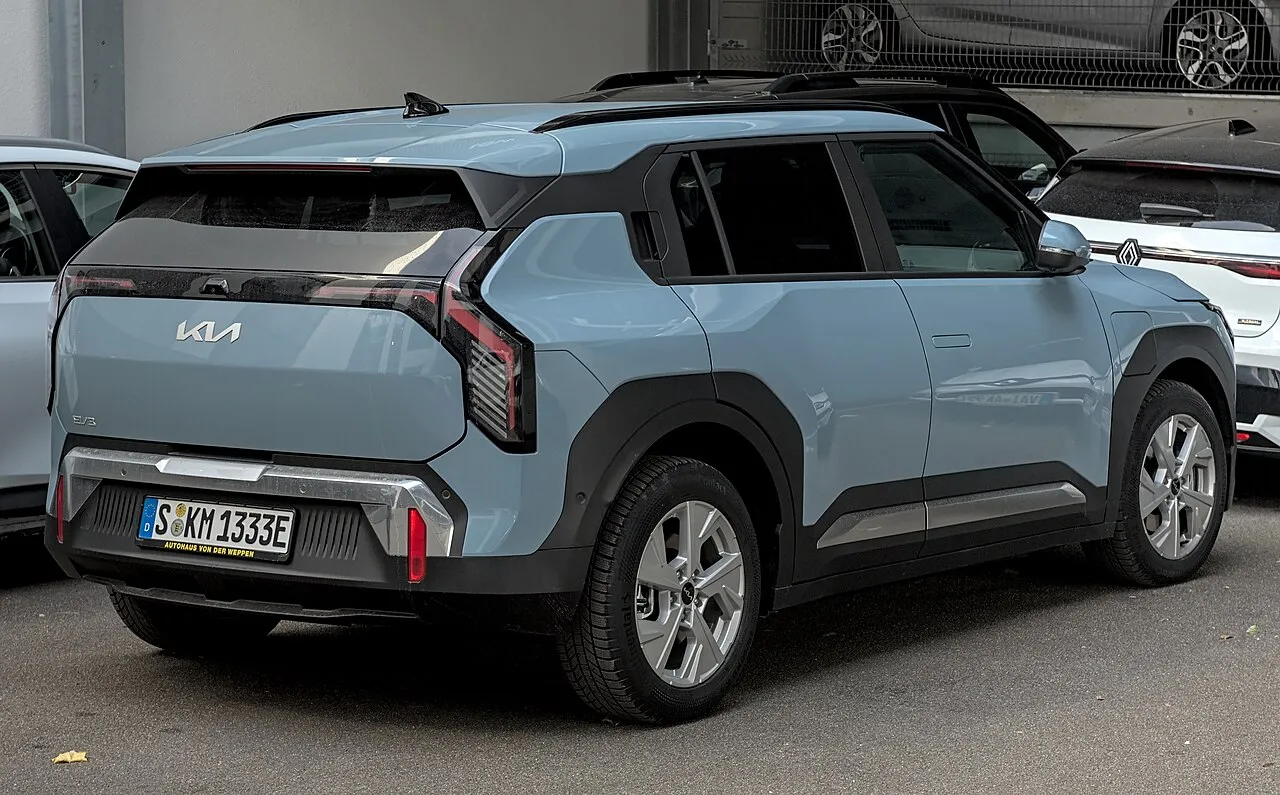
The short answer: The Kia EV3 is the stronger choice for maximum EPA range and a slightly larger European footprint. The Volvo EX30 offers more powertrain variety, including a quicker performance version, while both support 11 kW AC charging in their European versions.
Choose the Kia EV3 if your priority is rated range in the US or a slightly larger compact SUV body. Choose the Volvo EX30 if you want more powertrain variety, including a high output twin motor version, or prefer its shorter exterior dimensions. The EV3 Long Range FWD reaches 321 miles under the EPA standard, compared with 261 miles for the EX30 Single Motor Extended Range. Those figures are from different model years and trim structures, but they give the Kia a clear range advantage in the US versions covered here.
The comparison becomes closer when charging is considered. European versions of both SUVs support 11 kW AC charging. The EV3 Long Range reaches a 128 kW DC peak, while several EX30 versions reach 153 kW. In the US, the available published figure is the Level 2 full charge time: 8.8 hours for the EV3 Long Range FWD and 8 hours for the EX30 versions shown here. Range ratings from EPA, WLTP and NRCan should be read within their own standards rather than placed in one direct ranking.
Kia EV3 and Volvo EX30 figures at a glance
| Vehicle and version | Market, model year, test standard | Rated range | Drive | Charging or battery figures | Source |
|---|---|---|---|---|---|
| Kia EV3 Long Range FWD | US, 2027, EPA | 321 mi | FWD | Level 2 full charge: 8.8 hours | US EPA fueleconomy.gov |
| Kia EV3 Long Range AWD | US, 2027, EPA | 280 mi | AWD | Level 2 full charge: 7.9 hours | US EPA fueleconomy.gov |
| Kia EV3 Standard Range FWD | US, 2027, EPA | 221 mi | FWD | Level 2 full charge: 6.2 hours | US EPA fueleconomy.gov |
| Kia EV3 Long Range | Europe, 2025, WLTP | 605 km | Not specified here | 85 kWh gross, 81.4 kWh usable; 11 kW AC; 128 kW DC peak | EVDB |
| Volvo EX30 Single Motor Extended Range | US, 2026, EPA | 261 mi | RWD | Level 2 full charge: 8 hours | US EPA fueleconomy.gov |
| Volvo EX30 Twin Performance | US, 2026, EPA | 253 mi | AWD | Level 2 full charge: 8 hours | US EPA fueleconomy.gov |
| Volvo EX30 Cross Country, 18 inch wheels | Canada, 2026, NRCan | 327 km | Not specified here | Level 2 full charge: 8 hours; 315 kW | Natural Resources Canada |
| Volvo EX30 Extended Range Single Motor | Europe, 2025, WLTP | 476 km | RWD | 69 kWh gross, 64 kWh usable; 11 kW AC; 153 kW DC peak | EVDB |
| Volvo EX30 Base Twin Motor | Europe, 2025, WLTP | 460 km | AWD | 69 kWh gross, 66 kWh usable; 11 kW AC; 153 kW DC peak | OpenEV Data |
Range: the Kia has the US advantage
For American shoppers, the most useful headline is the difference between the longest range versions in the EPA figures. The 2027 Kia EV3 Long Range FWD is rated at 321 miles, while the 2026 Volvo EX30 Single Motor Extended Range is rated at 261 miles. That gives the Kia 60 more rated miles within this comparison. The EV3 Long Range AWD is rated at 280 miles, and the Long Range GT AWD is also rated at 280 miles. The EX30 Twin Performance reaches 253 miles, while the Cross Country versions range from 203 miles with 18 inch wheels to 227 miles with 19 inch wheels.
Drivetrain choice affects the range shown for both vehicles. Kia's US EV3 uses FWD for the 321 mile Long Range version and 221 mile Standard Range version, while its Long Range AWD versions are rated at 280 miles. Volvo's US EX30 range runs from 203 to 261 miles across the versions shown, with the longest range attached to the RWD Single Motor Extended Range trim.
The European ratings tell a similar story within the WLTP standard. The Kia EV3 Long Range is rated at 605 km, compared with 476 km for the EX30 Extended Range Single Motor. The EV3 Standard Range is rated at 410 km. The EX30 versions range from 344 km for the smaller battery versions to 480 km for the Base 69 kWh version. The EX30 Twin Motor versions are rated at 450 or 460 km depending on the version, while the Cross Country Twin Motor Performance version is rated at 450 km.
These market figures should remain separate. EPA, WLTP and NRCan are different test standards, so a US shopper should use the EPA rows for a US purchase and a European shopper should use the WLTP rows for a European purchase. A Canadian shopper has NRCan figures for the EX30 versions shown, including 420 km for the Single Motor Extended Range.
Space: a small dimensional edge for the Kia
The European dimensional figures show the Kia EV3 is 4,300 mm long, 1,850 mm wide, 1,560 mm high and has a 2,680 mm wheelbase. The standard European Volvo EX30 versions are 4,233 mm long, 1,837 mm wide, 1,555 mm high and use a 2,650 mm wheelbase.
That makes the EV3 67 mm longer, 13 mm wider, 5 mm taller and 30 mm longer between the axles in the comparable European measurements. Those exterior dimensions give the Kia a modest packaging advantage on paper. They do not establish passenger room or cargo capacity, so shoppers who need a specific amount of rear seat or luggage space should check the vehicle's published interior measurements separately.
The EX30 Cross Country changes the comparison slightly. Its European figures are 4,233 mm long, 1,850 mm wide and 1,573 mm high, with the same 2,650 mm wheelbase. It is therefore as wide as the EV3 in that version and taller than the standard EX30 versions. The wheelbase remains shorter than the EV3's figure.
Weight varies substantially by battery and drivetrain. The European EV3 versions are listed at 1,650 or 1,750 kg. EX30 figures span 1,760 kg for the Extended Range Single Motor, 1,790 kg for the Single Motor, 1,830 kg for the Base version and up to 2,010 kg for some twin motor versions. The Cross Country Twin Motor Performance is listed at 1,943 kg. These figures help explain why the EX30's output focused versions can carry more mass than the lighter single motor configurations.
Charging: similar home charging, different DC peaks
Both vehicles use an 11 kW AC charging rate in the European versions covered here. That makes them closely matched for an AC wallbox when the installation and vehicle version can deliver the full rate. The available US figures use a different format: Kia's EV3 versions are listed with Level 2 full charge times from 6.2 to 8.8 hours, while every US EX30 version shown is listed at 8 hours.
Within the Kia range, the 221 mile Standard Range FWD has the shortest listed Level 2 full charge time at 6.2 hours. The Long Range AWD is listed at 7.9 hours, and both the Long Range FWD and Long Range GT AWD are listed at 8.8 hours. The figures describe a full Level 2 charge and should not be treated as a DC fast charging time.
European DC peak charging favors the EX30 on the versions with a 153 kW rating. The Kia EV3 Long Range is listed at 128 kW, while the EX30 Extended Range Single Motor and the twin motor versions shown reach 153 kW. The EX30 Single Motor is listed at 134 kW. A peak figure is the highest stated charging rate, so the actual rate during a session can vary with the vehicle version and charging conditions.
Performance and powertrain choices
The Kia EV3 European Long Range version is listed with 150 kW, 283 Nm and a 0-to-100-km/h time of 7.7 seconds. The Standard Range version has the same 150 kW and 283 Nm figures, with a 7.5 second 0-to-100-km/h time. The European EV3 versions use NMC batteries, with 85 kWh gross and 81.4 kWh usable for Long Range, or 60 kWh gross and 58.3 kWh usable for Standard Range.
The EX30 offers a wider spread of outputs. The European single motor versions are listed at 200 kW and 343 Nm. The Base 69 kWh version reaches 0 to 100 km/h in 5.7 seconds, while the Extended Range Single Motor is listed at 5.3 seconds. The twin motor versions produce 315 kW and 543 Nm, with a listed 0-to-100-km/h time of 3.6 seconds.
The EX30 battery choices include a 51 kWh gross, 49 kWh usable LFP battery and 69 kWh gross batteries with either 64 or 66 kWh usable. The battery chemistry therefore varies by version. The most energetic driving option is also the one with the strongest output: the 315 kW twin motor versions. That choice brings AWD and the shortest acceleration time, but the listed range is below the longest range single motor version.
Which compact electric SUV should you choose?
Pick the Kia EV3 when range is the deciding factor, especially if you can use the US Long Range FWD version's 321 mile EPA rating. Its European dimensions also give it a small advantage in length, width, height and wheelbase over the standard EX30 figures.
Pick the Volvo EX30 when acceleration and drivetrain variety matter more. Its European range includes single motor and twin motor versions, and the twin motor models are listed at 315 kW with 543 Nm. Its 153 kW DC peak on several European versions also exceeds the EV3 Long Range's 128 kW figure.
For home charging, the two vehicles are closely aligned in the European figures because both use 11 kW AC charging. In the US figures, the EV3's Level 2 times vary by version, while the EX30 versions shown are all listed at 8 hours. The right choice therefore depends on which market rating applies to the vehicle being considered and whether range, space, charging peak or performance has the greatest effect on daily use.
Frequently asked questions
Which has more EPA range, the Kia EV3 or Volvo EX30?
The Kia EV3 has more in the figures shown. Its Long Range FWD version is rated at 321 miles under the EPA standard, while the Volvo EX30 Single Motor Extended Range is rated at 261 miles.
Which SUV is larger?
In the European dimensions shown, the Kia EV3 is 67 mm longer, 13 mm wider, 5 mm taller and has a 30 mm longer wheelbase than the standard Volvo EX30.
Which has faster DC charging?
The Volvo EX30 reaches a listed 153 kW DC peak on several European versions. The European Kia EV3 Long Range is listed at 128 kW.
Do both vehicles support 11 kW AC charging?
Yes. The European Kia EV3 and Volvo EX30 versions shown are listed with 11 kW AC charging.
Which offers more performance?
The Volvo EX30 twin motor versions are listed at 315 kW and 543 Nm, with a 0-to-100-km/h time of 3.6 seconds in the European figures.
Related stories

How to Choose an EV When It’s Your Household’s Only Car
Compare home charging, everyday range flexibility, and service access to find an EV that can handle your household’s needs without a backup car.

How to Check Whether an EV Can Carry a Roof Tent
Compare an EV’s roof-load limit, approved mounting points and tent hardware before buying. Then account for added wind resistance, noise and energy use.

Gross vs. Usable EV Battery Capacity, Explained
An EV’s gross battery capacity describes its full energy reserve; usable capacity is the portion the driver can draw on. Here’s how to compare the terms.