Chery Stockman Pricing Undercuts BYD Shark 6 in Australia
Chery's diesel plug-in hybrid pickup starts at A$52,990 in Australia, undercutting the BYD Shark 6 as an industry veteran warns about dealer profits.
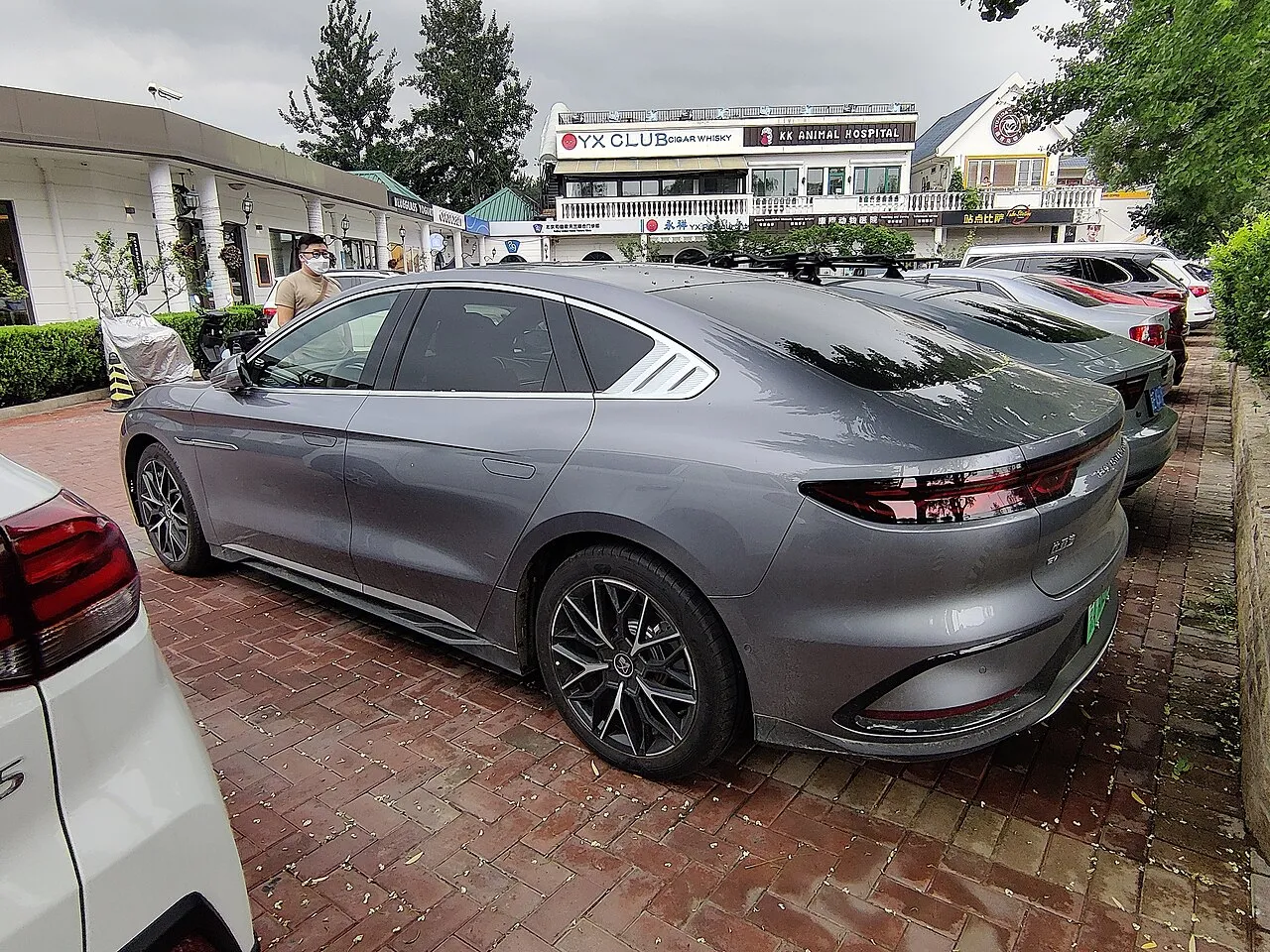
The short answer: Chery’s Stockman diesel plug-in hybrid pickup will start at A$52,990 before on-road costs in Australia, with showroom arrivals expected in early 2027, according to EV Central. Its pricing undercuts the BYD Shark 6, although an opinion article argues Chery could have charged more to support dealer profitability.
Chery has priced its Stockman diesel plug-in hybrid pickup from A$52,990 before on-road costs in Australia, positioning it below the best-selling BYD Shark 6 ahead of an expected early-2027 showroom arrival, according to EV Central. The launch gives pickup buyers another electrified option while adding pressure to a market already marked by aggressive discounting.
The price has also prompted an unusual criticism: Chery may be charging too little. In an EV Central opinion article, automotive industry veteran Alastair Doak argues that the Stockman’s diesel-electric powertrain and working capabilities could justify pricing closer to its main rival. His concern is that a lower purchase price could come at the expense of dealer earnings and, ultimately, customer support.
Two trims take aim at the Shark 6
According to EV Central, the Stockman will arrive in two grades: the Urban at A$52,990 and the Ultimate at A$57,990. Both Australian prices exclude on-road costs, so neither represents the final amount a buyer will pay to put the truck on the road.
| Australian trim | Price before on-road costs |
|---|---|
| Chery Stockman Urban | A$52,990 |
| Chery Stockman Ultimate | A$57,990 |
The Urban sits almost A$5,000 below the BYD Shark 6 Premium, while the Ultimate carries a similar discount against the Shark 6 Performance, according to EV Central. That positions both Stockman grades against corresponding versions of the segment’s sales leader, making the price difference relevant beyond the entry model.
EV Central describes the Shark 6 as Australia’s best-selling plug-in hybrid pickup. Its established position makes it the obvious benchmark for Chery’s launch, but the Stockman is entering a broader contest. The outlet also reports that the GWM Cannon and JAC Hunter gasoline-electric pickups start below the Chery, meaning the Stockman’s discount against BYD does not make it the cheapest electrified pickup option.
A diesel-electric point of difference
The Stockman’s central distinction is its diesel plug-in hybrid powertrain, which EV Central describes as a world first for a pickup. Doak argues that this gives Chery a potentially valuable selling point in a vehicle category where diesel engines have traditionally dominated Australian sales.
In his assessment, diesel’s association with low-speed pulling power and fuel economy also matters to the pricing argument. Diesel vehicles have historically commanded premiums over gasoline counterparts, he writes, raising the question of whether Chery needed such a substantial discount against the Shark 6 to attract attention.
According to EV Central, the Stockman has a higher payload than the Shark 6 and a towing capacity just 5 kilograms short of 3.5 metric tons. The article says only the range-topping Shark 6 Performance can match that level of towing capability. These are central considerations for buyers choosing a pickup for carrying loads and pulling trailers.
The distinction also complicates a price-only comparison. Doak’s argument is that Chery is bringing a different powertrain and competitive working capability into the segment, giving it reasons to compete on more than the size of its discount. That is his assessment of the product’s market position, rather than evidence that buyers will accept a higher price.
Local tuning still has to prove itself
EV Central reports that Premcar is tuning the Stockman locally, noting the engineering team’s work for Nissan and Mitsubishi. Doak sees that involvement as a reason for optimism about how the pickup will drive, although his article frames the expected result as something still to be demonstrated.
His favorable view of the Stockman is conditional on it delivering across ride quality, steering, driver-assistance calibration, locking differentials and towing behavior. Those expectations should be distinguished from a completed assessment of the production vehicle. Local tuning is part of the launch preparation; it does not by itself establish how the truck will perform for customers.
Doak also discusses the prospect of powering tools from a 34-kWh lithium iron phosphate battery, accessories from Ironman, and a comfortable cabin as elements of the Stockman’s appeal. In the article, those features form part of his broader case for a well-rounded pickup, with the overall ownership proposition still dependent on execution.
Early interest gives Chery an opening
Before pricing was announced, the Stockman had reportedly attracted about 2,000 preorders and 10,000 expressions of interest, according to EV Central. Those figures indicate attention ahead of the launch, although they describe different stages of buyer engagement and should not be treated as completed vehicle sales.
Doak uses that early response to question whether a steep discount was necessary. Chery is new to Australia’s pickup segment, but EV Central says the brand was already among the country’s top 10 automotive brands for the year to date. Its challenge is therefore to establish itself in this particular category while building on an existing presence in the wider market.
The article acknowledges the logic behind an introductory price advantage: an unfamiliar pickup has to win customers from established alternatives. Doak nevertheless questions whether other relatively new Chinese brands enjoy enough additional familiarity to justify Chery pricing its distinctive diesel-electric model so far below the segment leader.
Why dealer margins enter the debate
Doak’s argument centers on the dealer network as much as the manufacturer. He contends that pricing closer to the Shark 6 could generate more profit for Chery and its retailers, helping dealers remain engaged with the brand and attract stronger staff across their businesses.
In that view, dealer profitability has consequences for customers through service quality and long-term brand loyalty. The argument is a warning about the potential effects of pricing pressure, rather than a report that Stockman owners have experienced service problems. The truck’s Australian showroom launch is still ahead.
EV Central’s opinion article places that concern within a rapidly expanding automotive market. It says the number of brands selling vehicles in Australia rose from 39 in 2021 to 67 in 2026, with more than 10 additional brands said to be preparing to enter the following year. Annual vehicle sales, meanwhile, have hovered just above one million.
Doak argues that this combination leaves more brands and dealers competing for a market unlikely to expand substantially. He describes dealer earnings as already under pressure and warns that continued discounting could threaten some brands’ Australian operations. For buyers, his concern extends to access to service, parts and warranty support, as well as resale value if a brand exits.
The next test is the launch
The immediate milestone is the Stockman’s expected arrival in Australian showrooms in early 2027, according to EV Central. That will move the story from announced pricing and advance interest toward whether the pickup can deliver the driving behavior and utility underpinning its sales pitch.
Doak also warns that Chery’s pricing could provoke a response from BYD, which he describes as pursuing further Shark sales and broader market leadership. A price war is a possibility raised in his commentary, not an announced action by BYD. The competitive question now is how rivals respond and whether Chery’s initial price advantage translates into sales while sustaining the dealer support buyers will need after purchase.
Frequently asked questions
How much will the Chery Stockman cost in Australia?
According to EV Central, the Urban will cost A$52,990 and the Ultimate A$57,990. Both prices exclude on-road costs.
When will the Chery Stockman reach showrooms?
EV Central reports that Australian showroom arrivals are expected in early 2027.
How does Stockman pricing compare with the BYD Shark 6?
According to EV Central, the Stockman Urban is almost A$5,000 cheaper than the Shark 6 Premium, while the Stockman Ultimate carries a similar discount against the Shark 6 Performance.
What makes the Stockman’s powertrain distinctive?
The Stockman combines a diesel engine with a plug-in hybrid system. EV Central describes it as the world’s first diesel plug-in hybrid pickup.
Why has the Stockman’s low price drawn criticism?
In an EV Central opinion article, Alastair Doak argues that a higher price could improve earnings for Chery and its dealers. He warns that sustained discounting could weaken dealer networks and make long-term customer support harder to maintain.
Related stories

GWM Haval H7 PHEV Undercuts Toyota RAV4 PHEV in Australia
GWM’s Haval H7 PHEV pairs a lower Australian starting price with more power and claimed electric range, while Toyota counters with safety features and fuel economy.
Updated Volvo XC60 PHEV Claims Up to 124 Miles of EV Range
Volvo’s updated XC60 plug-in hybrid pairs a 37.9-kWh battery with claimed electric range of up to 124 miles, while retaining a gasoline engine.
2028 Volvo XC60 T8 Gets 78 Miles of EPA Electric Range
Volvo’s updated XC60 T8 pairs a 37.9-kWh battery with 455 hp and 78 miles of EPA electric range, extending the life of its aging plug-in hybrid SUV.