BYD Dolphin vs. Volkswagen ID.3 for City Driving
The BYD Dolphin is slightly longer, while the ID.3 is wider and has a longer wheelbase. Here is how their dimensions and European figures compare.
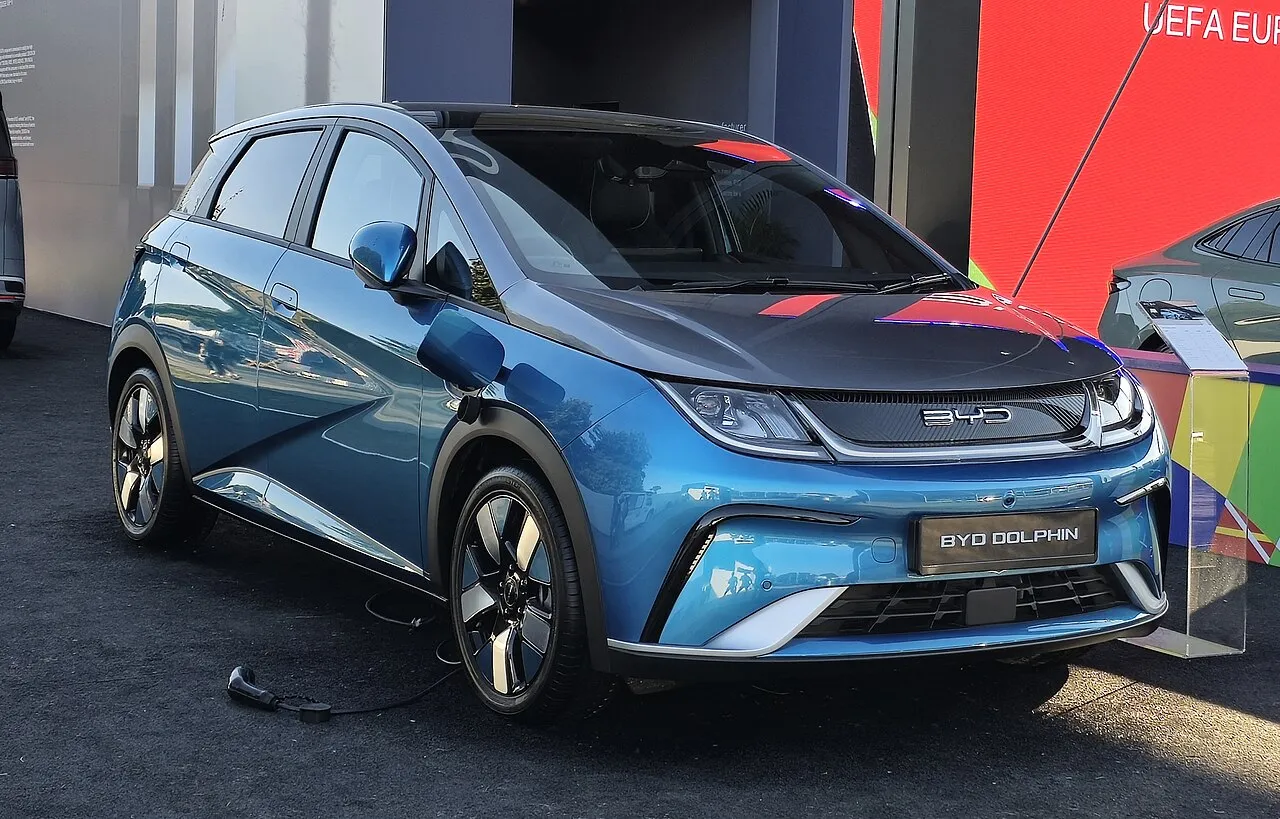
The short answer: For city streets and tight parking, the BYD Dolphin is narrower than the Volkswagen ID.3, while the ID.3 is shorter overall and has a longer wheelbase. Their published European figures show different battery, range and charging choices, so the better fit depends on the exact trim and the space you need.
The BYD Dolphin and Volkswagen ID.3 are both compact electric hatchbacks, but their dimensions point to different city priorities. The 2025 European Dolphin is narrower, which may help when threading through constrained streets or fitting into a tight parking space. The ID.3 is shorter from bumper to bumper and has a longer wheelbase, a combination that can make its cabin proportions appealing to passengers. Neither set of dimensions settles the question of maneuverability or passenger comfort on its own; actual visibility, turning circle, seat shape and cabin measurements are not published in the figures below.
For a buyer focused on squeezing into narrow spaces, the Dolphin has the more favorable published width. For someone prioritizing a shorter overall footprint and a longer distance between the axles, the ID.3 has those advantages. Battery, range and charging figures vary by trim, and the European WLTP range ratings should be read as ratings under that test standard rather than predictions for every city commute.
Dimensions: narrower Dolphin, shorter ID.3
The 2025 European BYD Dolphin measures 4,290 mm long and 1,770 mm wide, with a 2,700 mm wheelbase. The Volkswagen ID.3 measures 4,261 mm long and 1,809 mm wide, with a 2,765 mm wheelbase. That makes the Dolphin 29 mm longer and 39 mm narrower, while the ID.3 has a wheelbase 65 mm longer. Both stand at nearly the same height: 1,550 mm for the Dolphin and 1,552 mm for the ID.3.
Those measurements offer useful clues, but they do not directly establish how easy either car is to park or turn. Width is relevant when passing through narrow gaps and when judging space in a parking bay; length matters for fitting into a short curbside space. A turning circle is a more direct maneuverability measure, but no figure is published here. Drivers should also remember that mirrors and door opening room affect real-world fit, and those measurements are not included.
The ID.3’s longer wheelbase may support a roomier passenger layout, but wheelbase alone cannot tell you how much legroom or headroom occupants get. Cabin packaging, seat travel and floor shape matter too. There are no passenger-space measurements in the published figures, so a careful comparison should involve sitting in both cars, especially if adults will regularly use the rear seats.
Published European figures by trim
The table keeps each vehicle’s market, model year and test standard attached to its figures. Range figures are WLTP ratings for Europe; they are not directly interchangeable with ratings published under other standards. Sources are named alongside each version’s figures.
| Vehicle and trim | Market, model year and standard | Battery and range | Charging | Dimensions | Source |
|---|---|---|---|---|---|
| BYD Dolphin Standard | Europe, 2025; WLTP | 44.9 kWh gross, 44 kWh usable; 340 km | 7 kW AC; 60 kW peak DC | 4,290 × 1,770 × 1,550 mm; 2,700 mm wheelbase | OpenEV Data |
| BYD Dolphin Boost | Europe, 2025; WLTP | 44.9 kWh gross, 44 kWh usable; 310 km | 7 kW AC; 60 kW peak DC | 4,290 × 1,770 × 1,550 mm; 2,700 mm wheelbase | OpenEV Data |
| BYD Dolphin Design | Europe, 2025; WLTP | 63 kWh gross, 60.4 kWh usable; 435 km | 11 kW AC; 95 kW peak DC | 4,290 × 1,770 × 1,550 mm; 2,700 mm wheelbase | EVDB |
| BYD Dolphin Premium Extended Range | Europe, 2025; WLTP | 60.5 kWh gross, 60 kWh usable; 427 km | 11 kW AC; 88 kW peak DC | 4,290 × 1,770 × 1,550 mm; 2,700 mm wheelbase | OpenEV Data |
| Volkswagen ID.3 Pro | Europe, 2025; WLTP | 62 kWh gross, 58 kWh usable; 428 km | 11 kW AC; 135 kW peak DC | 4,261 × 1,809 × 1,552 mm; 2,765 mm wheelbase | OpenEV Data; EVDB |
| Volkswagen ID.3 Pro S | Europe, 2025; WLTP | 82 kWh gross, 77 kWh usable; 559 km | 11 kW AC; 135 kW peak DC | 4,261 × 1,809 × 1,552 mm; 2,765 mm wheelbase | OpenEV Data; EVDB |
| Volkswagen ID.3 GTX | Europe, 2025; WLTP | 82 kWh gross, 77 kWh usable; 600 km | 11 kW AC; 175 kW peak DC | 4,261 × 1,809 × 1,552 mm; 2,765 mm wheelbase | OpenEV Data; EVDB |
Passenger space is more than wheelbase
The longer wheelbase of the ID.3 is a point in its favor for shoppers considering rear-seat space, but it cannot confirm that the Volkswagen feels roomier. The Dolphin’s overall length is slightly greater, yet that does not establish its usable cabin space either. Neither external dimensions nor battery capacity reveal seat comfort, door aperture size, child-seat access or the room left for passengers when the front seats are adjusted.
For city use, think about the people and objects that travel with you most often. Check whether the rear seat accommodates the passengers or child seats you expect to carry, whether getting in and out works for them, and whether the front passenger can sit comfortably with the driver in their preferred position. These checks matter more than treating the wheelbase as a cabin-size guarantee. Cargo capacity figures are not published here, so shoppers should assess the hatch opening and luggage space directly if those affect daily use.
Range and charging vary by version
For the Dolphin, the listed European 2025 WLTP range spans 310 km for Boost to 435 km for Design. Standard is rated at 340 km, and Premium Extended Range at 427 km. The ID.3 figures span 428 km for Pro, 559 km for Pro S and 600 km for GTX, all under WLTP. These numbers help distinguish the versions within each lineup, but WLTP ratings do not guarantee a particular distance in city traffic or in other driving conditions.
Charging capability is also trim dependent. The Dolphin Standard and Boost have 7 kW AC charging and a 60 kW peak DC rating; Design and Premium Extended Range are listed at 11 kW AC, with 95 kW and 88 kW peak DC respectively. Every ID.3 version in the table has 11 kW AC charging. Peak DC ratings are 135 kW for Pro and Pro S and 175 kW for GTX. A peak rating is not a promise that a car will sustain that rate throughout a charging stop.
All versions in the table use the CCS2 connector, a European-market detail that matters when checking compatibility with the charging equipment available where the car will be used. These are European versions and figures. They do not establish what is sold or rated in the United States, and the range values should not be converted into a US-market estimate.
Which one fits your city routine?
Choose the Dolphin as the more promising starting point if minimizing width is central to your parking and street conditions. Its 1,770 mm body is narrower than the ID.3’s 1,809 mm body, while its European trims offer a range of battery and charging configurations. Its slightly greater length is a tradeoff to keep in mind when curb space is short.
Consider the ID.3 if the shorter body and longer wheelbase better match your priorities, or if you want one of the higher WLTP range ratings shown among these versions. Its Pro, Pro S and GTX figures differ substantially in battery, range, peak DC charging and performance, so the model name alone does not identify one city-use profile. The GTX is also the heaviest version in the table at 2,070 kg, while the Dolphin versions range from 1,405 to 1,545 kg; weight can be relevant to how a car feels, but these figures alone do not establish handling or ride comfort.
For either hatchback, the sensible choice depends on the specific trim, the dimensions of your usual parking space, and who regularly rides along. Compare the same kinds of information for the exact versions available in your market, then check visibility, turning space and passenger comfort in person. The published dimensions give the Dolphin an edge in width and the ID.3 an edge in overall length and wheelbase; they do not settle the parts of city life that depend on sightlines, steering or the cabin’s feel.
Frequently asked questions
Which is narrower, the BYD Dolphin or Volkswagen ID.3?
The 2025 European BYD Dolphin is 1,770 mm wide. The 2025 European Volkswagen ID.3 is 1,809 mm wide.
Which car is shorter?
The 2025 European Volkswagen ID.3 is 4,261 mm long, compared with 4,290 mm for the BYD Dolphin.
Which has the longer wheelbase?
The 2025 European Volkswagen ID.3 has a 2,765 mm wheelbase. The BYD Dolphin has a 2,700 mm wheelbase.
Are the range figures directly comparable with US ratings?
No. The figures shown are European WLTP ratings and should not be treated as equivalent to ratings under another test standard.
Related stories
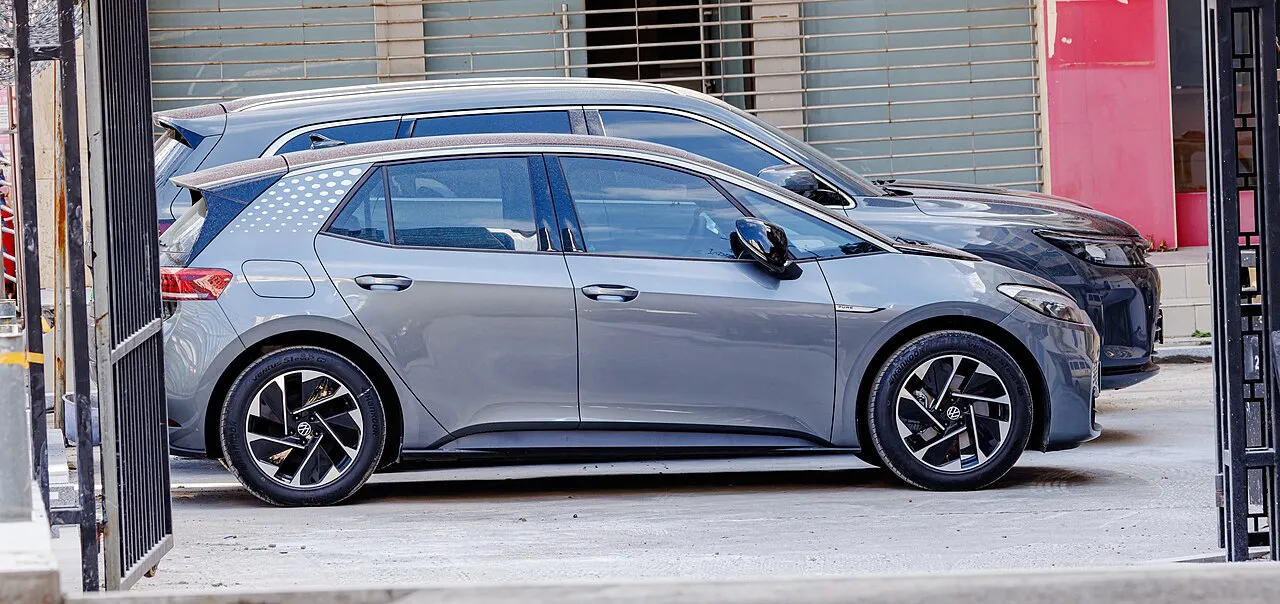
Volkswagen ID.3 vs. ID.4: Which Size Fits Your Needs?
The ID.3 hatchback is shorter and lower; the ID.4 SUV is longer and taller. Compare their proportions and think through passengers, cargo and parking.
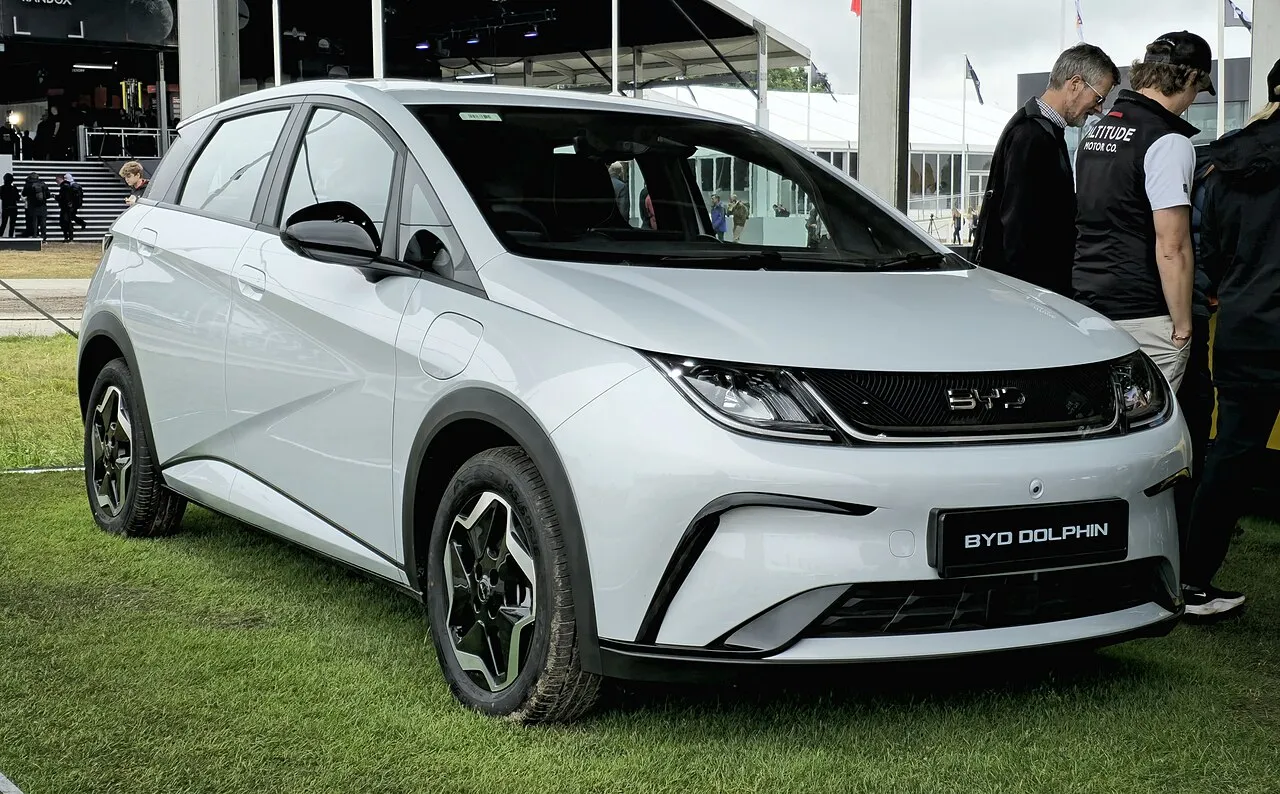
BYD Dolphin vs. Atto 3: Which Body Style Fits Better?
The BYD Dolphin is the smaller hatchback, while the Atto 3 is a taller, wider SUV. Their dimensions help show which format may suit your passengers, cargo and parking routine.
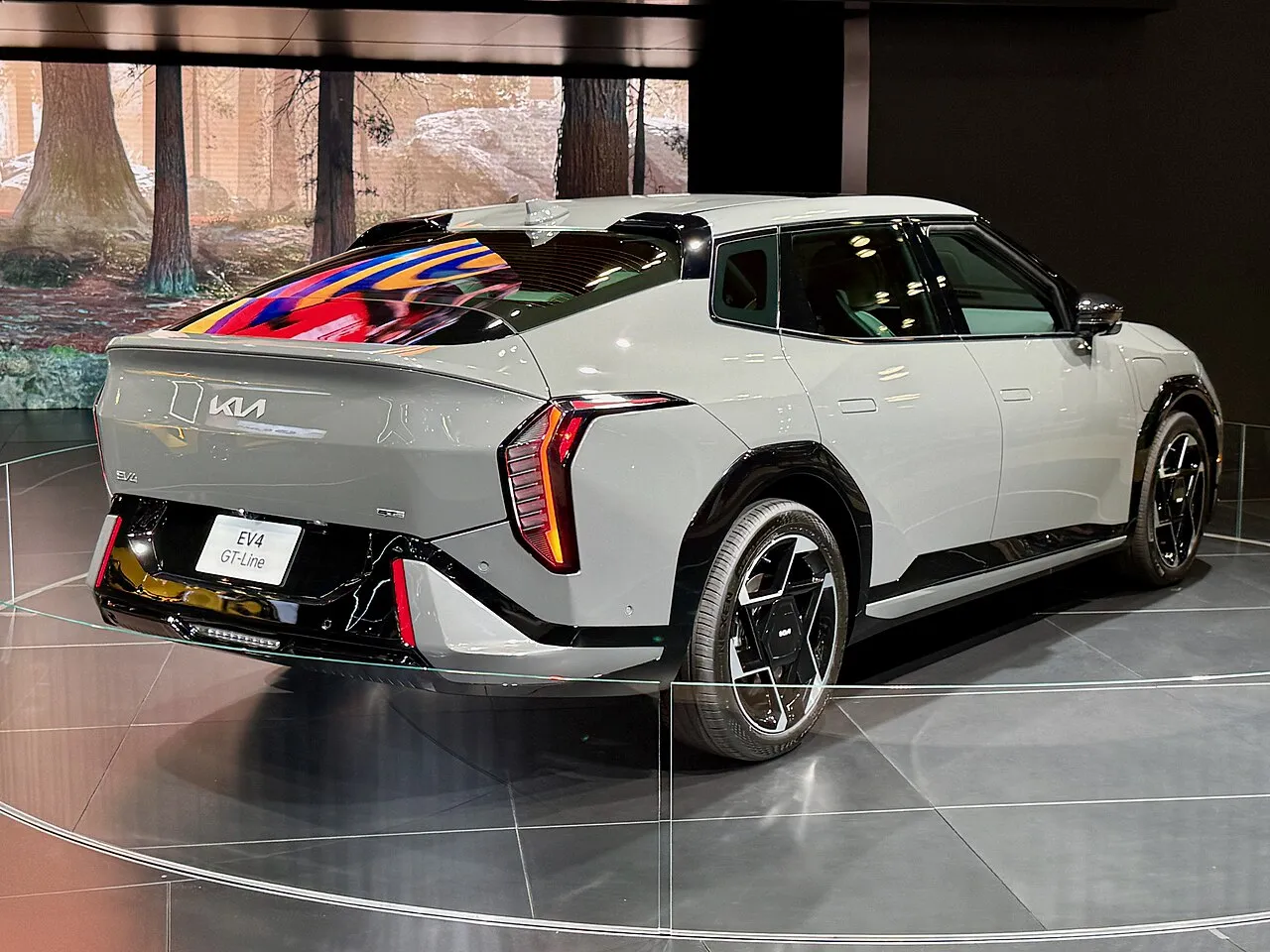
Sedan or Hatchback: Kia EV4 and Volkswagen ID.3 Compared
The Kia EV4 sedan and Volkswagen ID.3 hatchback take different approaches to space, cargo access, range and charging. Here is how they compare.