Sedan or Hatchback: Kia EV4 and Volkswagen ID.3 Compared
The Kia EV4 sedan and Volkswagen ID.3 hatchback take different approaches to space, cargo access, range and charging. Here is how they compare.
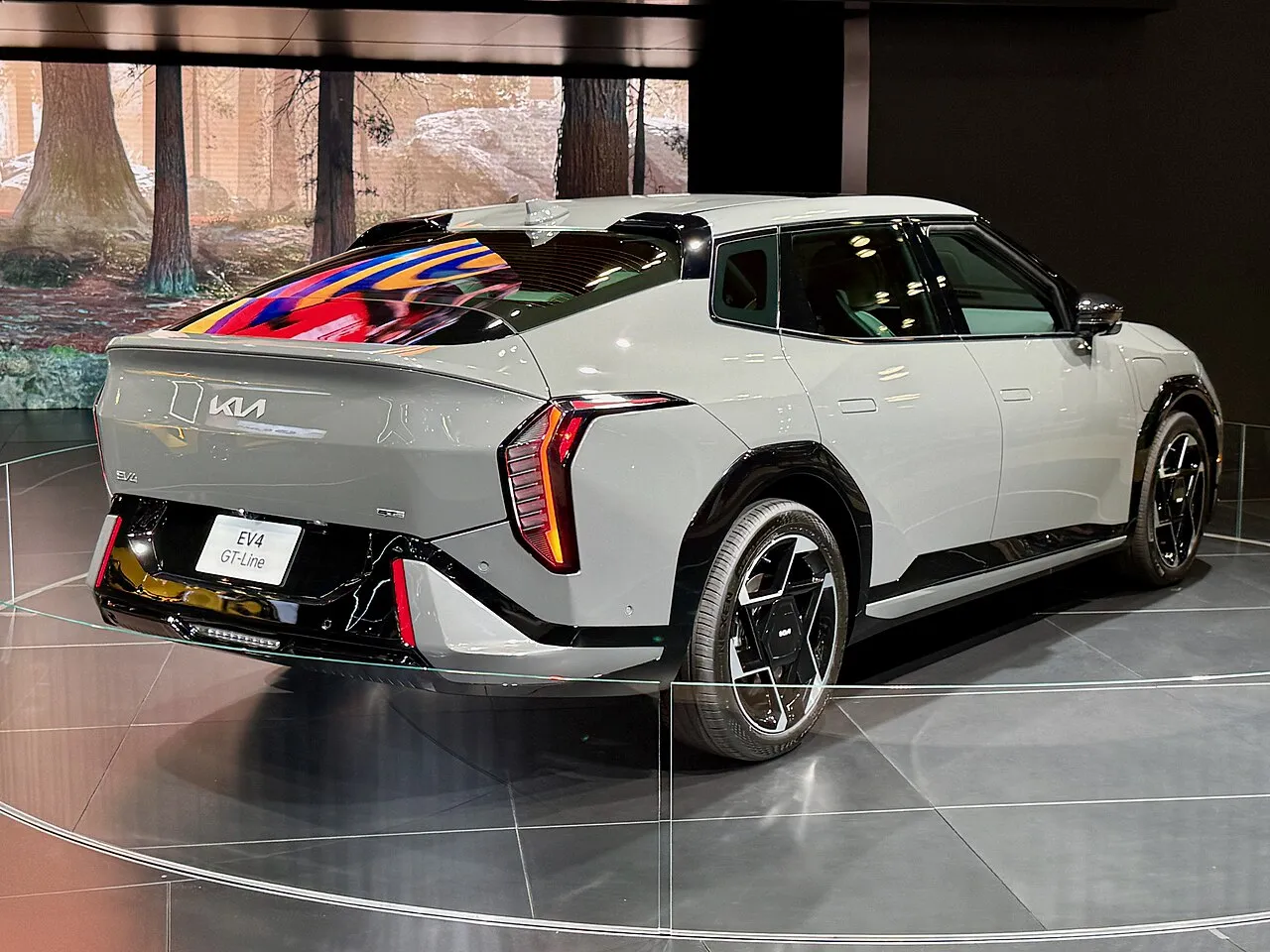
The short answer: Choose the Kia EV4 if you prefer a longer, lower sedan shape and strong published range figures. Choose the Volkswagen ID.3 if a compact hatchback’s liftgate and shorter body make daily cargo use easier.
The Kia EV4 is the better fit for shoppers who want a sedan’s long, low profile and a published range advantage in several European versions. The Volkswagen ID.3 is the more practical choice when a short hatchback body and wide-opening liftgate matter more than sedan styling. The decision depends mainly on how you load the vehicle, where you drive, and which market’s published figures apply.
These cars also occupy different positions in the available records. The EV4 is identified as a sedan, while the ID.3 is identified as a hatchback. European EV4 records also use the descriptions “Hatchback” and “Fastback” for some versions, so shoppers should check the exact body configuration in their market. The comparison below uses the published dimensions and powertrain figures for the named versions rather than treating every EV4 version as identical.
What the dimensions tell you
The European Kia EV4 58.3 kWh version is 4,610 millimeters long, 1,830 mm wide, 1,475 mm tall and has a 2,830 mm wheelbase. The 81.4 kWh sedan version grows to 4,635 mm long, 1,835 mm wide and 1,490 mm tall, while keeping the same wheelbase. EVDB gives the 58.3 kWh car a 1,620 kg curb weight and the 81.4 kWh car a 1,730 kg curb weight.
The Volkswagen ID.3 is shorter and taller. Both the Pro and Pro S are 4,261 mm long, 1,809 mm wide and 1,552 mm tall, with a 2,765 mm wheelbase. Their curb weights are 1,830 kg and 1,920 kg respectively. The GTX has the same exterior dimensions and weighs 2,070 kg, according to OpenEV Data and EVDB.
That makes the EV4 sedan 349 to 374 mm longer than the ID.3 in the European figures, depending on the EV4 battery version. The ID.3 is 77 mm taller and has a 65 mm shorter wheelbase. Length can make a sedan feel more substantial and can create room for a longer hood or rear deck, but it also affects tight parking spaces and garage fit. Height can make it easier to climb into a vehicle and may help create a more upright cabin.
Exterior dimensions do not determine usable passenger space by themselves. The wheelbase gives a rough indication of how much room can be allocated between the axles, but seat design, battery placement and roof shape also matter. Neither vehicle’s passenger volume or rear legroom figure is included here, so the published dimensions should guide an in-person check rather than replace it.
Cargo access is the main body-style difference
A sedan normally separates the passenger compartment from the trunk with a fixed rear shelf and a smaller opening. That arrangement can protect the cabin from loose cargo and may keep the rear interior quieter. It can also make it harder to load tall, wide or awkward objects because the opening is lower and narrower than the space behind it.
A hatchback uses a liftgate that opens with the rear glass. The Volkswagen ID.3’s hatchback format therefore gives it a more direct route into the cargo area. Grocery bags, boxes and bulky objects can be pushed through the opening rather than lowered into a separate trunk. Folding the rear seats can make the long load floor more useful, although the shape and flatness of that floor depend on the seat design.
The EV4’s sedan shape favors traditional trunk use. It can work well for luggage, work bags and other items that fit below the trunk opening, while the separate cargo area keeps the passenger cabin visually distinct. The tradeoff appears when the item is tall or needs to be loaded at an angle. A sedan buyer should measure the objects they carry most often and check the actual opening, not just the vehicle’s exterior length.
The EV4 records also include European versions identified as a hatchback and a fastback. Those labels matter because a liftback or fastback can have a larger rear opening than a conventional sedan while retaining a sloping roofline. Kia’s naming and body-style details should therefore be checked against the local vehicle before purchase. The comparison is clearest when the EV4 sedan is weighed against the ID.3 hatchback.
Range figures need their market and test standard
Natural Resources Canada gives the 2026 Kia EV4 ratings of 391 km for Light, 488 km for GT-Line, 552 km for Wind and 515 km for Wind Premium. Those are NRCan ratings for the Canadian market. The same Canadian records show 150 kW for each trim and Level 2 full-charge times ranging from 5.9 to 9.1 hours.
For Europe, EVDB gives the 2025 Kia EV4 58.3 kWh version a 458 km WLTP rating and the 81.4 kWh version a 625 km WLTP rating. The fastback versions are rated at 450 km and 633 km WLTP with the smaller and larger batteries respectively. The European Volkswagen ID.3 Pro is rated at 428 km WLTP, the Pro S at 559 km, and the GTX at 600 km, according to EVDB and OpenEV Data.
NRCan and WLTP are separate test standards. Their figures should not be lined up as though they were the same measurement, even when both are expressed in kilometers. A Canadian shopper should use the Canadian NRCan figures for the Canadian versions, while a European shopper should use the WLTP figure for the exact European trim. The battery size, wheels, equipment and body configuration can also change the published result.
| Vehicle and version | Market and model year | Published figures | Source and test standard |
|---|---|---|---|
| Kia EV4 Light, GT-Line, Wind, Wind Premium | Canada, 2026 | 391, 488, 552 and 515 km rated range; 150 kW; 5.9 to 9.1 hours Level 2 full charge | Natural Resources Canada; NRCan range ratings |
| Kia EV4 58.3 kWh and 81.4 kWh | Europe, 2025 | 458 and 625 km rated range; 55.9 and 78 kWh usable battery; 11 kW AC; 135 kW DC peak | EVDB; WLTP range ratings |
| Kia EV4 Fastback 58.3 kWh and 81.4 kWh | Europe, 2025 | 450 and 633 km rated range; 55.9 and 78 kWh usable battery; 11 kW AC; 135 kW DC peak | EVDB; WLTP range ratings |
| Volkswagen ID.3 Pro, Pro S and GTX | Europe, 2025 | 428, 559 and 600 km rated range; 58, 77 and 77 kWh usable battery; 11 kW AC; 135, 135 and 175 kW DC peak | EVDB and OpenEV Data; WLTP range ratings |
Charging and performance favor different priorities
The European EV4 versions use 11 kW AC charging and have a 135 kW DC peak charging figure. The 58.3 kWh version has 55.9 kWh usable, while the 81.4 kWh version has 78 kWh usable. Both use front-wheel drive, 150 kW and 283 Nm in the EVDB records. Their stated 0-to-100 km/h times are 8.3 seconds and 7.9 seconds.
The ID.3 Pro and Pro S also use 11 kW AC charging, but their DC peak figures are 135 kW. The GTX raises that figure to 175 kW. The Pro and Pro S use rear-wheel drive, 150 kW and 310 Nm, with a stated 0-to-100 km/h time of 7.3 seconds. The GTX uses all-wheel drive, 240 kW and 545 Nm, reaching 100 km/h in 5.6 seconds.
The EV4’s larger European battery versions target long-distance range, while the ID.3 GTX combines a 77 kWh usable battery with higher power and all-wheel drive. The Pro S also offers a 77 kWh usable battery but retains 150 kW and rear-wheel drive. These are different buying choices: battery capacity and range may matter most to a road-trip shopper, while power, traction and acceleration may matter more to someone choosing the GTX.
Charging power is a peak figure rather than a promise that the car will hold that rate throughout a session. Charging time also depends on the charger, battery temperature, state of charge and vehicle settings. The Canadian EV4 records include Level 2 full-charge times, but they apply to the named Canadian trims and should not be transferred to the European versions.
Which one fits your routine?
Choose the Kia EV4 sedan if your priorities are a lower roofline, a longer exterior, a separate trunk and the available long-range European battery version. The Canadian NRCan records also show a wide range of rated results between EV4 trims, so the trim matters as much as the badge. Buyers should confirm whether the local car is the sedan, hatchback or fastback configuration.
Choose the Volkswagen ID.3 if you regularly carry tall objects, use the rear cargo area for mixed errands or want a shorter vehicle with a liftgate. Its 4,261 mm length is easier to place in compact parking spaces than the European EV4 dimensions, while its taller body may suit drivers who prefer a more upright entry. The ID.3 also offers a clear performance step from the 150 kW Pro and Pro S to the 240 kW GTX.
The practical test is simple: measure the parking space, bring a representative box or stroller, and sit in both rear seats. Verify the exact market, model year, trim and body style before comparing range or charging. For the choice between sedan and hatchback, the shape of the rear opening will affect daily convenience more often than a small difference in a published range figure.
Frequently asked questions
Which is longer, the Kia EV4 or Volkswagen ID.3?
The European Kia EV4 is longer. Its published length is 4,610 or 4,635 mm, compared with 4,261 mm for the Volkswagen ID.3.
Is the Kia EV4 a sedan or hatchback?
The EV4 is identified as a sedan in this comparison, while European records also identify some versions as a hatchback or fastback.
Which car has the easier cargo opening?
The Volkswagen ID.3 hatchback has the more direct cargo opening because its liftgate opens with the rear glass. The EV4 sedan uses a separate trunk.
Which has the highest published European range?
The Kia EV4 Fastback 81.4 kWh has the highest published European figure at 633 km WLTP. The Volkswagen ID.3 GTX is rated at 600 km WLTP.
Related stories

How to Choose an EV for School Runs and Shared Pickups
Compare door access, seating, storage, and charging routines to find an EV that works for shared school runs, carpools, and regular activity pickups.

What Makes an EV Practical for Groceries and Weekly Errands
Cargo volume alone cannot tell you whether an EV will handle a grocery run. Check the opening, floor, seat layout, and how bags fit together.

How to Compare EV Cargo Space for Strollers and Mobility Aids
Compare an EV’s cargo opening, floor height, folding room and loading access with the stroller or mobility aid you use. A hands-on fit check can reveal practical limits.