Volkswagen ID.3 vs. ID.4: Which Size Fits Your Needs?
The ID.3 hatchback is shorter and lower; the ID.4 SUV is longer and taller. Compare their proportions and think through passengers, cargo and parking.
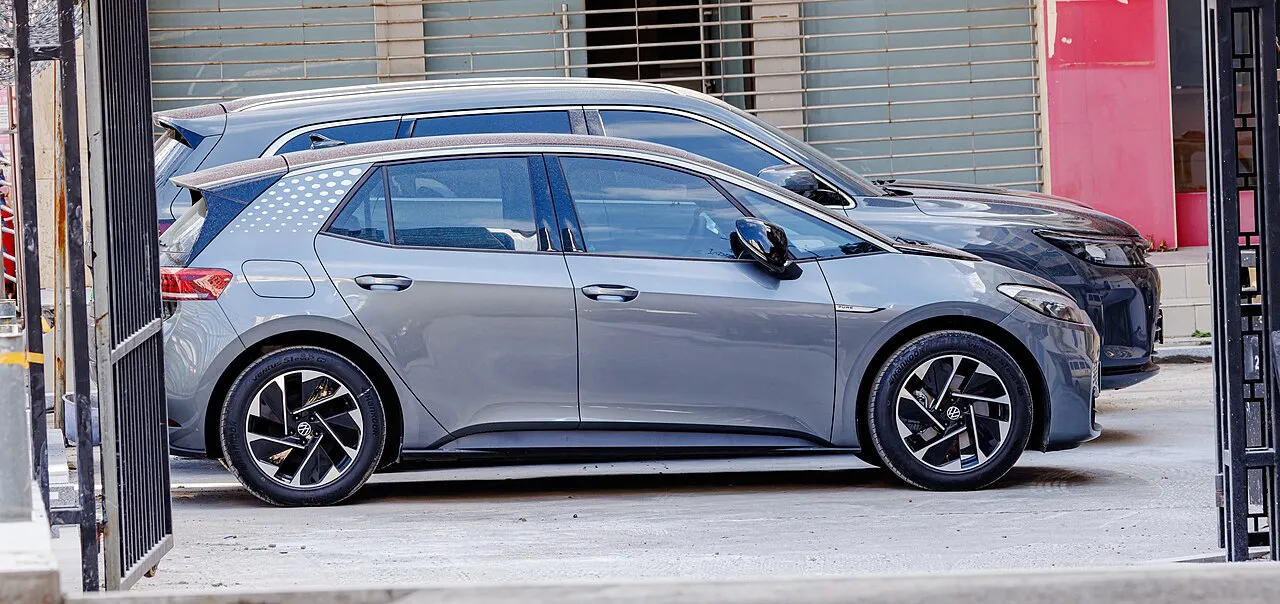
The short answer: Choose the Volkswagen ID.3 if a shorter, lower hatchback suits your parking and everyday cargo needs. Choose the ID.4 if you want a taller, longer SUV shape for passengers and flexible cargo use; check the actual rear seat and cargo area in person because interior measurements are not published here.
The Volkswagen ID.3 is the better size for drivers who want a compact hatchback that is easier to fit into tight parking spaces and whose regular cargo can be managed through a hatch. The ID.4 is the larger choice: it is longer and taller, with an SUV body that may suit shoppers who value a higher seating position and more adaptable space for passengers or bulky items. If rear-seat comfort or cargo capacity is decisive, compare the cars in person; exterior dimensions alone cannot establish how much room people or luggage get inside.
The choice is less about which vehicle is universally roomier and more about how the size and shape align with your routine. Think about where the car spends most of its time, who usually rides in back, and whether cargo tends to be small bags or awkward objects. The published figures clarify the exterior difference, while a seat and cargo-area check answers the questions those figures cannot.
What the published dimensions show
European 2025 model-year figures from OpenEV Data and EVDB make the size gap clear. The ID.3 measures 4,261 mm long, 1,809 mm wide and 1,552 mm tall, with a 2,765 mm wheelbase. The European ID.4 Pro measures 4,584 mm long, 1,852 mm wide and 1,642 mm tall, with a 2,765 mm wheelbase. That makes the listed ID.4 323 mm longer, 43 mm wider and 90 mm taller than the ID.3 Pro; both have the same listed wheelbase.
Those are exterior measurements for specific European versions, rather than a universal set of dimensions for every market configuration. The ID.4 GTX and Pro 4Motion share the Pro's listed length and width, while their heights are 1,642 mm and 1,640 mm respectively. The ID.3 versions share the same listed exterior measurements. The table keeps market, model year and test standard alongside each version so that the figures are not mistaken for a single global specification. Range figures in different rows use different test standards, and are not directly comparable across those standards.
| Vehicle and version | Market, model year | Exterior dimensions | Range and test standard | Source |
|---|---|---|---|---|
| ID.3 Pro | Europe, 2025 | 4,261 × 1,809 × 1,552 mm; wheelbase 2,765 mm | 428 km, WLTP | OpenEV Data; EVDB |
| ID.3 Pro S | Europe, 2025 | 4,261 × 1,809 × 1,552 mm; wheelbase 2,765 mm | 559 km, WLTP | OpenEV Data; EVDB |
| ID.3 GTX | Europe, 2025 | 4,261 × 1,809 × 1,552 mm; wheelbase 2,765 mm | 600 km, WLTP | OpenEV Data; EVDB |
| ID.4 Pro | Europe, 2025 | 4,584 × 1,852 × 1,642 mm; wheelbase 2,765 mm | 520 km, WLTP | OpenEV Data; EVDB |
| ID.4 Pro 4Motion | Europe, 2025 | 4,584 × 1,852 × 1,640 mm; wheelbase 2,771 mm | 498 km, WLTP | EVDB |
| ID.4 GTX | Europe, 2025 | 4,584 × 1,852 × 1,642 mm; wheelbase 2,765 mm | 480 km, WLTP | OpenEV Data; EVDB |
| ID.4, rear-wheel drive | US, 2026 | Not published here | 291 mi, EPA | US EPA fueleconomy.gov |
| ID.4, all-wheel drive | US, 2026 | Not published here | 263 mi, EPA | US EPA fueleconomy.gov |
| ID.4, rear-wheel drive | Canada, 2026 | Not published here | 468 km, NRCan | Natural Resources Canada |
| ID.4, all-wheel drive | Canada, 2026 | Not published here | 423 km, NRCan | Natural Resources Canada |
Rear-seat room: check how the space works for your passengers
A longer body does not by itself prove that rear passengers will be more comfortable. The listed European ID.3 and ID.4 wheelbases are close: 2,765 mm for the ID.3 versions and most ID.4 versions, with the Pro 4Motion at 2,771 mm. Wheelbase is only one part of cabin packaging; it does not tell you the seat shape, foot room, headroom, ease of entry or how the front seats affect space behind them. No rear-seat measurements are published for these versions, so the responsible comparison is to sit in both vehicles.
Bring the people who most often ride in back, if possible. Have them sit behind the usual driver position, check whether feet fit beneath the front seat, and assess whether the seating posture feels comfortable on a longer trip. For child seats, try the specific seats you use and check access to the buckles and the space needed to secure them. A taller SUV body can feel different to enter and sit in than a lower hatchback, but the actual experience depends on the vehicle's interior design and the passenger.
If rear passengers are occasional and usually travel short distances, the ID.3's smaller footprint may be a sensible daily trade. If adults or children ride in back frequently, treat that as a practical requirement and test it before choosing. The ID.4's exterior size suggests a more substantial overall package, but shoppers should verify rear comfort directly rather than infer a precise advantage from length or height.
Cargo flexibility: match the shape to what you carry
Both vehicles have the body style shoppers associate with access through a rear hatch: the ID.3 is a hatchback and the ID.4 is an SUV. The ID.4's additional exterior length and height may make its overall shape appealing when cargo is part of the decision, while the ID.3's shorter dimensions can be easier to place in a garage or parking space. Neither exterior dimensions nor the SUV label establish cargo volume, opening dimensions or the amount of floor space with the seats occupied. Those figures have not been published for the versions covered here.
Consider the objects you carry regularly. A stroller, sports equipment, groceries, luggage or a pet carrier can have awkward dimensions that a volume figure alone may not settle. At a dealer, bring representative items or measure them beforehand. Check the hatch opening, the height of the load floor, how far items must be lifted, and whether the rear seats fold in a way that works for your needs. If passengers and cargo often share the cabin, test the arrangement together rather than judging the empty cargo area.
For frequent large loads, the ID.4 is the natural starting point because it is the larger-bodied SUV. The ID.3 may be enough if your cargo is modest and the appeal of a more compact exterior matters more. The right answer depends on the shape and frequency of your real loads, so avoid treating the class label as a substitute for a hands-on check.
Parking and everyday maneuvering
The ID.3 is 323 mm shorter and 43 mm narrower than the European ID.4 Pro dimensions shown above. That difference can matter when a garage, street space or regular parking stall is tight. The ID.4 is also taller, which can affect whether it fits under a low garage entrance or other height restriction. Check the dimensions for the exact market and version you are considering, then compare them with the usable space where you park; mirrors, access clearance and the path into the space also matter.
Length and width do not capture visibility or turning behavior. The figures here do not include turning circles or driver sightlines, so a parking-lot drive or careful cabin check can help establish which vehicle feels manageable. If your routine includes narrow streets, small garages or frequent parallel parking, the ID.3's smaller exterior footprint is a concrete advantage to investigate. If you have ample parking and need a larger vehicle shape, the ID.4's extra size may be an acceptable trade.
Range figures are market-specific
Range should not decide the size question by itself, and the figures in the table use separate regional test standards. The European ID.3 Pro is rated at 428 km WLTP, while the European ID.4 Pro is rated at 520 km WLTP. The European ID.3 Pro S and GTX have their own listed WLTP figures, as do the ID.4 GTX and Pro 4Motion. In the US, the 2026 ID.4 is rated at 291 miles EPA for rear-wheel drive and 263 miles EPA for all-wheel drive; Canadian 2026 ratings from Natural Resources Canada are 468 km and 423 km respectively. EPA, NRCan and WLTP results should be read within their own standards, not treated as interchangeable comparisons.
These figures identify the market and version associated with each rating; they do not establish the range of an ID.3 sold in the United States. They also do not tell you how a particular commute, weather or driving style will affect actual range. First decide which body size suits the passengers, cargo and parking situation, then compare the relevant local version's range rating against your typical routes.
Choose by the constraint you feel most often
Start with the limit your current routine makes most noticeable. If parking and maneuvering are the recurring challenge, the ID.3's shorter and narrower European dimensions make it the logical one to inspect first. If you regularly carry several passengers or bulky items and prefer an SUV body, begin with the ID.4 and confirm the cabin and cargo arrangements with real occupants and luggage.
When both seem plausible, make a simple comparison around the same daily scenario: park each in the available space, set the driver's seat where it belongs, place rear passengers behind it, and load the items that usually travel with you. That process answers more than a general claim that one vehicle is roomy or compact. Choose the smallest vehicle that consistently accommodates your passengers and cargo, unless the ID.4's taller SUV form is itself a priority for you.
Frequently asked questions
Which is bigger, the Volkswagen ID.3 or ID.4?
The European 2025 ID.4 Pro is 4,584 mm long, 1,852 mm wide and 1,642 mm tall. The European 2025 ID.3 versions are 4,261 mm long, 1,809 mm wide and 1,552 mm tall, according to OpenEV Data and EVDB.
Does the ID.4 have more rear-seat room?
The ID.4 is longer and taller in the listed European dimensions, but rear-seat measurements are not published for these versions. Sit behind the usual driver position in both vehicles to compare comfort and access.
Which Volkswagen is better for cargo?
The ID.4 is the larger-bodied SUV and is a sensible starting point for bulky cargo. Cargo-volume and opening measurements are not published here, so test the hatch and load your usual items in person.
Are ID.3 and ID.4 range figures directly comparable?
Only ratings using the same market and test standard should be compared. WLTP, EPA and NRCan ratings use different standards, so figures across them are not interchangeable.
Related stories

How to Choose an EV for Frequent Public AC Charging
If you often charge at public AC stations, compare the car’s onboard charger, connector access and how long it will usually be parked there.

What to Check Before Buying an EV With a Panoramic Roof
Check a panoramic roof for sun protection, cabin heat, headroom and reliable operation. These practical steps can show whether the glass suits your daily driving.

How to Choose an EV for Your Dog and Travel Gear
Compare an EV’s entry points, secure travel area, climate controls and cleanability with your dog and gear on hand before choosing a vehicle.