BYD Dolphin vs. Atto 3: Which Body Style Fits Better?
The BYD Dolphin is the smaller hatchback, while the Atto 3 is a taller, wider SUV. Their dimensions help show which format may suit your passengers, cargo and parking routine.
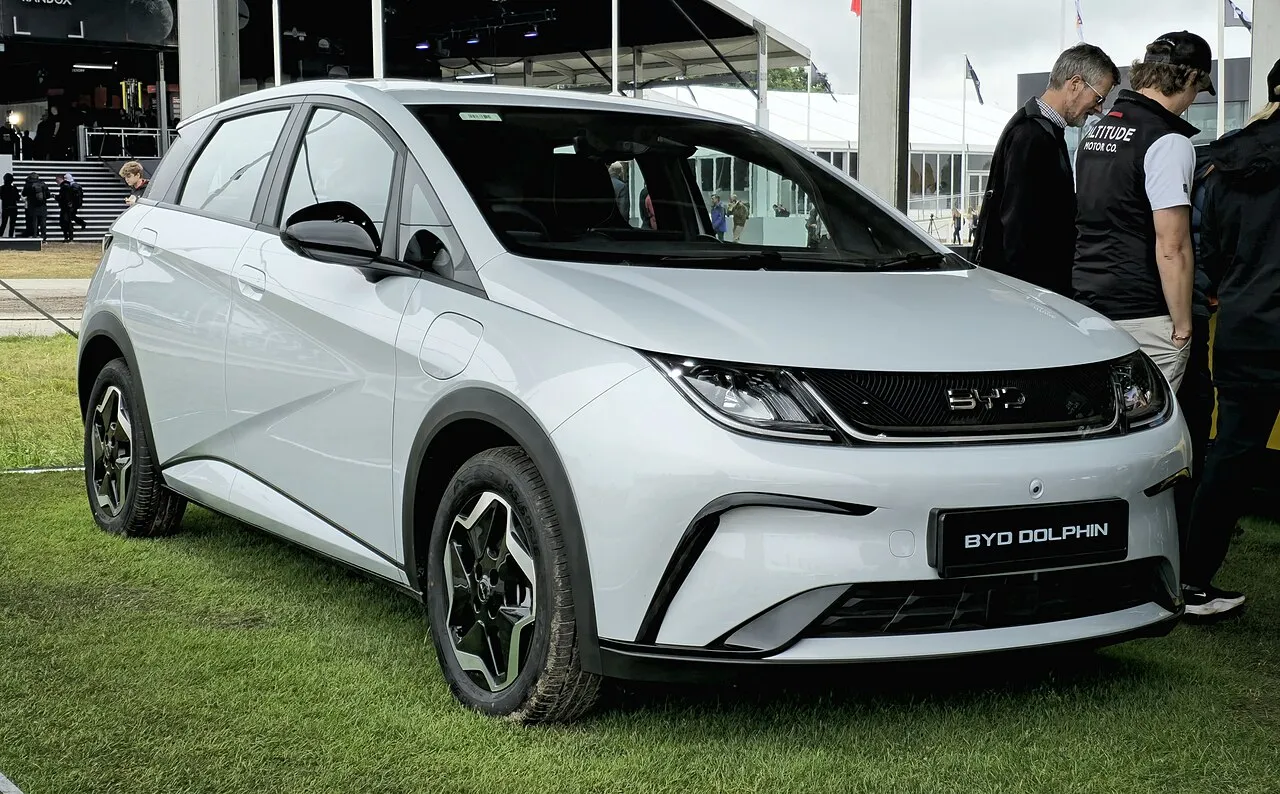
The short answer: Choose the BYD Dolphin if a shorter, lower hatchback better fits your parking and everyday errands; choose the BYD Atto 3 if you want a taller, wider SUV shape and a larger exterior footprint. The published dimensions show those format differences, but do not establish which one has more usable passenger or cargo space.
The BYD Dolphin is the more compact hatchback; the BYD Atto 3 is the taller, wider small SUV. That makes the Dolphin the more natural fit for shoppers who prioritize a shorter car in tight urban spaces, while the Atto 3’s SUV body and greater height may suit those who prefer a higher seating position and a taller cargo opening. The dimensions support that broad comparison, but they do not tell us the vehicles’ interior room, seat height, cargo volume or opening measurements.
Both vehicles have front-wheel drive in the European 2025 versions summarized below, but this comparison is about body shape and daily use rather than powertrain differences. The figures are European-market specifications, so they should not be treated as confirmation of equipment or measurements for a vehicle sold in another market.
What the dimensions say
The Dolphin measures 4,290 millimeters long, 1,770 mm wide and 1,550 mm tall across the listed European 2025 trims. The Atto 3 is 4,455 mm long, 1,875 mm wide and 1,615 mm tall. In other words, the Atto 3 takes up more exterior space in every listed direction: it is 165 mm longer, 105 mm wider and 65 mm taller.
That difference matters most when the car is moving through a dense street or fitting into a space with little room to spare. A shorter and narrower body can be easier to place in a tight parking bay or maneuver through a narrow lane. The Dolphin’s dimensions favor that sort of footprint. The Atto 3’s additional length and width call for more room around the car, although actual ease of parking also depends on visibility, turning behavior and driver-assistance features, which these figures do not describe.
The wheelbase—the distance between the front and rear axles—is close: 2,700 mm for the Dolphin and 2,720 mm for the Atto 3. A longer wheelbase can help create room between the axles, but it does not by itself prove that passengers have more legroom. Seat design, floor shape and cabin layout also matter. Without comparable cabin measurements, it would be a guess to declare either car roomier for rear passengers.
Passenger space and the feel of each body style
A hatchback and a small SUV package people and belongings differently. The Dolphin’s lower roof and hatchback proportions give it a more carlike outline. The Atto 3’s taller exterior gives it the conventional SUV profile. For shoppers who like sitting higher or want a vehicle that feels less low-slung when getting in and out, that taller shape may be appealing. But exterior height alone cannot establish the exact seat height, ease of entry or headroom in either car.
The Atto 3 is also wider on the outside. That may sound promising if you are thinking about shoulder room, but exterior width includes the body and does not directly translate into cabin width. Door structure, trim and seat placement use some of that space. The dimension is a useful clue about the overall footprint, not a substitute for sitting in the car or checking interior measurements.
Families should consider the shape of the rear seating area and the access needed for their regular passengers. A taller vehicle can make it easier for some people to enter without lowering themselves as far, while a lower hatchback can be a better match for drivers who prefer a carlike position. Those are body-style tendencies, not guarantees about these specific cabins. Check the rear-door opening, child-seat access and space around the seats in person if those determine whether the car will work.
The listed curb weights reinforce that these are different-sized vehicles: the European 2025 Atto 3 Extended Range is 1,750 kg, while the Dolphin’s listed trims range from 1,405 kg for Standard to 1,545 kg for Design. Weight is not a measure of passenger room, and the trim comparison is not perfectly like-for-like. It does, however, illustrate why choosing by body style alone does not settle every practical or driving question.
Cargo access: opening shape matters
Both vehicles have a hatchback-style rear opening in the everyday sense that the rear door lifts to provide access to the cargo area. The Dolphin’s hatchback body and the Atto 3’s SUV body may create different loading heights and cargo-floor relationships, but the available dimensions do not include cargo volume, opening width, opening height, floor length or load-floor height. There is no sound basis here for saying which one holds more luggage or fits a particular bulky object.
When cargo access is the deciding issue, think about the objects you carry rather than relying on the SUV label. A tall box may benefit from a higher opening, while a heavy item may be easier to load over a lower threshold. A long, flat item depends on floor length and the ability to fold seats. The Atto 3’s greater exterior height suggests a taller overall shape, but does not confirm more usable vertical cargo space; the Dolphin’s shorter body does not prove that its cargo area is small.
Try the actual loading task with the rear seats in the positions you normally use. Check whether the hatch clears a low garage ceiling, whether the floor is level with the opening and whether the cargo space remains useful with passengers in the back. Those details can outweigh the broad hatchback-versus-SUV distinction for a household that regularly carries a stroller, sports equipment, shopping or luggage.
Urban practicality: footprint versus height
For city driving, the Dolphin’s smaller exterior footprint is its clearest practical advantage in this comparison. It is shorter and narrower, which can make it easier to fit into constrained parking spaces and leave more room when squeezing past obstacles. The dimensions cannot guarantee a tighter turning circle or easier visibility, so shoppers should also assess those traits on the specific car.
The Atto 3 asks for more space on the street, but brings the taller SUV format some drivers prefer. A higher driving position can make it easier to see over nearby traffic in some situations, though sightlines depend on the vehicle’s windows, pillars, mirrors and seating position. The published exterior height does not tell us how high the driver sits or how much can be seen around the car.
Parking involves more than the car’s length. Width affects how much room remains to open doors; height matters in garages and covered parking; and the rear hatch needs clearance to open. The Dolphin is the smaller choice by the dimensions given, but measure the parking space and check the hatch’s movement if space is tight. The Atto 3’s extra width and height may be manageable at home and frustrating elsewhere, depending on the routes and parking places you use.
European 2025 dimensions and range
The table focuses on the body dimensions that help explain the format comparison. It also includes WLTP range as a point of model context; those ratings describe a test-cycle range, not cargo capacity or a direct measure of city practicality. Each entry identifies its market, model year and standard. The listed European trims share the same exterior dimensions within each model, while battery and range vary by trim.
| Vehicle and trim | Market, model year and test standard | Length × width × height | Wheelbase | Rated range |
|---|---|---|---|---|
| BYD Dolphin Standard | Europe, 2025, WLTP | 4,290 × 1,770 × 1,550 mm | 2,700 mm | 340 km |
| BYD Dolphin Boost | Europe, 2025, WLTP | 4,290 × 1,770 × 1,550 mm | 2,700 mm | 310 km |
| BYD Dolphin Design | Europe, 2025, WLTP | 4,290 × 1,770 × 1,550 mm | 2,700 mm | 435 km |
| BYD Dolphin Premium Extended Range | Europe, 2025, WLTP | 4,290 × 1,770 × 1,550 mm | 2,700 mm | 427 km |
| BYD Atto 3 Standard Range | Europe, 2025, WLTP | 4,455 × 1,875 × 1,615 mm | 2,720 mm | 345 km |
| BYD Atto 3 Extended Range | Europe, 2025, WLTP | 4,455 × 1,875 × 1,615 mm | 2,720 mm | 420 km |
Dimension and range figures are credited to OpenEV Data for the Dolphin Standard, Boost and Premium Extended Range and the Atto 3 Standard Range; EVDB for the Dolphin Design; and OpenEV Data and EVDB for the Atto 3 Extended Range. The range figures use the European WLTP test standard. They should not be mixed with the separate Chinese-market Atto 3 CLTC ratings: a different test cycle does not make those figures directly comparable.
Which format fits your routine?
Favor the Dolphin if your regular challenges are narrow streets, close parking or fitting a car into a smaller space. Its exterior dimensions are more compact, and its hatchback shape gives you a conventional car profile. Confirm that the seats, access and cargo opening work for your passengers and belongings, because the exterior measurements cannot answer those questions.
Favor the Atto 3 if you specifically want a small SUV’s taller, wider shape and are comfortable with its larger footprint. Its nearly similar wheelbase does not prove that it offers more passenger room, and the SUV body does not prove greater cargo capacity. Inspect the cabin and loading area to make those comparisons directly.
For either model, the useful test is whether it accommodates your usual passengers and cargo while fitting the places you drive and park. The Dolphin has the advantage in exterior compactness; the Atto 3 offers the taller SUV format. The right choice depends on which of those everyday trade-offs matters more to you.
Frequently asked questions
Which is smaller, the BYD Dolphin or Atto 3?
The Dolphin is smaller in all three listed exterior dimensions. The European 2025 Dolphin is 4,290 mm long, 1,770 mm wide and 1,550 mm tall; the Atto 3 is 4,455 mm long, 1,875 mm wide and 1,615 mm tall.
Does the Atto 3 have more passenger room?
The exterior dimensions do not establish which cabin has more usable passenger room. Their listed wheelbases are close, and interior measurements are not available here.
Which BYD has more cargo space?
Cargo volume and opening measurements are not included, so the available information cannot establish which vehicle carries more. Check the loading area with the kinds of items you regularly transport.
Which is easier to park in a city?
The Dolphin has the smaller exterior footprint, which may make it easier to fit into tight spaces. Actual parking ease also depends on visibility, turning behavior and the space available.
Can I compare the European and Chinese Atto 3 range ratings?
The European figures use WLTP, while the Chinese figures use CLTC. Those different test standards should not be treated as equivalent.
Related stories

Chevrolet Blazer EV SS Earns Its Place in SS History
Car and Driver says the 615-hp Blazer EV SS is worthy of Chevrolet’s Super Sport badge, pairing quick acceleration with upgraded brakes and tires.
Kia EV3 Loses Australian Buyers to BYD on Price and Features
A couple who considered Kia’s EV3 chose a BYD Atto 3 instead, weighing price, equipment, styling, dealer experience and concerns about long-term support.

Nio Launches ES8 Mirror Black Edition 2.0 in China
Nio’s ES8 Mirror Black Edition 2.0 adds black-and-gold trim and starts at 434,800 yuan in China, while retaining the standard ES8’s core hardware.