Will Your Child Seats Fit in an EV? What to Check
Compare rear-seat width, anchor access and front-seat clearance with your actual child seats. A hands-on fit check reveals what cabin dimensions cannot.

The short answer: Bring the child seats you use to the EV and check each intended seating position. Confirm that the seats can be installed according to both manuals, everyone has usable space, and the front seats remain comfortable.
The most useful way to compare EVs for carrying child seats is to try your actual seats in each vehicle. Check whether they fit across the rear bench, whether you can reach the correct anchors or seat belts, and how much space remains behind the front seats. A roomy-looking cabin can still be difficult to use if a rear-facing seat pushes a front occupant forward or if adjacent child seats block a buckle.
Make the comparison with the seats, children and seating arrangement you expect to use. A vehicle that works well with one child seat may pose a different problem when a second seat or an adult passenger needs the rear bench. Start with the vehicle and child seat manuals, then check the fit in person before deciding which EV works for your family.
Start with the seating arrangement you need
Write down who will sit where on a typical trip. Include the type of child seat each child uses, whether an adult sometimes rides in back, and which front seats need to accommodate regular drivers and passengers. This turns a general question about cabin size into a practical question: can every occupant use their assigned position comfortably while each child seat is installed as directed?
Think ahead to changes you expect to make soon. A rear-facing seat and a forward-facing seat place different demands on the cabin. A booster changes how a child reaches the seat belt buckle. If you plan to move a seat between vehicles or change its position on the bench, check those arrangements too. Do not assume that a successful installation in one rear position means the same seat will work equally well in another.
Check usable rear-seat width, not just cabin width
Rear-seat width matters most when you need multiple child seats, or a child seat beside another passenger. The useful space is shaped by the bench cushions, door panels, seat belt positions and the shape of the seats themselves. A broad bench can narrow where occupants actually sit, and a child seat can cover the buckle needed by the person beside it.
Place each child seat in its intended position and check whether it sits as its instructions require. If seats will be installed side by side, make sure each can be secured independently. One seat should not have to be pushed out of position by its neighbor to make the arrangement work. Check whether a rear passenger can sit normally and fasten their belt without reaching beneath a child seat or disturbing its installation.
For three occupants across the rear, pay particular attention to the center position. Its cushion shape, belt arrangement and access to buckles may differ from the outer positions. Look in the vehicle manual for the approved child seat installation method at each position. Lower anchors in the outer positions do not automatically mean there is a separate set for the center; follow the vehicle and child seat instructions rather than borrowing anchors from neighboring positions unless both permit it.
Inspect anchors, belts and buckle access
Find the lower anchors, tether anchors and seat belt buckles for every position you plan to use. Check where they are and whether the child seat leaves enough room to reach them. Anchors set deep between the cushions can take more effort to access, while a buckle crowded by the side of a child seat can be awkward to use every day.
In the United States, LATCH gives some child seats an installation method using lower anchors, with a top tether used as directed for a forward-facing seat. A seat belt can also be an installation method when the child seat and vehicle instructions allow it. Read both manuals for the permitted positions, installation method and any limits that apply. Do not treat the presence of an anchor as permission to use it for every seat or seating position.
After installation, check the child seat according to its instructions, including how it sits and where to test for movement. Then check the neighboring seats and belts. Can another child or adult reach the correct buckle? Can a booster rider buckle up without shifting the booster or an adjacent installed seat? This everyday access can distinguish two EVs that appear similar on a quick look inside.
Measure the space behind the front seats by using it
Rear-facing child seats often make front-to-back space the deciding factor. Set the driver’s seat for the person who normally drives, including a comfortable position for reaching the pedals and steering wheel. Set the front passenger seat for its usual occupant. Then install the rear-facing seat behind each front position you might use, following its required angle and clearance instructions.
Check the result with someone sitting in front. The question is whether the front occupant can sit comfortably and use the vehicle normally while the child seat remains correctly installed. Avoid judging the fit with the front seat moved farther forward than anyone would actually tolerate. If one rear position works better than another, check whether that choice creates a buckle or seating problem elsewhere on the bench.
Front-to-back clearance is also relevant to forward-facing seats and boosters. Check whether the child has room to sit as the seat instructions require and whether a front seat’s position affects access to the rear seat. The shape of the front seatback and rear cushion may matter as much as the apparent legroom. Test the full seating arrangement rather than using a single cabin measurement as a substitute.
Check daily access with the seats installed
A child seat may fit securely yet be frustrating to use. Open the rear doors and practice placing a child in the seat, reaching the harness and closing the door. Consider the space available to stand beside the vehicle when helping a child. If you often load children in a garage or a tight parking space, the way the rear door opens may affect the routine.
Check how easily an older child can get to a booster and fasten the belt. The belt should be used as the booster instructions direct, and the child should be able to reach the buckle without shifting another seat. If an adult will sit between child seats, have that person try the position and buckle up. A narrow gap that looks acceptable from outside may be uncomfortable or difficult to use once everyone is seated.
Repeat the check with the front seats in their normal positions and the rear seats fully installed. This is also the time to see whether doors close without interference and whether you can still reach any tether or buckle you need to use. A brief, realistic loading routine can expose problems that an empty-cabin inspection misses.
Compare EVs using the same setup
Use the same child seats and intended seating positions in each EV you consider. Start with the manuals, install the seats as directed, then sit in every occupied position. Record which arrangements work, which buckles are hard to reach and whether either front seat needs an uncomfortable adjustment. If a configuration fails, try another permitted rear position before ruling out the vehicle.
Keep the deciding question specific: can your family use this arrangement correctly and comfortably on an ordinary trip? Rear-seat width, anchor access and space behind the front seats each answer part of it. Checking them together gives a clearer answer than judging an EV by its overall size or how open the cabin looks.
Frequently asked questions
What should I check first when comparing EVs for child seats?
Identify the child seats and seating positions you need, then check the vehicle and child seat manuals. Try that arrangement in each EV.
Does a wide rear bench mean three child seats will fit?
Not necessarily. Cushion shape, seat belt positions, buckle access and the size of the child seats all affect whether each seat can be installed as directed.
Can I use the outer lower anchors for a center child seat?
Only if both the vehicle and child seat instructions permit that arrangement. Outer lower anchors do not automatically create a center installation position.
How do I check room for a rear-facing child seat?
Set the front seats for their usual occupants, then install the rear-facing seat at the angle required by its instructions. Check that it fits while the front occupants can still sit comfortably.
Related stories

How to Check Child-Seat Anchors and Fit in an EV
Learn where to find LATCH anchors, how to check access and fit, and why testing your own child seat in an EV can help before you buy.
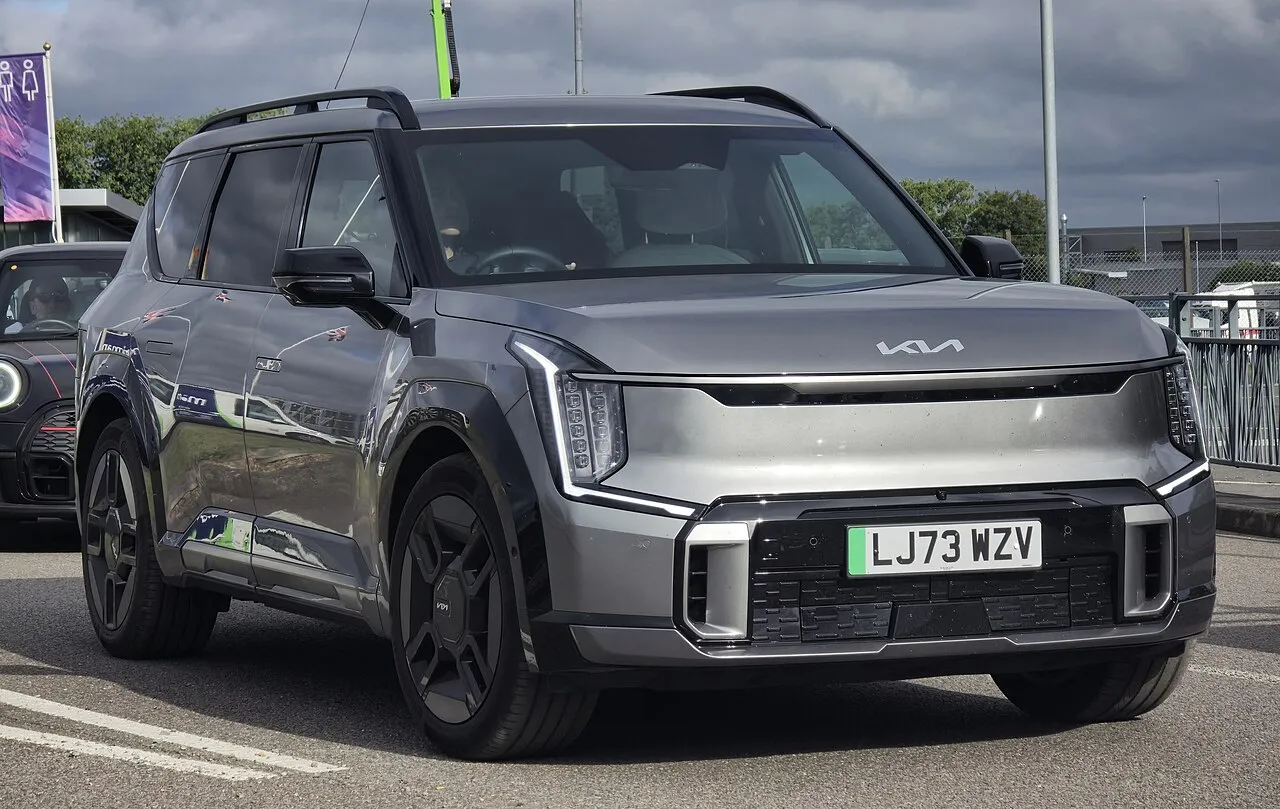
Kia EV9 vs. Volkswagen ID. Buzz: Which Fits a Large Family?
The EV9 offers three rows in an SUV, while the ID. Buzz brings minivan-style access. Compare family seating, cargo flexibility and published range.

How to Choose an EV for School and Sports Runs
Choose an EV by checking how easily passengers get in, whether sports gear fits, and how reliably you can recharge between short trips and activities.