Why EV Grid Export and Home Backup Power Have Different Limits
An EV may deliver one power level during an outage and another to the grid. Inverter ratings, home wiring and utility export rules set each limit.

The short answer: Grid export and home backup are separate operating modes with different equipment paths and connection rules. The lower limit at each point in the path determines how much power the EV can deliver in that mode.
An EV can have one power limit for sending electricity to the grid and another for powering a home during an outage. The difference usually comes from where the power is measured, which equipment carries it and what the grid connection permits. A home backup rating describes power available to connected home circuits under backup conditions. A grid export limit describes power allowed to flow out through the utility connection. Neither figure, on its own, tells you the limit for the other use.
Export and backup measure power at different places
In vehicle-to-grid operation, often shortened to V2G, electricity from the EV passes through bidirectional equipment and the home's electrical system toward the utility grid. Export is generally assessed at the point where the home connects to that grid. If the home is using some of the EV's output at the same time, less may cross that point. The power produced by the vehicle and the power exported to the grid therefore need not be equal.
During an outage, home backup serves circuits that have been connected to the backup system. The equipment must isolate those circuits from the utility grid before energizing them. A backup power rating may describe the output of an inverter or the capacity available to those circuits. It does not establish how much power the installation can send through the utility connection when the grid is operating.
These distinctions matter when reading a claim about what an EV can power. Ask whether the figure refers to the vehicle, the bidirectional charger, an inverter, the backup panel or the utility connection. Each is a different point in the electrical path. A rating at one point cannot automatically be treated as the usable power at another.
Equipment can impose a different limit in each mode
Power from an EV battery must be converted and controlled before it can serve household circuits or enter the grid. Depending on the system, conversion may occur in the vehicle, in external equipment or through a combination of components. The vehicle's discharge capability, the inverter's output rating, the bidirectional charger and the associated wiring can each constrain the result. The effective limit is the lowest applicable limit along the path being used.
Backup and grid export do not necessarily use identical paths. A backup system may feed a dedicated group of circuits through a transfer device, while grid export passes through equipment connected to the home's main electrical system. Even when the modes share an inverter, its controls may apply different output settings to each. A rating described as backup output is therefore not necessarily an approved export rating.
The type of rating also matters. Equipment may be able to supply a brief surge to start a motor while sustaining a lower output over time. An appliance that starts successfully during an outage does not demonstrate that the system can export that surge continuously. Conversely, a steady export setting says little about whether the backup system can handle the starting demand of a particular appliance. Continuous output and short bursts answer different questions.
Household wiring can narrow the usable backup limit further. A system that backs up selected circuits cannot power a load connected only to an unprotected circuit. Individual circuits, breakers and transfer equipment must also be suited to the loads they carry. Where a home has multiple electrical legs, the way backup equipment distributes power among them may affect which loads can run together. A single total power figure does not describe every circuit-level constraint.
Grid connection rules set the allowed export
Sending power into a utility network requires an approved grid connection and equipment that operates within the applicable connection requirements. The permitted export level may be lower than the equipment's physical output capability. An installation can also be configured to prevent export, even if it can power home circuits during an outage. In that case, the ability to provide backup does not imply permission to send electricity to the grid.
Export limits can be enforced through equipment settings or controls that measure power at the utility connection. The system can reduce EV output when necessary to stay within the allowed level. If household use changes while the EV is discharging, the amount crossing the connection can change as well. For example, more of the EV's output may serve the home when home demand rises, leaving less to export without increasing the vehicle's output.
Grid-connected operation also depends on the condition of the grid. Equipment must coordinate its output with grid voltage and frequency and respond to conditions that require it to reduce output or disconnect. During an outage, it must not continue feeding a utility line as though the grid were operating. Backup power requires the intended home circuits to be separated from that line. These operating requirements help explain why a system may support backup yet have a different limit, or no enabled capability, for grid export.
Approval applies to the installation, not just the EV. The charger or inverter, connection arrangement, controls and local utility requirements all affect what can be exported. A vehicle's ability to discharge is one part of that arrangement. It cannot, by itself, establish that a particular home can export power or identify the home's permitted export level.
Battery limits affect available power and duration
Power is the rate of delivery; energy is what the battery can deliver over time. A high backup power rating does not mean the EV can sustain that output indefinitely. Running large loads drains the usable battery energy faster, and the vehicle may reserve some charge for driving or stop discharging when it reaches a set threshold. The same distinction applies to grid export: an allowed power level is not a promise that the EV can maintain it for a particular period.
Battery state, temperature and vehicle controls may also affect discharge capability. An advertised equipment rating is best understood as a ceiling under the conditions for which it applies, rather than a constant output in every circumstance. For backup planning, both the power needed to run the chosen loads and the energy needed to run them for the desired time matter. For V2G, the vehicle must also be available, connected and permitted by its controls to discharge.
How to interpret two different power figures
First, identify the unit and measurement point behind each figure. Is it inverter output, power delivered to backed-up circuits, or net power crossing the utility connection? Next, check whether each figure describes sustained output, a temporary surge, an equipment maximum or an operating limit set for the installation. Figures with different definitions can both be accurate without describing the same capability.
Then check the configuration. Determine which circuits the backup system serves, whether the installation has grid export approval and whether an export limit is set. Those answers establish what the system is configured to do at that home. If export has not been enabled, a backup rating should be read solely as a backup rating. If both modes are enabled, compare their limits only after accounting for their measurement points and operating conditions.
The practical rule is to treat backup power and grid export as separate capabilities. Backup depends on the isolated home circuits and the equipment feeding them. Export depends on the power path to the grid and the rules governing that connection. The EV battery can be the energy source for both, while the usable and permitted power differs.
Frequently asked questions
Can an EV provide home backup without exporting to the grid?
Yes. A system can power isolated home circuits during an outage while being configured to prevent export through the utility connection.
Does a home backup power rating show how much the EV can export?
No. Backup output and grid export are measured at different points and can be subject to different equipment and connection limits.
Why might grid export be lower than the EV's output?
Some output may be used by the home, while equipment settings or the approved grid connection may further limit power crossing the utility connection.
Does a higher power rating mean the EV will provide power for longer?
No. Power describes the rate of delivery. Duration depends on usable battery energy, the loads or export level, and discharge controls.
Related stories

How EVs Convert Battery Power for Home and Device Use
Bidirectional charging takes more than an outlet: an EV needs power conversion, control logic and compatible hardware to send energy to a home or device.
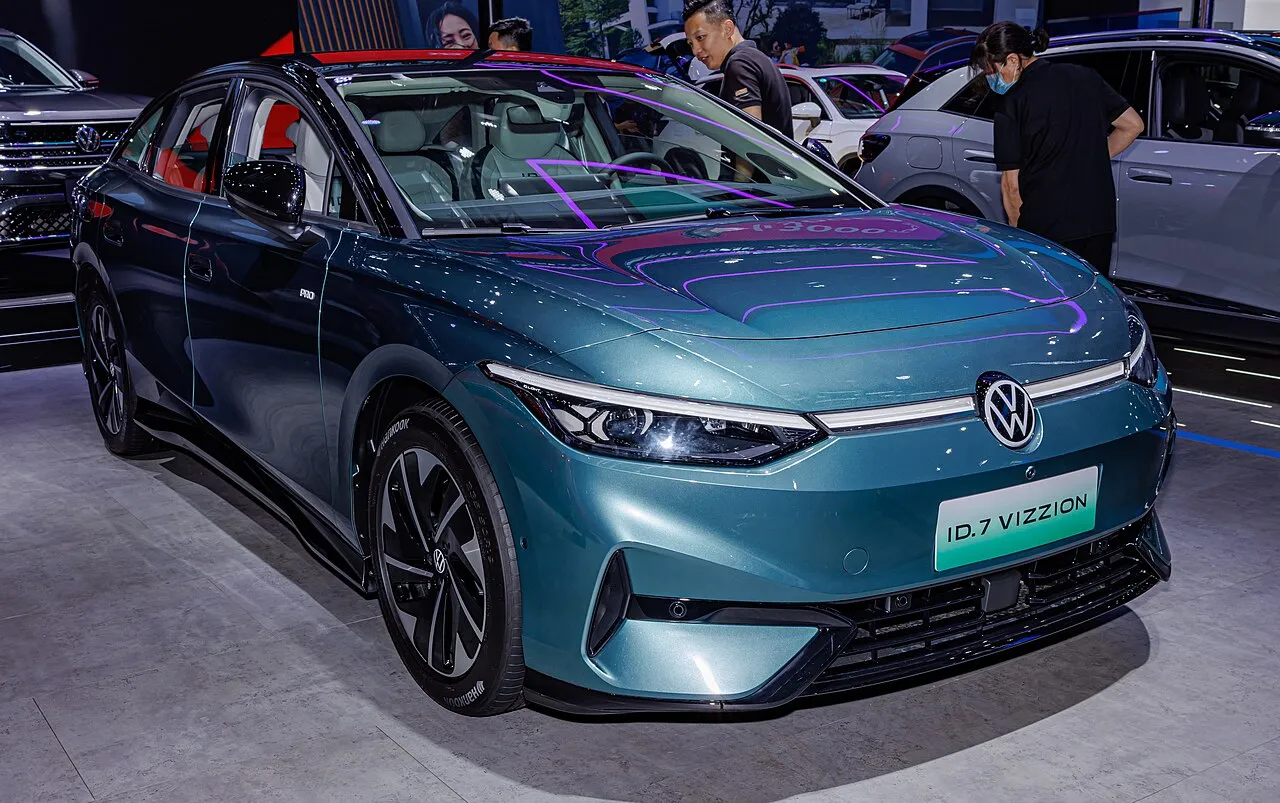
Volkswagen Elli Plans Paid Vehicle-to-Grid Charging in Germany
Volkswagen’s Elli is preparing a German V2G offer that pays owners to keep compatible EVs plugged in, with energy exports paid separately.

How EV Home Backup Cuts Loads to Protect Battery Reserve
An EV backup system can reduce household demand before the battery reaches its reserve. Here is what it can control, what it cannot, and why the settings matter.