Volvo’s Elbil Concept Turns 50 After 1976 Debut
Volvo’s 1976 Elbil concept paired a 40 mph top speed with under 35 miles of range. Its anniversary highlights how far the company’s EVs have since come.
The short answer: Volvo’s Elbil electric-car concept debuted in November 1976 and turns 50 in 2026. Electrek says two were built, but the concept never reached Volvo showrooms.
Volvo’s Elbil electric-car concept is 50 years old in 2026, marking an early attempt by the automaker to explore battery-powered transport decades before electric vehicles became mainstream. The concept was modest by modern measures: Electrek reports that it had a 9.5-kilowatt motor, a 4.3-kilowatt-hour lead-acid battery and less than 35 miles of range, with a top speed of 40 mph. Its history matters because it shows that Volvo’s interest in electrification predates the company’s modern electric models by half a century.
The Elbil debuted in November 1976. It did not become a production car, but Electrek reports that Volvo built two examples and that Sweden’s state-owned telecommunications company Televerket was a potential customer. The anniversary also gives a point of comparison with the Volvo EX60, which the outlet describes as a modern electric SUV with substantially different capabilities. Published figures for the EX60 vary by market and test standard, so they need to be read separately: the European P10 AWD has a 660-kilometer WLTP range, while US EPA ratings for 2027 versions run from 295 to 330 miles, depending on trim and wheels.
A practical idea in a small concept car
Electrek describes the Elbil as a low-cost runabout intended for young Swedes, with practicality taking priority over power and performance. Its layout and materials reflected that purpose. The concept used a steel skateboard structure and lightweight composite and aluminum body panels. Twelve 6-volt car batteries made up its battery pack, which the outlet reports had a total capacity of 4.3 kWh.
The car’s details were shaped by efforts to manage cost and weight. Electrek reports that it had sliding composite doors, parts-bin seats and flat glass. Pop-out side-window vents replaced roll-down windows. These features gave the vehicle a distinctively boxy appearance while fitting the concept’s practical brief. They also mark a different engineering context from a contemporary electric SUV: the Elbil’s reported range was under 35 miles and its top speed was 40 mph, whereas the EX60’s published range figures are measured in hundreds of miles under modern test cycles.
That comparison describes the scale of change, but the figures are not direct equivalents. The Elbil’s range figure in Electrek’s report is not identified with a modern EPA or WLTP test standard. The EX60 figures, by contrast, are tied to specific markets and standards. In Europe, EV Database lists the 2027 EX60 P10 AWD at 660 km under WLTP and the P12 AWD at 810 km under WLTP. In the United States, EPA ratings for the 2027 model range from 295 miles for a P6 Electric with 22-inch wheels to 330 miles for a P10 AWD Electric. WLTP and EPA ratings use different test procedures and should not be treated as interchangeable.
Why the Elbil did not reach showrooms
Despite what Electrek calls a relatively high level of refinement, the Elbil remained a concept. The outlet says Televerket was a ready customer in Sweden, but the car still did not enter Volvo showrooms. Only two examples were built. The report does not give a production cancellation date or explain why Volvo decided against taking the project further, so the available account establishes the outcome without assigning a specific cause.
The Elbil also represented a departure in Volvo’s concept-car naming. Electrek notes that earlier Volvo concepts and design studies included names such as Philip and Margarete Rose, inspired by Sweden’s practice of assigning a name to each day of the calendar. Elbil, by contrast, means “electric car” in Swedish. The direct name made the concept’s purpose explicit.
Volvo’s next electric-car effort came later. Electrek reports that about a decade passed before the company tried again, with a one-off Volvo 480 Electric coupe. The outlet gives that car a range of 120 km, or about 60 miles. It was another limited project rather than evidence of a continuous production line from the Elbil to today’s EVs. The long gap helps put the 1976 concept in context: it was an early exploration, not the start of an immediate transition to electric showrooms.
From an early experiment to today’s EX60
Volvo’s modern direction is different from the position described in the Elbil’s story. Electrek reports that Volvo is now owned by Chinese automaker Geely and says the company committed in 2017 to offering only electric and electrified vehicles. The outlet quotes Nicole Melillo Shaw, managing director of Volvo Car UK, describing the Elbil as an example of the company exploring electrification before EVs became mainstream. Shaw also pointed to the EX60 as a sign of progress in electric range, charging and safety technology.
The EX60 figures published for different markets show how much larger the capabilities of a current Volvo EV can be, while also illustrating why market labels matter. For the US market, EPA ratings for the 2027 P6 Electric are 307 miles with standard wheels and 295 miles with 22-inch wheels. The 2027 P10 AWD Electric is rated at 330 miles, or 312 miles with 22-inch wheels. Those are EPA figures for specific US versions, not estimates for every EX60.
European figures use WLTP. EV Database lists the 2027 P10 AWD at 660 km and the P12 AWD at 810 km. It also lists the P10 with a 95-kWh gross battery and 91-kWh usable capacity, and the P12 with a 117-kWh gross battery and 112-kWh usable capacity. Those European battery and range figures should not be combined with the US EPA ratings as though they describe one version tested on one cycle. They instead show the published figures for two market contexts.
The contrast with the Elbil is clear even without treating the range numbers as equivalent tests. Electrek’s account gives the 1976 concept a 4.3-kWh lead-acid pack and less than 35 miles of range. The modern EX60 figures refer to much larger battery capacities and range ratings in the hundreds of miles. The change is not simply a matter of a more powerful motor: the Elbil was built as a small, low-cost runabout, while the EX60 is an SUV with multiple versions and market-specific ratings.
What the anniversary says about Volvo’s EV history
The Elbil’s 50th anniversary connects Volvo’s current electrification ambitions with a much earlier prototype, while leaving an important distinction between experimentation and commercial adoption. In 1976, Volvo built a practical electric concept and had a possible institutional customer, but the vehicle did not reach showrooms. The later 480 Electric was also a one-off. Electrek’s account therefore describes several early steps rather than an uninterrupted production program.
For buyers, the anniversary offers context for the company’s present EV range, but it does not establish anything about future model plans or the Elbil’s production prospects. The EX60 serves as the current comparison in Electrek’s report: US EPA ratings for 2027 versions extend as high as 330 miles, while European WLTP figures reach 810 km for the P12 AWD. Those numbers belong to separate markets and test standards. The 1976 concept’s reported under-35-mile range has no named modern test cycle in the article, so it cannot be used as a standardized before-and-after measurement.
What happens next for the Elbil itself is not specified in Electrek’s report. The anniversary marks the concept’s debut 50 years earlier; the reported facts establish that two were built, neither reached Volvo showrooms, and the company later pursued other electric projects. Volvo’s modern electric direction and the EX60’s published market ratings provide the present-day context for looking back, while the Elbil remains a compact, early example of the company exploring battery-powered transport.
Frequently asked questions
When did Volvo’s Elbil concept debut?
The Elbil debuted in November 1976, according to Electrek.
How many Elbil concepts did Volvo build?
Electrek reports that Volvo built two examples.
Did the Elbil go into production?
No. Electrek says the concept never reached Volvo showrooms.
What range does the modern Volvo EX60 have?
For the 2027 US model, EPA ratings range from 295 to 330 miles, depending on version and wheels. European WLTP figures listed for the P10 AWD and P12 AWD are 660 km and 810 km, respectively.
Related stories
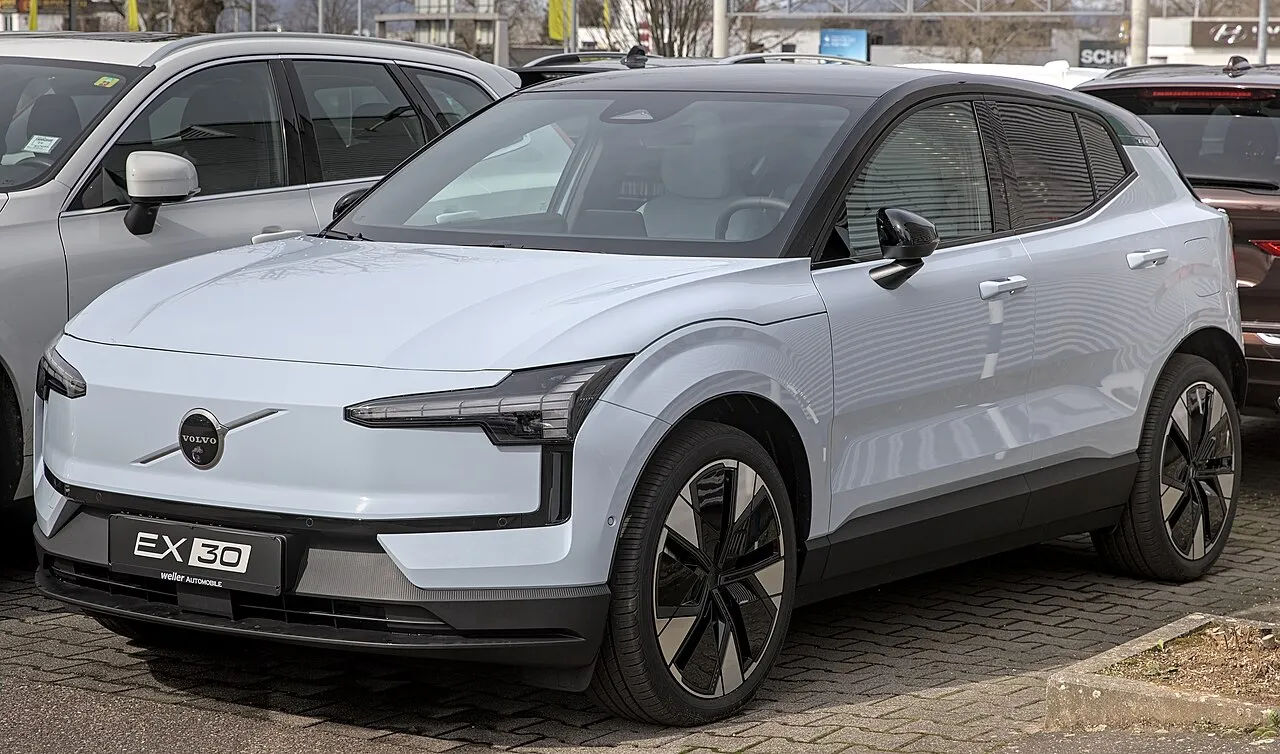
Volvo XC60 PHEV Adds 78 Miles of Electric Range
Volvo says its refreshed 2028 XC60 plug-in hybrid will travel an estimated 78 miles on electricity, giving buyers a longer electric commute before switching to gas.
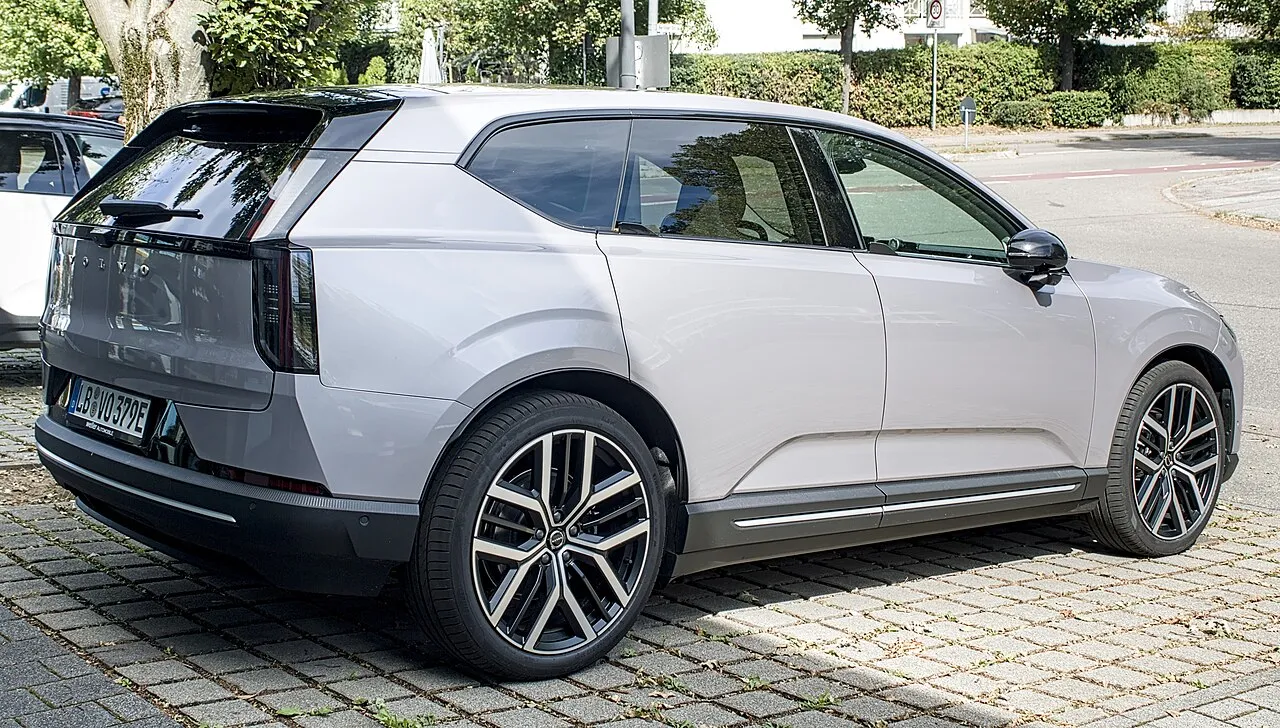
Volvo Marks 50 Years From the Elbil to the EX60
Volvo is marking 50 years since its experimental Elbil with a look at the EX60, tracing changes in range, charging, vehicle design and safety.

GM Helps Restore a Privately Titled 1997 EV1
A privately titled 1997 GM EV1 has returned to the road after a restoration with help from the engineers who worked on the pioneering electric car.