Volvo EX90 or Kia EV9: Choosing an SUV for Every Seat
Compare the Volvo EX90 and Kia EV9 for family travel, with a focus on third-row access, seating choices and luggage space when every seat is occupied.
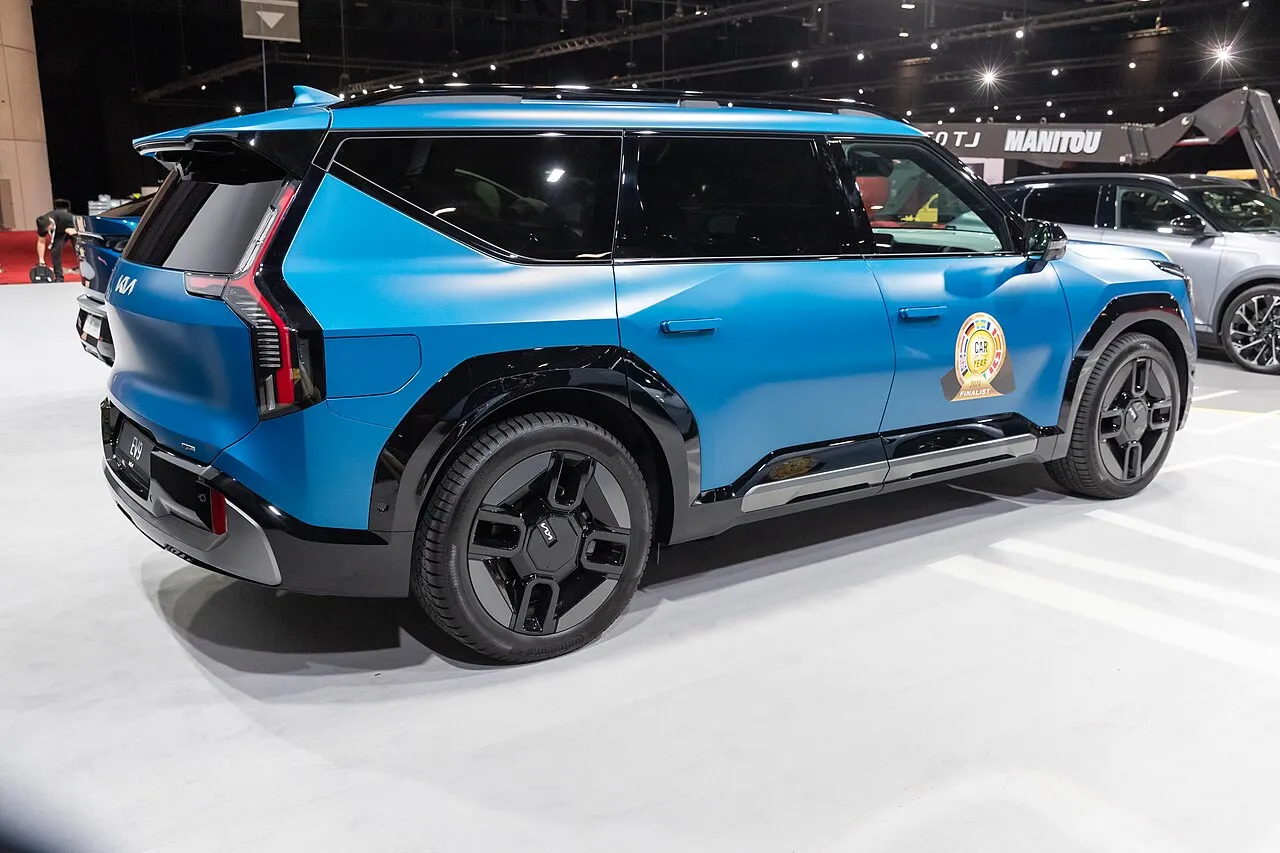
The short answer: Neither the Volvo EX90 nor the Kia EV9 can be declared the better choice for using every seat from exterior dimensions and driving range alone. The EV9 has a longer wheelbase in the European versions compared here, but that does not establish easier third-row access, more passenger room or greater luggage capacity.
Neither the Volvo EX90 nor the Kia EV9 earns a clear all-seats-occupied recommendation from exterior dimensions or driving range alone. The Kia has the longer wheelbase in the European versions examined here, while the Volvo is slightly longer overall. Those measurements establish different proportions, but they do not settle the questions that matter most to a large family: who can reach the back row, who fits comfortably there and whether the luggage fits behind it.
The decision therefore needs to start with the exact seating arrangement and the people using it. A useful third row must work alongside occupied seats ahead of it, and useful luggage space must remain available with every required seat upright.
What exterior size tells you about family space
For the European-market 2025 Kia EV9 Air RWD, EVDB reports a length of 5,010 mm, width of 1,980 mm, height of 1,755 mm and wheelbase of 3,100 mm. For the European-market 2025 Volvo EX90 Single Motor, EVDB reports a length of 5,037 mm, width of 1,964 mm, height of 1,744 mm and wheelbase of 2,985 mm. These are physical dimensions, rather than results from an EPA or WLTP range test.
The EV9 therefore places its axles farther apart despite having a shorter body in this comparison. That is a useful starting point for understanding its proportions. However, wheelbase does not show how interior length is divided among the front seats, middle row, rear row and luggage compartment.
Similarly, exterior width does not establish usable shoulder room. Interior trim, seat shape and door construction all affect the space passengers actually occupy. Overall height also cannot reveal the relationship between the rear seat cushion, floor and roof. These measurements justify a closer look inside; they cannot establish a comfort winner.
Third-row access depends on the occupied cabin
Access should be evaluated with the middle row arranged as it will be during normal family travel. An empty seat that moves freely can create a very different route from one occupied by a passenger or fitted with a child restraint. Whether a seat may move with a restraint installed depends on the vehicle and restraint instructions.
The practical questions are specific: can the intended rear passenger get a foot through the opening, turn into the cabin and reach the seat without climbing across another passenger? Once seated, can that person get out again without someone having to remove a restraint or reorganize the cabin?
Those are separate questions from whether a door opens widely. The route includes the doorway, the position of the middle-row seat and the floor area between them. A large exterior body does not guarantee that each part of that route is convenient.
For families making frequent school or activity stops, repeatability matters. An arrangement that works only after several seats move may be tolerable occasionally but cumbersome every day. Evaluate both vehicles with the intended seating positions occupied, following the instructions for their seat mechanisms.
Seating arrangements must match the passengers
Do not assume that every trim or market version has the same seating arrangement. Confirm the actual vehicle's passenger capacity, middle-row layout and child-restraint installation positions before treating either model as a fit for the family. A model name alone does not establish those details.
Where a choice exists, a middle-row bench and separate chairs create different compromises. A bench can accommodate a passenger in its center position, while a gap between separate chairs may offer another route toward the rear. Whether that route is usable depends on the actual layout and the passengers moving through it.
Child restraints make this more specific. Their installation requirements can limit which seating positions work and whether an access route remains available. Check the vehicle handbook and the restraint instructions together; do not infer compatibility from a broad seat cushion or an apparently convenient anchor location.
Assign passengers before comparing comfort. The tallest regular rear passenger should try the third row while the middle row remains suitable for its own occupants. Moving the middle row forward can improve rear legroom, but that adjustment is useful only if the person ahead still fits comfortably.
Third-row comfort is more than knee clearance
A rear passenger needs a workable seating posture, not merely enough room to close the door. Foot space beneath the seat ahead, thigh support, head clearance and the position of the knees all contribute to comfort. A person can have visible knee clearance while still sitting awkwardly because the floor is high relative to the cushion.
Check those relationships with the front and middle rows set realistically. A third row that becomes comfortable only when another passenger gives up necessary space does not solve the family's seating problem. Likewise, a child who fits now may have different needs as they grow.
The EV9's longer wheelbase is relevant background, but it cannot answer these questions by itself. Nor does the EX90's greater overall length establish more usable rear space. Neither measurement describes the seat cushion, footwell or access opening.
Luggage room must be judged with every seat upright
For this comparison, the relevant cargo area is the space behind the occupied third row. Capacity achieved by folding those seats answers a different question. A family that needs every seat cannot count that expanded area toward its normal luggage requirement.
Shape matters alongside volume. A stroller may need sufficient floor depth, while upright suitcases need an opening and roof profile that accommodate their height. A wide compartment can still be awkward if the tailgate shape interferes with a rigid item. Soft bags are more adaptable, but they still need secure places to travel.
Use the actual stroller, mobility equipment or typical travel bags when assessing either vehicle. Keep the rear seats in the positions required by their passengers, close the tailgate normally and follow the vehicle's cargo-restraint guidance. Passenger space should not depend on loose luggage occupying footwells or obstructing access.
Weight capacity is another separate check. Every occupied seat adds to the load, and luggage adds more. Confirm the exact vehicle's load limits before assuming that enough physical space means the full family and its belongings can travel together.
Range adds context after the cabin works
Once the seating and luggage arrangement works, driving range can help distinguish versions. The following figures are US-market 2027 EPA ratings credited to US EPA fueleconomy.gov. They describe rated driving range, not third-row comfort or a guaranteed distance with every seat occupied.
| Vehicle and version | Market | Model year | Rated range | Test standard | Source |
|---|---|---|---|---|---|
| Kia EV9 Long Range RWD | US | 2027 | 305 mi | EPA | US EPA fueleconomy.gov |
| Kia EV9 Long Range AWD | US | 2027 | 283 mi | EPA | US EPA fueleconomy.gov |
| Kia EV9 Long Range AWD GT-Line | US | 2027 | 280 mi | EPA | US EPA fueleconomy.gov |
| Kia EV9 Standard Range RWD | US | 2027 | 230 mi | EPA | US EPA fueleconomy.gov |
| Volvo EX90 RWD | US | 2027 | 276 mi | EPA | US EPA fueleconomy.gov |
| Volvo EX90 RWD, 21-inch wheels | US | 2027 | 291 mi | EPA | US EPA fueleconomy.gov |
| Volvo EX90 Twin Motor | US | 2027 | 300 mi | EPA | US EPA fueleconomy.gov |
| Volvo EX90 Twin Motor, 21-inch wheels | US | 2027 | 310 mi | EPA | US EPA fueleconomy.gov |
These ratings show why the exact version matters: neither model name corresponds to a single range figure. Passenger and luggage loads, weather and driving conditions can also change the distance available in use. Choose the seating arrangement that accommodates the family first, then compare the range of the specific versions that meet that requirement.
Frequently asked questions
Does the Kia EV9 have a longer wheelbase than the Volvo EX90?
In EVDB's European-market 2025 figures, the Kia EV9 Air RWD has a 3,100 mm wheelbase and the Volvo EX90 Single Motor has a 2,985 mm wheelbase. That difference alone does not establish which has more third-row passenger room.
Which is longer overall, the Volvo EX90 or Kia EV9?
EVDB reports an overall length of 5,037 mm for the European-market 2025 Volvo EX90 Single Motor and 5,010 mm for the European-market 2025 Kia EV9 Air RWD. Overall length does not establish luggage capacity behind the third row.
Does EPA range show how far either SUV travels with every seat occupied?
EPA ratings give a standardized range reference for a particular version. They do not guarantee the distance available with a particular combination of passengers, luggage, weather and driving conditions.
Which has the higher EPA range: the EV9 Long Range RWD or EX90 Twin Motor?
For the US-market 2027 versions, US EPA fueleconomy.gov rates the Kia EV9 Long Range RWD at 305 miles and the Volvo EX90 Twin Motor at 300 miles. The EX90 Twin Motor version with 21-inch wheels is rated at 310 miles under the same EPA standard.
Related stories

How to Choose an EV for Caregiving and Support Trips
Compare passenger access, rear-seat comfort, equipment storage and charging routines to find an EV that fits recurring appointments and support trips.

How to Choose an EV for Your Dog and Travel Gear
Compare an EV’s entry points, secure travel area, climate controls and cleanability with your dog and gear on hand before choosing a vehicle.
Kia EV3 vs. BYD ATTO 3: Which SUV Fits Daily Life?
The Kia EV3 and BYD ATTO 3 suit different daily needs. Compare market-specific range figures, dimensions and charging, then check cargo access and fit in person.