Volvo EX40 vs Volkswagen ID.4: Which Fits Family Life?
Compare the Volvo EX40 and Volkswagen ID.4 for family use, with a closer look at seating access, useful storage, cargo fit, range and charging differences.
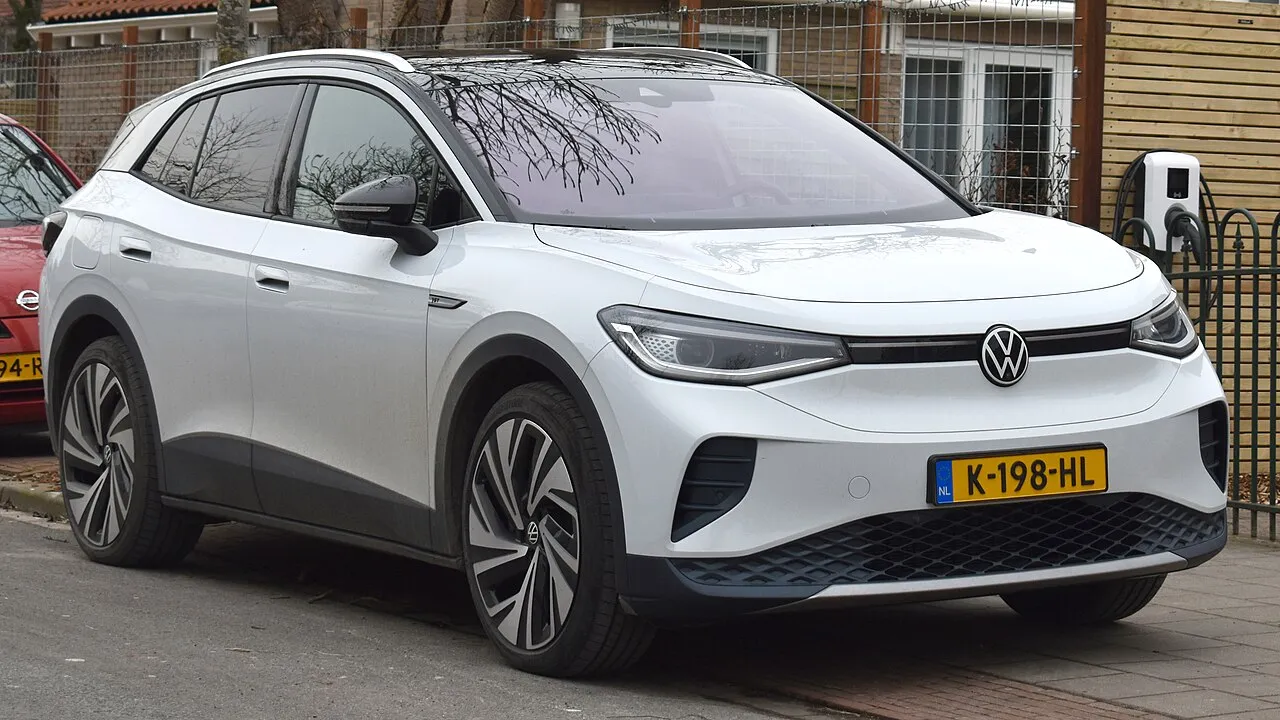
The short answer: Neither SUV earns a clear overall practicality win: the Volvo EX40 leads slightly in EPA-rated range for the US rear-wheel-drive versions, while the Volkswagen ID.4 leads slightly among the all-wheel-drive versions. The European ID.4 has a longer body and wheelbase, but those dimensions alone cannot establish better seating access, storage or cargo fit.
The Volvo EX40 and Volkswagen ID.4 are closely matched on US-rated range and full-charge time, so the better family SUV depends heavily on how passengers and everyday belongings fit. The EX40 has a small EPA range advantage with rear-wheel drive; the ID.4 has a small advantage with all-wheel drive. European dimensions show a longer body and wheelbase for the Volkswagen, but they do not establish a winner for rear-seat access or usable cargo space.
For shoppers seeking a conventional electric SUV, that distinction matters. Exterior size, rated range and charging power describe different aspects of ownership. None substitutes for checking whether a child seat clears the doorway, a stroller fits beneath the cargo cover or charging works with the household routine.
The figures that support the comparison
US EPA fueleconomy.gov is the source for the American range ratings and Level 2 full-charge times below. European figures come from OpenEV Data and EVDB, as identified by version. EPA and WLTP range results belong to different test procedures and should be compared within their respective groups.
| Vehicle and version | Market and model year | Range and test standard | Charging | Exterior dimensions and wheelbase | Source |
|---|---|---|---|---|---|
| Volkswagen ID.4 RWD | US, 2026 | 291 miles, EPA | Level 2 full charge: 8 hours; EPA reporting | — | US EPA fueleconomy.gov |
| Volkswagen ID.4 AWD | US, 2026 | 263 miles, EPA | Level 2 full charge: 8 hours; EPA reporting | — | US EPA fueleconomy.gov |
| Volvo EX40 RWD | US, 2026 | 296 miles, EPA | Level 2 full charge: 8 hours; EPA reporting | — | US EPA fueleconomy.gov |
| Volvo EX40 Twin AWD | US, 2026 | 260 miles, EPA | Level 2 full charge: 8 hours; EPA reporting | — | US EPA fueleconomy.gov |
| Volkswagen ID.4 Pro RWD | Europe, 2025 | 520 km, WLTP | 11 kW AC; 135 kW peak DC; CCS2 | 4,584 mm long; 1,852 mm wide; 1,642 mm high; 2,765 mm wheelbase | OpenEV Data; EVDB |
| Volkswagen ID.4 Pro 4Motion AWD | Europe, 2025 | 498 km, WLTP | 11 kW AC; 175 kW peak DC | 4,584 mm long; 1,852 mm wide; 1,640 mm high; 2,771 mm wheelbase | EVDB |
| Volvo EX40 Single Motor Extended Range RWD | Europe, 2025 | 515 km, WLTP | 11 kW AC; 200 kW peak DC | 4,440 mm long; 1,873 mm wide; 1,596 mm high; 2,702 mm wheelbase | EVDB |
| Volvo EX40 Twin Motor AWD | Europe, 2025 | 460 km, WLTP | 11 kW AC; 200 kW peak DC | 4,440 mm long; 1,873 mm wide; 1,596 mm high; 2,702 mm wheelbase | EVDB |
For the European rows, charging power and dimensions are source-reported technical values, not WLTP measurements. Their market and model year apply to every figure in that row. They should not be transferred automatically to the American versions.
Seating access: exterior size is only a starting point
The European ID.4 versions in the table have longer bodies and wheelbases than the European EX40 versions. That gives shoppers a useful starting point for assessing parking length and cabin packaging. It does not prove that the Volkswagen has more comfortable rear seating, a wider doorway or easier child-seat access.
Wheelbase measures the distance between the axles. How a manufacturer allocates the cabin within that span depends on seat placement, dashboard depth, floor design and other packaging decisions. Likewise, overall vehicle height does not reveal the height of the door opening or the distance passengers must step up from the pavement.
For a family comparison, check the rear doorway with the front seat adjusted for its usual occupant. A rear-facing child seat needs space both to remain installed and to move through the opening. An adult helping a child also needs room to reach the harness without awkwardly bending around the roof edge.
Passenger comfort requires a separate check. Look at foot space beneath the front seats, thigh support and the posture the rear bench encourages. These are direct measures of suitability for a particular household; a longer wheelbase cannot settle them by itself.
Storage and cargo shape: test the objects you carry
There is no defensible cargo-capacity winner here based on exterior dimensions alone. A longer SUV can offer useful loading length, but the location of the rear seats, wheel housings and tailgate determines how much of that length becomes accessible luggage space. Body width also cannot establish the width of the cargo floor.
For stroller users, the important relationship is between the folded stroller and the narrowest part of the loading route. The hatch opening may constrain an object before the cargo floor does. A tall bag may fit upright near the rear seats yet interfere with the closing tailgate farther back.
Compare both SUVs with the rear seats in the position your family will actually use. Folding a seat changes the vehicle's passenger-carrying role, so a successful demonstration with the bench folded may tell little about a trip with children aboard. Check whether routine luggage fits while everyone retains their seat.
Small-item storage deserves the same practical approach. Check where phones, drink bottles, wipes and charging cables would go, and whether those places remain reachable with passengers aboard. Cable storage is especially relevant when luggage covers the cargo floor: access matters as much as the existence of a compartment.
US range: a close result in either drive layout
For US-market 2026 rear-wheel-drive models, EPA ratings put the EX40 at 296 miles and the ID.4 at 291 miles. For US-market 2026 all-wheel-drive models, the ID.4 is rated at 263 miles and the EX40 Twin at 260 miles. These are comparisons within the same rating system.
The practical implication is modest: rated range alone does not create a decisive reason to choose either SUV. Within each model's US lineup, the rear-wheel-drive version has the higher EPA range rating. That makes drivetrain choice relevant before smaller differences between brands become the focus.
An EPA range rating is a standardized reference, not a promise for every journey. Speed, temperature, heating use and load can affect consumption. A household should assess its normal driving and opportunities to recharge, while keeping the rating separate from expectations for a particular highway trip.
Charging: similar US timing, different European peaks
US EPA fueleconomy.gov reports an eight-hour Level 2 full-charge time for all four US-market 2026 versions in the table. That makes their published full-charge timing equal at this level of comparison. It does not mean every home charger will reproduce that duration, because the available electrical supply and the vehicle's starting charge affect the session.
Routine charging also differs from a full recharge. Replacing energy used during daily driving generally requires less charging than replenishing an empty battery. For household planning, the useful question is whether the car can recover the day's energy during the time it normally remains parked.
The European 2025 versions illustrate why trim details matter for fast charging. EVDB reports a 200 kW DC peak for both EX40 versions in the table, compared with 175 kW for the ID.4 Pro 4Motion. OpenEV Data and EVDB report 135 kW for the ID.4 Pro. All these European versions have an 11 kW AC rating.
A higher peak does not establish a shorter charging stop. Peak power describes a maximum, while energy added depends on power sustained throughout the session. Battery temperature, starting charge and charger capability also matter. These European peak ratings cannot establish how the US versions compare at a fast charger.
Which should a family choose?
Keep both on the shortlist if the goal is an electric SUV with closely matched US range and full-charge timing. The European ID.4's greater length merits attention when checking parking space and cabin layout; the EX40's shorter European body merits the same consideration where space is tight. Neither observation establishes superior interior usefulness.
Make the final choice around the tasks the vehicle must handle: loading a child, seating the usual passengers, carrying the normal luggage and recharging where it regularly parks. The better family SUV is the one that completes those tasks comfortably in the exact version being purchased.
Frequently asked questions
Does the Volvo EX40 or Volkswagen ID.4 have more US-rated range?
For US-market 2026 rear-wheel-drive models, EPA ratings give the EX40 296 miles and the ID.4 291 miles. Among the all-wheel-drive versions, the ID.4 has 263 miles and the EX40 Twin has 260 miles.
How long does Level 2 charging take?
US EPA fueleconomy.gov reports an eight-hour Level 2 full-charge time for the US-market 2026 ID.4 RWD and AWD and EX40 RWD and Twin AWD. Actual charging time depends on the electrical supply and starting charge.
Is the Volkswagen ID.4 longer than the Volvo EX40?
For the European 2025 versions compared in the table, the ID.4 is 4,584 mm long and the EX40 is 4,440 mm long, according to OpenEV Data and EVDB. These exterior measurements do not establish a cargo-space or seating-access winner.
Does the EX40 have a higher DC charging peak?
For the European 2025 versions compared here, EVDB reports 200 kW for the EX40 Single Motor Extended Range and Twin Motor, and 175 kW for the ID.4 Pro 4Motion. OpenEV Data and EVDB report 135 kW for the ID.4 Pro. Peak power alone does not establish charging-stop duration.
Related stories

How to Build a Flexible EV Charging Routine for Work
Build charging around the miles you need for your next drive, using home, work, or public charging as your schedule allows. Keep a practical buffer.

How to Check EV Charger Plug Compatibility Before a Trip
Match your EV’s connector and charging limits to each route stop. Learn what charger labels mean, when an adapter may work, and what to confirm before you leave.

How to Estimate Electric Car Range While Towing
Estimate towing range from your vehicle’s normal range, then adjust for trailer shape, speed, weather and hills. Use the result to plan charging stops.