Unplugged Proposes Licensing Cybertruck Production From Tesla
Unplugged Performance wants to license Cybertruck production as Tesla shifts factory space to Cybercab, but financing and an agreement remain unsecured.

The short answer: Unplugged Performance has proposed taking over Cybertruck production under a license from Tesla, backed by outside investors. According to Motor1, Tesla has not publicly responded, and its plan to build the pickup through the end of summer 2027 remains in place.
Unplugged Performance wants to take over Tesla Cybertruck production under a licensing agreement, potentially extending the electric pickup’s life as Tesla redirects Texas factory space toward Cybercab. According to Motor1, the aftermarket company proposes financing the operation with outside investors while paying Tesla for permission to build the truck. For buyers, the proposal raises the possibility of continued production beyond Tesla’s planned wind-down, although no agreement or funding commitment has been secured.
The offer comes after Tesla extended Cybertruck production through the end of summer 2027, moving beyond an earlier target of around midyear, Motor1 reports. Tesla has not publicly responded to Unplugged’s pitch. The distinction matters: an outside company has expressed interest in continuing the vehicle, but Tesla’s announced production schedule remains the operative plan.
A production license backed by outside investors
Unplugged Performance, known for Cybertruck lift kits and armor packages, made its offer in an open post on X, according to Motor1. Its proposed role would go well beyond modifying finished pickups. The company wants a production license that would allow it to take responsibility for building vehicles, with a consortium of investors covering the operation’s costs.
Unplugged presented the idea as compatible with Tesla’s shift toward Cybercab. “We fully support putting Cybercab first, and we’d be glad to take the Cybertruck line off your hands,” the company wrote, according to Motor1. It added: “We’d fund it with a consortium of investors and run it at no cost to Tesla’s floor space, headcount, or focus.”
Under the proposed arrangement, Tesla would receive a license fee, plus revenue from Full Self-Driving and the Robotaxi network on each vehicle built, Motor1 reports. Those payments are part of Unplugged’s pitch, rather than terms accepted by Tesla. The proposal offers Tesla a continuing financial interest in Cybertruck-based vehicles while placing responsibility for financing and running production with another operator.
The financing effort is still preliminary. According to Motor1, Unplugged said its investor outreach was intended to gauge interest and was neither an offer to sell securities nor a request for funds. The company is organizing prospective investors, but no funding commitment has been secured. That leaves a significant gap between the proposed business arrangement and a financed manufacturing operation.
Why Tesla is winding down the pickup
Tesla’s Texas factory is the only site building the Cybertruck, according to Motor1. It is also the location where the upcoming Cybercab small-car platform is scheduled to take over factory space. CEO Elon Musk connected the original Cybertruck wind-down plan directly to that changeover, saying the plant needed the room.
Musk subsequently extended the pickup’s production timeline to work through additional orders. “Pickup production is being extended through summer of next year to work through more of the Cybertruck order backlog,” he said, according to Motor1’s November 2026 report. The resulting schedule keeps production running through the end of summer 2027, rather than ending around the middle of that year.
Motor1 reports that Tesla’s third-quarter figures put annual Cybercab capacity at the Texas plant above 125,000 vehicles. That is a capacity figure, rather than a statement that the factory has built or sold that many Cybercabs. It establishes the scale of the planned manufacturing commitment behind Tesla’s decision to free space currently occupied by pickup production.
How an independently operated Cybertruck program would fit alongside that changeover remains unresolved. Unplugged has pledged to avoid consuming Tesla’s floor space, staffing, or attention, but Tesla has not accepted the offer. Motor1 reports that it is also unclear whether Cybercab capacity would be filled on Tesla’s original schedule or whether an arrangement with Unplugged would affect the transition.
A pickup, a seven-seat SUV, and a cargo vehicle
Unplugged’s proposed business extends beyond keeping the existing pickup in production. According to Motor1, the company floated a three-row “CyberSUV” and an unmanned “CyberCargo” hauler as possible derivatives. Both would use the Cybertruck platform, expanding the proposal from continuation of one vehicle into a family serving different purposes.
The company described that broader reach as a reason investors might support the project. “We believe this is highly fundable because one production platform serves three markets: existing demand for the pickup, pent-up demand for a seven-seat SUV, and Robotaxi network vehicles in useful all-terrain form factors,” Unplugged said, according to Motor1. The demand assessment is the company’s argument for financing the venture.
Neither derivative is a formally revealed vehicle. Motor1 describes the SUV and cargo ideas as building on concepts Tesla has floated without a formal unveiling. For prospective buyers, the distinction separates a proposed product strategy from a vehicle launch: Unplugged has identified body styles and uses it wants to pursue, but those ambitions do not establish an approved production program.
Staffing and batteries are part of the pitch
Unplugged says it already has a team with experience building Cybertrucks and has heard from former Tesla employees interested in helping, according to Motor1. “The number of Tesla alumni who have reached out offering to help has been overwhelming,” the company said. That manufacturing experience is part of its case for taking over production, alongside its existing work on aftermarket truck upgrades.
The company would also allow Cybercab to take priority for batteries, Motor1 reports. That concession reinforces the central premise of its offer: continued Cybertruck production would accommodate Tesla’s priorities. It also leaves prospective buyers without a promise that an independently built truck would match the current production vehicle. According to Motor1, Unplugged-built pickups could cost more and have lower peak output than Tesla-built versions.
What current Cybertruck ratings establish
Existing government ratings offer a reference for the current truck. For the U.S. market, the EPA rates the 2026 Cybertruck AWD and Dual Motor AWD at 325 miles of range. The 2026 rear-wheel-drive Long Range version with 20-inch Cyber Wheels has an EPA-rated range of 335 miles. Those ratings apply to the identified versions; they do not establish the range of an Unplugged-built pickup or either proposed derivative.
EPA figures put Level 2 full-charge time at 11.7 hours for the U.S. 2026 AWD and 12 hours for both the Dual Motor AWD and Long Range versions. These existing ratings describe vehicles buyers can use as a reference when assessing the proposal. Unplugged’s potential changes in output and price have not been accompanied by published range or charging figures for its proposed vehicles.
What happens next
Unplugged wants an answer from Tesla before the production deadline arrives and is continuing to organize investors and recruit manufacturing talent, according to Motor1. The next substantive developments would be Tesla’s response, a production license, and committed financing. Until those are secured, continued Cybertruck production under Unplugged remains a proposal, while Tesla’s announced plan runs through the end of summer 2027.
Frequently asked questions
Has Tesla agreed to let Unplugged build the Cybertruck?
No agreement has been announced. According to Motor1, Tesla has not publicly responded, and Unplugged has secured neither a production license nor a funding commitment.
When does Tesla plan to stop building the Cybertruck?
According to Motor1, Tesla plans to continue Cybertruck production through the end of summer 2027, extending an earlier target of around midyear to work through more of its order backlog.
How would Unplugged finance Cybertruck production?
Unplugged proposes using a consortium of outside investors to fund the operation. Tesla would receive a license fee and revenue from Full Self-Driving and the Robotaxi network on vehicles built under the proposed arrangement, according to Motor1.
What are the proposed CyberSUV and CyberCargo?
They are possible Cybertruck-based derivatives floated by Unplugged: a three-row, seven-seat SUV and an unmanned cargo hauler. According to Motor1, neither is a formally revealed vehicle.
Would an Unplugged Cybertruck have the same price and performance?
That has not been established. According to Motor1, Unplugged-built trucks could cost more and have lower peak output than Tesla’s own production versions.
Related stories
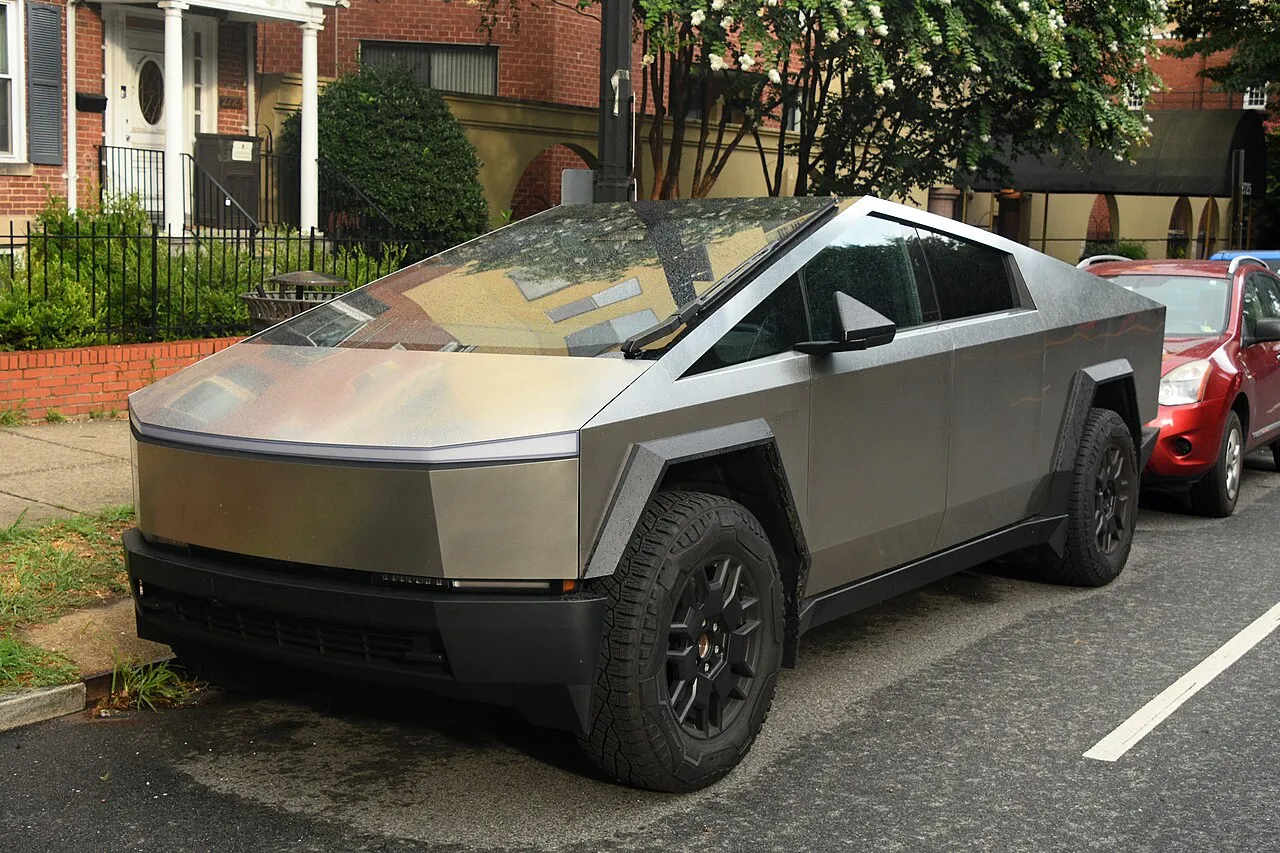
Tesla Offers Cybertruck Owners Refunds for PCS Repairs
Tesla is offering parts, labor and tax refunds to some 2024 and 2025 Cybertruck owners who paid to replace a failed power conversion system.
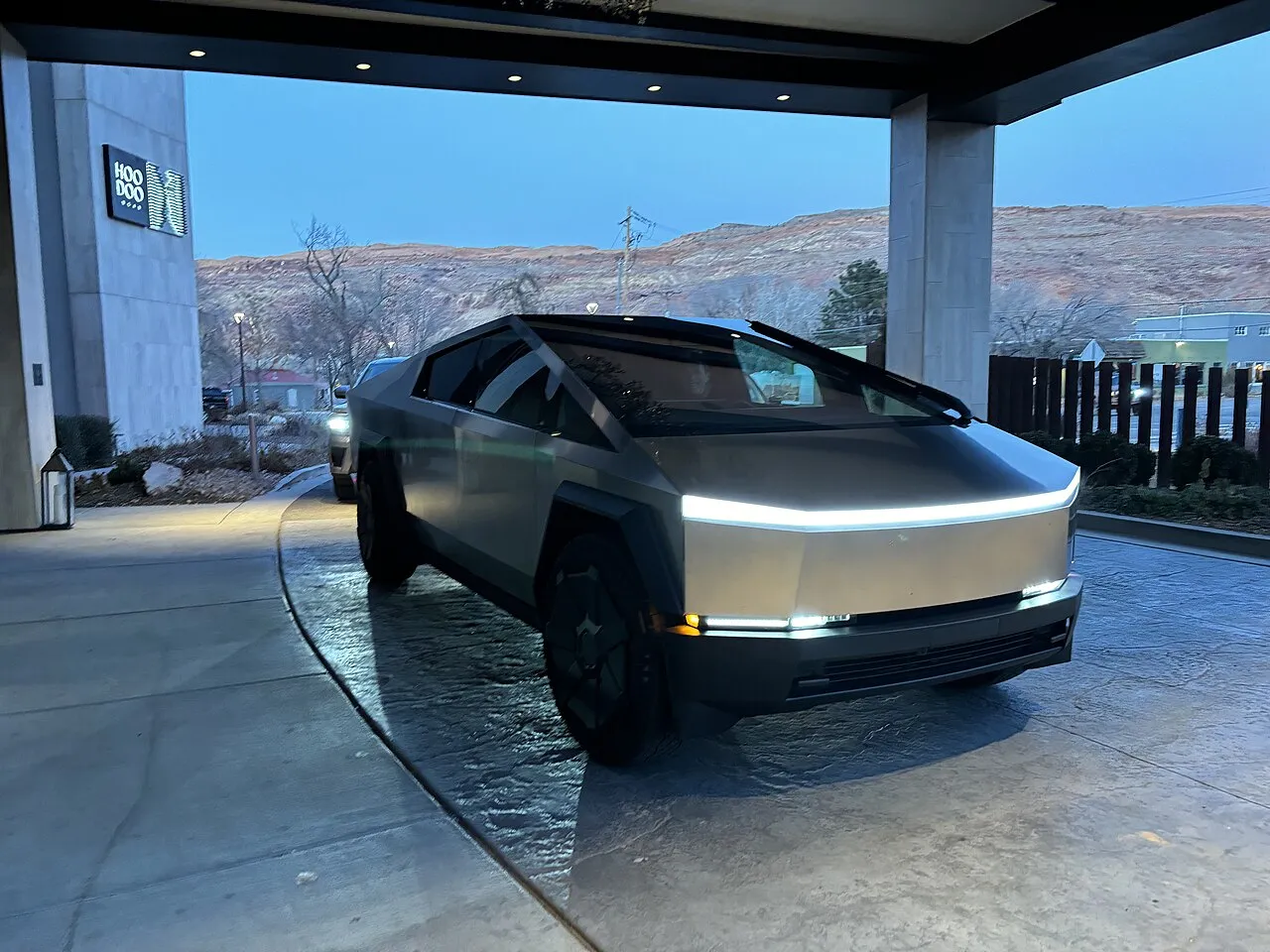
Tesla Tightens Cybertruck Turns for 2027 Models Only
Tesla is rolling out tighter turns for 2027 Cybertrucks, but has not published a new turning-circle figure. Earlier model years are excluded.
Tesla Robotaxi Plans Add Highway Speeds and Cybercab Hardware
Updated Tesla responder plans describe Cybercab hardware and roads posted up to 85 mph, but they do not establish when highway or owner rides will begin.