Tesla Plans $3.3 Billion German Expansion for Cybercab
Tesla plans a $3.3 billion factory expansion near Berlin for Cybercab production in 2029, as its passenger lineup shrinks and autonomy approvals remain pending.
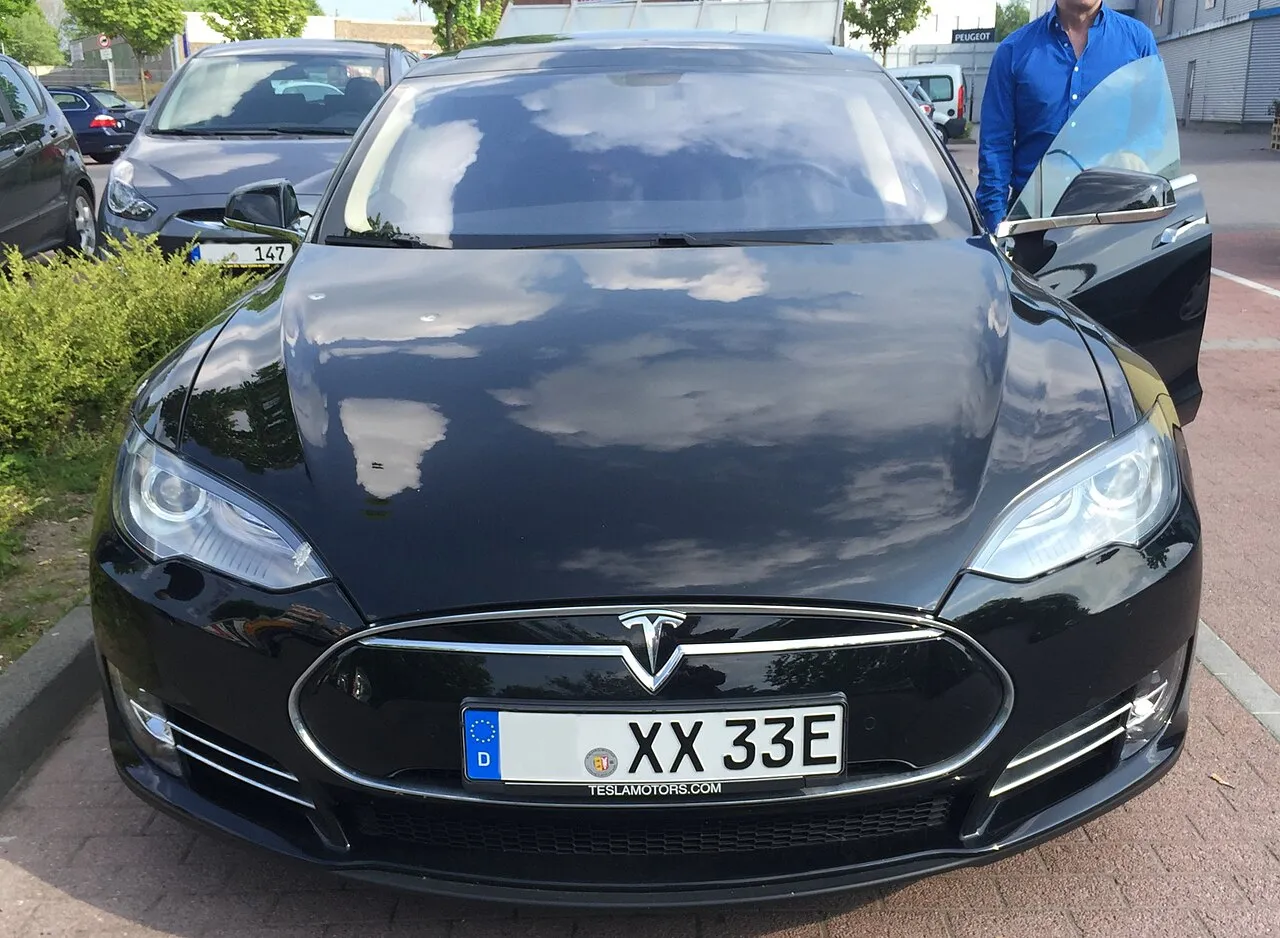
The short answer: Tesla plans to invest €3 billion ($3.3 billion) to expand its factory near Berlin for Cybercab production starting in 2029, according to InsideEVs, citing Reuters. The project targets production of up to one million vehicles, but permission to operate the driverless Cybercab remains a separate hurdle.
Tesla plans to invest €3 billion ($3.3 billion) to expand its factory near Berlin for Cybercab production, extending its robotaxi manufacturing ambitions to Germany as it cuts back its conventional vehicle lineup. According to InsideEVs, citing Reuters, German production is targeted for 2029, with the project aiming to produce up to one million Cybercabs.
The investment would deepen Tesla’s commitment to vehicles that depend on autonomous driving and regulatory permission to operate. For buyers, the shift is already accompanied by fewer conventional choices: InsideEVs reports that Tesla has ended the Model S and Model X, scheduled the Cybertruck for retirement and removed the least expensive all-wheel-drive Model Y.
A German factory expansion with a 2029 target
According to the Reuters reporting cited by InsideEVs, Tesla intends to apply for permits before the end of 2026 and begin construction in the first half of 2027. The planned start of German Cybercab production in 2029 puts the factory project on a different timetable from the passenger vehicles Tesla is withdrawing now.
The expansion would take Cybercab manufacturing ambitions beyond Texas, where Tesla is also redirecting factory space toward the vehicle, according to InsideEVs. Germany therefore represents another manufacturing commitment to the same driverless product, rather than a new conventional sedan, SUV or pickup to replace the models leaving Tesla’s range.
The distinction matters because building the Cybercab and securing permission for it to carry passengers are separate tasks. The vehicle has no steering wheel or pedals, according to InsideEVs. Its usefulness consequently depends on autonomous driving capabilities and authorization to deploy them, even if Tesla completes the factory expansion on its intended schedule.
Factory space shifts from cars to robots and robotaxis
InsideEVs reports that Tesla ended the Model S sedan and Model X SUV during 2026 and announced plans to use their former production space in Fremont for Optimus humanoid robots. Both were aging, low-volume vehicles, according to the outlet, but their departures remove two distinct passenger models from Tesla’s business.
The Model S also illustrates the type of conventional EV Tesla is leaving behind. For the U.S. market, EPA ratings for the 2026 Model S include 410 miles of range for the standard all-wheel-drive version, 368 miles for the Plaid and 309 miles for the Plaid with 21-inch wheels. Those are EPA ratings for specific configurations, rather than measures of Cybercab capability.
The Cybertruck’s departure has a less settled schedule. According to InsideEVs, Elon Musk initially announced a production shutdown in mid-2027 to free space at the Texas factory for Cybercabs. He subsequently extended production through the end of summer to fulfill the order backlog. The outlet reports that the pickup remains scheduled for retirement despite that extension.
Together, the Fremont and Texas decisions show how the change reaches beyond product announcements. Tesla is assigning manufacturing space previously used by human-driven vehicles to humanoid robots and robotaxis. The German expansion would add a further investment in Cybercab production while those existing facilities change their roles.
What remains for conventional EV buyers
Tesla is also narrowing choices within the Model Y range. According to InsideEVs, the company dropped its cheapest all-wheel-drive version earlier in November 2026, less than a year after introducing it. Buyers seeking two motors must move to the Premium AWD, while the base rear-wheel-drive version remains available.
For American shoppers, EPA ratings give context to those remaining configurations. The U.S.-market 2027 Model Y Premium AWD has a 327-mile EPA range rating, while the base RWD has a 321-mile EPA rating. The Premium RWD is rated at 355 miles under the same EPA standard. These figures describe range; they do not establish the price difference created by the cheaper AWD version’s withdrawal.
The Model 3 continues to give Tesla a conventional sedan alongside the Model Y SUV. InsideEVs describes both vehicles as very popular worldwide. Their continuing role means Tesla retains passenger cars for individual buyers even as the company reduces the breadth of its lineup and directs investment toward autonomous transportation.
EPA ratings for the U.S.-market 2027 Model 3 span 316 miles for the Performance AWD, 321 miles for the base RWD, 346 miles for the Premium AWD and 363 miles for the Premium RWD. That leaves a choice of rear-wheel-drive and all-wheel-drive sedans within the Model 3 family, although it does not restore the larger Model S or the other departing body styles.
Tesla has another human-driven vehicle promised: the redesigned Roadster, revealed in October 2026, is now targeted for 2028, according to InsideEVs. The outlet reports that the redesign includes thruster assistance and follows years of delays. Its return would add a sports car, while the luxury sedan, large SUV and pickup departures affect different uses.
European driver assistance approval is a separate issue
The regulatory backdrop is particularly consequential for a vehicle without manual controls. InsideEVs reports that Dutch regulators approved Tesla’s supervised driving system in April 2026 after more than 18 months of testing. Since then, its rollout has depended on permission from individual countries, with European Union-wide approval still pending.
According to InsideEVs, Tesla has renamed the system “Tesla Assisted Driving” and tightened its speed settings to address regulators’ concerns. That software still requires an attentive driver. Approval for a supervised system therefore does not resolve the permission needed for the Cybercab, whose design omits the steering wheel and pedals that a driver would otherwise use.
The Cybercab also faces scrutiny in the United States. InsideEVs reports that regulators have opened an investigation into how the vehicle complies with federal safety requirements. That inquiry adds another unresolved issue to the program, alongside the European approvals that would be relevant to Tesla’s broader autonomous driving ambitions.
A factory in Germany would establish a place to manufacture Cybercabs. It would not, by itself, determine where those vehicles could operate. That separation is central to assessing the expansion: Tesla’s proposed construction schedule concerns production, while the vehicle’s deployment depends on decisions about its autonomous operation.
The next milestones extend beyond construction
The immediate milestone is Tesla’s planned permit application before the end of 2026, followed by its target to begin construction in the first half of 2027. German Cybercab production is then scheduled for 2029, according to the Reuters reporting cited by InsideEVs. Each remains a planned step toward the proposed expansion.
Alongside that project, Tesla must manage the changing Cybertruck shutdown schedule and its promised 2028 Roadster launch. InsideEVs also identifies the Semi as a potential route into electric trucking. Those programs sit alongside the Model 3 and Model Y as other parts of Tesla’s vehicle business while the Cybercab strategy develops.
The business stakes come from the combination of investment and fewer passenger models. Tesla is committing billions to robotaxis while withdrawing vehicles that buyers can drive themselves. If autonomous deployment takes longer than expected or proves less profitable than Musk anticipates, that narrower lineup would leave Tesla with fewer alternatives, as InsideEVs observes. The German expansion makes the manufacturing commitment larger; regulatory progress will help determine what that capacity can ultimately support.
Frequently asked questions
How much does Tesla plan to invest in German Cybercab production?
According to InsideEVs, Tesla plans to invest €3 billion ($3.3 billion) to expand its factory near Berlin, targeting production of up to one million Cybercabs.
When would Cybercab production start in Germany?
InsideEVs, citing Reuters, reports that Tesla aims to apply for permits before the end of 2026, begin construction in the first half of 2027 and start German Cybercab production in 2029.
Does European approval of Tesla Assisted Driving authorize the Cybercab?
The approval reported in the Netherlands concerns a supervised system that requires an attentive driver. The Cybercab has no steering wheel or pedals, and permission for its autonomous operation is a separate challenge, according to InsideEVs.
Which conventional Tesla vehicles are being discontinued?
InsideEVs reports that Tesla ended the Model S and Model X in 2026. Cybertruck production remains scheduled to end after an extension through the end of summer 2027 to fulfill its order backlog.
Can buyers still get a rear-wheel-drive Model Y?
Yes. According to InsideEVs, the base rear-wheel-drive Model Y remains available after Tesla removed its cheapest all-wheel-drive version. The U.S.-market 2027 Model Y RWD has a 321-mile EPA range rating.
Related stories

Denver Man Repeatedly Boxes In and Eggs Waymo Robotaxis
Waymo says one man has egged its Denver robotaxis at least 30 times after trapping them with traffic cones. Each reported vehicle needed cleaning.

Lucid Begins Driverless Gravity Testing in the Bay Area
Lucid, Uber and Nuro have begun driverless Gravity SUV tests in four Bay Area cities, a step toward planned paid rides in early 2027.
Tesla FSD v15 Puts AI4’s Remaining Compute Under Scrutiny
Tesla says cars will stay on AI4 as FSD v15 rolls out, raising questions about compute capacity, redundancy and whether the system can drive unsupervised.