Tesla FSD v15 Puts AI4’s Remaining Compute Under Scrutiny
Tesla says cars will stay on AI4 as FSD v15 rolls out, raising questions about compute capacity, redundancy and whether the system can drive unsupervised.
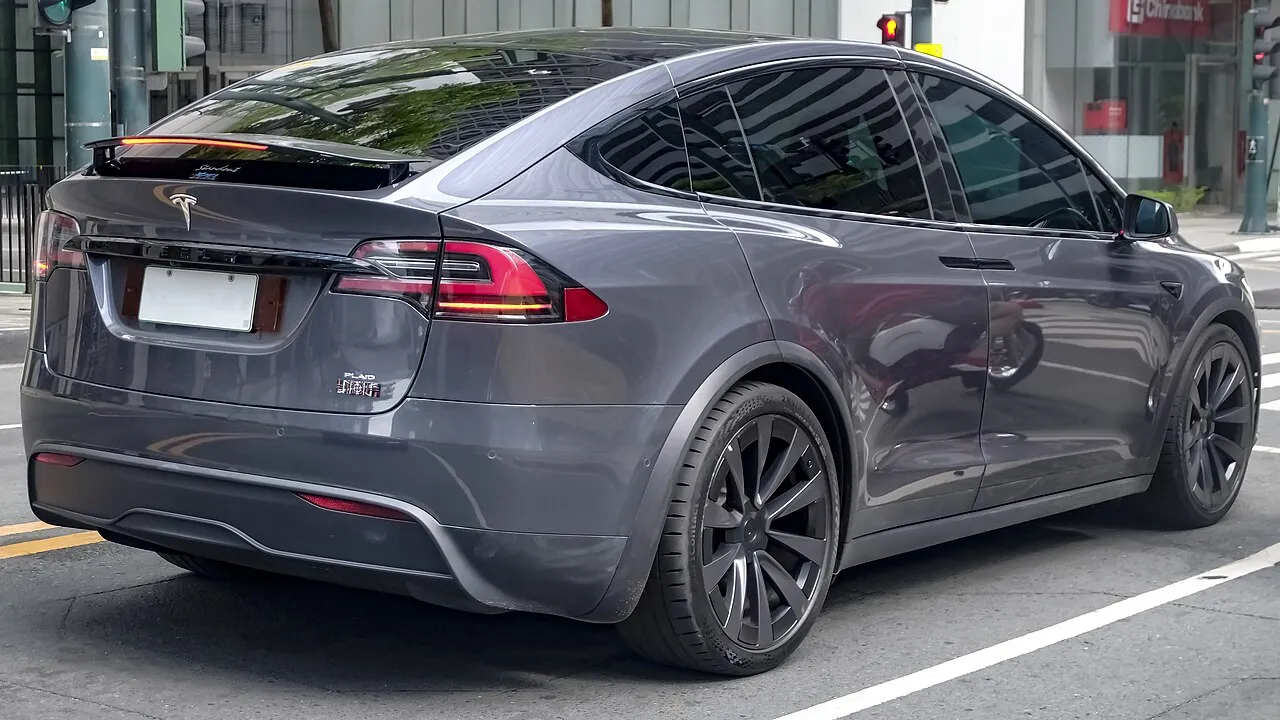
The short answer: Tesla has begun rolling out FSD v15 and says its cars will remain on the AI4 computer, with AI5 directed to Optimus. Electrek reports that Tesla executives describe AI4 as compute constrained, while the company has not publicly explained how the system would maintain a safe stop if one of its two chips failed.
Tesla has started rolling out Full Self-Driving version 15 on its AI4 computer, while CEO Elon Musk says future AI5 chips are intended for the Optimus robot and cars will remain on AI4. The move puts greater weight on whether the current hardware can support Tesla’s stated goal of unsupervised driving: according to Electrek, Musk and a Tesla AI silicon engineer have described v15 as using much of AI4’s available computing capacity, while the company has not publicly detailed how the system would handle a chip failure with no driver ready to take control.
For owners, that leaves two linked questions: how much v15 improves driving performance, and whether the hardware can safely support a system that operates without human supervision. Tesla has promoted a large improvement in safety-critical cases, but Electrek says the company did not identify a baseline for that claim. The outlet also notes that early posts about the release chiefly show visual and interface changes, which do not establish how often the vehicle needs a driver to intervene.
What Tesla says v15 does with AI4
The most visible new feature in v15 is Tesla Reality View, a live rendering of the vehicle’s surroundings that includes floating arrows for upcoming turns. Musk described it on X as real-time AI video generation running on half of one AI4 TRIP accelerator. In a subsequent explanation, he said Tesla had moved a decoder into SRAM and had half of a TRIP available on SoC B for the visualizer. Electrek interprets that description as the visualizer using compute left over after other workloads were assigned.
Musk also described Reality View as a diffusion model with roughly 1 billion parameters. According to Electrek, it uses features from the same vision encoder connected to a 3 billion-parameter model that produces driving actions. Musk said the visualizer has somewhat high latency because of compute constraints. Those descriptions provide a look at how Tesla is allocating some of AI4’s resources, but they do not specify the total compute demand of v15 or how much capacity is reserved for a fault in one of the chips.
Electrek also points to a Tesla AI silicon engineer’s description of the v15 vision encoder as work to extract the last few percentage points of model FLOPs utilization from AI4. The outlet says Musk responded to the post with a target emoji. That account adds to the question of available headroom, though it does not quantify the entire driving system’s performance or establish what the system can do after a hardware fault.
Redundancy remains an open question
Tesla introduced its FSD computer in 2019 with two independent chips, each with its own power and memory. Electrek says the design was presented as redundancy, with one chip able to take over if the other failed. That kind of fallback matters to unsupervised operation because a vehicle without a driver cannot simply hand control back to a person if part of its computing hardware stops working.
The outlet reports that Musk’s description of v15 places the decoder and Reality View work on SoC B. It also cites reports from Tesla hackers that the company began splitting FSD workloads across both chips as far back as the HW3 generation. Tesla, according to Electrek, has not explained how much AI4 capacity it holds in reserve for failover or whether one SoC alone could run enough of the stack to bring a vehicle to a safe stop.
That distinction is central to assessing claims about unsupervised driving. A system may have two chips, but buyers and regulators would need to know what happens when one fails while both are carrying work. Electrek says Waymo has publicly described both of its onboard computing systems running full workloads in parallel, with a secondary computer able to bring the vehicle to a safe stop if the primary fails; it also cites redundant braking, steering and power. The comparison underscores the kind of operational detail that has not been publicly laid out for Tesla’s AI4 system.
Electrek estimates AI4 at roughly 100 to 150 TOPS across both chips, compared with more than 1,000 TOPS for Waymo’s new custom chip. These are the outlet’s estimates and figures, respectively; they do not by themselves show how either system performs in driving or how its redundancy is implemented. The article’s central concern is not simply the headline compute rating, but the combination of workload, fault tolerance and safe-stop capability.
AI4.5 changes memory, while AI5 shifts to Optimus
Musk’s comments about AI4.5 have also tempered expectations for a substantial performance jump. On Tesla’s first-quarter 2026 earnings call, he announced an “AI4 Plus” with memory doubled from 16GB to 32GB per chip. In posts cited by Electrek, Musk later called AI4.5 a relatively small performance improvement, mostly tied to upgrading to LPDDR5X memory. He then said Tesla reduced the planned memory from 32GB to 24GB because memory is expensive and difficult to use fully given bandwidth constraints.
Musk also said AI4 costs twice as much as before because of increases in memory and storage prices, according to Electrek. The outlet’s account frames AI4.5 as a memory refresh more than a major compute step. The available comments do not establish precisely how every AI4.5 configuration will differ in real-world FSD performance, but they do indicate that Tesla is not describing the revision as a dramatic leap in processing capacity.
Asked whether an owner should wait for AI5 before upgrading from HW3, Musk replied that AI5 is going to Optimus and that cars will remain on AI4. He called AI5 a roughly 12-fold compute improvement, and later described it as roughly an order-of-magnitude hardware performance gain, while noting memory bandwidth as a constraint. Electrek says Musk had previously cited a 40-fold improvement by some measures. The outlet also reports that AI5 memory plans changed, first being cut to 72GB and then increased to 96GB, while AI6 was reduced to 144GB of LPDDR6.
According to Electrek, Musk said Samsung’s Texas fab would not reach AI5 volume production until the second half of 2027, and that the volume is now intended for Optimus and data centers rather than cars. That reported allocation means AI4 remains the relevant platform for Tesla’s current vehicle fleet, including the Model Y. For context, the 2027 Tesla Model Y AWD has a US EPA-rated range of 294 miles; that range rating describes the vehicle, not the capability of its driver-assistance computer.
Early release claims still need driving evidence
Tesla began the v15 rollout on a Saturday, according to Electrek, and said the software delivers “25x better handling of safety critical cases.” The outlet reports that Tesla did not state the baseline behind the multiplier. Musk also said shortly before the rollout that v15 would reach a wide release the following month. Electrek describes the first public videos as coming mainly from early testers and focusing on Reality View, parking spot selection and floating arrows.
Those features may make the system easier to follow visually, but they do not answer how reliably it handles driving situations or how often a human must intervene. Electrek says the early clips do not show miles driven between critical interventions, and its report does not offer a performance test of v15. The outlet’s assessment is that driving performance, rather than the visualizer’s appearance, will determine whether the release represents a meaningful step toward unsupervised operation.
The next evidence to watch is therefore both software and hardware: broader v15 use, specific results behind Tesla’s safety claim, and a public explanation of how the AI4 system responds to a chip failure. Tesla’s position, as reported by Electrek, is that AI4 is enough to solve what Musk calls superhuman driving. Whether it can also provide the required fallback behavior remains unanswered in the outlet’s account. With AI5 directed away from cars, v15 carries the burden of demonstrating what the installed AI4 fleet can achieve.
Frequently asked questions
What is Tesla Reality View?
It is a live rendering of a vehicle’s surroundings in FSD v15, with features such as floating arrows for upcoming turns. Musk described it as an AI video-generation model running on AI4.
Will Tesla cars receive the AI5 computer?
Musk said AI5 is going to Optimus and that cars will remain on AI4, according to Electrek.
What is changing with AI4.5?
Musk characterized AI4.5 as a relatively small performance improvement, mostly associated with LPDDR5X memory. He said Tesla reduced its planned memory from 32GB to 24GB.
Has Tesla explained how AI4 handles a chip failure?
Electrek reports that Tesla has not publicly explained how much AI4 capacity is reserved for failover or whether one SoC can run enough of the driving stack to bring a vehicle to a safe stop.
Related stories

Tesla FSD v15 Reaches Older Model Ys Without Bumper Cameras
Tesla is extending FSD v15 to pre-refresh Model Ys without front bumper cameras, with early reports praising smoother driving but flagging visual lag.
Tesla FSD V15 Adds Parking Choices and Garage Entry
Tesla FSD V15 can distinguish street parking from parking lots, show its intended space and enter a home garage, according to Not a Tesla App.
Tesla Plans Faster Reality View and FSD V15 Fixes
Tesla says it is working to cut Reality View latency, fix a purple tint and restore visual features in FSD v15, with a wider rollout planned next month.