Tesla Model Y vs Volkswagen ID.4 for Family Use
The Model Y has higher EPA range ratings, but family fit needs a closer look. Compare cabin and cargo questions, home charging times, and trip planning.
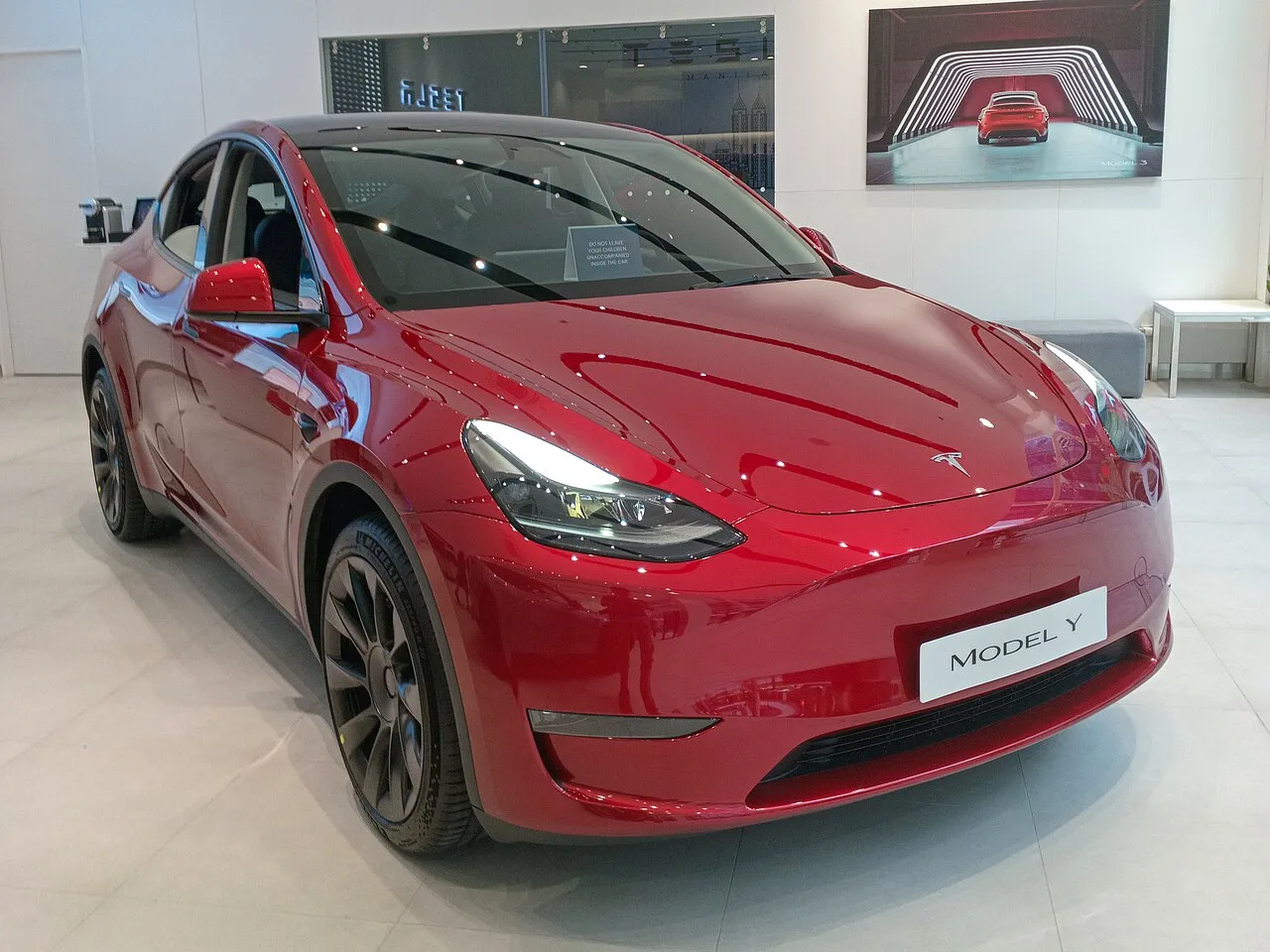
The short answer: The Tesla Model Y has higher EPA range ratings than the Volkswagen ID.4 in the US versions shown here. Neither vehicle can be declared the roomier family SUV from exterior measurements alone; both have EPA entries showing an eight-hour Level 2 full charge.
For an American family choosing between these SUVs, the clearest published difference is rated driving range. US EPA fueleconomy.gov rates the 2027 Tesla Model Y versions shown here from 294 to 355 miles and the 2026 Volkswagen ID.4 versions at 263 or 291 miles. Both have entries showing an eight-hour Level 2 full charge. Passenger comfort and cargo usefulness need a closer look: exterior measurements can describe the vehicles’ footprints, but they do not establish how easily a child seat fits or how much luggage the cargo area holds.
Range and charging figures at a glance
The US rows below use EPA ratings, so their range figures share a test standard. They cover different model years and specific versions, which matters when comparing a vehicle at a dealership with a figure in the table. The European rows use EVDB’s measurements for two 2025 versions to give context for exterior size. Their range figures use WLTP, a different test standard, and should be read separately from the EPA figures.
| Vehicle and version | Market and model year | Rated range and test standard | Level 2 full charge | Exterior length × width × height; wheelbase | Source |
|---|---|---|---|---|---|
| Model Y AWD | US, 2027 | 294 mi, EPA | 8 hours | — | US EPA fueleconomy.gov |
| Model Y L (20In Wheels) | US, 2027 | 328 mi, EPA | 10.4 hours | — | US EPA fueleconomy.gov |
| Model Y Performance AWD | US, 2027 | 306 mi, EPA | 12.2 hours | — | US EPA fueleconomy.gov |
| Model Y Premium AWD | US, 2027 | 327 mi, EPA | 8 hours | — | US EPA fueleconomy.gov |
| Model Y Premium RWD | US, 2027 | 355 mi, EPA | 10 hours | — | US EPA fueleconomy.gov |
| Model Y RWD | US, 2027 | 321 mi, EPA | 10 hours | — | US EPA fueleconomy.gov |
| ID.4 RWD | US, 2026 | 291 mi, EPA | 8 hours | — | US EPA fueleconomy.gov |
| ID.4 AWD | US, 2026 | 263 mi, EPA | 8 hours | — | US EPA fueleconomy.gov |
| Model Y Long Range AWD | Europe, 2025 | 565 km, WLTP | — | 4,751 × 1,978 × 1,624 mm; 2,890 mm wheelbase | EVDB |
| ID.4 Pro | Europe, 2025 | 520 km, WLTP | — | 4,584 × 1,852 × 1,642 mm; 2,765 mm wheelbase | EVDB |
Which SUV gives a family more room?
The European measurements suggest different exterior shapes. EVDB describes the 2025 Model Y Long Range AWD as longer and wider than the 2025 ID.4 Pro, while the ID.4 Pro is taller. The Model Y version also has a longer wheelbase, the distance between its front and rear axles. These are useful clues when judging parking space and the broad proportions of each SUV. They are measurements of European versions, however, and they are not measurements of usable passenger or cargo space in the US vehicles.
A longer wheelbase may create room for a spacious cabin, but it cannot tell a parent whether a rear-facing child seat leaves enough space for the front passenger. Overall height does not reveal headroom, and exterior width does not establish how comfortably passengers fit across the back seat. Seat shape, door openings, floor height and the location of interior trim all affect daily use. Families should check their own seating arrangement in the particular vehicle they intend to buy rather than treating the larger exterior dimension as a verdict on comfort.
Child seats and everyday access
For a household using child seats, the useful comparison is the complete routine: putting a child into the seat, fastening the restraint and getting an adult into the front seat afterward. A rear-facing seat can affect front-seat position, while several passengers or restraints across the back can make access to buckles important. The figures above do not establish child-seat compatibility, anchor placement, rear-seat width or door-opening clearance for either SUV. A hands-on fit check with the family’s actual seats answers those questions more directly than the vehicles’ outside dimensions.
The same applies when children are old enough to climb in themselves. An easy route into the rear seat, enough space to handle a bag and a comfortable seating position can matter on every school run. These are practical questions to check in both vehicles. The published exterior measurements identify which European versions are longer, wider or taller; they do not rank the experience of getting a family aboard.
Which cargo area is more useful?
There is no cargo-volume figure here that supports naming a capacity winner. Even a volume figure would be only a starting point for family use. The shape of the opening, the height of the load floor and the space available with the rear seats occupied determine whether a stroller, sports bag or vacation luggage fits without rearranging passengers. A long item can fit differently from several bulky ones even when the total amount of gear is similar.
Compare the vehicles with the rear seats in the positions the family will normally use. Check whether the items that travel together can be loaded together, whether they block visibility and whether they can be lifted over the cargo sill comfortably. If a stroller is part of the routine, folding it and trying the loading motion is more informative than judging the cargo area by sight. The European exterior length figures show that those particular Model Y and ID.4 versions have different footprints; they do not measure either cargo opening or usable storage space.
How do their US range ratings compare?
The EPA ratings give the Model Y the advantage across the US versions in the table. Within the 2027 Model Y entries, the Premium RWD has the highest rating at 355 miles, while the AWD entry is rated at 294 miles. The 2026 ID.4 RWD is rated at 291 miles and the AWD at 263 miles, according to US EPA fueleconomy.gov. Version choice matters: describing either SUV with only its highest rating would hide the shorter-rated alternatives a family might actually consider.
These are rated ranges, not promises for a particular trip. Highway speed, weather, heating or cooling use, terrain and the weight carried can change how far an EV travels between charging stops. A family that regularly drives with passengers and luggage should use the rating to compare versions, then plan trips with room for changing conditions. The EPA figures are appropriate to compare with one another; the WLTP figures for the European vehicles in the table come from a different driving test and do not belong in the same ranking.
Drive configuration is another decision tied to the exact version. The US EPA entries include rear-wheel-drive and all-wheel-drive ID.4 versions, as well as both configurations across the Model Y versions. The table does not show a single range penalty that applies whenever a family chooses all-wheel drive: each rating belongs to its named vehicle and version. Start with the configuration that meets the household’s needs, then compare its own EPA rating and charging entry.
What do the charging figures mean at home and on a trip?
US EPA fueleconomy.gov gives both 2026 ID.4 entries an eight-hour Level 2 full-charge figure. For the 2027 Model Y, the entries vary: AWD and Premium AWD are shown at eight hours, while RWD, Premium RWD, L (20In Wheels) and Performance AWD have longer figures. That makes the exact Model Y version relevant when planning how long a full charge could take. A full-charge figure is most useful for a nearly empty battery; an ordinary overnight session may replace only the energy used that day.
Level 2 charging and DC fast charging answer different questions. Level 2 is relevant to longer parking periods, including charging at home. DC fast charging is relevant to stops during a trip, where the time needed depends on the battery’s state of charge, its temperature and the charger. The US EPA entries above give Level 2 full-charge times but no DC peak charging figures, so they do not establish which US vehicle will make the shorter highway charging stop.
EVDB reports an 11.5 kW AC charging figure and a 250 kW DC peak for the 2025 European Model Y Long Range AWD. For the 2025 European ID.4 Pro, EVDB reports 11 kW AC and a 135 kW DC peak. Those figures describe the named European versions, not the US vehicles in the EPA rows. A peak is also a maximum charging-power figure, not the power sustained throughout a session. It cannot, by itself, predict how long a family will spend at a charger.
How to make the final choice
Choose a particular version before comparing ratings: the US EPA figures favor the Model Y for rated range, but its Level 2 full-charge times differ across versions. Both ID.4 entries show the same eight-hour Level 2 figure. For passenger room and cargo practicality, the evidence calls for a fit check in the vehicles the family can buy. Bring the child seats and the gear that most often travel together. The better family SUV is the one that accommodates those routines while meeting the household’s range and charging needs.
Frequently asked questions
Which has the higher US EPA rated range, the Model Y or ID.4?
The 2027 US Model Y versions shown are rated from 294 to 355 miles, above the 263- and 291-mile ratings for the 2026 US ID.4 versions, according to US EPA fueleconomy.gov.
Which SUV has more passenger or cargo room?
The exterior measurements for the named European versions do not establish usable passenger room or cargo capacity. Check child-seat fit and cargo loading in the specific vehicles under consideration.
How long does a Level 2 full charge take?
US EPA fueleconomy.gov shows eight hours for both 2026 US ID.4 entries. Its 2027 US Model Y entries range from eight to 12.2 hours, depending on version.
Can the European charging-power figures predict US road-trip stops?
No. EVDB’s AC and DC peak figures describe named 2025 European versions. Peak DC power alone also does not establish the length of a charging stop.
Related stories

How to Choose an EV for Caregiving and Support Trips
Compare passenger access, rear-seat comfort, equipment storage and charging routines to find an EV that fits recurring appointments and support trips.

Choosing 120V or 240V Charging for an EV at Home
A standard outlet may work for an EV that sits parked for long stretches. A 240V setup adds charging power, which can matter when daily driving uses more energy.

How to Plan EV Charging When You Park on the Street
Street parking can work with EV ownership when you confirm local rules, identify dependable charging, and build a routine that fits where you park.