Tesla Extends Cybertruck PCS Coverage After Charging Failures
Tesla extended PCS coverage for 2024 and 2025 Cybertrucks after reliability problems, as owners debate whether to charge at the truck’s full 48 amps.
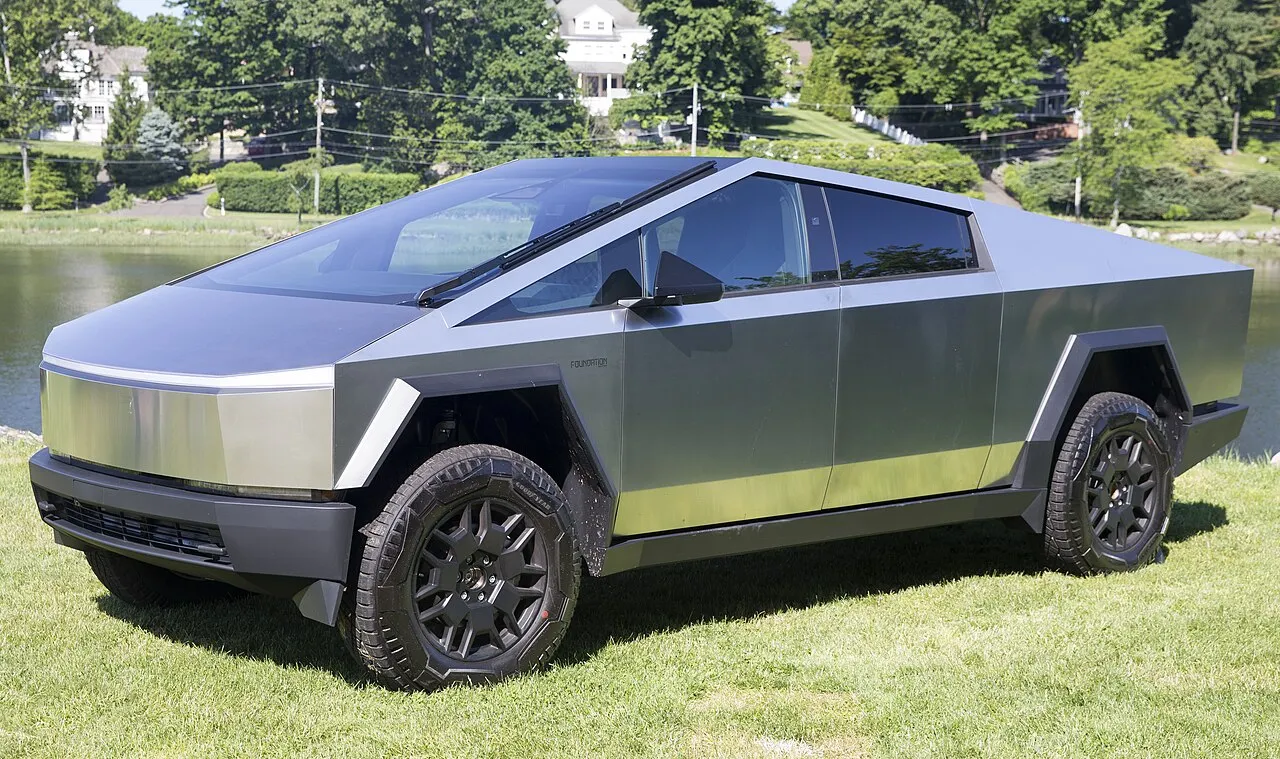
The short answer: Tesla extended Power Conversion System coverage on 2024 and 2025 Cybertrucks to eight years or 150,000 miles after acknowledging reliability problems in pre-2026 units. Owners are debating full-rate 48-amp charging, which Torque News says is within the truck’s stated rating, while some fear heat could hasten a failure.
Tesla Cybertruck owners are debating whether to keep using the truck’s full 48-amp home charging rate after reports of failures in early Power Conversion System hardware. The concern is whether sustained higher-current charging could expose a weak unit before warranty coverage expires, particularly for owners who might otherwise face a costly repair. According to Torque News, Tesla has extended Power Conversion System (PCS) coverage on 2024 and 2025 Cybertrucks to eight years or 150,000 miles.
The issue matters because the PCS handles more than home charging. It converts alternating current (AC) from a home charger into direct current (DC) for the battery, and its DC-to-DC stage supports the truck’s 48-volt electrical system. Torque News reports that some failures can limit Level 2 charging, while a failure affecting the auxiliary system can leave the truck undrivable. The outlet says Tesla has also issued a software update that lets DC Supercharging bypass a failed AC charging stage and pledged to reimburse owners who paid for repairs.
Why owners are questioning a normal charge rate
Torque News describes 48 amps as the Cybertruck’s maximum Level 2 AC charging rate, equivalent to 11.5 kilowatts on a 60-amp circuit. That makes the owners’ debate less about exceeding a stated limit and more about whether repeated charging at the maximum rate puts additional thermal stress on early PCS hardware. The outlet says higher current creates more continuous heat inside the electronics than charging at 24 or 32 amps.
In the owner discussion described by Torque News, some drivers wondered whether charging at the full rate might bring a latent failure to light while the vehicle remains under warranty. Others said they already charge at 48 amps but had not seen warnings. One owner quoted by the outlet said the truck’s warranty might expire before the vehicle accumulated many miles or charging sessions. The discussion illustrates the uncertainty facing owners: the reported issue concerns early hardware revisions, but the available account does not establish that every truck will fail or that charging at 48 amps causes a failure.
Torque News says some PCS problems do not stop charging altogether. A failing unit may instead cap Level 2 charging at 24 amps, a fault that could be overlooked if an owner assumes a slower rate comes from a shared charger or scheduled charging. The outlet recounts one owner discovering the limit when a visiting Model Y charged at 48 amps while the Cybertruck remained at 24 amps. The owner had attributed the slower rate to power sharing during an overnight charging window.
Warranty coverage and repair consequences
Tesla acknowledged the reliability concern in a statement quoted by Torque News: “We have identified PCS electronics in pre-2026 Cybertrucks that do not meet our reliability standards.” The outlet reports that Tesla extended coverage for the PCS on 2024 and 2025 trucks to eight years or 150,000 miles. It gives a different term for 2026 models: seven years or 70,000 miles. These are PCS coverage terms described by the outlet, rather than a claim that every component of the vehicle has the same warranty.
Before Tesla’s coverage change, Torque News says owners who were outside warranty could receive repair quotes of about $2,500, before any goodwill discounts. The outlet also says Tesla pledged to reimburse owners who had already paid out of pocket. Because the report does not detail reimbursement eligibility or the process for confirming an individual vehicle’s coverage, owners would need to check their own service records and Tesla’s terms for their truck.
A PCS failure can affect the truck in different ways, according to the report. If the AC charging stage fails, the truck may lose its ability to charge from a home wall connector. Tesla’s reported update allows DC Supercharging to bypass that failed stage, preserving a way to charge the battery. But the PCS also includes the DC-to-DC function that feeds the 48-volt system; if that function stops working, Torque News says the truck can become undrivable. The update’s AC-stage workaround therefore does not mean every consequence of a PCS fault disappears.
How the early hardware compares with Ford’s approach
Torque News compares the Cybertruck’s early PCS design with Ford’s onboard charging hardware in the 2022 and 2023 F-150 Lightning Extended Range. According to the outlet, Ford used two parallel onboard chargers to support 80 amps, or 19.2 kilowatts, and paired that capability with the 80-amp Ford Charge Station Pro. The report says Ford later dropped the second onboard charger on 2024 and newer retail Lightnings, leaving a 48-amp ceiling.
The comparison is about hardware design and rated charging capacity, not a controlled test of failure rates across the two trucks. Torque News says Tesla combined 48-amp AC charging and 48-volt power electronics in one PCS module, and that early revisions lacked the thermal margin added later. Ford’s dual-charger arrangement divided the charging load, while its later trucks used one onboard charger. The outlet presents the Lightning’s former 80-amp capability as a contrast to the Cybertruck’s early reliability concerns at 48 amps.
The report also points to the home electrical panel as a practical limit on charging power. Its author says using the Lightning’s full 80 amps at home would have required a major service upgrade to support that continuous draw alongside household loads. That experience is an example from the outlet’s author, not a general measurement of every home. It helps explain why a vehicle’s maximum charging rate and the rate a household can use are separate considerations.
What Cybertruck owners can verify
Torque News says owners should confirm that the PCS coverage extension appears in the service record for a 2024 or 2025 truck and keep records of charging fault codes. It also advises arranging service promptly for PCS or 48-volt system alerts. Those steps are relevant because a warning or reduced charging rate may help identify an issue before the owner needs to rely on the vehicle during a trip.
The outlet’s account does not establish that owners need to deliberately stress a charger to secure warranty coverage. It reports that drivers discussed that possibility, while also noting that Tesla’s extension covers specified model years and mileage limits. Charging at 48 amps is described as within the Cybertruck’s stated maximum; reducing the rate to 32 amps is presented by Torque News as an option that may reduce continuous heat when a truck is plugged in overnight. The report does not quantify how much that adjustment changes component life or establish that it prevents failures.
The next step for affected owners is therefore tied to their vehicle’s model year, service record, charging behavior, and any warnings or reduced charge rate. Tesla’s stated warranty extension and reimbursement pledge address some repair costs, while the Supercharging bypass addresses one consequence of an AC-stage failure. The scale of the reported failures, the likelihood of a particular truck developing one, and the effect of charging amperage on that likelihood are not quantified in the Torque News report.
Frequently asked questions
What warranty extension did Tesla announce for Cybertruck PCS failures?
According to Torque News, Tesla extended PCS coverage on 2024 and 2025 Cybertrucks to eight years or 150,000 miles. The outlet reports seven years or 70,000 miles for 2026 models.
Is 48-amp charging above the Cybertruck’s stated limit?
No. Torque News describes 48 amps as the Cybertruck’s maximum Level 2 AC charging rate, or 11.5 kilowatts on a 60-amp circuit.
What can happen if the PCS fails?
A failure can stop AC home charging or reduce Level 2 charging to 24 amps. Torque News says a fault in the DC-to-DC stage that supports the 48-volt system can leave the truck undrivable.
Can a Cybertruck still use a Supercharger after an AC-stage failure?
Torque News reports that Tesla issued a software update allowing DC Supercharging to bypass a failed AC charging stage.
Related stories

What Everyday Use of the Tesla Cybertruck Requires
The Cybertruck's daily practicality depends on fitting its pickup body to your routes, parking and cargo needs. EPA and NRCan figures cover range and charging.

How to Choose an EV for Caregiving and Support Trips
Compare passenger access, rear-seat comfort, equipment storage and charging routines to find an EV that fits recurring appointments and support trips.

Choosing 120V or 240V Charging for an EV at Home
A standard outlet may work for an EV that sits parked for long stretches. A 240V setup adds charging power, which can matter when daily driving uses more energy.