Southwire Says Preloaded Cable Cuts EV Charging Site Costs
Southwire says cable installed inside conduit can cut charging site costs by 25% to 30%, as higher currents and smaller connectors add engineering demands.

The short answer: Southwire says its cable-in-conduit approach can reduce total installation costs by 25% to 30% by delivering conductors already inside their conduit, according to Charged EVs. The company also describes growing challenges in keeping charging cables flexible, durable and cool as charging currents rise.
Southwire says delivering electrical conductors already inside their underground conduit can cut total installation costs by 25% to 30%, according to an interview with Charged EVs. The claim points to a potentially significant saving in the infrastructure between a utility connection and a charging dispenser, as larger charging sites bring more demanding electrical and construction requirements.
The Georgia wire and cable manufacturer also described challenges closer to the driver: making charging cables smaller and easier to handle while carrying more current and surviving public use. Together, those demands show why charging infrastructure depends on more than the dispenser. Installation methods, underground heat management, connector design and cable support all affect how a site is built and how its equipment holds up.
Putting the conductors inside before installation
Joe Fawcett, Southwire’s business development sales manager for eMobility Infrastructure Solutions, told Charged EVs that the company’s cable-in-conduit product arrives on one reel, with the conductors already inside high-density polyethylene conduit. His work covers the route from the utility transformer to the dispenser, including medium-voltage feeders and underground duct banks.
Fawcett put the total cost saving at 25% to 30%, with a greater saving on labor alone, according to Charged EVs. He described the investment as paying back by the time installation is complete. That is Southwire’s assessment of the approach; the interview does not establish a separate saving on the price drivers pay to charge.
The construction process also creates opportunities for damage. Fawcett described a charging site where a Southwire field engineer removed wire from conduit months after the site opened and found tire tracks on it. Someone had driven over the cable while it was on the ground before it was pulled into place, according to Charged EVs.
At another site, debris inside the conduit wore through cable jackets until a short circuit shut down the dispenser, Fawcett said. Those examples connect underground installation practices with charging availability: damage along the electrical path can disable equipment even when the dispenser itself is not the original problem.
Larger sites make planning more demanding
Charging sites are increasing in scale, particularly for fleets, Fawcett told Charged EVs. Such projects often need a separate utility service and transformer, along with medium-voltage cable. He said those cables have longer lead times than 600-volt cables, while transformers also face lengthy lead times.
Fawcett argued for greater standardization in medium-voltage cable designs. Although customers seek different configurations, more consistent designs would make it easier to build inventory and fill orders, according to Charged EVs. The practical issue is coordinating the electrical equipment a larger site needs with the time required to obtain it.
Heat adds another constraint underground. The report describes tightly packed duct banks without spacing and concrete whose thermal resistivity varies between suppliers. Those conditions matter because the surrounding construction affects how heat moves away from cables. Increasing electrical capacity therefore involves the installation around the conductors as well as the conductors themselves.
Expansion can also exceed earlier expectations. According to Charged EVs, some owners had planned to gain capacity by replacing aluminum conductors with copper, only to face a later expansion that doubled the station’s size. That changes the planning problem from upgrading an existing electrical path to accommodating a much larger charging operation.
Smaller connectors put pressure on cable design
At the vehicle end, the central goals remain familiar. Kevin Wahl, lead consulting engineer in Southwire’s CableTechSupport Services group, told Charged EVs that cables must become lighter, smaller and more flexible while remaining durable. Public charging adds repeated rough handling to those requirements.
The shift toward the North American Charging Standard, or NACS, introduces another design challenge. Wahl described the Tesla connector as smaller than the connectors around which much of the industry previously designed its equipment. Its size and different signal-wire arrangement push manufacturers toward a smaller cable configuration, according to Charged EVs.
Wahl also pointed to a mismatch between connector adoption and some government requirements. He said some regulations still require CCS1 or Type 1 connectors at new charging sites while automakers move toward NACS. His comments describe an additional consideration for equipment designers and site developers working through the connector transition.
There is substantial customization behind these products. Southwire told Charged EVs in a 2025 interview that roughly 95% of its EV charging cables were built to project-specific requirements. Wahl’s account of connector size, electrical capacity and cooling arrangements helps explain why different charging projects can call for different cable designs.
More current does not always mean bigger wires
Higher charging current generally calls for larger copper conductors, Wahl told Charged EVs. But continuing to enlarge a pair of conductors creates problems with cable size and flexibility. At that stage, dividing the current between additional conductors can offer an advantage.
Instead of using two very large wires, a design can use four smaller wires in parallel, according to Wahl. He said that arrangement can produce a physically smaller cable that bends more easily. Copper accounts for most of the weight at this point, so changing the conductor arrangement addresses a major part of the handling problem.
At still higher currents, cooling becomes central. Wahl described megawatt charging work for large buses and tractor-trailers as largely in the trial phase, with currents around 1,500 amps. At those levels, he said, liquid cooling allows smaller copper conductors to carry higher current, but also requires chillers and a more complex site design.
According to Charged EVs, Wahl said a few DC fast-charging systems are also beginning to use liquid-cooled cable technology. The appeal is a smaller cable that can support higher charging performance. Delivering that benefit requires the cable and the charging equipment’s cooling system to work together.
Cooling and cable support must work together
Liquid-cooled cables can take several forms. Wahl described water-glycol mixtures and dielectric oils, which have different heat capacities. He also distinguished direct cooling, where copper is immersed in dielectric oil, from indirect cooling, where insulated conductors surround tubes carrying liquid.
The route taken by the coolant also matters. Liquid may travel along conductors and return through a separate tube, or travel outward along one conductor and return along another. In the latter arrangement, the returning liquid has already absorbed heat, Wahl explained to Charged EVs. Designers must account for that warming alongside flow rate, the desired charging cycle and the chiller’s capabilities.
Mechanical support remains a separate durability issue. Wahl said suspending a heavy charging cable from a small ring can allow it to droop and bend more tightly than its minimum bend radius permits. The resulting stress can kink copper, create ripples in the jacket and accelerate degradation, according to Charged EVs.
Southwire’s account points to several areas of continuing work: more consistent underground cable configurations, conductors that remain manageable as current rises, cooling systems matched to cable designs, and supports that prevent damaging bends. For charging operators, the cost claim concerns construction. For drivers, the related engineering work concerns the cable they handle and the electrical infrastructure that keeps the dispenser operating.
Frequently asked questions
How much does Southwire say cable-in-conduit can save?
According to Charged EVs, Southwire’s Joe Fawcett estimates total installation cost savings of 25% to 30%, with greater savings on labor alone. He says the investment pays back by the end of installation.
What is cable-in-conduit?
Southwire’s cable-in-conduit product arrives on a reel with the electrical conductors already inside high-density polyethylene conduit, according to Charged EVs.
Why do some charging cables use four conductors instead of two?
Southwire engineer Kevin Wahl told Charged EVs that splitting two large conductors into four smaller conductors running in parallel can produce a smaller, more flexible cable because smaller copper wires bend more easily.
Why use liquid cooling in a charging cable?
According to Charged EVs, liquid cooling removes heat so smaller copper conductors can carry higher current. Wahl described its use in megawatt charging trials and said a few DC fast-charging systems are also adopting it.
How can cable supports affect charger durability?
Wahl told Charged EVs that holding a heavy cable at one small point can let it droop below its minimum bend radius, leading to kinked copper, jacket deformation and degradation.
Related stories
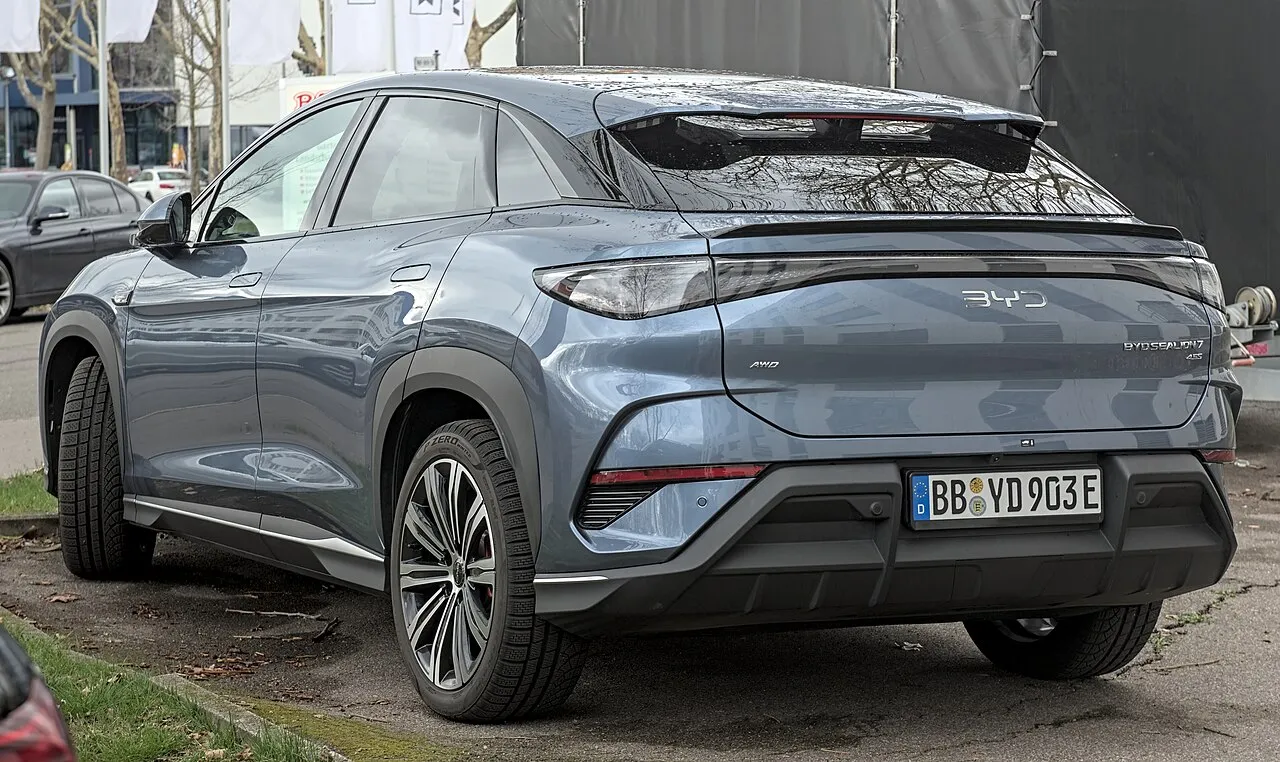
BYD Adds Storage at Busy Flash-Charging Stations in China
BYD is adding storage cabinets at busy flash-charging sites, but the fix may only delay slower charging where demand stays above the grid’s supply.

Why EV Fast Chargers Reduce Power During a Session
Public fast chargers can lower output when equipment heats up, the site reaches an electrical limit, or protection controls respond. Here is how those limits work.

How EV Charging Sites Divide Power Among Cars
EV chargers share a site’s electrical limit through a controller that adjusts each unit’s output as demand changes. Here’s why charging speeds can shift.