Kia EV9 vs Hyundai IONIQ 9: Which Has More Room?
European exterior measurements put the IONIQ 9 ahead in length on the compared trims, but seating layouts and cargo volumes need separate confirmation.
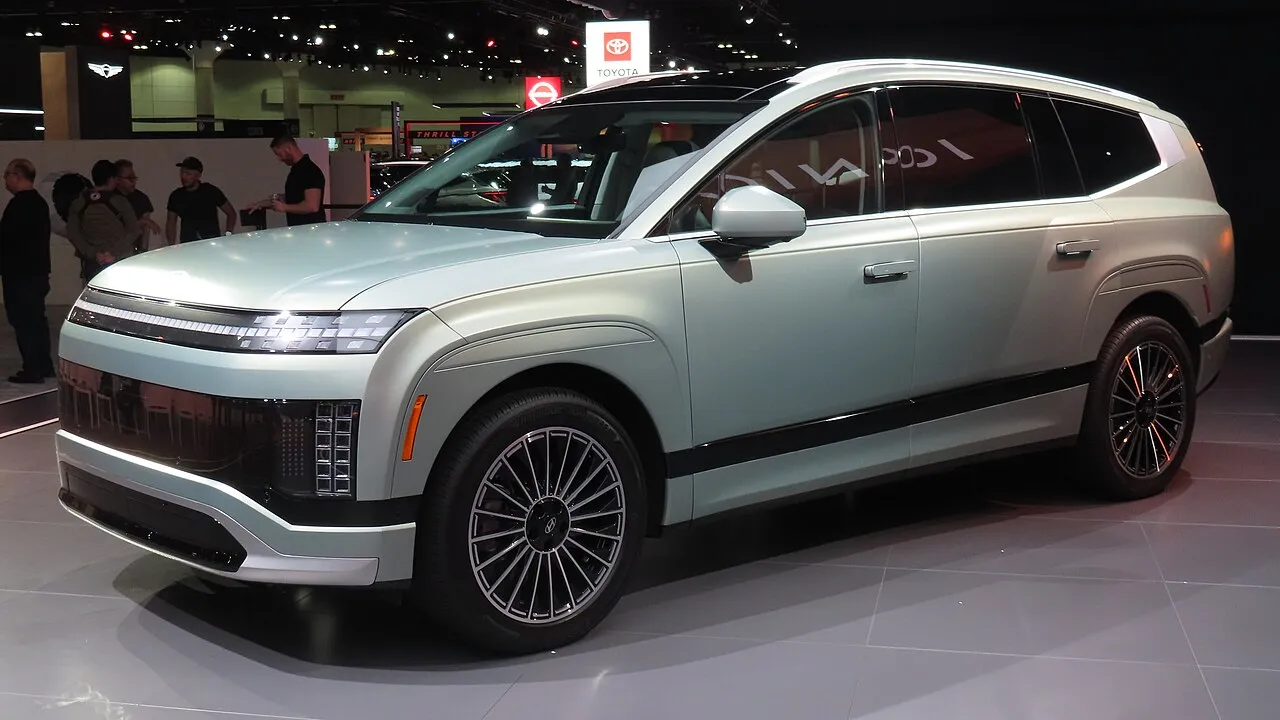
The short answer: The Hyundai IONIQ 9 is longer than the Kia EV9 in the European versions compared below, while their published widths are the same. Exterior size alone cannot establish which has more usable seating or cargo space.
The Hyundai IONIQ 9 has the larger exterior length in the European versions compared here, but that does not settle which three-row SUV gives a family more room. EVDB records both vehicles at the same width, while length, height and wheelbase vary by version. Those measurements help explain what to inspect, but they cannot establish how comfortably people fit in each row or how much luggage fits behind it.
For an American family, the decisive comparison is the seating layout and cargo space of the exact US vehicles under consideration. Neither a longer body nor a longer wheelbase guarantees a more useful third row. Seat design, the space occupied by interior fittings and the position of the second row all affect how the cabin works when every seat is in use.
How do their exterior dimensions compare?
The table uses EVDB's measurements for European 2025 versions. These are physical dimensions, so no driving range test standard applies. They are useful for understanding the vehicles' exterior proportions; they should not be treated as measurements of US cabin or cargo space.
| Vehicle and version | Market, model year and measurement standard | Length | Width | Height | Wheelbase |
|---|---|---|---|---|---|
| Hyundai IONIQ 9 Long Range RWD | Europe, 2025; physical dimensions, no driving range test standard; EVDB | 5,060 mm | 1,980 mm | 1,790 mm | 3,130 mm |
| Hyundai IONIQ 9 AWD Performance | Europe, 2025; physical dimensions, no driving range test standard; EVDB | 5,060 mm | 1,980 mm | 1,790 mm | 3,130 mm |
| Hyundai IONIQ 9 Long Range AWD | Europe, 2025; physical dimensions, no driving range test standard; OpenEV Data and EVDB | 5,100 mm | 1,980 mm | 1,750 mm | 3,100 mm |
| Kia EV9 Air RWD | Europe, 2025; physical dimensions, no driving range test standard; EVDB | 5,010 mm | 1,980 mm | 1,755 mm | 3,100 mm |
| Kia EV9 GT AWD | Europe, 2025; physical dimensions, no driving range test standard; EVDB | 5,015 mm | 1,980 mm | 1,755 mm | 3,100 mm |
EVDB puts the European IONIQ 9 Long Range RWD and AWD Performance at 5,060 mm long, compared with 5,010 mm for the EV9 Air RWD. That is a 50 mm difference between those versions. The IONIQ 9 Long Range AWD entry from OpenEV Data and EVDB is longer still, at 5,100 mm. Because the IONIQ 9 entries themselves differ, a single length should not be assumed to describe every version.
Wheelbase shows a similar need for precision. EVDB records 3,130 mm for the IONIQ 9 Long Range RWD and AWD Performance, while the IONIQ 9 Long Range AWD entry and both EV9 entries in the table show 3,100 mm. A longer wheelbase can give designers more room between the axles, but it does not reveal where that room went. The extra space could affect different parts of the cabin, and the measurement says nothing directly about legroom in a particular row.
All five entries show a width of 1,980 mm. That makes width a poor way to choose between these European versions. Exterior width also cannot answer whether three people can sit comfortably across a bench: door trim, seat shapes and the usable distance between seating positions matter. For a garage or parking space, exterior width is relevant, but the table does not include width with mirrors or the clearance needed to open the doors.
Height varies among the IONIQ 9 entries. EVDB records 1,790 mm for two versions, while OpenEV Data and EVDB record 1,750 mm for the Long Range AWD. Both EV9 entries are 1,755 mm tall. Those figures describe the outside of each vehicle. Roof shape, floor height and seat position determine how much headroom an occupant actually gets, so exterior height should not be read as an interior headroom ranking.
What matters more than the vehicle's length?
A three-row SUV has to serve several different seating arrangements. A family might need every row occupied on one trip, easier passage to the back on another, or extra cargo room when fewer people travel. The best layout depends on which of those uses is routine. An exterior measurement stays the same through all of them, while the usable cabin changes as seats move or fold.
Start with the second row because it controls access to the third. Check the seating configuration on the exact version being considered, then look at the route into the back row. The opening created by a moved second-row seat, the space for a passenger's feet and the effort needed to move the seat can matter more in daily use than a small difference in overall vehicle length. If a child seat will stay installed in the second row, check whether the intended access route still works with it in place.
Next, assess the third row with the passengers who would actually use it. Legroom can change when the second row moves; comfort can also depend on seat height, foot space and the shape of the roof near the rear. A measurement taken across the whole vehicle cannot stand in for those checks. A family that regularly carries adults in the back has a different question from one that uses the third row occasionally for children.
Seat count deserves the same version-specific attention. The presence of three rows does not, by itself, identify how many occupants a particular configuration seats or what kind of second row it has. Before comparing the EV9 and IONIQ 9 by claimed passenger capacity, confirm the actual seating arrangement of each US version on the shopping list. That prevents a difference in trim or configuration from being mistaken for a difference between the two models as a whole.
Which has more cargo space for family trips?
The exterior dimensions cannot establish a cargo-volume winner. For a family that frequently fills all three rows, the most relevant cargo measurement is the space remaining behind the upright third row. A capacity measured with seats folded answers a different question. Both can be useful, but they describe different ways of using the vehicle and should be compared with the seats in matching positions.
Volume alone is only part of the cargo decision. A stroller, suitcase or other bulky item must pass through the opening and fit within the available floor area and height. Two cargo areas with similar volume can accommodate differently shaped objects. The location of the load floor and the ability to arrange smaller bags around a large item also affect whether a family can keep the third row available for passengers.
Seat movement changes the calculation again. If the second row can move to give the third row more legroom, the passenger arrangement that works best may affect the space available elsewhere in the cabin. Folding the third row may make a large load possible, but it removes those passenger places for that trip. The useful comparison is therefore a set of matching situations: every row occupied, the third row folded, and any regular arrangement that requires both passengers and bulky cargo.
For a US purchase decision, compare cargo figures only when they describe the same seat position and measurement convention, then check the actual opening and floor with the items the family carries. The European body dimensions above establish that some IONIQ 9 versions are longer than the EV9 versions shown. They do not establish which US vehicle holds more luggage behind occupied seats or offers a more flexible cargo area.
How should a family choose between them?
Use the exterior figures to narrow questions, rather than to declare an interior winner. The IONIQ 9's greater length in the compared European versions may prompt a closer look at its third row and luggage area. The equal widths make it especially useful to compare the actual second-row seating surfaces and access paths. Neither observation substitutes for checking the US versions a family can buy.
The strongest comparison uses the same passenger and cargo setup in each vehicle. Set the front seats for the usual drivers, position the second row for its usual passengers, and then assess access to and comfort in the third row. Finally, leave every required seat in place and see whether the regular family load fits. That sequence tests the tradeoff at the heart of a three-row EV: carrying people and their belongings at the same time.
On the published exterior measurements shown here, the IONIQ 9 leads on length, the two models match on width, and height and wheelbase depend on version. Usable seating and cargo capacity remain separate questions. The better family choice is the version whose actual seating arrangement, third-row access and luggage space work together for the trips it will make most often.
Frequently asked questions
Is the Hyundai IONIQ 9 longer than the Kia EV9?
Yes, among the European 2025 versions compared here. EVDB records the IONIQ 9 Long Range RWD at 5,060 mm and the EV9 Air RWD at 5,010 mm. These are exterior dimensions for those specific versions.
Are the Kia EV9 and Hyundai IONIQ 9 the same width?
The European 2025 versions in the table all have a published exterior width of 1,980 mm, according to EVDB and, for one IONIQ 9 entry, OpenEV Data and EVDB.
Does the IONIQ 9's longer body mean it has a roomier third row?
The exterior length figures cannot establish that. Third-row comfort depends on the seating layout, second-row position and usable space around the passengers.
Which SUV has more cargo space behind the third row?
The exterior measurements do not establish a winner. Compare cargo capacities with both third rows upright, then check whether the items your family carries fit through each vehicle's opening.
Related stories

How to Choose an EV for Caregiving and Support Trips
Compare passenger access, rear-seat comfort, equipment storage and charging routines to find an EV that fits recurring appointments and support trips.

How to Choose an EV for Your Dog and Travel Gear
Compare an EV’s entry points, secure travel area, climate controls and cleanability with your dog and gear on hand before choosing a vehicle.
Kia EV3 vs. BYD ATTO 3: Which SUV Fits Daily Life?
The Kia EV3 and BYD ATTO 3 suit different daily needs. Compare market-specific range figures, dimensions and charging, then check cargo access and fit in person.