Kia EV3 Standard Range Faces a Price and Range Test
An Australian review finds the base Kia EV3 capable in daily use, while its price, firm ride and recurring driver alerts complicate the case for buyers.
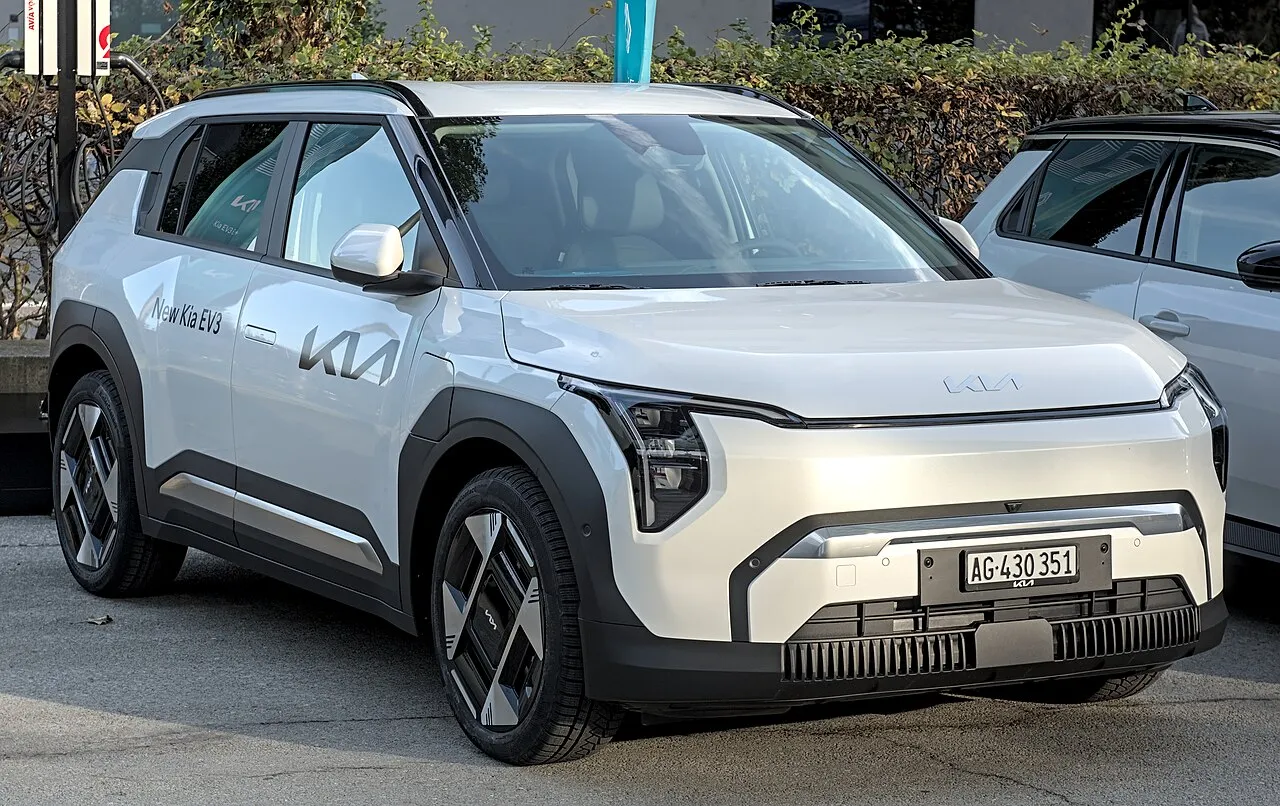
The short answer: EV Central reports that the Kia EV3 Air Standard Range has handled everyday driving well in the early stages of an Australian long-term review. Its price relative to Chinese rivals and its recurring driver alerts remain concerns.
The least expensive Kia EV3 is making a promising start in an Australian long-term review, but its price remains central to the buying decision. According to EV Central, the Air Standard Range has handled shopping trips and suburban driving well, with no apparent need so far for the larger battery offered in more expensive versions. The outlet has also flagged a firm ride, noticeable tire noise and driver alerts that require attention at the start of each trip. For buyers considering a smaller, cheaper battery, the early findings show what the trade-off looks like in daily use; they do not yet establish how the EV3 performs on a long trip or at a fast charger.
EV Central is testing the entry-level Australian model over three months and plans six updates. Its account covers the beginning of that period, with most driving devoted to ordinary errands rather than a dedicated range or charging assessment. The publication chose the Air Standard Range to examine the starting point of the lineup, where price and the smaller battery matter most.
Price puts the base EV3 under scrutiny
In Australia, the EV3 Air Standard Range costs A$47,600 before on-road costs, according to EV Central. The outlet also reports a A$46,990 drive-away offer in Victoria. Those figures describe different ways of quoting a car’s price, so the Victorian offer is the relevant figure for someone considering that particular deal. Its availability outside Victoria has not been published.
EV Central points to two larger Chinese electric SUVs as price comparisons: the Geely EX5 starts at A$41,990 before on-road costs, while the Leapmotor C10 EV starts at A$45,888 before on-road costs. The publication says Chinese alternatives closer to the EV3’s size can cost substantially less, though it gives no prices for those models. The comparison explains why Kia’s equipment, packaging and day-to-day usability carry particular weight. It does not establish a like-for-like price gap after on-road charges or account for differences in equipment between the vehicles.
The Australian test car is built in South Korea and measures 4,300 mm long, with a 2,680 mm wheelbase, according to EV Central. The outlet reports a 460-liter cargo area and a 25-liter compartment beneath the hood. It found useful rear-seat room for two adults despite the EV3’s compact footprint. Those details give the price discussion some practical context: the EV3 is being judged as a manageable suburban SUV that still needs to carry passengers and everyday cargo.
What the smaller battery has shown so far
The Australian Air Standard Range has a 58.3-kWh battery and a front motor rated at 150 kW and 283 Nm, according to EV Central. Kia claims 436 km of range on the WLTP test for that version, the outlet reports, and a 7.5-second run from zero to 100 km/h. The Australian Air Long Range increases battery capacity to 81.4 kWh and carries a claimed 604-km WLTP range. Those are rated figures; EV Central’s early driving does not constitute a measured maximum range for either version.
Across 377 km of freeway, suburban and country driving, the EV3’s trip computer showed an average of 14.9 kWh per 100 km, EV Central reports. The outlet cites Kia’s claimed consumption of 12.5 kWh per 100 km for comparison. At the point described in its review, the battery displayed 26% remaining and an estimated 115 km of range. The displayed estimate is the car’s projection, rather than a distance the publication drove after that reading.
Those readings are useful for understanding the reviewer’s initial experience, but the driving mix, conditions and charging history needed to turn them into a repeatable range result have not been published. EV Central’s narrower finding is that the smaller battery has not hindered the routine trips completed so far. That distinction matters to a buyer weighing battery size: a week of local use can show whether charging fits a household’s schedule, while longer journeys expose a different set of demands.
EV Central reports one charge from a normal Australian 240-volt household outlet. The car remained connected for well over 24 hours and showed 100% when it was next driven. The outlet has not yet used a DC fast charger in this review. The account therefore illustrates how a long period parked at home can work with the EV3’s current pattern of use, without establishing a full charging time from a known starting charge.
Charging figures depend on the version and market
For the Australian Standard Range, EV Central reports AC charging capability of up to 6.9 kW on single-phase power or 10.5 kW on three-phase power, and a peak DC charging rate of about 100 kW. The outlet says the EV3 uses a 400-volt version of Hyundai Motor Group’s E-GMP architecture. It contrasts that arrangement with the 800-volt systems in the Kia EV6 and EV9, which have greater rapid-charging capability. A peak rating alone does not describe the time needed for a particular charging stop, and EV Central has yet to report one for its test car.
American readers should also keep the markets separate. For the 2027 U.S. Kia EV3 Standard Range FWD, EPA ratings show 221 miles of range and a 6.2-hour Level 2 full-charge time. The U.S. Standard Range FWD price was $29,890 as of August 2026. Those U.S. figures identify a different market and test standard from the Australian Air’s A$ pricing and Kia’s Australian WLTP claim; the range numbers should not be treated as interchangeable.
European figures add another version-specific reference point. EVDB records a 410-km WLTP rating, 11-kW AC charging capability and a 102-kW DC peak for the 2025 European Standard Range EV3. Its German price was €35,990 as of February 2026. The European WLTP rating also differs from the 436-km WLTP claim EV Central reports for the Australian Air Standard Range. Buyers should use the rating and charging details for the version sold in their own market.
Equipment and driving impressions
EV Central reports that the Australian Air includes 17-inch wheels, LED headlights, cloth seats with manual front adjustment, and dual-zone climate control with rear vents. Two 12.3-inch screens handle instruments and infotainment, with a five-inch climate display between them. Wireless Apple CarPlay and Android Auto, navigation, a six-speaker audio system, a wireless phone charger and Kia Connect with over-the-air updates are also included. Vehicle-to-load capability comes with an interior socket and an external adapter for powering electrical equipment.
That equipment makes the base model more than a bare-bones route into the EV3 range. EV Central nevertheless found the gray cabin plain, with hard plastic in several places and softer surfaces where occupants rest their elbows. The publication also notes that the steering wheel can obscure the climate display. These are observations about the Australian test car’s interior, alongside its finding that the space works well for its compact size.
The parking equipment is simpler than EV Central would like. The Air has a reversing camera with dynamic guidelines and parking sensors at both ends, but no surround-view camera system, according to the review. That omission is especially relevant in a vehicle whose size and maneuverability are part of its appeal for suburban use.
On the road, EV Central describes responsive steering and adequate acceleration in Eco mode. Steering-wheel paddles let the driver adjust regenerative braking from strong one-pedal operation to near-coasting. The outlet found that flexibility useful in both traffic and open-road driving. It also reports a ride firmer than it would prefer at low speeds and noticeable tire noise. These are early impressions from the routes driven so far, rather than findings from a dedicated assessment of the car’s full performance range.
The driver-assistance controls have been a more persistent irritation. EV Central reports switching off speed-limit warnings, two attention-warning settings and lane-safety intervention when starting a drive. Some settings reset at the next start, requiring the process again. The publication says the warnings and steering intervention are too intrusive for its reviewer. Buyers whose preferences differ may weigh those systems differently, but the repeated setup is part of the ownership experience described in the review.
What the remaining review needs to answer
EV Central plans to continue the three-month review and has yet to report a DC fast-charging session or a trip undertaken specifically to explore the EV3’s driving capabilities. Those later accounts could give buyers a clearer picture of the smaller battery away from the suburban routine that has suited it so far. For now, the evidence supports a limited conclusion: the Australian Air Standard Range has proved useful in ordinary driving, while its price, ride and recurring alerts give shoppers concrete points to consider. U.S. shoppers have their own EPA range rating and price to use when assessing the 2027 Standard Range FWD.
Frequently asked questions
What is the Kia EV3 Standard Range’s U.S. EPA range?
The 2027 U.S. EV3 Standard Range FWD is rated at 221 miles by the EPA.
How much does the EV3 Air Standard Range cost in Australia?
EV Central reports a price of A$47,600 before on-road costs and a A$46,990 drive-away offer in Victoria.
Has EV Central tested the EV3’s DC fast charging?
No. EV Central had not used a DC fast charger in the early stage of its three-month review.
What concerns did EV Central raise about the base EV3?
The outlet reported a firm low-speed ride, noticeable tire noise and driver alerts that require repeated adjustments.
Related stories

How to Choose an EV When Homes Share a Transformer
A shared transformer can limit when several homes charge at once. Learn what to ask your utility and installer before choosing an EV or charger.

EV Charging With a Shared Meter: Billing, Access and Permission
A shared electric meter does not rule out home EV charging. Agree on permission, fair billing, charger access and electrical work before installation.

Choosing 120V or 240V Charging for an EV at Home
A standard outlet may work for an EV that sits parked for long stretches. A 240V setup adds charging power, which can matter when daily driving uses more energy.