Is the Hyundai INSTER Practical for City and Highway Use?
The Hyundai INSTER's compact footprint suits city parking, while its WLTP range and charging figures make longer trips possible with some planning.
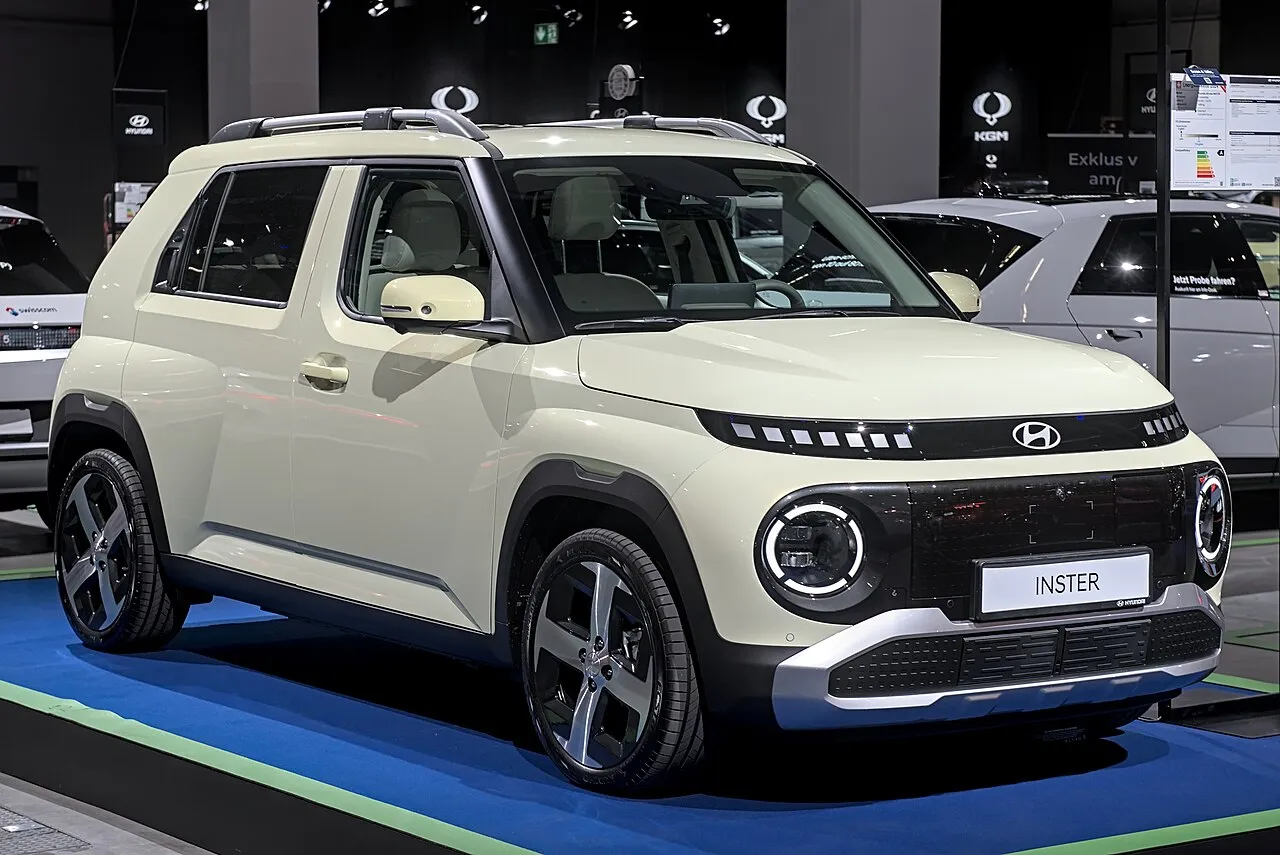
The short answer: The Hyundai INSTER looks well suited to city parking and routine driving. Longer highway trips are plausible in either version, but its WLTP ratings are not highway range promises, and charging stops need planning.
The Hyundai INSTER makes the strongest case for itself in a city: it is a short, narrow hatchback with enough published battery capacity to make trips beyond town plausible. For mixed use, the choice between its European Standard and Long Range versions depends less on whether a highway trip is possible than on how often the driver wants to stop and charge. EVDB’s WLTP ratings offer a useful comparison between the two versions, but neither rating predicts what a particular highway drive will deliver.
Size, range and charging at a glance
EVDB reports the following figures for the European 2025 INSTER. The test standard applies to the range ratings; dimensions, battery capacities and charging power are vehicle figures rather than driving-cycle results. Charging power figures describe rated capability, not a promised charging speed throughout a session.
| Figure | Standard 42 kWh — Europe, 2025; EVDB | Long Range 49 kWh — Europe, 2025; EVDB | Test standard |
|---|---|---|---|
| Rated range | 327 km | 370 km | WLTP |
| Usable battery capacity | 42 kWh | 49 kWh | Not applicable |
| Gross battery capacity | 44.6 kWh | 51.8 kWh | Not applicable |
| Battery chemistry | LFP | LFP | Not applicable |
| Length | 3,825 mm | 3,825 mm | Not applicable |
| Width | 1,610 mm | 1,610 mm | Not applicable |
| Height | 1,575 mm | 1,575 mm | Not applicable |
| Wheelbase | 2,580 mm | 2,580 mm | Not applicable |
| Maximum AC charging power | 11 kW | 11 kW | Not applicable |
| Peak DC charging power | 120 kW | 120 kW | Not applicable |
| Drive | Front-wheel drive | Front-wheel drive | Not applicable |
What its dimensions mean for city parking
The INSTER’s short body should make it easier to fit into a limited parking space than a longer vehicle, while its narrow body can leave more room to open a door or pass between parked cars. Those are useful qualities for curbside parking, compact garages and crowded lots. Both European versions have the same exterior dimensions, so choosing the larger battery does not change the amount of parking space the car occupies.
Dimensions are only a starting point for judging a particular space. The published width does not establish the car’s width with its mirrors in the position used for parking. Nor do length and wheelbase tell a driver the turning circle or how easily the car can make a tight maneuver in one move. Garage door openings, posts, walls and the space needed to get out of the car matter as much as whether the body fits between painted lines.
For a prospective owner with a difficult driveway or garage, the useful check is the actual route into the space, including the turn at its entrance. A compact footprint reduces the space the car needs, but an awkward approach can still determine whether parking feels easy every day. The INSTER’s hatchback shape may also appeal to someone who regularly loads items at the curb, although its exterior height alone cannot establish how much cargo will fit inside.
How the two range ratings translate to daily use
The Long Range version has a larger usable battery and a higher WLTP range rating than the Standard version. That gives a clear reason to favor it when trips between convenient charging opportunities are regularly long. For shorter local travel with dependable charging, the Standard version may meet the same routine needs without asking the owner to carry extra range for every trip. The right choice depends on the routes and charging access the car will actually have.
WLTP is a standardized test cycle, which makes the two European ratings useful for comparing these versions on the same basis. It is not a guarantee of distance on a particular day. Sustained highway speeds can require more energy than slower city driving; cold or hot weather, hills, wind, passengers and climate control can also change consumption. A driver should leave room for those conditions and for reaching a working charger, especially on an unfamiliar route.
For city driving, range is often less about the distance of a single outing than about the gap between chances to recharge. Someone who can charge where the car normally parks can start routine days with a predictable amount of energy. Someone dependent on public chargers has to account for their locations, operating hours and availability. The same WLTP rating can therefore feel generous to one owner and restrictive to another.
Charging on routine days and longer trips
EVDB gives both versions the same maximum AC charging power. AC charging is the relevant figure when the car is connected to a compatible home or destination charger. Actual power also depends on what the charging equipment and electrical connection can deliver. A charger capable of less than the car’s maximum will charge at the lower available power. The battery’s starting charge and the desired finishing charge also affect how long a session takes.
For highway stops, EVDB reports the same peak DC charging power for both versions. A peak is the highest charging power the car may accept under suitable conditions, not the power it will hold from arrival to departure. DC charging typically changes speed as the battery fills, and battery temperature and the charger’s available output can affect the session. The shared peak figure therefore does not mean the two batteries will take the same time to gain a useful amount of driving range.
Plan a longer trip around the energy needed to reach the next suitable stop, rather than assuming the full WLTP distance is available on each highway leg. Check that a charger is compatible and accessible, and consider another reachable charging option if the intended stop is busy or unavailable. A stop can also be more useful when it adds enough energy for the next leg and a sensible reserve; filling the battery as far as possible is not automatically the quickest way to travel.
The Long Range version’s larger usable battery can offer more flexibility between stops, particularly when highway conditions reduce distance per charge. The Standard version can still serve a driver who accepts more frequent charging opportunities or takes longer drives less often. Because their published AC maximums and DC peaks match, the main distinction for trip planning is the energy each can carry and the distance each achieves under the same WLTP test, rather than a higher headline charging power for one version.
Choosing an INSTER for mixed use
Start with the trips that would be hardest to accommodate: a recurring highway drive, an overnight stay without charging, or a route with limited places to stop. Then consider where the car will park and charge on ordinary days. If charging is readily available and most travel is local, the Standard version’s smaller battery may be sufficient. If long drives are frequent or charging opportunities are less convenient, the Long Range version’s additional usable capacity gives more room to work with.
For an American reader, these are European-market vehicles with European WLTP ratings reported by EVDB. They should be read as figures for those versions under that test standard, not as an American range rating or a prediction for US highways. The practical verdict is straightforward: the INSTER’s dimensions favor city parking, and either version can be considered for longer travel if charging stops fit the route. The Long Range version gives more range on the same WLTP basis, while neither version removes the need to plan around real driving conditions.
Frequently asked questions
Is the Hyundai INSTER small enough for city parking?
EVDB reports a length of 3,825 mm and width of 1,610 mm for both European 2025 versions. Those dimensions favor compact spaces, though the approach to a particular parking spot still matters.
What is the Hyundai INSTER's rated range?
EVDB reports 327 km for the European 2025 Standard version and 370 km for the European 2025 Long Range version, both under the WLTP test standard.
Does the Long Range INSTER charge at a higher peak power?
No. EVDB reports the same 11 kW maximum AC charging power and 120 kW peak DC charging power for both European 2025 versions. Actual charging power can vary during a session.
Can the INSTER's WLTP range be used to plan a highway leg?
It is a comparison point, not a guaranteed highway distance. Plan for driving conditions and enough energy to reach a suitable charger with a reserve.
Related stories

How to Choose an EV for Caregiving and Support Trips
Compare passenger access, rear-seat comfort, equipment storage and charging routines to find an EV that fits recurring appointments and support trips.

Choosing 120V or 240V Charging for an EV at Home
A standard outlet may work for an EV that sits parked for long stretches. A 240V setup adds charging power, which can matter when daily driving uses more energy.

How to Plan EV Charging When You Park on the Street
Street parking can work with EV ownership when you confirm local rules, identify dependable charging, and build a routine that fits where you park.