Hyundai INSTER or BYD ATTO 2: Which Fits Your Needs?
The INSTER is easier to fit into tight spaces and has more WLTP range. The ATTO 2 has a larger body and quicker acceleration. Compare the European trims.
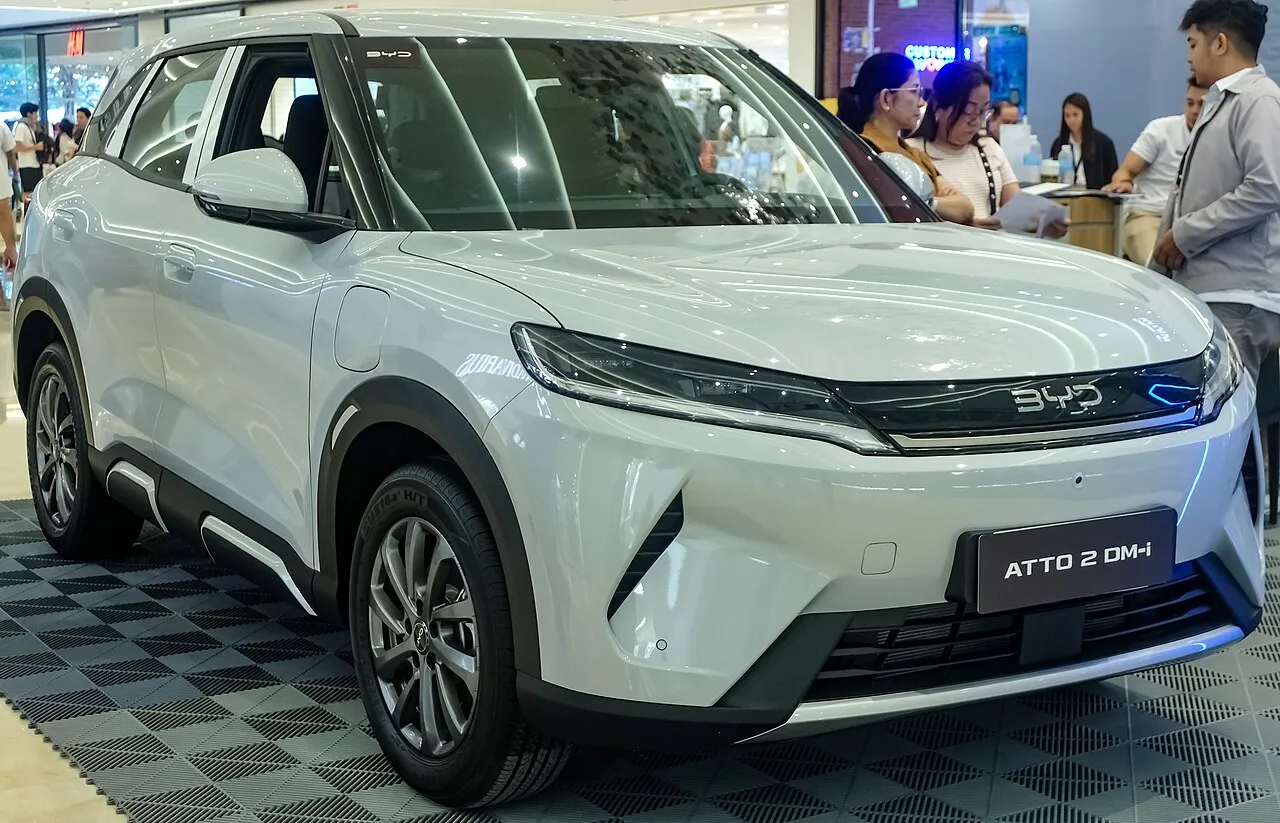
The short answer: Choose the Hyundai INSTER if compact dimensions and WLTP range matter most. Choose the BYD ATTO 2 if you want a larger vehicle with quicker acceleration, while checking its cabin and cargo space in person.
The Hyundai INSTER is the stronger fit for a driver who regularly navigates narrow streets or small parking spaces. In the European versions reported by EVDB, it is shorter and narrower than the BYD ATTO 2, and both INSTER trims have higher WLTP range ratings than the ATTO 2 Standard. The ATTO 2 makes more sense if a larger body and quicker acceleration are priorities. Its exterior size suggests more room to work with, but exterior measurements alone cannot establish how much usable cabin or cargo space either vehicle has.
These are European market versions. Their WLTP range ratings offer a consistent basis for comparing the three trims here, but they are not EPA ratings or promises of range on a particular trip. For an American reader, the useful question is which trade-offs would suit daily driving, followed by a check of the actual vehicle and charging arrangements in the market where it will be used.
European versions at a glance
EVDB reports the following figures for the 2025 European versions. WLTP is the test standard for the range row only; dimensions, battery capacity, charging power, output, weight, and acceleration are vehicle figures rather than WLTP results. Each column identifies the market and model year to which its figures apply.
| Figure and applicable standard | Hyundai INSTER Standard 42 kWh Europe, 2025; EVDB | Hyundai INSTER Long Range 49 kWh Europe, 2025; EVDB | BYD ATTO 2 Standard Europe, 2025; EVDB |
|---|---|---|---|
| Rated range; WLTP | 327 km | 370 km | 312 km |
| Battery, gross / usable; WLTP not applicable | 44.6 / 42 kWh | 51.8 / 49 kWh | 51.1 / 45.1 kWh |
| Battery chemistry; WLTP not applicable | LFP | LFP | LFP |
| Length × width × height; WLTP not applicable | 3,825 × 1,610 × 1,575 mm | 3,825 × 1,610 × 1,575 mm | 4,310 × 1,830 × 1,675 mm |
| Wheelbase; WLTP not applicable | 2,580 mm | 2,580 mm | 2,620 mm |
| Curb weight; WLTP not applicable | 1,350 kg | 1,400 kg | 1,645 kg |
| Maximum AC charging power; WLTP not applicable | 11 kW | 11 kW | 11 kW |
| Peak DC charging power; WLTP not applicable | 120 kW | 120 kW | 65 kW |
| Motor power / torque; WLTP not applicable | 71 kW / 147 Nm | 85 kW / 147 Nm | 130 kW / 290 Nm |
| Acceleration, 0–100 km/h; WLTP not applicable | 11.7 seconds | 10.6 seconds | 7.9 seconds |
Which one fits a tight parking space?
Start with the parking space you use most often. EVDB's European 2025 dimensions show that the ATTO 2 has a longer, wider, and taller body than either INSTER trim. Its greater width may matter when opening a door beside another vehicle, while its extra length may matter in a short parking bay. The INSTER's smaller footprint is a practical advantage where space is constrained.
Exterior size does not tell the whole story inside. The ATTO 2 also has a longer wheelbase, which can affect how a vehicle is packaged, but it does not establish rear legroom or cargo capacity on its own. Likewise, a small exterior does not prove that the INSTER will feel cramped to a particular passenger. Sit in both vehicles, check the seating position behind your usual driver setting, and try the items you expect to carry. Those checks turn a dimensional difference into a decision about your own space needs.
How should you read the range ratings?
For the European 2025 versions, EVDB gives the INSTER Standard a 327 km WLTP rating, the INSTER Long Range a 370 km WLTP rating, and the ATTO 2 Standard a 312 km WLTP rating. Because all three ratings use WLTP, they can be compared as ratings under the same test standard. Both INSTER trims lead in that comparison, with the Long Range version offering the largest rated margin.
A WLTP rating is a planning reference, not a fixed distance between charging stops. Speed, weather, terrain, climate control, tires, and the portion of the battery a driver chooses to use can change the distance available on a trip. The table therefore supports a relative comparison, while a personal charging plan still needs room for changing conditions. It would be misleading to treat any of these European WLTP figures as an EPA estimate for U.S. driving.
The choice between the two INSTER trims is also more specific than a choice between the brands. The Long Range trim has the highest WLTP rating in this group; the Standard trim still rates above the European ATTO 2 Standard. If most trips are short and charging is convenient, the additional rated range may be less useful than it would be for someone who regularly covers longer distances.
What do the battery figures actually mean?
EVDB reports both gross and usable battery capacity for each European 2025 trim. Gross capacity describes the battery as a whole; usable capacity is the portion available for driving. For comparing the energy a driver can draw from these versions, usable capacity is the more relevant figure. The INSTER Long Range has the largest usable capacity in the table, followed by the ATTO 2 Standard and the INSTER Standard.
Capacity alone is not a range rating. A vehicle can use more or less energy to cover the same distance, so a larger battery does not automatically mean a higher rated range. That distinction is visible here: EVDB's European 2025 figures give the INSTER Standard a higher WLTP rating than the ATTO 2 Standard even though the INSTER Standard has less usable battery capacity. All three batteries are identified by EVDB as LFP; the shared chemistry does not erase the differences in capacity, vehicle size, or rated range.
Would either be easier to charge?
For AC charging, EVDB rates all three European 2025 versions at a maximum of 11 kW. That puts their stated onboard AC charging limits on equal footing. Actual AC power still depends on the charging equipment and electrical connection, and a power rating by itself cannot establish how long a particular charging session will take. Battery size and the amount of charge being added matter too.
For DC charging, EVDB reports a higher peak for both INSTER trims than for the ATTO 2 Standard in Europe for 2025. That gives the INSTER a higher stated maximum power, which may be attractive to a driver who expects to use rapid chargers often. A peak is only the highest point a vehicle may reach during a session. It does not say how long that power is sustained, so the table cannot establish a charging time or prove which vehicle finishes every stop sooner.
Charging equipment must also be compatible with the particular vehicle. Before relying on a charger during regular travel, check the connector and charging arrangements for the version being considered in that market. A power figure alone cannot answer whether a specific charger will work.
How different will the acceleration feel?
EVDB's European 2025 figures show the ATTO 2 Standard with greater motor power and torque than either INSTER trim, alongside a quicker published 0–100 km/h time. That makes it the clear choice on these acceleration figures. Within the INSTER range, the Long Range trim has more power and a quicker published time than the Standard trim, while EVDB reports the same torque for both.
Acceleration is only one part of everyday driving. A published run from a standstill to highway speed does not describe ride comfort, steering, visibility, or how a vehicle responds in every passing situation. The figures can identify a performance priority, but they cannot substitute for assessing whether the seating, controls, and driving response suit the person who will use the car.
Which should you choose?
Pick the INSTER if the smaller exterior is valuable in your regular parking spaces or if maximizing WLTP rated range among these European trims is the main goal. The Long Range trim leads this group on rated range; the Standard trim retains the compact dimensions and still has a higher WLTP rating than the European ATTO 2 Standard. Both INSTER trims also have the higher stated peak DC charging power.
Pick the ATTO 2 if you want the larger exterior and place more weight on the stronger published acceleration. Confirm that its cabin and cargo area meet your needs, since the exterior dimensions do not quantify usable space. If charging stops will shape the decision, compare complete charging behavior and compatible chargers for the exact market version you plan to use. The most useful choice is the one whose size, rated range, and charging setup match your regular trips.
Frequently asked questions
Which has the longer rated range, the Hyundai INSTER or BYD ATTO 2?
EVDB rates both 2025 European INSTER trims above the 2025 European ATTO 2 Standard under WLTP: 327 km and 370 km, respectively, versus 312 km.
Is the BYD ATTO 2 bigger than the Hyundai INSTER?
Yes. EVDB's 2025 European dimensions show the ATTO 2 is longer, wider, and taller than either INSTER trim. Those measurements do not establish usable cargo or passenger space.
Which has the higher peak DC charging power?
EVDB reports 120 kW for both 2025 European INSTER trims and 65 kW for the 2025 European ATTO 2 Standard. Peak power alone does not determine charging time.
Do these range ratings describe U.S. EPA range?
No. The range ratings compared here are for European 2025 versions under WLTP, not EPA.
Related stories

How to Choose an EV for Caregiving and Support Trips
Compare passenger access, rear-seat comfort, equipment storage and charging routines to find an EV that fits recurring appointments and support trips.

Choosing 120V or 240V Charging for an EV at Home
A standard outlet may work for an EV that sits parked for long stretches. A 240V setup adds charging power, which can matter when daily driving uses more energy.

How to Plan EV Charging When You Park on the Street
Street parking can work with EV ownership when you confirm local rules, identify dependable charging, and build a routine that fits where you park.