How to Check Whether an EV Fits a Rear-Facing Car Seat
Compare front-seat clearance, rear-seat shape and the child-seat maker’s installation guidance. A careful fit check can reveal issues that cabin dimensions miss.

The short answer: Check the exact EV and rear-facing seat together: confirm the child seat is approved for the vehicle and seating position, install it as directed, and verify that it fits without interfering with the front seat or required seat-belt and airbag functions. Compare rear-seat geometry and front-seat clearance in person, because a vehicle’s overall size or cargo capacity cannot establish whether a particular child seat will fit.
To compare EVs for a rear-facing child seat, check the specific child seat in the specific vehicle and seating position. Look at how much room the installed seat needs, whether its base and support features suit the vehicle’s rear-seat shape, and whether the front seat can remain in a usable position. Then follow both manufacturers’ instructions to confirm the installation.
Cabin dimensions can help narrow a shortlist, but they cannot confirm fit on their own. Rear-facing seats differ in shape and installation method, while EV rear seats can vary in cushion angle, contour, belt-anchor position and available adjustment. A fit check should account for the child seat, the vehicle, the child’s seating position and the front passenger’s needs as one system.
Start with the exact child seat and seating position
Before comparing vehicles, identify the child seat’s permitted installation methods and the vehicle’s allowed child-seat positions. The child-seat manual explains how that model is designed to be installed. The vehicle owner’s manual identifies the seating positions and installation details for the vehicle. Check both manuals rather than assuming that a seat can be installed in any rear position.
Confirm whether the seat uses lower anchors, a seat belt, or either method, as directed by its manufacturer. The instructions govern how the seat is secured and whether particular features, such as a load leg or tether, are required or allowed. Do not assume that a familiar installation method applies to every seat or every vehicle.
Consider where the child seat would go in everyday use. A position that works for one family may not work for another if it changes access to the other rear seat, affects loading the child, or leaves too little room for the front passenger. Compare the positions you could realistically use, following the vehicle manual for any position-specific restrictions.
Check front-seat clearance with the child seat installed
A rear-facing seat occupies space in front of the child, so the front seat can be the limiting factor even when the rear bench appears spacious. The relevant question is whether the child seat can be installed correctly while the front passenger seat remains in a position that its occupant can use safely and comfortably.
During a fit check, put the front seat where its regular occupant needs it, then install the child seat according to its instructions. Check for contact between the child seat and the front seat. Some child-seat instructions or vehicle manuals address whether contact is allowed and how seats may be positioned. Follow those directions; do not create a gap or force contact based on a general rule.
Repeat the check with the driver’s seat set for the person who will drive. A fit that works behind a shorter driver may not work behind a taller one, and moving the driver’s seat can affect the child-seat installation. Assess the actual seating arrangement rather than relying on a single front-to-rear measurement.
Look at how the front seat moves and reclines, too. If adjusting it changes the fit or pushes against the child seat, that interaction belongs in the comparison. Check the rear-facing seat’s required recline and make sure its angle can be set as instructed in the vehicle’s seating position.
Compare rear-seat geometry, not just legroom
Rear-seat space is more than a distance between the front and rear seats. Cushion angle and shape affect how a child-seat base rests on the bench. The seat belt and lower anchors determine how the installation can be routed and secured. A raised or contoured section, buckle placement or a change in cushion shape can affect where the child seat sits and how it can be tightened.
Assess the exact position where the seat would be installed. Check whether the base sits steadily, whether the belt or lower-anchor connectors can be used as directed, and whether the seat can reach its required recline. Make sure the installation does not depend on placing the child seat partly on a neighboring cushion or using an anchor or buckle in a way the manuals do not permit.
EVs do not share one rear-seat layout. A flat floor may change foot space for other passengers, but it does not establish that a rear-facing seat will fit. Likewise, a roomy-looking cabin or a long vehicle does not guarantee favorable seat-belt routing, anchor access or front-seat clearance. Compare the shape and usable space at the intended seating position.
Verify the installation instead of judging by appearance
A child seat can appear to fit while being installed incorrectly or too loosely. Follow the child-seat manual’s steps for routing the belt or connecting to lower anchors, tightening the installation, setting the recline and using any required support feature. Follow the vehicle manual for anchor locations, allowable seating positions and restrictions on front-seat or airbag operation.
After installation, use the check described by the child-seat manufacturer to assess whether the seat is secure. Make sure the belt or connectors are routed through the correct path and that the buckle is not positioned where it prevents tightening. Confirm that the child seat does not obstruct a required vehicle function or conflict with a manual’s warning.
Do not use lower anchors and a seat belt together unless the child-seat instructions specifically allow that combination. Do not add accessories or use a different routing method to solve a poor fit unless both manufacturers’ instructions permit it. If the manuals do not answer a fit question, seek help from a qualified child-passenger-safety technician or the manufacturers.
Make a useful comparison across EVs
Use the same child seat and the same intended seating position to compare candidate vehicles. This keeps the fit check focused on the differences between vehicles instead of differences in seat models or installation choices. If the child seat is not yet selected, identify the models under consideration and check each one in the vehicles you are comparing.
For each vehicle, assess whether the child seat can reach its required recline, whether its base sits appropriately on the cushion, whether the allowed belt or lower-anchor method can be used, and whether the front seat can remain in its normal position. Also consider the practical routine: placing the child in the seat, fastening the harness and preserving access for other passengers.
Repeat the installation after changing the seating position or front-seat setting. A result for one side of the rear bench does not automatically apply to the other. If another caregiver will install the seat, make sure the instructions and setup are clear enough for them to reproduce the correct fit.
Use published dimensions as a screening tool
Published interior measurements can help identify questions to investigate, but they rarely describe the details that decide child-seat fit. A legroom figure does not show whether a particular seat base rests well on the cushion, and a general cabin measurement does not confirm that the required anchors or belt path work for a specific child seat.
When comparing published figures, check that they refer to the same measurement and market. Treat them as a starting point for selecting vehicles to inspect, not as a substitute for installing the child seat. In this comparison, no vehicle measurements or model-specific child-seat fit results are available, so there are no vehicle figures to rank.
What a good fit check should establish
A useful comparison ends with a clear answer for each candidate: the intended rear position is permitted, the child seat can be installed in an approved way, its required angle and support features can be set, and the front seat remains usable without violating either manual. It should also account for the family’s everyday passenger and loading needs.
If any part of that check fails, try another approved seating position or installation method only when the manuals allow it. If the fit remains uncertain, get qualified installation help before relying on the setup. The vehicle that works best is the one that accommodates the specific seat and passengers in a correct, repeatable installation.
Frequently asked questions
Can rear legroom alone tell me whether an EV fits a rear-facing child seat?
No. Legroom does not show whether the seat base, belt path, anchors and required recline work for a particular child seat, or whether the front seat remains usable after installation.
Should I use lower anchors or a seat belt?
Use the installation method or methods permitted by the child-seat manufacturer and vehicle manual for that seating position. Do not combine lower anchors and a seat belt unless the child-seat instructions allow it.
Does a flat EV floor mean a rear-facing seat will fit?
No. Floor shape does not establish fit. Check the rear cushion, anchor and belt locations, required seat angle and front-seat clearance.
What should I do if I cannot tell whether the installed seat is correct?
Consult the child-seat and vehicle manuals. If they do not resolve the question, seek help from a qualified child-passenger-safety technician or the manufacturers.
Related stories

How to Choose an EV for a Multi-Generational Family
Compare door access, seating flexibility, comfort, and daily routines to find an EV that works for children, older adults, and everyone who rides along.
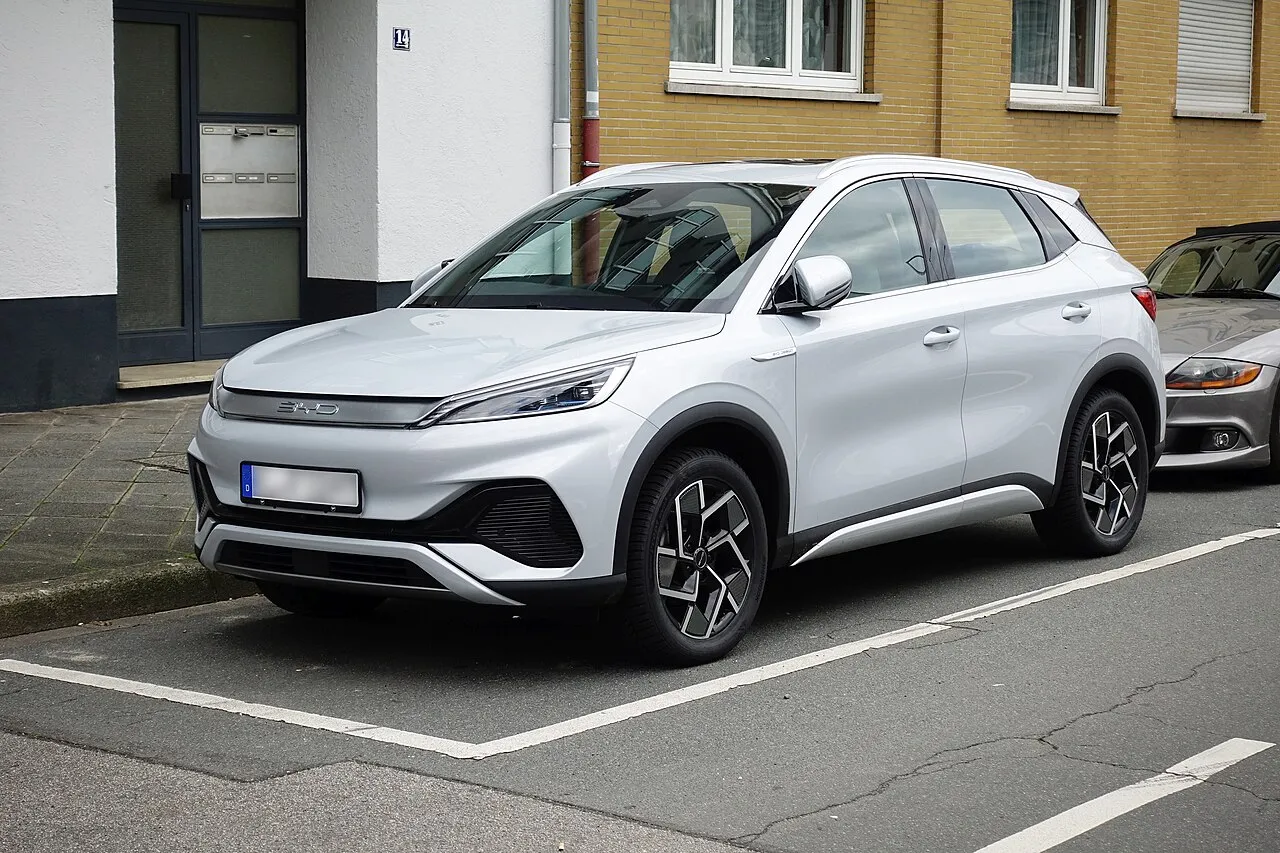
BYD ATTO 3 vs. Kia EV5: Which SUV Suits Family Life?
The Kia EV5 is larger on published dimensions, while the BYD ATTO 3 is smaller. Here’s what the figures can—and cannot—tell families comparing space and range.

How to Check EV Upholstery and Trim for Long-Term Wear
Compare EV seats, trim and touch points by how they feel, clean and hold up to your routines. A focused cabin inspection can reveal practical tradeoffs.