Cybertruck Sales Trail Tesla's 250,000-a-Year Ambition
Musk says Tesla will wind down Cybertruck production in 2027 to make room for the Cybercab. The move follows sales far below Tesla's original annual goal.
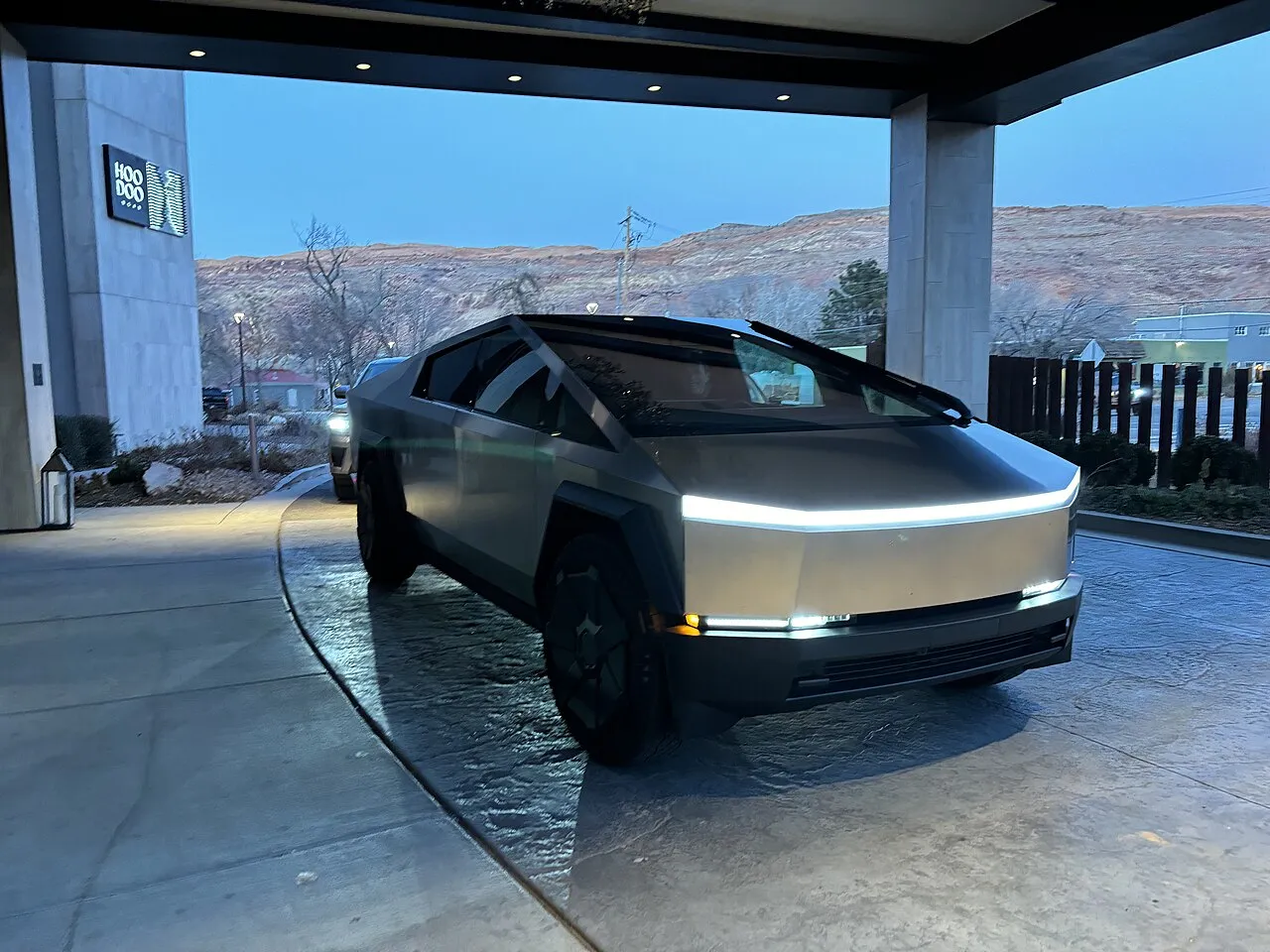
The short answer: Elon Musk said Tesla will wind down Cybertruck production in 2027 to make room for the Cybercab, according to The Verge Transportation. The outlet reported about 70,000 Cybertruck sales to date, against Tesla's former ambition of 250,000 a year.
Tesla plans to wind down Cybertruck production in 2027 to make room for the Cybercab, according to The Verge Transportation, which reported Elon Musk's announcement on November 7, 2026. For EV buyers, the announcement raises a practical question about the pickup's future: Tesla has described a winding down, but the report does not establish when production will stop. For the industry, it marks a change of course for a vehicle Tesla once expected to build and sell in far greater numbers.
The Verge Transportation reported that Tesla had targeted production and demand of 250,000 Cybertrucks a year. It said the company had sold about 70,000 in total by the time of Musk's announcement. Those figures describe different periods: the first was an annual ambition, while the second is cumulative sales. Even so, the reported total is below what Tesla once hoped to sell in a single year. That gap helps explain why freeing production capacity for another vehicle would be consequential.
Musk's statement concerned production, according to The Verge Transportation. A plan to wind it down does not give buyers an exact final build date or say how many trucks Tesla intends to make during 2027. It also does not establish when the Cybercab will take over the capacity. The immediate development is Tesla's stated direction: less emphasis on building the electric pickup and more room for the Cybercab.
From production ambition to a wind down
The Cybertruck was meant to be more than a small addition to Tesla's lineup. The Verge Transportation recalled Musk calling it Tesla's best product during a 2019 earnings call, while also acknowledging that he could be wrong. The outlet described the pickup as a prominent expression of his vision for the company's future. Tesla's reported target of 250,000 units in annual production and demand shows the scale of the business it had hoped the truck could support.
The Verge Transportation also reported that SpaceX, another Musk company, became one of the largest individual Cybertruck purchasers as Tesla dealt with unsold inventory. That account adds context to the sales figure, though the outlet did not state how many trucks SpaceX bought. Buyers should therefore read the reported 70,000 total as the outlet's cumulative figure, without assuming it identifies the mix of individual, fleet or SpaceX purchases.
The outlet attributed the Cybertruck's weaker showing to a combination of factors, including price, range and towing capability falling short of earlier promises, recalls and its unconventional appearance. Those are The Verge Transportation's assessments of why demand faltered; its report does not assign a measured share of lost sales to any one factor. What can be said from the figures it reported is narrower and clearer: cumulative sales were well short of Tesla's former annual ambition when Musk said production would wind down.
The Verge Transportation noted that the Cybertruck initially became a leading premium electric pickup in early 2024. That early position and the later production decision can both be true. A vehicle can draw substantial attention and buyers at launch without sustaining the volume its maker expected. Tesla's shift toward making room for the Cybercab is the clearest indication in the report of how the company now intends to use the capacity associated with the truck.
What buyers can establish about the truck
The production announcement does not change the published ratings of Cybertrucks already described by US regulators. For the 2026 model year in the US, EPA ratings put the AWD and Dual Motor AWD versions at 325 miles of range. The EPA rates a 2026 Long Range version with 20 inch Cyber Wheels at 335 miles. These are ratings for specific versions under the US EPA test standard; they are not a claim about how far every Cybertruck will travel in use.
The EPA figures also identify different drivetrains. The 2026 US AWD and Dual Motor AWD Cybertrucks have all wheel drive, while the Long Range version with 20 inch Cyber Wheels has rear wheel drive. That distinction matters when interpreting the 335 mile figure: it belongs to a particular configuration, rather than every truck carrying the Cybertruck name. Musk's production announcement did not set out a revised range rating or a new configuration.
For home charging, the US EPA figures give the 2026 AWD Cybertruck an 11.7 hour full charge time on Level 2 charging. They give the Dual Motor AWD and Long Range versions 12 hours. Those figures describe a full charge on Level 2 equipment, not a stop at a fast charger. They offer buyers a way to identify which published figure belongs to each US version while the production timeline remains unsettled.
The Cybertruck ratings also should not be confused with those of Tesla's other vehicles. US EPA ratings for the 2027 Model 3 Premium RWD sedan and 2027 Model Y Premium RWD SUV are 363 miles and 355 miles, respectively. Both figures use the same US test standard as the Cybertruck ratings, but they describe different vehicles and model years. They provide lineup context, rather than a measure of how the Cybertruck performs as a pickup.
Published Canadian figures use a different test standard. Natural Resources Canada rates the 2026 Cybertruck AWD at 523 kilometers under NRCan testing. That number should not be set against the US EPA mileage figures as though the tests were interchangeable. The relevant US figures for an American buyer are the EPA ratings for the particular Cybertruck version under consideration.
Politics and the timing of the announcement
The Verge Transportation tied the timing of Musk's announcement to elections earlier that week. It reported that he had spent more than $445 million on Republican races, including more than $200 million directed toward Texas. The outlet said Democrat James Talarico defeated Republican Senate candidate Ken Paxton in Texas by 12 points and that Gina Hinojosa defeated Governor Greg Abbott. Those election figures and outcomes are reported by The Verge Transportation; the production statement itself did not establish a connection between the results and Tesla's manufacturing plans.
The outlet argued that Musk's political activity had become closely associated with the Cybertruck and had affected how people viewed it. That is an interpretation of the vehicle's reception, rather than a quantified explanation of sales. The Verge Transportation did not report a buyer survey or sales breakdown that would show how many purchases were gained or lost because of politics. Its reported sales total and Tesla's former production ambition provide the firmer basis for assessing the size of the gap.
The Cybertruck's distinctive design also figures prominently in the outlet's account of its reception. The Verge Transportation portrayed the truck as unusually closely tied to Musk's public identity. That association may help explain why the announcement drew attention beyond Tesla's production schedule, but it does not change what Musk said Tesla would do: wind down production next year to make room for the Cybercab. The timing and pace of that change remain the questions with direct consequences for the truck's availability.
What happens next
The next useful details for buyers will be Tesla's production schedule and any clarification of how many Cybertrucks it expects to build as the wind down proceeds. For now, The Verge Transportation's account supports a direction and a year, not a precise final production date. The published EPA ratings describe existing 2026 US versions; they do not answer how long each version will remain available.
For Tesla, the decision places the Cybercab ahead of the Cybertruck in its stated use of production capacity. The Verge Transportation reported no Cybercab output figure in connection with Musk's announcement, so the scale of that shift has yet to be established. The numbers available now tell a more limited story: Tesla once aimed for 250,000 Cybertrucks a year, the outlet reports roughly 70,000 sold in total, and Musk says the company will begin winding down pickup production in 2027.
Frequently asked questions
Is Tesla ending Cybertruck production?
Musk said Tesla will wind down Cybertruck production in 2027 to make room for the Cybercab, according to The Verge Transportation. The report does not give a final production date.
How many Cybertrucks has Tesla sold?
The Verge Transportation reported about 70,000 Cybertruck sales in total at the time of Musk's announcement.
What was Tesla's original Cybertruck volume goal?
According to The Verge Transportation, Tesla targeted production and demand of 250,000 Cybertrucks per year.
What is the rated range of the 2026 Cybertruck in the US?
US EPA ratings are 325 miles for the AWD and Dual Motor AWD versions, and 335 miles for the Long Range version with 20 inch Cyber Wheels.
Related stories
Tesla Offers Cybertruck Owners Refunds for PCS Repairs
Tesla is offering parts, labor and tax refunds to some 2024 and 2025 Cybertruck owners who paid to replace a failed power conversion system.
Tesla Tightens Cybertruck Turns for 2027 Models Only
Tesla is rolling out tighter turns for 2027 Cybertrucks, but has not published a new turning-circle figure. Earlier model years are excluded.
Tesla Robotaxi Plans Add Highway Speeds and Cybercab Hardware
Updated Tesla responder plans describe Cybercab hardware and roads posted up to 85 mph, but they do not establish when highway or owner rides will begin.