BYD SEAL and Kia EV4: Space, Range and Charging
Compare the BYD SEAL and Kia EV4 for family use, from sedan and hatchback access to cabin dimensions, rated range and charging across European and Canadian versions.
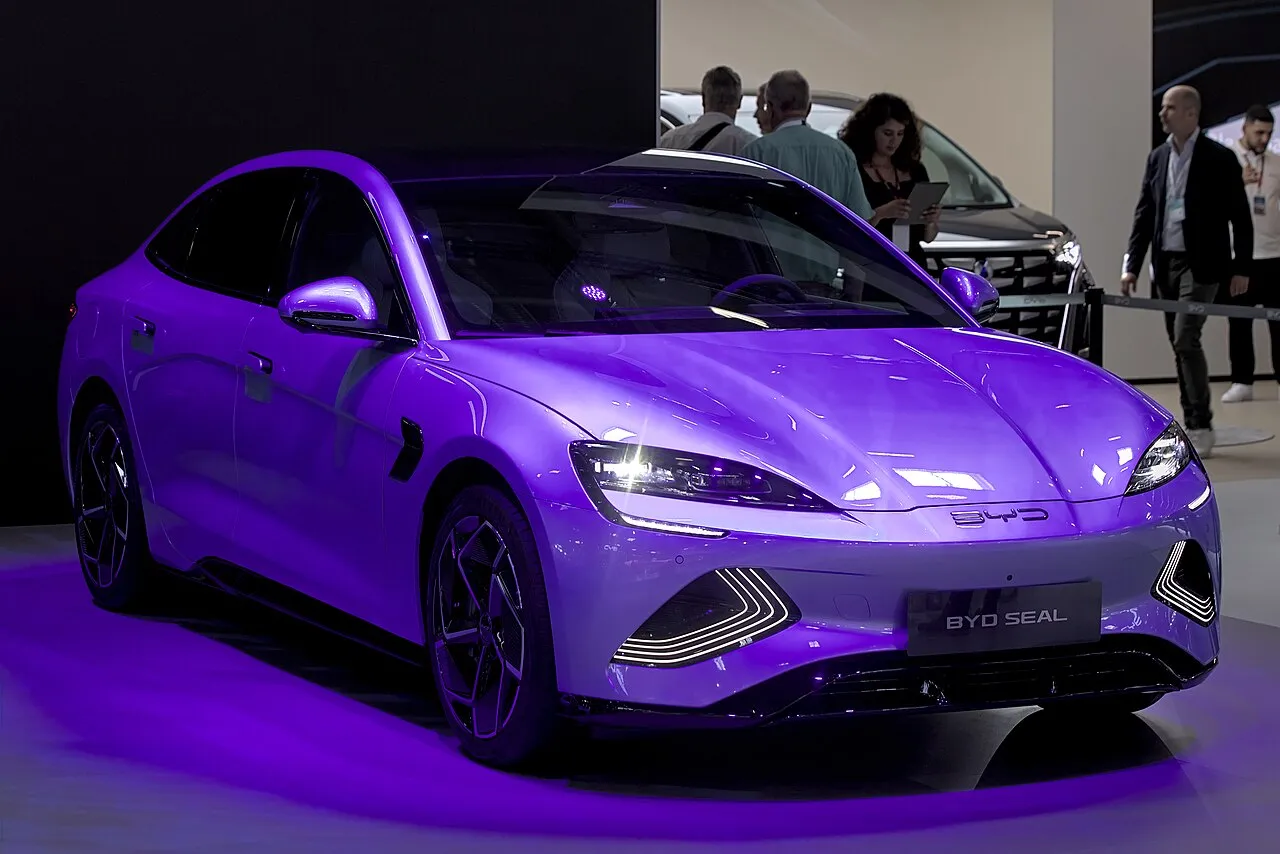
The short answer: The EV4 is the more flexible choice if a hatchback opening matters or you want a longer WLTP rating from a European version. The SEAL is a larger sedan with a longer wheelbase on the European versions compared here. Check the exact trim and market before using either car’s range or charging figure to decide.
For a family choosing between these cars, body style is the first decision. The BYD SEAL is a sedan. The Kia EV4 appears here in sedan, hatchback and Fastback forms, depending on the market and version. An EV4 hatchback may suit a household that regularly loads a stroller, bulky bags or other awkward cargo through a large rear opening. If a sedan works for your routine, the SEAL’s larger exterior dimensions and longer wheelbase make it worth considering. Those dimensions, however, cannot establish how much room passengers or luggage will actually have.
Range is less straightforward. EVDB reports different WLTP ratings for European SEAL and EV4 versions, while Natural Resources Canada publishes NRCan ratings for Canadian EV4 trims. A WLTP figure and an NRCan figure are results from different test standards and should not be treated as directly comparable. Charging also depends on the version: a peak DC power figure describes a possible maximum, not the rate a car will hold throughout a stop.
How do their sizes and body styles compare?
The SEAL’s sedan shape may appeal to families whose regular load is passengers, school bags and ordinary luggage. The EV4 hatchback offers a different kind of practicality: its rear opening can make the shape of an item easier to accommodate. An EV4 sedan or Fastback should be judged on its own opening rather than assumed to load like the hatchback. None of those body style labels establishes cargo volume, rear headroom or the ease of fitting a child seat.
For the European versions in the table, EVDB puts the SEAL’s wheelbase beyond that of the EV4 hatchback. Wheelbase is the distance between the axles, so it is a useful clue when thinking about how a car might package its cabin. It is not a rear legroom measurement. Seat design, floor height and the position of the front seats can all affect how comfortable the rear bench feels. The SEAL is also longer and wider externally in this comparison, which matters when judging a parking space or garage as well as the potential for interior room.
The EV4’s available forms deserve particular attention because the name alone does not identify the rear opening. A shopper who needs to fit a folded stroller should check whether the actual car is the hatchback, then check the opening and cargo floor with the item in mind. For either model, sitting behind a front seat set for the usual driver is a more direct way to judge family seating than comparing wheelbase figures. The published dimensions below narrow the choice; they do not settle those fit questions.
Version figures at a glance
EVDB is the source for the European figures in this table; its range figures use the WLTP standard. Natural Resources Canada is the source for the Canadian EV4 figures and their NRCan range ratings. Battery capacity, dimensions, charging power and charge time are vehicle attributes rather than WLTP or NRCan range results. A dash means no figure is shown for that version here.
| Vehicle and version | Market, model year and range test | Battery and rated range | Charging | Exterior size and wheelbase |
|---|---|---|---|---|
| BYD SEAL Dynamic | Europe; 2025; WLTP (EVDB) | 61.4 kWh usable; 460 km WLTP | 11 kW AC; 110 kW peak DC | 4,800 × 1,875 × 1,460 mm; 2,920 mm wheelbase |
| BYD SEAL Design RWD | Europe; 2025; WLTP (EVDB) | 82.5 kWh usable; 580 km WLTP | 11 kW AC; 150 kW peak DC | 4,800 × 1,875 × 1,460 mm; 2,920 mm wheelbase |
| BYD SEAL Excellence | Europe; 2025; WLTP (EVDB) | 82.5 kWh usable; 530 km WLTP | 11 kW AC; 150 kW peak DC | 4,800 × 1,875 × 1,460 mm; 2,920 mm wheelbase |
| Kia EV4 hatchback, 58.3 kWh version | Europe; 2025; WLTP (EVDB) | 55.9 kWh usable; 458 km WLTP | 11 kW AC; 135 kW peak DC | 4,610 × 1,830 × 1,475 mm; 2,830 mm wheelbase |
| Kia EV4 hatchback, 81.4 kWh version | Europe; 2025; WLTP (EVDB) | 78 kWh usable; 625 km WLTP | 11 kW AC; 135 kW peak DC | 4,635 × 1,835 × 1,490 mm; 2,830 mm wheelbase |
| Kia EV4 Fastback, 81.4 kWh version | Europe; 2025; WLTP (EVDB) | 78 kWh usable; 633 km WLTP | 11 kW AC; 135 kW peak DC | 4,430 × 1,860 × 1,485 mm; 2,820 mm wheelbase |
| Kia EV4 Light | Canada; 2026; NRCan (Natural Resources Canada) | —; 391 km NRCan | 5.9 hours for a full Level 2 charge; AC and peak DC power — | — |
| Kia EV4 Wind | Canada; 2026; NRCan (Natural Resources Canada) | —; 552 km NRCan | 8.1 hours for a full Level 2 charge; AC and peak DC power — | — |
| Kia EV4 GT-Line | Canada; 2026; NRCan (Natural Resources Canada) | —; 488 km NRCan | 9.1 hours for a full Level 2 charge; AC and peak DC power — | — |
What do the range ratings mean for a family trip?
Within the European WLTP figures, the larger-battery EV4 hatchback has a higher rating than the SEAL Design RWD, and the EV4 Fastback version in the table is rated higher still. The smaller-battery EV4 hatchback and SEAL Dynamic have ratings close to one another. The SEAL Excellence has a lower WLTP rating than the SEAL Design RWD despite the same usable battery capacity reported by EVDB. That is why choosing a model name or battery size alone is an unreliable shortcut to a range figure.
The Canadian EV4 ratings illustrate the same need to identify the trim. Natural Resources Canada rates the Wind above the Light and GT-Line. Those NRCan figures can help a Canadian buyer compare the named Canadian EV4 trims on a common basis. They cannot establish whether a Canadian EV4 will travel farther than a European SEAL with a WLTP rating. No Canadian SEAL rating appears in this comparison, so it would be misleading to turn the two sets of ratings into a Canadian head-to-head result.
A rated range is a planning reference, not a promise for an individual drive. Highway speed, temperature, hills, passengers, cargo and climate control can change energy use. For a family trip, think about the route and where a charging stop would fit around meals or breaks. That turns a rating into a practical question: does the version under consideration give the household enough flexibility between stops? Keep the market and test standard attached to each number while making that judgment.
How different are their charging capabilities?
For the European versions shown, EVDB reports the same AC charging power for both cars. That makes the AC figure alone a poor reason to favor either one for routine charging. The time needed to replenish a battery also depends on how much energy must be added and the power the charging equipment can deliver. A larger usable battery can take longer to fill at the same charging power if both cars start from a comparable state of charge.
On DC charging, EVDB reports a higher peak for the SEAL Design RWD and Excellence than for the European EV4 hatchbacks and Fastback in the table. The SEAL Dynamic has a lower peak than those EV4 versions. Peaks are useful for identifying a capability, but they do not give a reliable stop duration by themselves. Charging power changes through a session, and the starting charge level, battery conditions and charger can affect the result. A buyer who often makes long drives should look for a charging-time figure covering a stated battery percentage interval for the exact version before estimating a typical stop.
Natural Resources Canada reports full Level 2 charge times for the Canadian EV4 trims shown. Those times address a different question from European peak DC power: they describe a full charge using Level 2 charging, rather than the maximum power reached at a fast charger. The Canadian figures should therefore guide expectations for that charging context, not be used to rank the Canadian trims against the European versions’ DC peaks. A Canadian EV4 DC charging time has not been published in the figures cited here.
Which one makes more sense?
Choose the EV4 hatchback for a closer look if the shape of the cargo opening is central to daily family use. Its European larger-battery version also has a higher WLTP rating than the European SEAL Design RWD shown here. Consider the SEAL if a sedan suits the household and its larger exterior footprint works for your parking and driving routine. Its longer wheelbase makes rear seating worth checking in person, but it is no substitute for a cabin measurement.
Before deciding, match the exact body style, trim, model year and market to the car you can actually obtain. Then check the rear seat with the people and child seats that will use it, and check the cargo opening with the items that must fit. Use range ratings only within their stated test standards, and treat charging peaks as one part of a longer-stop decision. That sequence keeps the comparison focused on what will make the car work for a family every day.
Frequently asked questions
Is the Kia EV4 a hatchback or a sedan?
The EV4 appears in sedan, hatchback and Fastback forms across the versions discussed here. Check the body style of the particular car you are considering.
Which has the longer wheelbase, the BYD SEAL or Kia EV4?
EVDB reports a 2,920 mm wheelbase for the European 2025 SEAL versions shown, versus 2,830 mm for the European 2025 EV4 hatchbacks shown. Wheelbase does not establish rear legroom.
Can a European WLTP range be compared directly with a Canadian NRCan range?
No. WLTP and NRCan are different test standards. Compare ratings within the same standard and identify the market, model year and trim.
Does a higher peak DC charging power guarantee a shorter stop?
No. Peak power is a maximum, while charging power can change during a session. A stop also depends on factors such as the starting charge level, battery conditions and charger.
Related stories

How to Choose an EV for Caregiving and Support Trips
Compare passenger access, rear-seat comfort, equipment storage and charging routines to find an EV that fits recurring appointments and support trips.

Choosing 120V or 240V Charging for an EV at Home
A standard outlet may work for an EV that sits parked for long stretches. A 240V setup adds charging power, which can matter when daily driving uses more energy.

How to Plan EV Charging When You Park on the Street
Street parking can work with EV ownership when you confirm local rules, identify dependable charging, and build a routine that fits where you park.