Volvo EX90 or Hyundai IONIQ 9: Which Fits Your Family?
The IONIQ 9 leads on US EPA range, while the EX90 has shorter reported Level 2 charge times. Seating and cargo needs require a closer look.
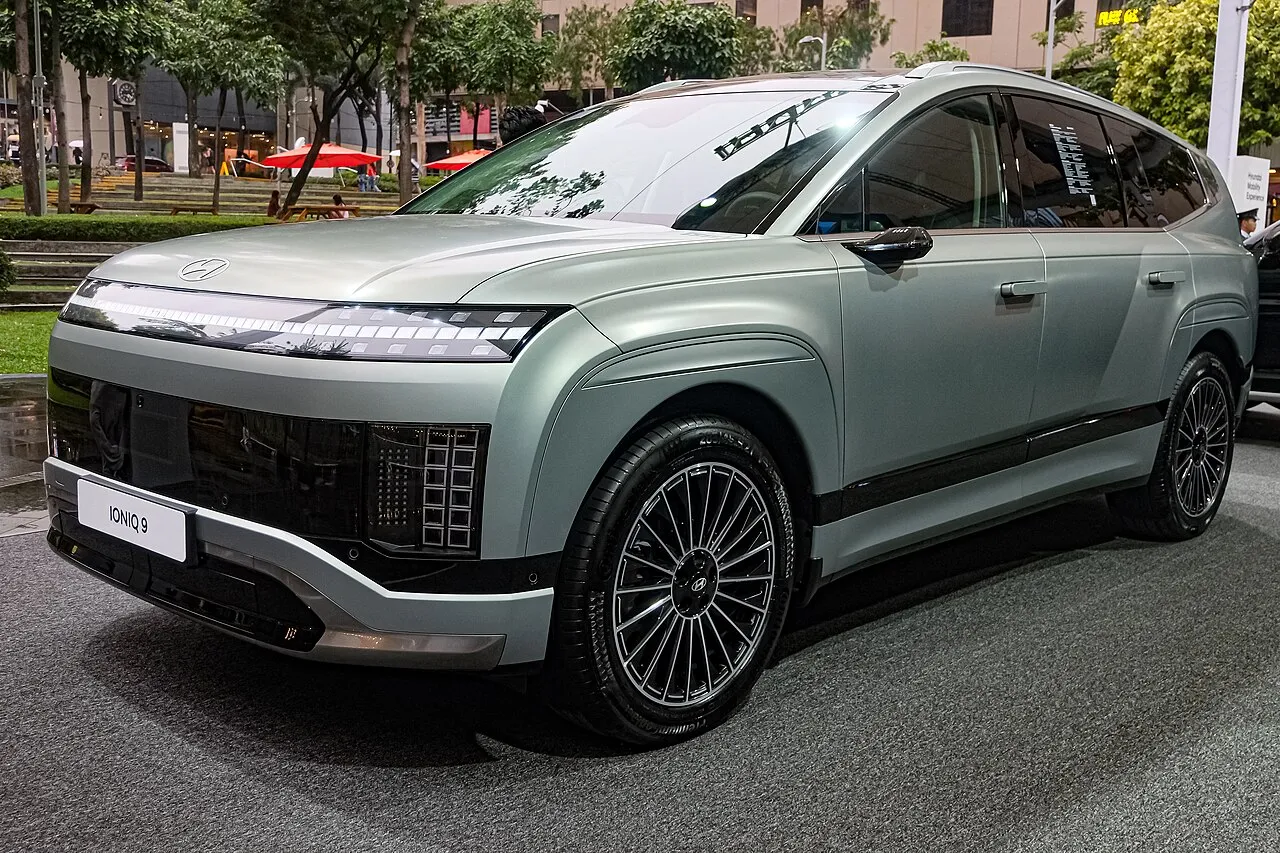
The short answer: The Hyundai IONIQ 9 is the stronger choice if US EPA rated range is the priority. The Volvo EX90 has shorter reported Level 2 full charge times, but the better family fit depends on the seating layout and cargo space of the exact vehicle you choose.
For a US family choosing primarily by rated range, start with the Hyundai IONIQ 9: its 2027 EPA ratings run from 311 to 335 miles across the versions shown here. The 2027 Volvo EX90 ratings run from 276 to 310 miles. The EX90 has shorter reported Level 2 full charge times, at 10 or 11 hours versus 11.5 to 11.7 hours for the IONIQ 9. Neither result settles the family question on its own. The seating layout, access to the third row and usable cargo space matter every day, and those need checking on the exact version under consideration.
Range and charging figures at a glance
US EPA fueleconomy.gov reports the US range ratings and Level 2 full charge times below. Natural Resources Canada reports the Canadian figures. EVDB and OpenEV Data report the European figures. Each row identifies its market, model year and range test standard; ratings from different standards should be read within their own markets.
| Vehicle and version | Market, model year and source | Rated range and test standard | Level 2 full charge time | Other reported figures |
|---|---|---|---|---|
| IONIQ 9 RWD | US, 2027; US EPA fueleconomy.gov | 335 mi; EPA | 11.7 hours | RWD |
| IONIQ 9 AWD | US, 2027; US EPA fueleconomy.gov | 320 mi; EPA | 11.6 hours | AWD |
| IONIQ 9 AWD Performance | US, 2027; US EPA fueleconomy.gov | 311 mi; EPA | 11.5 hours | AWD |
| EX90 RWD | US, 2027; US EPA fueleconomy.gov | 276 mi; EPA | 10 hours | RWD |
| EX90 RWD, 21 inch wheels | US, 2027; US EPA fueleconomy.gov | 291 mi; EPA | 10 hours | RWD |
| EX90 Twin Motor | US, 2027; US EPA fueleconomy.gov | 300 mi; EPA | 11 hours | AWD |
| EX90 Twin Motor, 21 inch wheels | US, 2027; US EPA fueleconomy.gov | 310 mi; EPA | 11 hours | AWD |
| IONIQ 9 AWD | Canada, 2026; Natural Resources Canada | 515 km; NRCan | 11.8 hours | 226 kW power |
| EX90 Twin Motor, 21 inch wheels | Canada, 2025; Natural Resources Canada | 499 km; NRCan | 10 hours | 300 kW power |
| IONIQ 9 Long Range AWD | Europe, 2025; OpenEV Data and EVDB | 620 km; WLTP | Not reported here | 11 kW AC; 350 kW peak DC; 5,100 mm long, 1,980 mm wide, 1,750 mm high; 3,100 mm wheelbase |
| EX90 Twin Motor | Europe, 2025; EVDB | 610 km; WLTP | Not reported here | 11 kW AC; 250 kW peak DC; 5,037 mm long, 1,964 mm wide, 1,744 mm high; 2,985 mm wheelbase |
The European dimensions and charging power figures are specifications for the named European versions, not EPA or WLTP test results. US vehicle dimensions and peak DC charging figures have not been published here, so the European versions should not stand in for a US vehicle with a similar name. The Canadian rows likewise concern different model years from the US rows.
Choose the seating arrangement before choosing by range
A three row SUV can work well for one family and poorly for another with the same number of passengers. Start by deciding who will use the rearmost seats most often. Children who need help buckling in, adults making regular trips and passengers who enter while child seats occupy the middle row place different demands on the cabin. The useful comparison is the route into the third row with the family’s actual seating arrangement in place.
For either vehicle, confirm the seat count and second row configuration of the exact version being considered. Then check whether a child seat can stay installed while someone reaches the third row. Test how easily passengers can climb in, where they can put their feet and whether the second row must move forward enough to affect its own occupants. A layout that looks generous with every seat empty can feel quite different when child seats and passengers are aboard.
Cargo space deserves the same practical check. A family that regularly uses every seating position needs room for bags, a stroller or sports gear behind the occupied third row. A published exterior length cannot establish how much of that load fits inside, or how convenient the cargo opening is. Check the vehicle with the third row raised, using the items that normally travel with the family. If a seat must fold to carry those items, decide whether losing that passenger place works for routine trips.
What the dimensions say, and what they cannot say
OpenEV Data and EVDB report a 5,100 mm length and 3,100 mm wheelbase for the European 2025 IONIQ 9 Long Range AWD. EVDB reports a 5,037 mm length and 2,985 mm wheelbase for the European 2025 EX90 Twin Motor. On those particular European versions, the IONIQ 9 is longer and has the longer wheelbase. It is also wider according to those sources: 1,980 mm against 1,964 mm.
Those measurements help frame two separate checks. Overall length and width matter when a driveway, garage or parking space is tight. Wheelbase describes the distance between the axles, but it does not establish third row legroom, seat shape or cargo room. Interior packaging determines how much of the exterior footprint becomes useful passenger space. There are also differing dimensions among the European IONIQ 9 versions reported by EVDB and OpenEV Data, making a version specific measurement especially relevant.
Measure the space where the SUV will be parked and allow room to open the doors and load cargo. At the vehicle, check whether passengers can sit comfortably in all the seats they will use at the same time. These steps answer different questions: the exterior measurements establish whether the vehicle fits at home, while an occupied cabin check establishes whether the family fits in the vehicle.
How to read the range ratings
US EPA fueleconomy.gov rates the 2027 IONIQ 9 RWD at 335 miles, the AWD at 320 miles and the AWD Performance at 311 miles. The choice of drive version therefore changes the US rating within the IONIQ 9 lineup. The 2027 EX90 entries also show why version details matter. Its Twin Motor and Twin Motor Performance versions each carry a 300 mile EPA rating, while their entries with 21 inch wheels each carry a 310 mile EPA rating. The RWD entries are rated at 276 miles and, with 21 inch wheels, 291 miles.
Compare the exact versions a dealer can identify, including the EX90 wheel entry, rather than treating one headline range as a rating for every vehicle wearing the same badge. The EPA figures give a consistent US basis for comparing these US model year versions. They do not promise the same distance on every trip. Passenger load, driving conditions and climate control use all affect how far an EV can travel before it needs charging.
For Canadian readers, Natural Resources Canada rates the 2026 IONIQ 9 AWD at 515 km and the 2025 EX90 Twin Motor with 21 inch wheels at 499 km. Those are NRCan ratings for the identified Canadian versions and model years. European WLTP ratings belong to yet another set of versions. For example, OpenEV Data and EVDB report 620 km WLTP for the European 2025 IONIQ 9 Long Range AWD, while EVDB reports 610 km WLTP for the European 2025 EX90 Twin Motor. An EPA mile figure, an NRCan kilometer figure and a WLTP kilometer figure are not interchangeable measures of the same trip.
Charging at home and on a trip
The Level 2 full charge time describes a charging task, not a fixed amount of electricity a family will need every night. US EPA fueleconomy.gov reports 11.5 to 11.7 hours for the three US IONIQ 9 versions and 10 or 11 hours for the US EX90 versions shown. The EX90 times are shorter, but a household that plugs in after ordinary daily driving may only need to replace the energy used that day. Available charging power at home also matters when judging whether either vehicle will be ready for the next departure.
For road trips, keep the European peak DC figures in their proper context. OpenEV Data and EVDB report a 350 kW peak for the European 2025 IONIQ 9 Long Range AWD; EVDB reports a 250 kW peak for the European 2025 EX90 Twin Motor. Peak power is a maximum charging rate, not the rate maintained throughout a stop. It cannot, by itself, establish which vehicle spends less time charging over a journey. A useful trip comparison needs the charging behavior of the exact market version, alongside the route and the chargers available.
The decision comes back to the family’s recurring constraint. Choose among the US versions using their specific EPA ratings if distance between charges carries the most weight. Give the EX90’s shorter reported Level 2 full charge times weight if home charging time is the tighter constraint. Before either choice, confirm the seating configuration and try the third row and cargo area with the people and belongings that will use them.
Frequently asked questions
Which has more EPA rated range, the Volvo EX90 or Hyundai IONIQ 9?
For the US 2027 versions shown, the IONIQ 9 ranges from 311 to 335 miles EPA, while the EX90 ranges from 276 to 310 miles EPA, according to US EPA fueleconomy.gov.
Which has the shorter reported Level 2 full charge time?
US EPA fueleconomy.gov reports 10 or 11 hours for the US 2027 EX90 versions and 11.5 to 11.7 hours for the US 2027 IONIQ 9 versions.
Is the European IONIQ 9 longer than the European EX90?
For the European 2025 versions compared here, OpenEV Data and EVDB report the IONIQ 9 Long Range AWD at 5,100 mm long, while EVDB reports the EX90 Twin Motor at 5,037 mm.
Do the European peak charging figures establish which SUV charges faster on a trip?
No. OpenEV Data and EVDB report a 350 kW peak DC figure for the European 2025 IONIQ 9 Long Range AWD, and EVDB reports 250 kW for the European 2025 EX90 Twin Motor. Peak power alone does not establish charging time across a stop.
Related stories

How to Build a Flexible EV Charging Routine for Work
Build charging around the miles you need for your next drive, using home, work, or public charging as your schedule allows. Keep a practical buffer.

Will an EV's Charge Port Work With Your Home Parking Setup?
Check where you park, which way the car faces and how a charging cable will travel before choosing an EV. A short fit check can prevent daily hassles.

How to Choose an EV When It’s Your Household’s Only Car
Compare home charging, everyday range flexibility, and service access to find an EV that can handle your household’s needs without a backup car.