Volvo EX30 vs Hyundai INSTER: Which Is the Better First EV?
The Hyundai INSTER is the smaller, city-focused choice; the Volvo EX30 offers more range in several published versions. Their figures use different markets and tests.
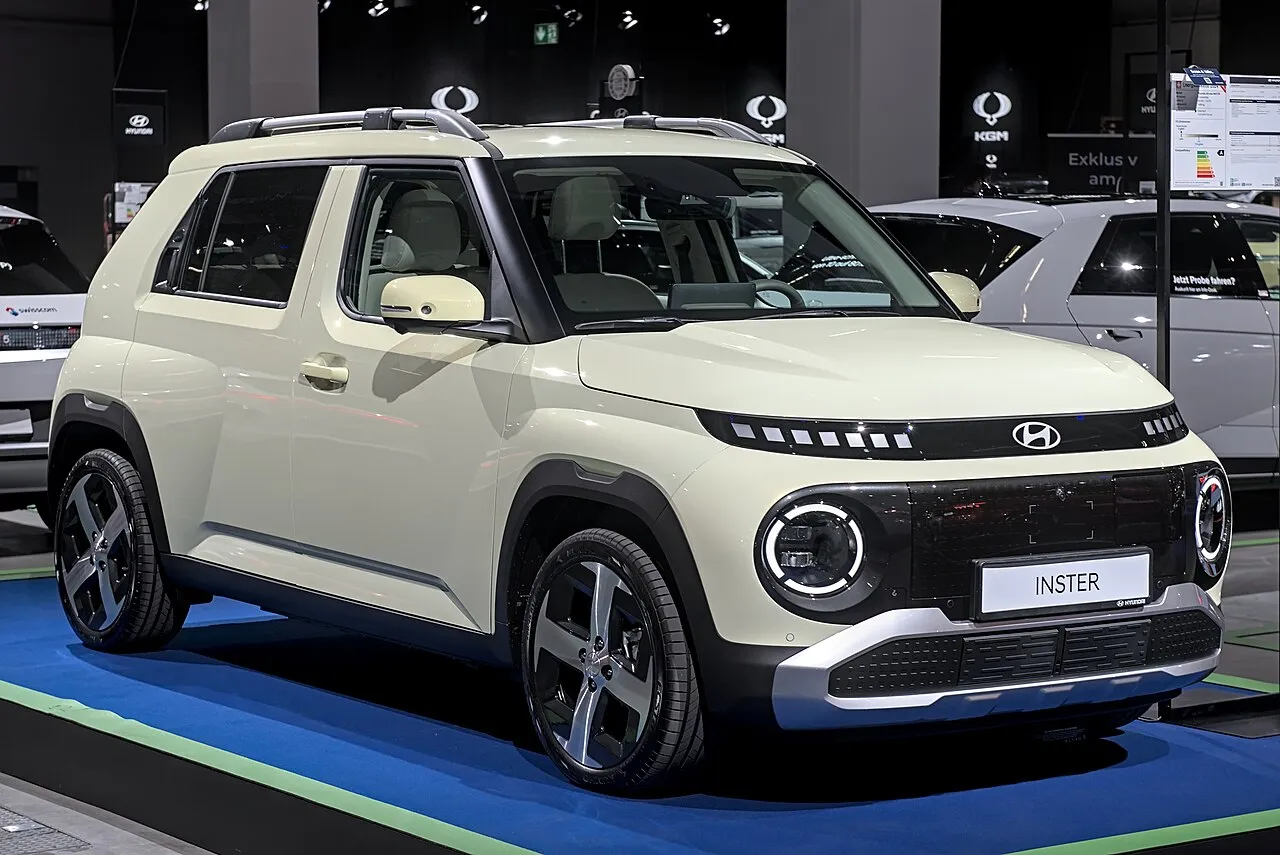
The short answer: For a first EV centered on compact city use, the Hyundai INSTER is the smaller option; the Volvo EX30 is larger and has higher published range in several versions. The figures available here cover European INSTER and EX30 trims alongside US and Canadian EX30 ratings, so they do not establish a direct US-market comparison.
For a first EV used mainly around town, the Hyundai INSTER is the more compact choice; for shoppers wanting a larger vehicle and more published range in some versions, the Volvo EX30 is the stronger fit. That recommendation comes with an important market caveat: the INSTER figures here are for European 2025 trims, while the EX30 figures include European 2025 and North American 2026 versions. The available figures do not establish a same-market comparison for a US buyer.
The INSTER is a hatchback with a shorter body and narrower dimensions than the European EX30 measurements. The Volvo is classed as an SUV and its published wheelbase is longer. Those measurements point to different priorities: fitting into tight streets and parking spaces favors the Hyundai, while the Volvo's larger exterior footprint may suit shoppers seeking a more substantial small EV. Exterior dimensions alone do not say how much usable passenger or cargo space either cabin provides.
Range also depends on which version and test standard a shopper is considering. The European INSTER Long Range has a WLTP rating of 370 km. European EX30 figures range from 344 km WLTP for the 49 kWh usable-battery versions to 480 km for a 66 kWh usable-battery version. US EPA ratings for the 2026 EX30 run from 203 to 261 miles across the trims shown; Canadian NRCan ratings run from 327 to 420 km. These results use different procedures and should not be compared directly.
Published figures by market
The table brings together representative versions and the market and test standard attached to each range figure. Dimensions and battery figures are included only where published for that version. Sources are identified alongside each entry.
| Vehicle and version | Market, model year, range test | Published range | Other published figures | Source |
|---|---|---|---|---|
| Hyundai INSTER Standard 42 kWh | Europe, 2025, WLTP | 327 km | 42 kWh usable battery; 11 kW AC; 120 kW peak DC; 3,825 mm long, 1,610 mm wide, 2,580 mm wheelbase | EVDB |
| Hyundai INSTER Long Range 49 kWh | Europe, 2025, WLTP | 370 km | 49 kWh usable battery; 11 kW AC; 120 kW peak DC; 3,825 mm long, 1,610 mm wide, 2,580 mm wheelbase | EVDB |
| Volvo EX30 Single Motor Extended Range | US, 2026, EPA | 261 mi | Level 2 full charge: 8 hours | US EPA fueleconomy.gov |
| Volvo EX30 Cross Country, 18-inch wheels | US, 2026, EPA | 203 mi | Level 2 full charge: 8 hours | US EPA fueleconomy.gov |
| Volvo EX30 Single Motor Extended Range | Canada, 2026, NRCan | 420 km | 200 kW power; Level 2 full charge: 8 hours | Natural Resources Canada |
| Volvo EX30 Cross Country, 18-inch wheels | Canada, 2026, NRCan | 327 km | 315 kW power; Level 2 full charge: 8 hours | Natural Resources Canada |
| Volvo EX30 Single Motor, 49 kWh usable battery | Europe, 2025, WLTP | 344 km | 11 kW AC; 134 kW peak DC; 4,233 mm long, 1,837 mm wide, 2,650 mm wheelbase | EVDB |
| Volvo EX30 Extended Range Single Motor | Europe, 2025, WLTP | 476 km | 64 kWh usable battery; 11 kW AC; 153 kW peak DC; 4,233 mm long, 1,837 mm wide, 2,650 mm wheelbase | EVDB |
Size and everyday practicality
For European 2025 versions, the INSTER measures 3,825 mm long and 1,610 mm wide, with a 2,580 mm wheelbase. The European EX30 Single Motor and Extended Range versions measure 4,233 mm long and 1,837 mm wide, with a 2,650 mm wheelbase. The Volvo is therefore longer and wider in these published versions. That difference matters when judging whether a car will fit a home parking space, a narrow street, or a crowded lot.
The INSTER's hatchback body and smaller exterior footprint make it the more straightforward candidate for tight urban use. The EX30's SUV body and longer wheelbase suggest a different balance, but they do not prove it has a roomier cabin or more cargo capacity. No passenger-volume, cargo-volume, seat-adjustment, or storage measurements are included here. A shopper carrying child seats, bulky equipment, or several passengers should check the actual vehicle and its published cabin measurements before deciding.
Both models have multiple versions, and the name alone does not identify one range or drivetrain. The European INSTER entries are front-wheel drive; the European EX30 versions include rear-wheel-drive and all-wheel-drive options. In the North American figures, the EX30 Cross Country is listed with all-wheel drive, while the single-motor extended-range version has the highest stated range in each market's figures. A buyer should match the exact trim to the requirements for traction, range, and vehicle size.
Range and charging for a first EV
Within the European WLTP figures, the INSTER Standard is rated at 327 km and the Long Range at 370 km. The EX30's European WLTP range depends on battery and drivetrain: the 49 kWh usable-battery Single Motor is rated at 344 km; the 64 kWh usable-battery Extended Range Single Motor at 476 km; and several 66 kWh usable-battery versions at 460 or 480 km. These figures describe different versions, not a single range value for each model.
The US EPA ratings shown for the 2026 EX30 are 203 miles for the Cross Country with 18-inch wheels, 227 miles for the 19-inch-wheel Cross Country, 261 miles for the Single Motor Extended Range, and 253 miles for Twin Performance. Canada's 2026 NRCan ratings are 327 km, 365 km, 420 km, and 407 km for the corresponding versions. EPA, NRCan, and WLTP figures come from different market-specific test standards; a number from one standard cannot be treated as equivalent to a number from another.
Charging figures also vary by market and version. EVDB lists 11 kW AC charging and 120 kW peak DC charging for both European INSTER trims. For the European EX30, EVDB lists 11 kW AC and peak DC rates of 134 kW for the 49 kWh usable-battery Single Motor and 153 kW for the Extended Range Single Motor. The US and Canadian EX30 entries state an eight-hour Level 2 full-charge time. A peak DC rate is not a promise that a session will stay at that power throughout; actual charging depends on conditions such as the charger and battery state.
For a first EV, home charging access can matter more to daily convenience than the headline range. A driver who can charge where the car is parked may start many days with enough energy for routine trips, while someone relying on public charging needs to plan around charger access and time. The figures here do not establish real-world range, charging curves, or local charging availability, so they cannot predict an individual owner's experience.
Which one makes more sense?
The INSTER is the more natural starting point for a shopper prioritizing a very small footprint and urban maneuverability, provided the European-market version and its local availability are relevant to that shopper. Its Long Range trim has a higher published WLTP rating than the Standard trim, while both share the same reported exterior length and width. The stated charging rates are also the same for those two entries.
The EX30 makes a stronger case when the shopper wants a larger SUV-shaped vehicle, a choice of rear- or all-wheel-drive versions in the European entries, or the longer-range options shown in market-specific figures. Its range varies substantially by configuration, and the 18-inch-wheel Cross Country rating is lower than the 19-inch-wheel version in both North American rating sets. Comparing trims closely is therefore essential.
For an American shopper, the available US EPA figures describe the EX30, while the INSTER figures shown here describe European versions. A fair purchase decision needs confirmed local availability and market-specific ratings for both candidates. On the evidence here, the clearest distinction is the INSTER's smaller European dimensions versus the EX30's larger body and higher range options in several published configurations.
Frequently asked questions
Which is smaller, the Hyundai INSTER or Volvo EX30?
The European 2025 Hyundai INSTER figures show it is smaller: 3,825 mm long and 1,610 mm wide, compared with 4,233 mm long and 1,837 mm wide for the cited European 2025 Volvo EX30 versions.
What is the Hyundai INSTER's published range?
EVDB lists the European 2025 INSTER Standard at 327 km WLTP and the Long Range at 370 km WLTP.
What is the 2026 Volvo EX30's US EPA range?
US EPA fueleconomy.gov lists 203 miles for the 18-inch-wheel Cross Country, 227 miles for the 19-inch-wheel Cross Country, 261 miles for the Single Motor Extended Range, and 253 miles for Twin Performance.
How quickly can these versions charge?
EVDB lists 11 kW AC and 120 kW peak DC charging for the European 2025 INSTER trims. The cited European 2025 EX30 versions have 11 kW AC and peak DC rates of 134 or 153 kW; North American EX30 entries state an eight-hour Level 2 full-charge time.
Related stories

How to Build a Flexible EV Charging Routine for Work
Build charging around the miles you need for your next drive, using home, work, or public charging as your schedule allows. Keep a practical buffer.

How to Choose an EV When It’s Your Household’s Only Car
Compare home charging, everyday range flexibility, and service access to find an EV that can handle your household’s needs without a backup car.

How to Check Whether an EV Can Carry a Roof Tent
Compare an EV’s roof-load limit, approved mounting points and tent hardware before buying. Then account for added wind resistance, noise and energy use.