Volkswagen ID.4 vs Kia EV5: Space and Charging Compared
Compare the ID.4 and EV5 on exterior size, rated range and charging, while seeing which seating and cargo details still need checking before a family buys.
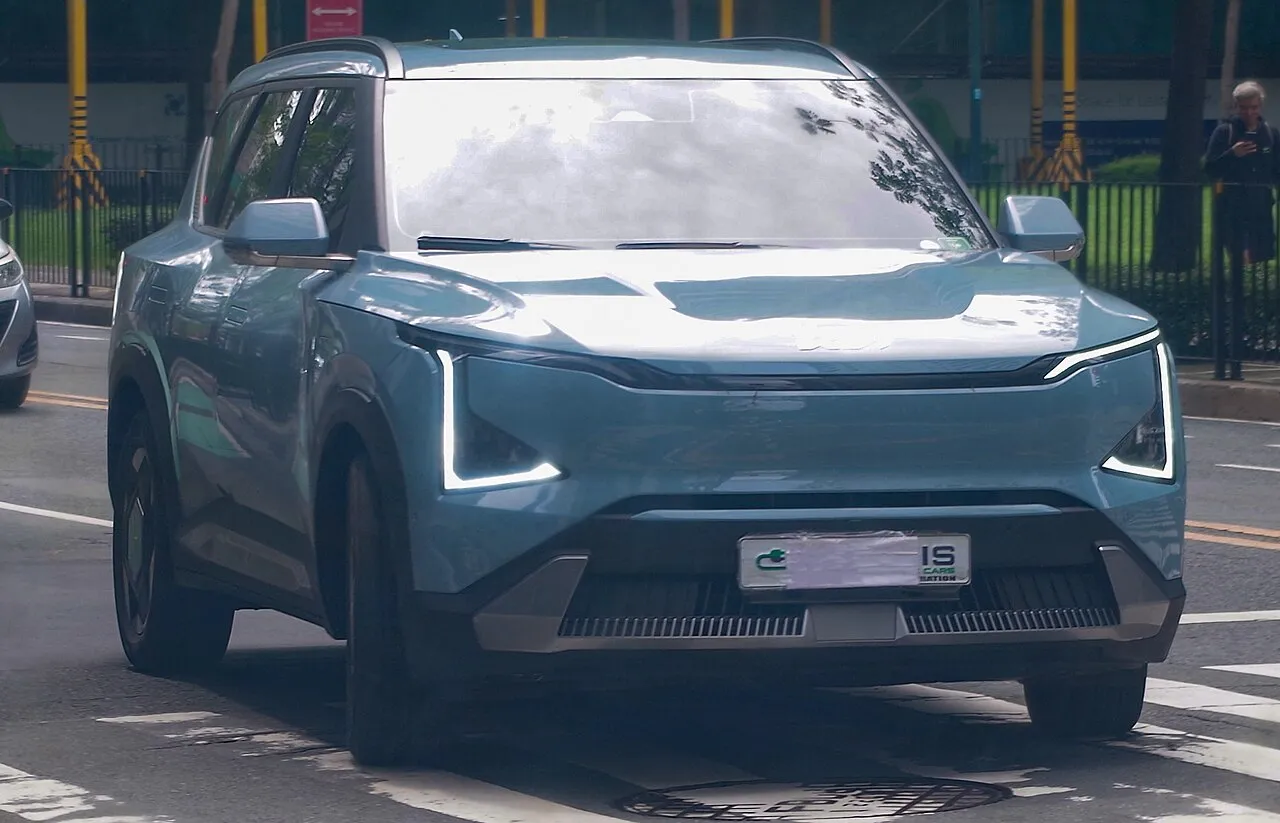
The short answer: The ID.4 has published US EPA range and Level 2 charging figures; comparable US figures for the EV5 have not been published. European figures show that both SUVs offer similar exterior footprints and 11 kW AC charging, but seating layouts and cargo volumes need to be checked for the versions a family can buy.
For an American family, the Volkswagen ID.4 is easier to compare on published US figures: EPA ratings give ranges for its rear-wheel-drive and all-wheel-drive versions, along with a Level 2 full-charge time. Comparable US ratings for the Kia EV5 have not been published. European figures put the SUVs in a similar exterior-size category and show 11 kW AC charging for the versions covered here. Neither exterior measurements nor charging figures answer the most practical family questions, however: how the seats fit passengers and how much luggage fits behind them.
Which figures can families compare directly?
Market, model year, version and test standard matter. The ID.4 has US EPA and Canadian Natural Resources Canada ratings, while the EV5 range figures here are European WLTP ratings. A WLTP kilometer figure should not be converted into miles and treated as a prediction of EPA range. Even within one test standard, trim and drive configuration can change a rating.
The table separates those markets and identifies each figure’s source. Exterior dimensions are length, width, height and wheelbase, in that order. A dash means that figure has not been published for that version here. AC entries describe charging power; DC entries are peak power, not an estimated charging time. The US and Canadian ID.4 entries instead give the published Level 2 full-charge time.
| Vehicle, market, model year and version | Exterior dimensions: L × W × H; wheelbase | Rated range and test standard | Battery and charging | Figure credit |
|---|---|---|---|---|
| Kia EV5; Canada; 2026; 4Dr Suv AWD | 4,620 × 1,880 × 1,720 mm; 2,750 mm | — | — | NHTSA vPIC |
| Kia EV5; Europe; 2025; Air | 4,615 × 1,875 × 1,715 mm; 2,750 mm | 590 km, WLTP | 84 kWh gross, 77.4 kWh usable; 11 kW AC; 200 kW peak DC | EVDB |
| Kia EV5; Europe; 2025; GT-Line | 4,615 × 1,875 × 1,715 mm; 2,750 mm | 580 km, WLTP | 84 kWh gross, 77.4 kWh usable; 11 kW AC; 200 kW peak DC | EVDB |
| Volkswagen ID.4; US; 2026; RWD | — | 291 mi, EPA | 8 hours for a Level 2 full charge | US EPA fueleconomy.gov |
| Volkswagen ID.4; US; 2026; AWD | — | 263 mi, EPA | 8 hours for a Level 2 full charge | US EPA fueleconomy.gov |
| Volkswagen ID.4; Canada; 2026; version unspecified | — | 468 km, NRCan | 8 hours for a Level 2 full charge | Natural Resources Canada |
| Volkswagen ID.4; Canada; 2026; AWD | — | 423 km, NRCan | 8 hours for a Level 2 full charge | Natural Resources Canada |
| Volkswagen ID.4; Europe; 2025; GTX | 4,584 × 1,852 × 1,642 mm; 2,765 mm | 480 km, WLTP | 82 kWh gross, 77 kWh usable; 11 kW AC; 135 kW peak DC | OpenEV Data; EVDB |
| Volkswagen ID.4; Europe; 2025; Pro | 4,584 × 1,852 × 1,642 mm; 2,765 mm | 520 km, WLTP | 82 kWh gross, 77 kWh usable; 11 kW AC; 135 kW peak DC | OpenEV Data; EVDB |
| Volkswagen ID.4; Europe; 2025; Pro 4Motion | 4,584 × 1,852 × 1,640 mm; 2,771 mm | 498 km, WLTP | 82 kWh gross, 77 kWh usable; 11 kW AC; 175 kW peak DC | EVDB |
Seating: check the arrangement before counting on the space
A family needs more than a seat count. The shape of the rear bench, the position of its buckles and the space available for child seats can determine whether a seating plan works. Comparable seating counts, rear-seat measurements and child-seat fit results for these versions have not been published here. Neither SUV should be assumed to meet a particular car-seat arrangement from its exterior width alone.
Start with the people who will travel together most often. If children use restraints, check the exact seats in the exact vehicle version, including the intended positions and access to the buckles. Make sure front occupants can sit comfortably with the restraints installed behind them. If an adult will ride between child seats, check whether that person can sit and buckle in normally. These are fit questions, so a measurement taken outside the vehicle cannot settle them.
For older passengers, consider how easily they can enter, place their feet and sit for a typical trip. Headroom, door opening and the angle of the rear seat can matter as much as the width printed in a brochure. The European EV5 and ID.4 dimensions in the table offer a starting point for judging parking and garage space, but they do not establish which rear seat feels roomier. Different markets and versions also make it unwise to use a European exterior figure as a substitute for checking a US vehicle.
Luggage: measure the load the family actually carries
Comparable cargo-volume figures for these versions have not been published here, so there is no sound basis for declaring a luggage-space winner. Cargo volume is useful when measured under the same convention, but the shape of the opening and floor can decide whether an item fits. A stroller may need a particular opening width or length; a suitcase may fit only in one orientation. A family carrying both should assess them together.
The rear-seat position matters to that check. Folding a seat can make room for a long object, but it also removes a place for a passenger or child restraint. For a trip with every usual passenger aboard, compare the space available with those seats in use. If the family needs to carry a stroller, bags and charging equipment at the same time, consider where each would go without blocking access to anything needed on the journey.
Exterior height and length can help determine whether an SUV fits a garage or parking space. They cannot be converted into usable cargo volume: interior trim, floor height, wheel arches and seat positions affect the load area. The European EV5 Air is longer and taller than the European ID.4 Pro in the figures credited to EVDB and OpenEV Data, but those exterior differences do not prove a larger trunk. A direct loading check is the practical way to resolve that question.
Charging: separate home use from road trips
For routine charging, the distinction between charger power and a full-charge estimate matters. EVDB reports 11 kW AC charging for the European EV5 Air and GT-Line. OpenEV Data and EVDB report 11 kW AC for the European ID.4 GTX and Pro, while EVDB reports the same for the Pro 4Motion. That is a vehicle charging capability, not a promise that every home installation will deliver it. The available power from the charging equipment and electrical setup also affects charging.
US EPA fueleconomy.gov gives an eight-hour Level 2 full-charge figure for both US ID.4 drive versions. Natural Resources Canada gives the same duration for the two Canadian ID.4 entries. Those durations describe the versions and charging assumptions behind those ratings; they are not published EV5 home-charge times. An EV5 buyer should seek a charging estimate for the exact local version and planned home equipment before comparing overnight routines.
On a road trip, the European EV5 Air and GT-Line carry a 200 kW peak DC figure from EVDB. The European ID.4 figures are 135 kW peak DC for the GTX and Pro, credited to OpenEV Data and EVDB, and 175 kW for the Pro 4Motion, credited to EVDB. Peak power identifies a maximum charging rate, not how long a family will spend at a stop. Battery charge level, temperature and the charger’s output all affect what happens during a session. Comparable fast-charge times for these versions have not been published here.
The European ID.4 Pro and GTX have a CCS2 connector identified by OpenEV Data and EVDB. A connector for the other versions in the table has not been published here. Families planning frequent highway travel should confirm the connector and charging options on the vehicle sold in their market, then check the stations along the routes they use. A European peak-power figure alone cannot establish how a US or Canadian version will charge.
Range: compare like with like
For US readers considering an ID.4, EPA ratings are the relevant figures in this comparison: US EPA fueleconomy.gov rates the 2026 rear-wheel-drive version at 291 miles and the all-wheel-drive version at 263 miles. Natural Resources Canada rates its 2026 ID.4 entries at 468 kilometers and 423 kilometers under NRCan testing. Those Canadian figures should be read as Canadian ratings, even though they describe the same model name.
Within the European WLTP figures, EVDB rates the EV5 Air at 590 kilometers and the GT-Line at 580 kilometers. The European ID.4 Pro is rated at 520 kilometers under WLTP by OpenEV Data and EVDB; the GTX is rated at 480 kilometers by those sources, while EVDB rates the Pro 4Motion at 498 kilometers. These are comparisons of named European versions under one test standard. They do not establish the range of a US EV5, and they should not be set against the US ID.4’s EPA miles as though the tests were interchangeable.
For a family decision, first confirm which versions are offered locally. Then check seating with the passengers and restraints that will actually ride, try the regular luggage load with seats in use, and compare charging and range figures for that market. The published figures narrow the questions; the missing seating and cargo measures leave those everyday fit decisions to a check of the actual vehicle.
Frequently asked questions
What is the US EPA range of the 2026 Volkswagen ID.4?
US EPA fueleconomy.gov rates the 2026 ID.4 RWD at 291 miles and the AWD version at 263 miles.
Can the European Kia EV5 WLTP range be compared directly with US ID.4 EPA range?
No. WLTP and EPA are different test standards. EVDB's European EV5 figures are WLTP ratings; US EPA fueleconomy.gov's ID.4 figures are EPA ratings.
Which charges faster on a DC charger, the ID.4 or EV5?
EVDB reports a 200 kW peak for the European EV5 Air and GT-Line. The European ID.4 versions shown have peaks of 135 kW or 175 kW, according to OpenEV Data and EVDB. Peak power alone does not determine charging-stop time.
Which SUV has more room for child seats and luggage?
Comparable seating-fit and cargo-volume figures for these versions have not been published here. Check the intended child seats and regular luggage in the exact version under consideration.
Related stories

How to Choose an EV for Caregiving and Support Trips
Compare passenger access, rear-seat comfort, equipment storage and charging routines to find an EV that fits recurring appointments and support trips.

Choosing 120V or 240V Charging for an EV at Home
A standard outlet may work for an EV that sits parked for long stretches. A 240V setup adds charging power, which can matter when daily driving uses more energy.

How to Plan EV Charging When You Park on the Street
Street parking can work with EV ownership when you confirm local rules, identify dependable charging, and build a routine that fits where you park.