Volkswagen ID. Buzz Battery at 95.75% After World Tour
A Volkswagen ID. Buzz covered 99,767 km across 92 countries. Its reported battery health offers a rare look at heavy EV use, with limits buyers should know.
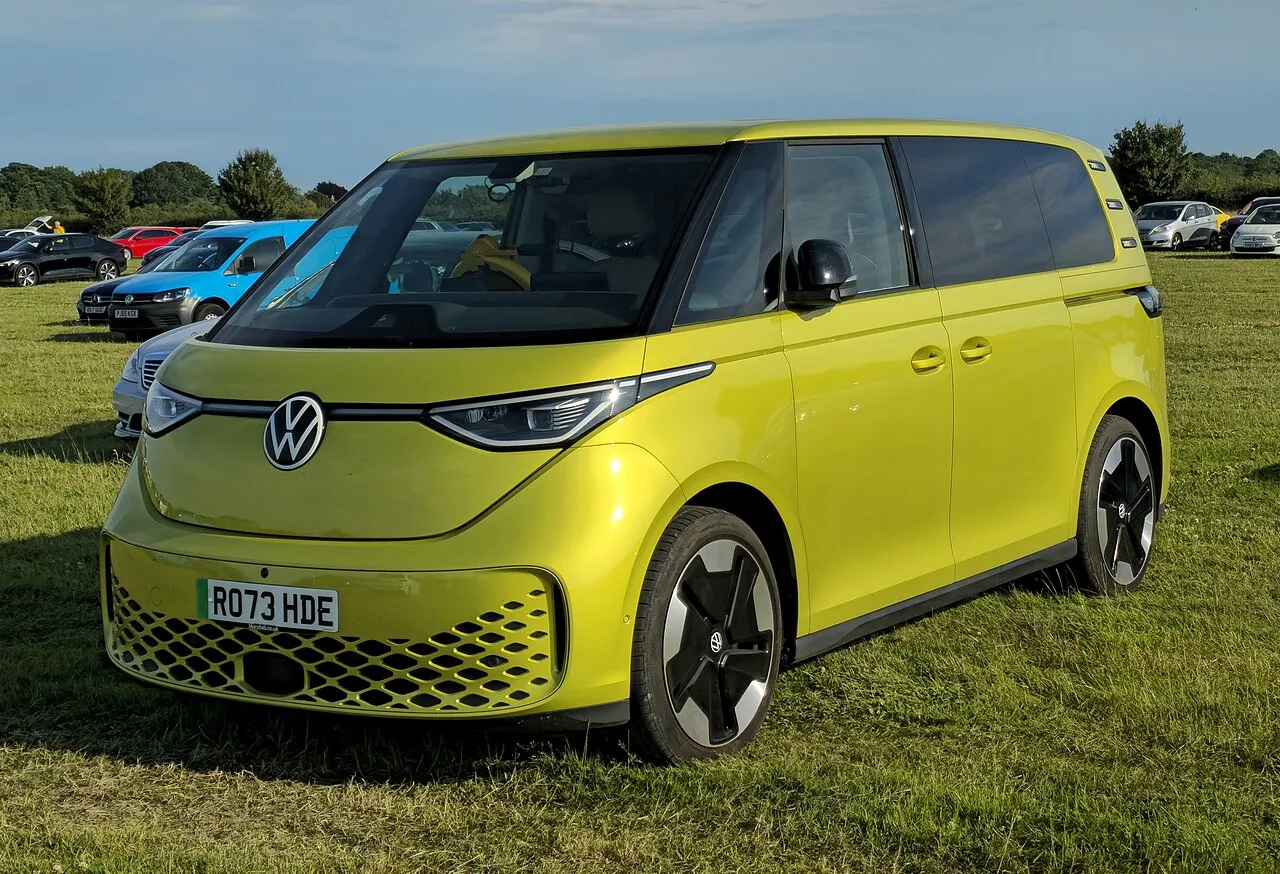
The short answer: According to EV Central, a long-wheelbase Volkswagen ID. Buzz Pro finished a 99,767-km journey with no technical breakdowns. Volkswagen reported that its battery had 95.75% state of health afterward.
A Volkswagen ID. Buzz completed a 99,767-km journey through 92 countries, and an inspection afterward put its battery at 95.75% state of health, according to EV Central. Volkswagen also reported that the vehicle had no technical breakdowns during the trip. For EV buyers, the battery reading is the most useful part of the story: it shows how one vehicle’s battery stood up to unusually extensive use. It does not, by itself, establish how every ID. Buzz battery will age.
The journey crossed six continents, including Australia, and earned a Guinness World Record for the most countries visited in a continuous journey by a battery-powered electric vehicle, EV Central reported. German driver Rainer Zietlow used a long-wheelbase ID. Buzz Pro that Volkswagen described as being in standard production condition. The trip involved more than 300 charging cycles and 16 container-ship crossings, according to EV Central. Those crossings matter when interpreting the route: the vehicle traveled between driving legs by sea as well as by road.
What the battery inspection found
According to EV Central, Volkswagen said German inspection organization TÜV Nord assessed the high-voltage battery after the journey and recorded 95.75% state of health. Expressed against full battery health, that is a reported reduction of 4.25 percentage points. The figure is an inspection result for this particular vehicle after nearly 100,000 km of travel. It is not a measured account of how the battery changed at each stage of the tour.
That distinction matters because EV Central said Volkswagen did not detail the assessment method or publish a measured starting state of health. A post-trip reading gives buyers a concrete number to consider, but the information reported does not establish an exact change from a documented measurement taken before departure. Nor does a battery health percentage state the distance the vehicle could travel on a charge after the trip. Readers should treat the result as a reported battery assessment, rather than as a range test.
The scale and conditions of the journey still make the inspection noteworthy. EV Central described driving through climates and terrain ranging from deserts to mountain regions. The vehicle accumulated far more distance than a short demonstration drive and relied on repeated charging along the way. Its reported battery health therefore speaks to a substantial period of use across varied conditions, even though a single vehicle cannot show the range of outcomes owners might see with different routes, charging habits or operating conditions.
Reliability over 92 countries
Volkswagen said the ID. Buzz completed the journey without a single technical breakdown, according to EV Central. That claim concerns the vehicle’s operation during the tour; it does not mean every part of the trip was straightforward. The route required charging in countries with very different levels of public infrastructure, as well as sea transport between driving legs. Together, the reliability claim and the battery inspection describe how the vehicle performed, while the route shows the practical work involved in keeping it moving.
EV Central reported that Zietlow, who has undertaken projects exclusively with Volkswagen vehicles since 2005, identified reliability as the trip’s standout feature. His experience gives context to the no-breakdown claim, but it remains an account of this journey. The long-wheelbase ID. Buzz Pro’s reported standard production condition also makes the vehicle relevant to buyers assessing the model. It does not turn the world tour into a controlled comparison with other ID. Buzz vehicles or other electric vehicles.
The Guinness record has a narrower meaning than a claim that the ID. Buzz could be driven continuously around the world. EV Central reported that the record was for the most countries visited in a continuous journey by a battery-powered electric vehicle. With 16 container-ship crossings included in the trip, the country count and total distance should be understood as figures for the overall journey. They do not describe an uninterrupted drive or show that every border crossing could be completed using public chargers.
Charging was the harder part of the route
Charging access varied sharply from country to country, according to EV Central. Zietlow said a lack of public charging infrastructure in Zambia and Tanzania led him to arrange supervised charging at electricity substations. Those arrangements show why the tour is a poor shortcut for judging whether an international EV trip can be made with little preparation. The ID. Buzz could continue, but in those places charging depended on arrangements beyond the public networks a traveler might expect to use.
Zietlow reported more developed charging networks in South Africa, Morocco and Rwanda, EV Central said. He also reported substantial progress in Saudi Arabia, Brazil and Chile. Those observations sit alongside the charging difficulties in Zambia and Tanzania: a route crossing 92 countries encountered very different charging conditions. The world record demonstrates that a carefully organized electric journey can cover an enormous geographic span. It does not establish that charging access is consistent across the countries on that route.
EV Central reported more than 300 charging cycles over the course of the journey, but that number alone cannot describe how often the driver stopped or how long charging took. The report does not give a charging timetable for the route. For buyers planning ordinary trips, the useful lesson is more specific: vehicle reliability and access to electricity are separate questions. This ID. Buzz was reported to have avoided technical breakdowns, while its driver still had to solve difficult charging problems in parts of the world.
What buyers can take from one vehicle
The trip brings together three observations that buyers often want to know about an EV: how far a vehicle can be used, whether it stays operational and what its battery looks like afterward. EV Central reported a distance of 99,767 km, Volkswagen’s claim of no technical breakdowns and TÜV Nord’s post-trip battery health reading of 95.75%. These figures describe the same ID. Buzz on the same tour, making the battery result more informative than an isolated percentage without a driving history.
The limits are just as specific. EV Central said Volkswagen did not publish a measured starting battery health figure or explain the assessment method. The report concerns one long-wheelbase ID. Buzz Pro, not a group of vehicles tracked over time. As a result, the 4.25% reduction from full battery health should not be treated as a predicted loss for another owner after the same distance. The route’s varied climates and charging arrangements also prevent a simple account of which parts of the journey affected the result.
For an American reader, the distance and battery percentage are more relevant here than a comparison with an official range rating. EV Central did not report an EPA range test for the record vehicle after the journey. Its 95.75% state-of-health result is a battery assessment, not an EPA estimate of miles per charge. Keeping those measures separate avoids implying that a battery health percentage translates directly into a particular driving range in US use.
What happens next for the vehicle or the battery has not been announced in EV Central’s report. A documented starting measurement and details of the post-trip assessment would make the battery result easier to interpret if Volkswagen publishes them. For now, the record stands as an unusually demanding example of one production-condition EV traveling through 92 countries. Its reported battery health and lack of technical breakdowns are encouraging observations, while the charging arrangements show how much the route depended on planning and local access to electricity.
Frequently asked questions
How far did the Volkswagen ID. Buzz travel?
According to EV Central, it traveled 99,767 km through 92 countries across six continents.
What was the battery’s state of health after the trip?
EV Central reported that TÜV Nord assessed it at 95.75% state of health after the journey.
Did the ID. Buzz have any technical breakdowns?
Volkswagen said it completed the trip without a technical breakdown, according to EV Central.
Was the entire world tour driven on roads?
No. EV Central reported that the journey included 16 container-ship crossings between driving legs.
Was public charging available throughout the route?
No. EV Central reported that Zietlow arranged supervised charging at electricity substations in Zambia and Tanzania because public charging infrastructure was lacking.
Related stories
BYD Adds Storage at Busy Flash-Charging Stations in China
BYD is adding storage cabinets at busy flash-charging sites, but the fix may only delay slower charging where demand stays above the grid’s supply.

How Long Should You Keep an Electric Car?
An EV’s resale value depends on mileage, condition, battery confidence and changing buyer needs. Compare the costs of keeping your car with replacing it.

How to Read an EV Battery Health Report
Battery health reports can help used EV shoppers assess capacity, but one reading is only a snapshot. Learn what common metrics mean and what to ask next.