Volkswagen Electric Models: Range, Charging and Size
For U.S. shoppers, the ID.4 offers more EPA-rated range, while the ID. Buzz brings a van body. European models add hatchback and sedan choices.
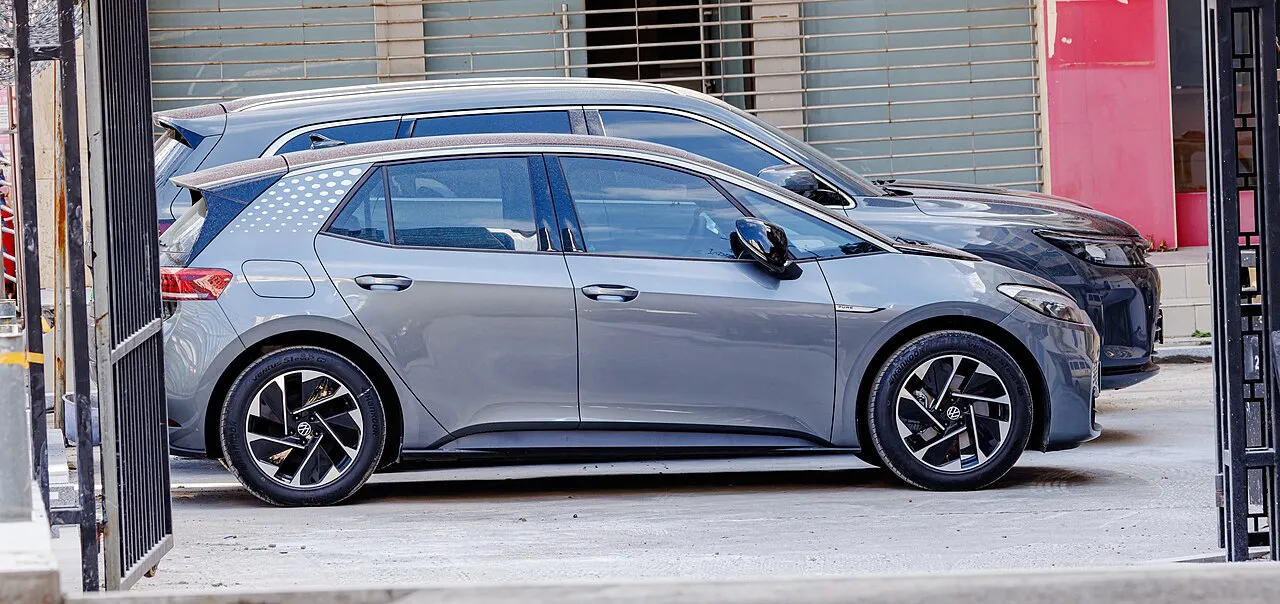
The short answer: For a U.S. shopper choosing between the Volkswagen models with EPA ratings here, start with the ID.4 for range or the ID. Buzz for its van body. The European ID.3, ID.5 and ID.7 offer other body styles, but their WLTP ratings should be considered separately.
Start with the body style you need. The Volkswagen ID.4 is an SUV with the higher EPA-rated range of the two models with U.S. figures here: 291 miles for the 2026 rear-wheel-drive version and 263 miles for the 2026 all-wheel-drive version, according to US EPA fueleconomy.gov. The 2025 ID. Buzz is a van, rated at 234 miles with rear-wheel drive or 231 miles with 4Motion all-wheel drive. Both are meaningful choices, but the range difference makes the ID.4 the clearer starting point if miles between charges matter more than a van body.
Volkswagen's European figures broaden the picture. The ID.3 is a hatchback, the ID.5 is an SUV, and the ID.7 comes as a sedan or Tourer. Their WLTP ranges, batteries and charging figures help distinguish those versions from one another. They cannot be treated as direct alternatives to the U.S. EPA numbers on a single range scale. Market, model year and test standard matter every time a range figure appears.
Volkswagen electric models at a glance
The table uses each version's market and model year. A dash means a figure has not been published for that version here. Battery figures show usable capacity; charging figures identify either the AC and peak DC power ratings or a Level 2 full-charge time. Dimensions are length × width × height. Sources are named in the final column.
| Model and version | Market and model year | Rated range and standard | Usable battery | Charging | Dimensions | Source |
|---|---|---|---|---|---|---|
| ID.4 RWD | U.S., 2026 | 291 mi, EPA | — | 8 hr, Level 2 full charge | — | US EPA fueleconomy.gov |
| ID.4 AWD | U.S., 2026 | 263 mi, EPA | — | 8 hr, Level 2 full charge | — | US EPA fueleconomy.gov |
| ID. Buzz RWD | U.S., 2025 | 234 mi, EPA | — | 9 hr, Level 2 full charge | — | US EPA fueleconomy.gov |
| ID. Buzz 4Motion AWD | U.S., 2025 | 231 mi, EPA | — | 9 hr, Level 2 full charge | — | US EPA fueleconomy.gov |
| ID.3 Pro | Europe, 2025 | 428 km, WLTP | 58 kWh | 11 kW AC; 135 kW peak DC | 4,261 × 1,809 × 1,552 mm | OpenEV Data; EVDB |
| ID.3 Pro S | Europe, 2025 | 559 km, WLTP | 77 kWh | 11 kW AC; 135 kW peak DC | 4,261 × 1,809 × 1,552 mm | OpenEV Data; EVDB |
| ID.3 GTX | Europe, 2025 | 600 km, WLTP | 77 kWh | 11 kW AC; 175 kW peak DC | 4,261 × 1,809 × 1,552 mm | OpenEV Data; EVDB |
| ID.4 Pro | Europe, 2025 | 520 km, WLTP | 77 kWh | 11 kW AC; 135 kW peak DC | 4,584 × 1,852 × 1,642 mm | OpenEV Data; EVDB |
| ID.4 Pro 4Motion | Europe, 2025 | 498 km, WLTP | 77 kWh | 11 kW AC; 175 kW peak DC | 4,584 × 1,852 × 1,640 mm | EVDB |
| ID.5 Pro | Europe, 2025 | 520 km, WLTP | 77 kWh | 11 kW AC; 135 kW peak DC | 4,599 × 1,852 × 1,618 mm | OpenEV Data; EVDB |
| ID.7 Pro | Europe, 2026 | 628 km, WLTP | 77 kWh | 11 kW AC; 175 kW peak DC | 4,961 × 1,862 × 1,538 mm | EVDB |
| ID.7 Pro S | Europe, 2026 | 709 km, WLTP | 86 kWh | 11 kW AC; 200 kW peak DC | 4,961 × 1,862 × 1,536 mm | EVDB |
| ID.7 Tourer Pro S | Europe, 2026 | 690 km, WLTP | 86 kWh | 11 kW AC; 200 kW peak DC | 4,961 × 1,862 × 1,536 mm | EVDB |
| ID. Buzz Pro | Europe, 2025 | 423 km, WLTP | 77 kWh | 11 kW AC; 135 kW peak DC | 4,712 × 1,985 × 1,937 mm | OpenEV Data |
| ID. Buzz Pro S | Europe, 2025 | 487 km, WLTP | 86 kWh | 11 kW AC; 185 kW peak DC | 4,712 × 1,985 × 1,937 mm | EVDB |
For a U.S. shopper, compare the ID.4 and ID. Buzz first
The U.S. EPA ratings make this the most direct range comparison. US EPA fueleconomy.gov rates the 2026 ID.4 rear-wheel-drive version at 291 miles and its all-wheel-drive version at 263 miles. It rates the 2025 ID. Buzz rear-wheel-drive version at 234 miles and the 4Motion version at 231 miles. On those ratings, either ID.4 version offers more range than either ID. Buzz version. That conclusion concerns the rated distances, not the amount of room inside: interior measurements are needed to judge passenger or cargo space.
Drivetrain also changes the choice within each model. In the 2026 U.S. ID.4 ratings, selecting all-wheel drive corresponds to 28 fewer EPA-rated miles than rear-wheel drive. In the 2025 U.S. ID. Buzz ratings, the 4Motion version is rated three miles below the rear-wheel-drive version. Those are comparisons within the same model, market, model year and test standard. They show why the drivetrain should be part of a range decision instead of treating a model name as though it had one fixed rating.
For Level 2 charging, US EPA fueleconomy.gov gives both 2026 U.S. ID.4 versions an eight-hour full-charge figure. Both 2025 U.S. ID. Buzz versions have a nine-hour figure. These are full-charge times, so they answer a different question from a peak DC power rating: how long a complete Level 2 charge is rated to take. U.S. battery capacities and peak DC charging powers have not been published in these version figures. European battery and charging ratings should not be assigned to a U.S. version simply because it shares the ID.4 or ID. Buzz name.
What the European models add to the choice
The European 2025 ID.3 makes the clearest case for choosing a hatchback. OpenEV Data and EVDB put all three versions in the table at the same exterior length, width and height, while their batteries and WLTP ranges differ substantially. The Pro has a 58 kWh usable battery and a 428 km WLTP rating. The Pro S moves to 77 kWh usable and 559 km WLTP. The GTX also has 77 kWh usable but is rated at 600 km WLTP and has all-wheel drive, according to the same sources. Battery size alone therefore does not determine the rating, even among versions with the same body dimensions.
The European 2025 ID.4 and ID.5 illustrate a different decision. OpenEV Data and EVDB give the rear-wheel-drive Pro versions of both SUVs a 77 kWh usable battery, 520 km WLTP range, 11 kW AC rating and 135 kW peak DC rating. The ID.5 Pro is 15 mm longer and 24 mm lower than the ID.4 Pro, while both are 1,852 mm wide. The matching range and charging figures give little reason to choose between those two versions on those grounds alone. Their exterior proportions offer a more concrete distinction; the dimensions do not establish which has more usable interior space.
EVDB's European 2025 ID.4 Pro 4Motion shows how a drivetrain choice can change the charging comparison within an SUV. It shares the Pro's 77 kWh usable battery but has a 498 km WLTP rating instead of 520 km, and its peak DC rating is 175 kW instead of 135 kW. That higher peak is a capability figure, not a promise that every charging session will run at that power or finish in a particular time. It does, however, give a shopper a specific charging difference to weigh alongside all-wheel drive and the lower WLTP range.
When the ID.7 or ID. Buzz makes more sense
For a European shopper prioritizing a sedan and the highest WLTP rating among the versions shown, the 2026 ID.7 Pro S stands out at 709 km, according to EVDB. It has an 86 kWh usable battery and a 200 kW peak DC rating. The ID.7 Pro has a smaller 77 kWh usable battery, a 628 km WLTP rating and a 175 kW peak DC rating. Both are 4,961 mm long in EVDB's figures. The Pro S is the stronger range choice on these WLTP ratings, while the Pro still offers a longer rated distance than the European ID.4 Pro shown in the table.
The ID.7 Tourer Pro S gives shoppers another body form without changing that exterior length: EVDB reports 4,961 mm for both it and the ID.7 Pro S sedan. The Tourer Pro S also has an 86 kWh usable battery and a 200 kW peak DC rating, but its WLTP range is 690 km rather than the sedan Pro S's 709 km. A shopper considering the Tourer can see the rated range difference clearly. Its name and exterior dimensions alone do not quantify how much luggage it will carry, so the WLTP figure is the firm comparison available here.
The ID. Buzz is the van choice. Its European 2025 Pro and Pro S versions are both 4,712 mm long, 1,985 mm wide and 1,937 mm tall, according to OpenEV Data and EVDB respectively. The Pro has a 77 kWh usable battery, 423 km WLTP rating and 135 kW peak DC rating. The Pro S has an 86 kWh usable battery, 487 km WLTP rating and 185 kW peak DC rating. Those figures make the Pro S the range choice between these European van versions. For a U.S. shopper, the relevant published range comparison remains the separate EPA-rated ID. Buzz versions.
How to read range and charging claims together
Compare rated ranges within one test standard first. EPA, WLTP and Natural Resources Canada's NRCan ratings are identified separately because their numbers are not interchangeable. Natural Resources Canada, for example, rates the 2026 Canadian ID.4 at 468 km and its AWD version at 423 km under NRCan; those figures should not be placed alongside the European ID.4's WLTP kilometers as though both came from the same test. The same caution applies when reading the Canadian and European ID. Buzz figures.
Then check which kind of charging number you have. A Level 2 full-charge time, an AC power rating and a peak DC power rating describe different things. The European versions in the table have 11 kW AC ratings and varying peak DC ratings; the U.S. versions have Level 2 full-charge times. None of those figures by itself states the time for a particular DC charging stop. For the most defensible choice, use the rating tied to your market and version, then let the body style and exterior size narrow the field.
Frequently asked questions
Which Volkswagen EV here has the longest U.S. EPA-rated range?
The 2026 U.S. ID.4 rear-wheel-drive version is rated at 291 miles by US EPA fueleconomy.gov.
How do the U.S. ID.4 and ID. Buzz compare for Level 2 charging?
US EPA fueleconomy.gov gives the 2026 U.S. ID.4 versions an eight-hour full-charge figure and the 2025 U.S. ID. Buzz versions a nine-hour figure.
Which European ID.7 version has the highest WLTP range shown?
EVDB rates the 2026 European ID.7 Pro S sedan at 709 km WLTP.
Can an EPA range be compared directly with a WLTP range?
No. EPA and WLTP are different test standards. Compare versions rated under the same standard when weighing their published ranges.
Related stories

How to Build a Flexible EV Charging Routine for Work
Build charging around the miles you need for your next drive, using home, work, or public charging as your schedule allows. Keep a practical buffer.

How to Choose an EV When It’s Your Household’s Only Car
Compare home charging, everyday range flexibility, and service access to find an EV that can handle your household’s needs without a backup car.

How to Check Whether an EV Can Carry a Roof Tent
Compare an EV’s roof-load limit, approved mounting points and tent hardware before buying. Then account for added wind resistance, noise and energy use.