Tesla Model Y and Volkswagen ID.4: Choosing Your Electric SUV
Compare Tesla Model Y and Volkswagen ID.4 EPA range, charging, battery size and price, with a clear distinction between US and European versions.
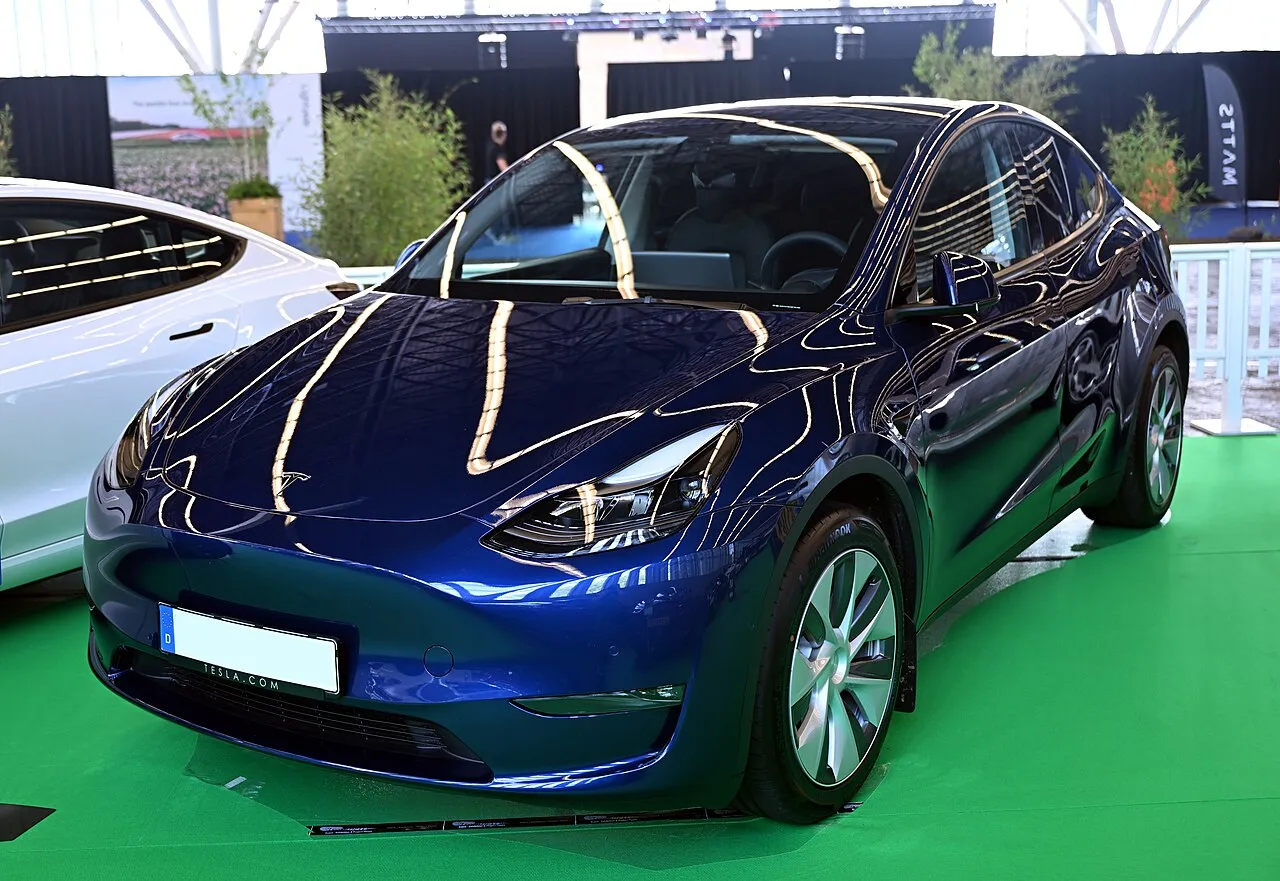
The short answer: The Tesla Model Y is the stronger choice for maximum EPA-rated range: the US 2027 Premium RWD reaches 355 miles, versus 291 miles for the US 2026 Volkswagen ID.4 RWD. The ID.4 suits shoppers whose range needs fit its EPA ratings and who want a documented US price reference of $45,095, although a US Model Y starting price has not been published.
The Tesla Model Y has the advantage in EPA-rated range, while the Volkswagen ID.4 offers a documented US price reference of $45,095 for its 2026 rear-wheel-drive version, dated November 2026. According to US EPA fueleconomy.gov, the US 2027 Model Y Premium RWD reaches 355 miles, compared with 291 miles for the US 2026 ID.4 RWD. For shoppers prioritizing the longest rated distance between charges, the Tesla makes the stronger case.
The comparison needs two boundaries. These US ratings cover different model years, and the battery, DC charging, acceleration and dimension figures discussed below describe European 2025 versions. Those European figures help explain specific configurations, but they do not establish the capabilities of the US vehicles.
EPA range: the Model Y offers more choices and a higher maximum
US EPA fueleconomy.gov assigns the US 2027 Model Y six range ratings. The Premium RWD leads at 355 miles, followed by the L (20In Wheels) at 328 miles and Premium AWD at 327 miles. The RWD reaches 321 miles, Performance AWD reaches 306 miles, and AWD reaches 294 miles. Trim names matter here: AWD and Premium AWD have different ratings despite sharing the same drive layout.
For the US 2026 Volkswagen ID.4, the EPA figures are 291 miles with rear-wheel drive and 263 miles with all-wheel drive. Comparing the longest-range rear-wheel-drive versions produces a 64-mile advantage for the Model Y Premium RWD. Comparing the Model Y RWD with the ID.4 RWD narrows that difference to 30 miles.
Among all-wheel-drive versions, the US 2027 Model Y AWD exceeds the US 2026 ID.4 AWD by 31 EPA-rated miles. Choosing the Model Y Premium AWD increases that difference to 64 miles. The practical buying implication is to compare exact trims: a broad Model Y range claim can conceal a substantial difference between versions.
The key figures, with markets and model years identified
The table separates US EPA ratings from European technical figures. EPA is the range test standard for the US entries. The European technical measurements are not EPA range results; no charging, acceleration or dimensional test standard is identified by EVDB for those entries.
| Measure and scope | Tesla Model Y | Volkswagen ID.4 | Source and standard |
|---|---|---|---|
| US rear-wheel-drive range | 2027 RWD: 321 miles; Premium RWD: 355 miles | 2026 RWD: 291 miles | US EPA fueleconomy.gov; EPA |
| US all-wheel-drive range | 2027 AWD: 294 miles; L (20In Wheels): 328 miles; Performance AWD: 306 miles; Premium AWD: 327 miles | 2026 AWD: 263 miles | US EPA fueleconomy.gov; EPA |
| US Level 2 full-charge time | 2027 AWD and Premium AWD: 8 hours; RWD and Premium RWD: 10 hours; L (20In Wheels): 10.4 hours; Performance AWD: 12.2 hours | 2026 RWD and AWD: 8 hours | US EPA fueleconomy.gov; Level 2 full-charge figures accompanying EPA entries |
| US starting-price reference | 2027: has not been published | 2026 RWD: $45,095, as of November 2026 | US EPA fueleconomy.gov vehicle entry; price, no test standard |
| European battery capacity and chemistry | 2025 Long Range AWD: 82 kWh gross, 79 kWh usable; NCA | 2025 Pro 4Motion: 82 kWh gross, 77 kWh usable; NCM | EVDB; technical figures, test standard not identified |
| European AC and peak DC charging power | 2025 Long Range AWD: 11.5 kW AC; 250 kW peak DC | 2025 Pro 4Motion: 11 kW AC; 175 kW peak DC | EVDB; charging test standard not identified |
| European power and acceleration | 2025 Long Range AWD: 370 kW; 0–100 km/h in 5 seconds | 2025 Pro 4Motion: 250 kW; 0–100 km/h in 6.2 seconds | EVDB; acceleration test standard not identified |
| European exterior dimensions | 2025 Long Range AWD: 4,751 mm long, 1,978 mm wide, 1,624 mm tall; 2,890 mm wheelbase | 2025 Pro 4Motion: 4,584 mm long, 1,852 mm wide, 1,640 mm tall; 2,771 mm wheelbase | EVDB; dimensional measurement standard not identified |
Battery capacity: European figures need a market label
EVDB gives the European 2025 Model Y Long Range AWD an 82-kWh gross battery with 79 kWh usable. The European 2025 ID.4 Pro 4Motion also has an 82-kWh gross battery, with 77 kWh usable. Equal gross capacity therefore does not mean equal usable capacity in these two configurations.
EVDB identifies the Tesla battery chemistry as NCA and the Volkswagen chemistry as NCM. Those descriptions apply to these particular European versions. US battery capacities and chemistries for the model years compared here have not been published, so the European battery figures cannot explain the US EPA range differences conclusively.
That distinction prevents a misleading shortcut. A shopper can compare the US EPA range ratings directly, while keeping the European capacity comparison separate. Attaching the European battery sizes to the American range ratings would combine different versions and model years into a vehicle configuration that has not been established.
Charging: full-charge hours and peak power answer different questions
US EPA fueleconomy.gov gives both US 2026 ID.4 versions an eight-hour Level 2 full-charge time. The US 2027 Model Y AWD and Premium AWD also have eight-hour figures. The other Model Y versions range from 10 hours for RWD and Premium RWD to 10.4 hours for L (20In Wheels) and 12.2 hours for Performance AWD.
On this measure, the Model Y does not have a universal advantage. Its longest-range US version, Premium RWD, has a longer full-charge figure than either ID.4 version. The Premium AWD combines a higher EPA range rating than the ID.4 AWD with the same full-charge time.
For DC charging, EVDB credits the European 2025 Model Y Long Range AWD with a 250-kW peak, versus 175 kW for the European 2025 ID.4 Pro 4Motion. Their AC charging figures are 11.5 kW and 11 kW, respectively. The Tesla has the higher peak DC power in this specific European pairing.
However, a peak-power figure is not an elapsed charging time. A comparable DC charging interval has not been published for these versions, so the figures do not establish how many minutes either vehicle would save at a stop. US peak DC charging figures for the model years compared here have not been published.
Performance and size: what the European comparison establishes
EVDB rates the European 2025 Model Y Long Range AWD at 370 kW and the European 2025 ID.4 Pro 4Motion at 250 kW. Their respective 0–100 km/h times are five seconds and 6.2 seconds. The Tesla is quicker by that acceleration measure, but these are European figures using a metric speed endpoint, not US 0–60 mph results.
The same EVDB comparison shows the European Model Y is longer and wider, while the ID.4 is slightly taller. The Tesla also has the longer wheelbase. These measurements establish exterior proportions for the named European versions; they do not establish passenger space or cargo capacity. Comparable US dimensions and interior-capacity figures have not been published.
US price: one reference, no complete price comparison
The US 2026 ID.4 RWD has a $45,095 price reference dated November 2026 in its US EPA fueleconomy.gov vehicle entry. A US starting price for the 2027 Model Y has not been published. Consequently, neither a dollar premium for the Tesla nor an overall price advantage for the Volkswagen can be established.
The ID.4 figure gives shoppers a concrete starting point, but its date belongs alongside the amount. European prices cannot fill the missing American comparison: they describe different markets and versions.
Which buyer does each SUV suit?
Choose the Model Y if maximum EPA-rated range is the deciding factor. The US 2027 Premium RWD leads this comparison, while the Premium AWD offers a strong range rating for buyers seeking all-wheel drive. Its European charging and acceleration figures also favor Tesla in the specific AWD pairing, subject to the market distinction.
The ID.4 suits buyers whose needs fit its US EPA range ratings and who value having a documented US price reference. Both US drive layouts share an eight-hour Level 2 full-charge figure. It remains a credible choice on those terms, although declaring it the cheaper vehicle requires a comparable US Model Y price.
Frequently asked questions
Which has more EPA-rated range, the Model Y or ID.4?
US EPA fueleconomy.gov rates the US 2027 Tesla Model Y Premium RWD at 355 miles and the US 2026 Volkswagen ID.4 RWD at 291 miles, a 64-mile difference. The result varies with the exact trim.
How long do the US versions take to charge on Level 2?
US EPA fueleconomy.gov gives both US 2026 ID.4 versions an eight-hour full-charge time. US 2027 Model Y figures range from eight hours for AWD and Premium AWD to 12.2 hours for Performance AWD.
Does the Model Y have faster DC charging?
EVDB gives the European 2025 Model Y Long Range AWD a 250-kW DC peak, compared with 175 kW for the European 2025 ID.4 Pro 4Motion. These figures do not establish US charging performance or a difference in charging-stop duration.
What are their US starting prices?
The US 2026 ID.4 RWD has a $45,095 price reference dated November 2026 in its US EPA fueleconomy.gov vehicle entry. A US starting price for the 2027 Model Y has not been published.
Which SUV is larger?
EVDB's European 2025 measurements show the Model Y Long Range AWD is longer and wider than the ID.4 Pro 4Motion, while the Volkswagen is slightly taller. Those measurements do not establish US dimensions or interior space.
Related stories

How to Choose an EV for Caregiving and Support Trips
Compare passenger access, rear-seat comfort, equipment storage and charging routines to find an EV that fits recurring appointments and support trips.

Choosing 120V or 240V Charging for an EV at Home
A standard outlet may work for an EV that sits parked for long stretches. A 240V setup adds charging power, which can matter when daily driving uses more energy.

How to Plan EV Charging When You Park on the Street
Street parking can work with EV ownership when you confirm local rules, identify dependable charging, and build a routine that fits where you park.