Tesla Adds Home Backup Power to New Model 3 and Model Y
Tesla is expanding home backup power to new Model 3 and Model Y vehicles with Powerwall 3, giving eligible owners another source of electricity during outages.
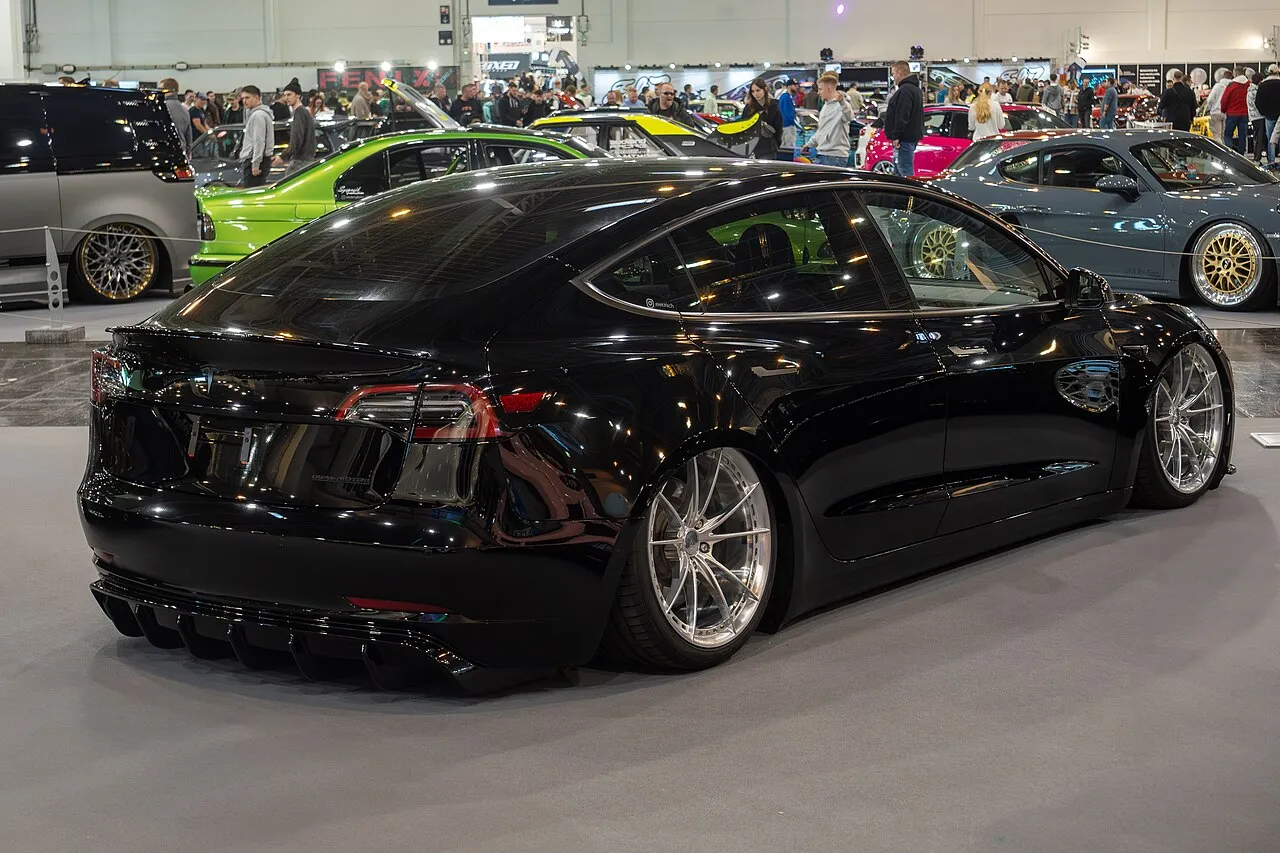
The short answer: New Tesla Model 3 and Model Y vehicles can provide home backup power when paired with a Powerwall 3 and Wall Connector, according to Canary Media. Tesla has not enabled those vehicles to send power to the grid.
Tesla is expanding home backup power to new Model 3 and Model Y vehicles, according to Canary Media. The feature lets an eligible car’s battery help power a house during an outage, but the house must have a Powerwall 3 battery and a Wall Connector. For buyers who already have a Powerwall 3, the added charging hardware is far less expensive than the separate power conversion equipment commonly used for vehicle-to-home backup. For buyers starting from scratch, the cost of the Powerwall and its installation remains a substantial part of the decision.
Canary Media reported that Tesla expects the EV battery to add two to three days of home backup power. That estimate describes the additional backup from the vehicle in the system Tesla outlined; it is not a published backup duration for every household. The announcement extends a capability Tesla has offered on the Cybertruck for more than a year to two of its other vehicles, while placing a different requirement on Model 3 and Model Y owners: they need the home battery.
How the home backup system works
Homes and the power grid use alternating current, or AC, while EV batteries store direct current, or DC. Electricity leaving an EV battery must therefore be converted before it can run a home. According to Canary Media, almost every commercially available vehicle-to-home backup system in the U.S. uses a separate DC bidirectional charger to handle that conversion. Tesla’s approach puts the AC power conversion hardware in the vehicle, allowing it to send power through home charging equipment without that separate charger.
Colby Hastings, head of Tesla Energy’s residential energy business, told Canary Media that converting the power within an EV can cost less than installing a separate conversion system at the house. An EV already handles conversion in the other direction when it takes AC power for its DC battery. The change does not make the EV battery or a home battery inexpensive. It changes which equipment is needed to connect the car to the house and make its stored energy usable there.
For the new Model 3 and Model Y arrangement, Canary Media put the Powerwall 3 retail price at $8,200, with installation costing several thousand dollars more. Tesla’s standard Wall Connector retails for $595 and is the only additional equipment the outlet identified for adding EV backup to a Powerwall-equipped home. Those figures describe hardware and installation in different parts of the setup: the $595 charger price is not the cost of building a home backup system from the beginning.
The Cybertruck has a different path. According to Canary Media, it does not require a Powerwall for home backup. Its vehicle-to-home hardware package retails for $1,990, with installation costing about $1,800 to $2,200. Canary Media said a separate DC bidirectional charger typically costs $6,500 to $10,000 or more before adding a home battery. The comparison helps explain the interest in AC equipment, though the equipment each household needs depends on which Tesla vehicle and home energy system it has.
What this means for Model 3 and Model Y owners
The announcement is specifically about new Model 3 and Model Y vehicles paired with Powerwall 3. Canary Media did not report that Tesla had extended the feature to older examples of either model. Owners considering home backup therefore need to distinguish the newly announced capability from the presence of a large battery in a Tesla they already drive. The relevant setup includes a compatible vehicle and the required equipment at the house.
Driving range ratings also answer a different question from home backup duration. For example, the U.S. EPA rates the 2027 Model 3 Premium RWD at 363 miles of driving range and the 2027 Model Y Premium RWD at 355 miles. Those are U.S. EPA driving range ratings, not measures of how long either vehicle can power a home. Canary Media’s two-to-three-day backup estimate concerns use of the EV battery with the home system Tesla described. Driving range alone cannot establish how long a particular household’s electricity needs would be covered.
For a household that already owns a Powerwall 3, adding a compatible vehicle creates another source of stored energy for an outage. For a buyer comparing home backup options, the Powerwall requirement is central to the price calculation. Cybertruck owners face a separate equipment purchase and installation bill, while new Model 3 and Model Y owners need the Powerwall-based arrangement. The same broad function—using an EV battery to support a home—therefore comes with different hardware requirements across Tesla’s vehicles.
Where Tesla’s approach fits in the wider market
Tesla is entering an established field of vehicle-to-home systems. Canary Media reported that automakers have promoted EV backup power for years, including systems associated with the Nissan Leaf and the discontinued Ford F-150 Lightning. Kia markets the EV9 with vehicle-to-home charging, while Rivian is working on similar capability. Those examples show that the ability to use an EV during an outage predates Tesla’s Model 3 and Model Y announcement; the distinction Canary Media highlighted is Tesla’s use of AC power conversion within its vehicles.
Other home backup packages also show why the hardware approach matters to buyers. According to Canary Media, GM Energy offers systems with a home battery and EV charging and power conversion equipment that retail from just under $12,000 to more than $20,000. It also offers a vehicle-to-home package without a home battery at a standard price of $8,998, which Canary Media reported was on sale for $6,748. Those are package prices with different contents, so they do not by themselves establish the total installed cost of every alternative.
Zach Woogen, executive director of the Vehicle-Grid Integration Council, told Canary Media that many in the industry expect AC bidirectional equipment to be economical for customers and manufacturers at a lower price point. The council works with EV and charging manufacturers, utilities and regulators on using EVs as backup batteries and grid assets. Putting conversion hardware in a vehicle can add complexity and cost to vehicle manufacturing, Canary Media noted. Its potential appeal at the house is the prospect of avoiding a costly separate DC charger.
Cost has been a practical hurdle in utility programs. Pacific Gas & Electric has tested home backup with EVs from GM, Kia, Nissan, Polestar and Volvo using bidirectional DC chargers, according to Canary Media. Eli Darby of PG&E’s clean energy transportation team said equipment, installation and interconnection can total $10,000 to $15,000 for participating households. He said that expense limits how much customers are willing to spend. PG&E has consequently been working to certify combinations that can take AC power directly from EVs through home chargers.
Home backup now, grid use later
Powering a house during an outage and sending electricity to the utility grid are separate capabilities. The second is known as vehicle-to-grid, or V2G. Canary Media reported that Tesla has enrolled Cybertrucks in programs with PG&E and the Texas utilities CenterPoint Energy and Oncor to send battery power back to the grid. PG&E told the outlet it was technically piloting interconnection of Tesla systems. Tesla has not enabled V2G for the Model 3 and Model Y vehicles covered by the new home backup announcement.
Rules for broader AC bidirectional charging remain limited. According to Canary Media, California and Maryland are the only states that have established utility regulations allowing it outside pilot projects, although other states are working on regulations. Utilities have conducted V2G pilots for decades, and a handful have begun broader programs that pay customers for access to EV battery power. A vehicle’s ability to supply a home does not, on its own, mean its owner can participate in one of those grid programs.
The potential scale gives utilities a reason to keep testing the idea. Canary Media cited a study finding that California could meet one-third of its grid energy storage needs by drawing on just 10% of the 9.7 million EVs the state expects by the mid-2030s. That is a projection about a future fleet, rather than an outcome of Tesla’s announcement. For now, the immediate change for eligible new Model 3 and Model Y owners is home outage backup with Powerwall 3. Whether those cars later join grid programs depends on a capability Tesla has yet to enable for them.
Frequently asked questions
Can a new Tesla Model 3 or Model Y power a home during an outage?
Yes. According to Canary Media, new Model 3 and Model Y vehicles can provide home backup power when paired with a Powerwall 3 and Wall Connector.
Does Model 3 or Model Y home backup require a Powerwall?
Yes. Canary Media reported that the newly announced Model 3 and Model Y capability requires a Powerwall 3. The Cybertruck does not have that requirement.
How much does the equipment cost?
Canary Media reported that Powerwall 3 retails for $8,200, with installation costing several thousand dollars more, and the Wall Connector retails for $595. The Cybertruck’s separate home backup hardware package retails for $1,990, plus about $1,800 to $2,200 for installation.
Can the new Model 3 and Model Y send power to the grid?
Tesla has not enabled vehicle-to-grid capability for the Model 3 and Model Y vehicles covered by this announcement, according to Canary Media.
Related stories

MAHLE Tests Automated Wireless EV Charging With BMW
MAHLE’s Park & Charge pilot guides an EV over an in-ground pad and starts wireless charging automatically, while BMW helps assess the system in an iX3.

Leapmotor B10 Design LR Joins Australia’s Amber V2G Program
The Leapmotor B10 Design LR can now send stored power to homes or the grid through Amber, with warranty support subject to operating conditions.

How EVs Convert Battery Power for Home and Device Use
Bidirectional charging takes more than an outlet: an EV needs power conversion, control logic and compatible hardware to send energy to a home or device.