REO Reveals $21,500 Gas Truck Concept to Rival Slate
REO's Runabout targets a lower starting price than Slate's electric pickup, but the startup has no factory or clear production plan, according to InsideEVs.

The short answer: REO has unveiled renderings of a basic gasoline-powered truck with an estimated $21,500 starting price, compared with $24,950 for the electric Blank Slate, according to InsideEVs. The Runabout remains a proposed vehicle, with no factory or clear plan to bring it to market.
Dallas startup REO has unveiled renderings of the Runabout, a basic gasoline-powered truck aimed at buyers drawn to the simplicity and customization of Slate's electric pickup. According to InsideEVs, REO estimates a starting price of $21,500, below the $24,950 price reported for the entry-level Blank Slate. That makes the proposal relevant to shoppers seeking an inexpensive utility vehicle, although REO has no factory or clear plan to bring its truck to market.
The two companies are pursuing a similar idea through different powertrains: a simple vehicle, a common underlying structure and a choice of body configurations. But their development positions differ substantially. InsideEVs describes Slate as approaching the launch of production vehicles, while the Runabout has so far appeared only in renderings. REO's price, equipment and durability claims therefore describe its ambitions for a future product.
A lower price target, with a significant qualification
The cheapest proposed Runabout is the T4X, a two-door, two-seat pickup with drop-down bed sides. InsideEVs reports that its estimated $21,500 price would include a four-cylinder gasoline engine, a choice of six-speed manual or automatic transmission, and mechanical four-wheel drive. REO has not identified the engine or the company that would make it, leaving a central part of the proposed vehicle unresolved.
At those reported starting prices, the T4X would cost $3,450 less than the Blank Slate. The qualification matters as much as the difference: InsideEVs says REO explicitly describes its price as an estimate. The number establishes where the startup hopes to compete, but the absence of a factory and a clear route to production makes it premature to treat that difference as an available saving for a truck buyer.
The Blank Slate is also a two-door pickup, but its mechanical layout centers on a battery and one rear electric motor, according to InsideEVs. Its basic equipment excludes a radio, power windows and screens. The comparison therefore brings together two interpretations of an inexpensive truck: Slate strips back cabin equipment around an electric drivetrain, while REO proposes a gasoline drivetrain with several additional convenience features.
One basic structure, several body choices
According to InsideEVs, REO proposes three body variants built around one basic frame: a two-door pickup, an SUV and a four-door pickup. Slate also offers pickup and SUV configurations, but does not have the four-door pickup option described for REO. That additional body style is one of the clearest differences between the two concepts beyond their choice of propulsion.
The distinction gives REO's proposal a broader range of shapes, although it does not establish the passenger capacity, dimensions or utility of every variant. The two-door T4X is described as a two-seater. Its drop-down bed sides are another specific feature, giving the pickup a different cargo-bed arrangement from a conventional fixed-side design. InsideEVs compares that detail with the layout of a kei truck.
The underlying structures differ as well. InsideEVs describes Slate's chassis as a hybrid body-on-frame design, while REO proposes a traditional ladder frame. Here, the word hybrid describes Slate's structural approach; the vehicle uses an electric powertrain. REO also claims a solid rear axle configuration, which it presents as part of the Runabout's off-road credentials. Those construction choices distinguish the designs, but do not by themselves establish comparative capability.
A simple cabin that keeps power windows
REO's planned interior is basic, though less stripped back than Slate's, according to InsideEVs. The Runabout is intended to have a digital instrument display and a navigation screen, with physical controls for everything else. Its cabin has not yet been revealed, so those details remain a description of the intended equipment rather than features demonstrated in a finished interior.
Power windows are another promised difference. InsideEVs reports that REO says every model will include them, while Slate's basic truck uses hand-crank windows. For shoppers comparing the two approaches, this is a concrete example of where the companies draw different lines around simplicity. REO's plan retains some familiar convenience equipment even as it pitches the Runabout as a return to a more basic pickup.
That positioning reflects REO's stated inspiration: the straightforward, utilitarian pickups customers associated with the 1980s and 1990s. According to InsideEVs, the company wants to revive that kind of workhorse. Its proposed combination of a manual-transmission option, a ladder frame, physical controls and a small gasoline engine supports that theme. The screens and power windows show that the intended result is not a complete recreation of an older truck.
A known designer, an unidentified engine
REO hired automotive designer Frank Stephenson for the Runabout, according to InsideEVs. His previous work includes the first Mini Cooper developed under BMW ownership, the Maserati MC12 and the McLaren P1. That background gives the project an established design connection, but the images remain renderings. A completed exterior design is a different milestone from establishing the facilities and arrangements needed to build vehicles.
The powertrain remains one of the most consequential unanswered parts of the proposal. A four-cylinder engine describes the broad configuration, but REO has not identified the actual engine or its manufacturer, InsideEVs reports. Buyers therefore cannot yet tie the Runabout's gasoline-engine promise to a named production unit. The proposed transmission choices and mechanical four-wheel drive are more detailed, but still belong to the company's planned package.
REO also states a targeted powertrain life of 500,000 miles, according to InsideEVs. That wording is important: it is a development target, not a reported durability-test result or a warranty commitment. Without an identified engine, the claim also sits alongside an unresolved powertrain choice. It should be understood as an expression of the startup's intended durability rather than evidence of how a production Runabout will perform over that distance.
What the comparison means for electric-truck buyers
For an EV shopper, the Runabout's relevance is that it challenges the same basic-truck proposition with a different propulsion system. Its estimated purchase price is lower, its proposed equipment includes more cabin conveniences, and its planned range includes a four-door pickup. Slate, meanwhile, offers the electric drivetrain at the center of its own interpretation of a simple utility vehicle. InsideEVs identifies reduced maintenance and fuel costs as advantages of that electric approach.
The reported starting prices do not settle the overall ownership-cost comparison. Nor do the proposed frame, axle and four-wheel-drive arrangements establish that the Runabout will outperform Slate in practical use. The meaningful distinctions currently available are narrower: the stated prices, the intended equipment, the body configurations and the fundamental difference between gasoline and electric propulsion. Each helps explain the proposal without turning REO's plans into demonstrated results.
Production is the next decisive step
REO's immediate challenge is to turn its design into a viable vehicle program. InsideEVs reports no factory or clear production plan, while describing Slate as preparing to launch production vehicles. For the Runabout, identifying its engine and showing a finished interior would resolve important product questions. Establishing how and where it will be built would address the larger question of whether buyers can eventually purchase it.
Until then, the Runabout adds a proposed gasoline alternative to the discussion around inexpensive, customizable trucks. Its estimated $21,500 entry price makes the pitch specific, and its three planned body styles give it a distinct place beside Slate. The practical significance for buyers will depend on whether REO can carry those promises through to production at the price it is targeting.
Frequently asked questions
How much is the REO Runabout expected to cost?
According to InsideEVs, REO estimates a $21,500 starting price for the two-door T4X pickup. The company has no factory or clear production plan, so that figure remains a target.
Is the REO Runabout electric?
No. REO proposes a four-cylinder gasoline engine, a choice of six-speed manual or automatic transmission, and mechanical four-wheel drive, according to InsideEVs. The engine and its manufacturer have not been identified.
How does the Runabout's price compare with Slate's?
InsideEVs reports a $24,950 price for the entry-level Blank Slate, which is $3,450 above REO's estimated $21,500 starting price. Slate is approaching production, while REO's truck has appeared only in renderings.
What body styles does REO plan to offer?
According to InsideEVs, REO plans a two-door pickup, an SUV and a four-door pickup. The two-door T4X is described as a two-seat truck with drop-down bed sides.
Has REO demonstrated a 500,000-mile powertrain life?
InsideEVs reports that REO describes 500,000 miles as its targeted powertrain life. It is a stated goal, not a reported durability-test result or warranty commitment.
Related stories
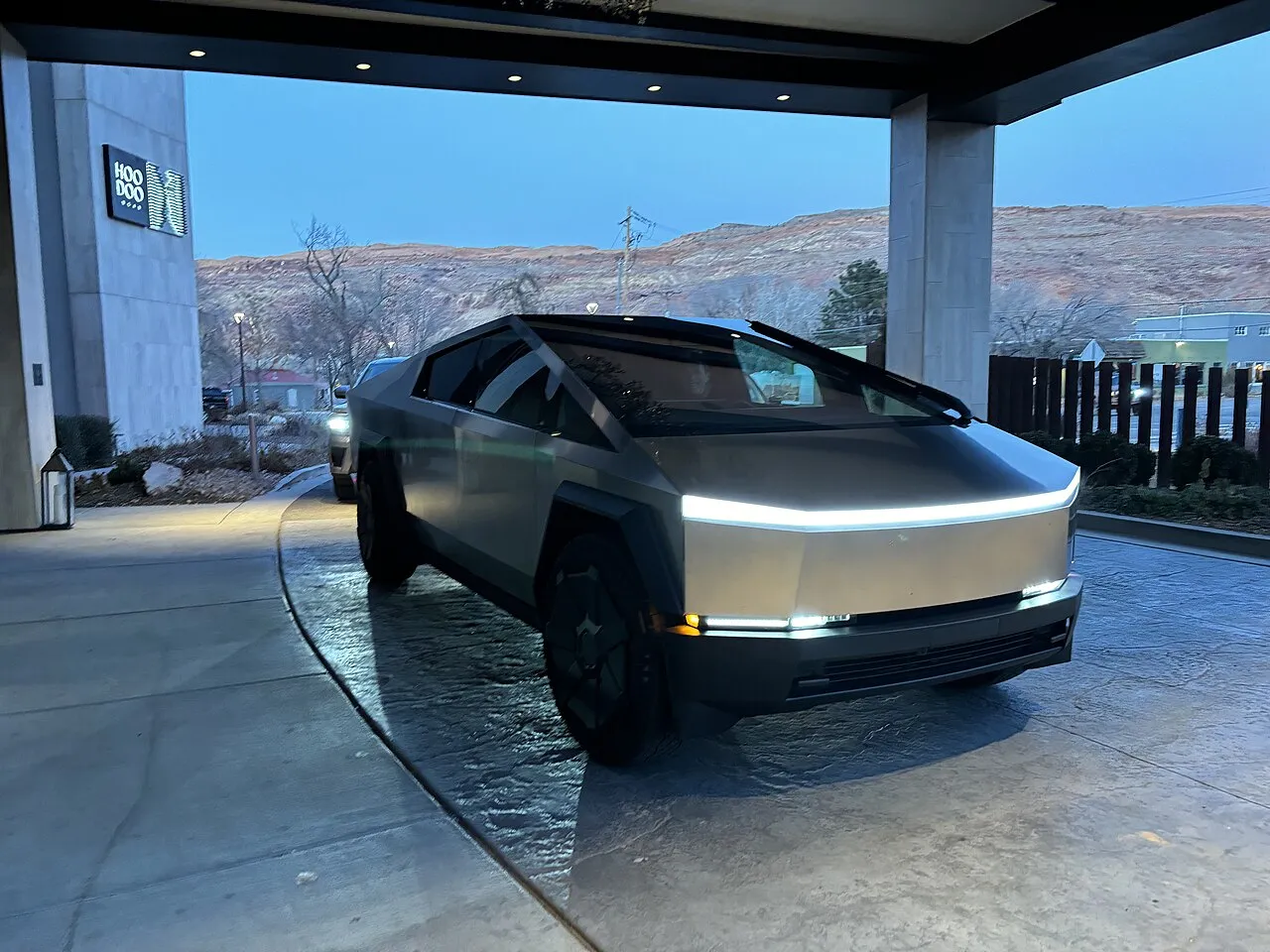
Used Cybertruck Sold Faster Than Other Pickups in October
A used Cybertruck averaged 39.1 days to sell in October, the quickest pace among pickups in an iSeeCars study. The ranking does not show what buyers paid.

Ford Starts LFP Cell Deliveries for Fathom Pickup Prototypes
Ford has begun sending Michigan-made LFP cells to build Fathom pickup prototypes, marking a step toward in-house battery production and a planned 2027 pack plant.

Cybertruck Leads Used Truck Sales as EVs Sell Faster
A study of October used vehicle sales found EVs averaged 45.6 days on the market, with the Cybertruck leading pickups and 16 EVs in the top 25.