Proposed China Ownership Rule Puts Mercedes Sales in Focus
Congress is weighing a 15% Chinese ownership limit for automakers. Mercedes exceeds it, while Volvo and Polestar already face different U.S. rulings.

The short answer: A proposed U.S. law could restrict Mercedes-Benz sales because Chinese investors hold nearly 20% of its stock. Lawmakers are considering an exception, and the bill’s terms are still being negotiated.
Mercedes-Benz could face a new barrier to selling cars in the United States under legislation Congress is negotiating to restrict automakers with substantial Chinese ownership. According to InsideEVs, the proposed Connected Vehicle Security Act would extend a U.S. sales ban to automakers with more than 15% Chinese ownership, including those that build vehicles in America. Two Chinese investors together hold just under 20% of Mercedes-Benz stock. Lawmakers are considering an exception that could let the company continue selling cars, but the bill’s terms have not been finalized.
For EV buyers, the question reaches beyond where a vehicle is assembled. Mercedes-Benz builds the EQS SUV in Alabama, while Volvo and Polestar build the EX90 and Polestar 3 on the same South Carolina assembly line. Yet an existing federal rule has already produced different outcomes for Volvo and Polestar. The pending bill could bring Mercedes into a similar debate over whether ownership ties restrict U.S. sales, even when production takes place in the United States.
What Congress is considering
InsideEVs reported, citing Bloomberg, that Republican and Democratic lawmakers are nearing a deal on legislation with a Chinese ownership threshold of more than 15%. They want to send a bill to the president by the end of the year, according to InsideEVs. That goal is not a final vote or an effective date. The language is still being negotiated, including how the ownership calculation might treat certain investors.
According to InsideEVs, China’s state-owned BAIC Group owns 9.98% of Mercedes-Benz, while Geely founder Li Shufu holds another 9.69% through an investment company. Together, those stakes amount to 19.67%, above the threshold under discussion. That calculation explains why a measure aimed at Chinese ownership could affect a German automaker with U.S. production. It does not establish that Mercedes-Benz would ultimately be barred from selling vehicles: the legislation has yet to be finalized, and its treatment of those holdings remains under discussion.
InsideEVs reported that lawmakers are considering an exception for passive investments with no voting rights. Such stakes could be excluded from the proposed 15% calculation. Mercedes-Benz says its Chinese shareholders have no seats on its management board and no say in day-to-day decisions, according to InsideEVs. Shareholders could still have voting rights, however. The reported exception turns on voting rights, so the company’s statements about management roles do not, by themselves, resolve whether either stake would qualify.
Mercedes-Benz North America CEO Jason Hoff told InsideEVs that the U.S. is an extremely important market for the company. He said Mercedes has not opposed the bill and would take steps to comply if it passes. Hoff declined to comment on specific discussions with shareholders when asked whether the company had a plan for its Chinese investors to divest. InsideEVs also reported that House members have asked Mercedes for documents, answers to two dozen questions by December 1, and a meeting with its U.S. boss.
How the current vehicle rule works
The proposed act would write existing connected-vehicle restrictions into federal law and extend their reach through the ownership threshold, according to InsideEVs. The current Commerce Department rule, finalized in 2025, addresses certain software and hardware linked to China or Russia. It covers connected and self-driving technology amid federal concerns that a foreign adversary could collect information about Americans or remotely control vehicles through those systems.
InsideEVs reported that the software restrictions take effect for the 2027 model year, followed by hardware restrictions in 2030. The rule applies to gasoline and electric vehicles, including vehicles assembled in the United States. That scope is central to the proposed law’s impact: a U.S. factory does not, on its own, settle whether an automaker can sell a vehicle subject to the restrictions.
Volvo Cars sought specific Commerce Department authorization to continue importing and selling connected vehicles because Geely holds a majority stake in the Swedish automaker, according to InsideEVs. Commerce granted that authorization. Volvo told InsideEVs it still must meet the same software requirements as other automakers. Sweden’s foreign trade minister confirmed that the Swedish government worked closely with Volvo on compliance.
Polestar, another Sweden-based automaker controlled by Geely, applied for authorization but was denied permission to keep selling vehicles from the 2027 model year onward, according to InsideEVs. The different decisions are striking because the Volvo EX90 and Polestar 3 share a South Carolina assembly line and much of their hardware. Polestar says they also run the same software. Their shared production and technology did not result in the same authorization decision.
According to InsideEVs, Polestar told its dealers it had asked Commerce why its application was denied and had not received an explanation. The U.S. government has not publicly stated the reason for the different outcomes, and Polestar did not appeal. Sweden’s foreign trade minister said Polestar did not want the same assistance that Volvo received. Those facts show a difference in how the companies approached the process, but they do not establish why Commerce reached different decisions.
Why ownership and assembly both matter
InsideEVs reported that Geely owns 79% of Volvo Cars. It also reported that Li Shufu disclosed beneficial ownership of 60.5% of Polestar shares in a September 2026 SEC filing. Those figures are much larger than either individual Chinese stake in Mercedes-Benz. The pending legislation would introduce a threshold low enough to bring Mercedes into the discussion despite that difference in ownership structure.
The Volvo and Polestar cases also show why buyers should distinguish an existing agency decision from a bill still under negotiation. Volvo has Commerce authorization to continue selling connected cars and says it remains subject to the software requirements. Polestar’s authorization request was denied for vehicles from the 2027 model year onward. Mercedes-Benz, meanwhile, faces a potential restriction under legislation that has not been finalized. None of those positions can be inferred solely from a vehicle’s badge, shared components or U.S. assembly location.
For context, the U.S.-market 2027 Volvo EX90 is an electric SUV with EPA-rated range that varies by configuration. EPA ratings run from 276 miles for the rear-wheel-drive version to 310 miles for certain all-wheel-drive versions with 21-inch wheels. U.S. EPA information also gives a Level 2 full-charge time of 10 hours for the rear-wheel-drive versions and 11 hours for the all-wheel-drive versions. Those ratings describe the vehicle; they do not change the ownership or software rules governing its sale.
The range figures also underscore the practical stakes of a sales decision. An authorization determines whether an automaker can continue offering affected connected vehicles in the U.S. under the current rule, while an EPA rating tells a buyer about a particular U.S.-market configuration. Volvo’s authorization keeps that regulatory path open for its connected cars. Polestar’s denial leaves its vehicles from model year 2027 onward facing the restriction described by InsideEVs, even though the Polestar 3 shares a production line with the EX90.
What happens next
The immediate questions are the final wording of the proposed act and whether its ownership calculation includes the two Chinese stakes in Mercedes-Benz. According to InsideEVs, lawmakers are discussing an exception for passive holdings without voting rights, but it is unclear how Mercedes would show that its investors meet those terms. House members’ requests for documents and answers may bring more detail about the company’s ownership and governance before lawmakers finish negotiating.
Until the bill’s terms are settled, the proposed 15% threshold is a potential sales restriction rather than a final outcome for Mercedes-Benz. The existing Commerce decisions are more concrete: Volvo received authorization, and Polestar did not. For automakers and buyers, the next legislative decision will show whether Congress applies a broader ownership test alongside the connected-vehicle restrictions already taking effect for software in the 2027 model year and hardware in 2030.
Frequently asked questions
Could the proposed law prevent Mercedes-Benz from selling cars in the U.S.?
It could. InsideEVs reports that the proposed threshold is more than 15% Chinese ownership, while two Chinese investors hold a combined 19.67% of Mercedes-Benz stock. The bill is unfinished, and lawmakers are considering an exception.
Why can Volvo continue selling connected cars while Polestar faces a restriction?
According to InsideEVs, the Commerce Department authorized Volvo’s request but denied Polestar’s request for vehicles from the 2027 model year onward. The department has not publicly explained the different decisions.
Would building a vehicle in the United States avoid the restrictions?
No. According to InsideEVs, the existing connected-vehicle restrictions cover vehicles assembled in the U.S., and the proposed ownership threshold would also apply to automakers that build cars there.
When do the existing connected-vehicle restrictions take effect?
InsideEVs reports that restrictions on certain Chinese- or Russian-linked software start with the 2027 model year, while hardware restrictions follow in 2030.
Related stories

Rivian R2 Impresses in Weeklong Drives, With Tradeoffs
InsideEVs praised the Rivian R2's ride and software after two weeklong drives, while finding limits in its handling, charging architecture and cabin.

FullGood Seeks US Partner for Retro Plug-In Hybrid Van
FullGood showed its seven-seat Summer van in Los Angeles as it seeks a US partner. Its path to buyers depends on assembly and connected-vehicle rules.
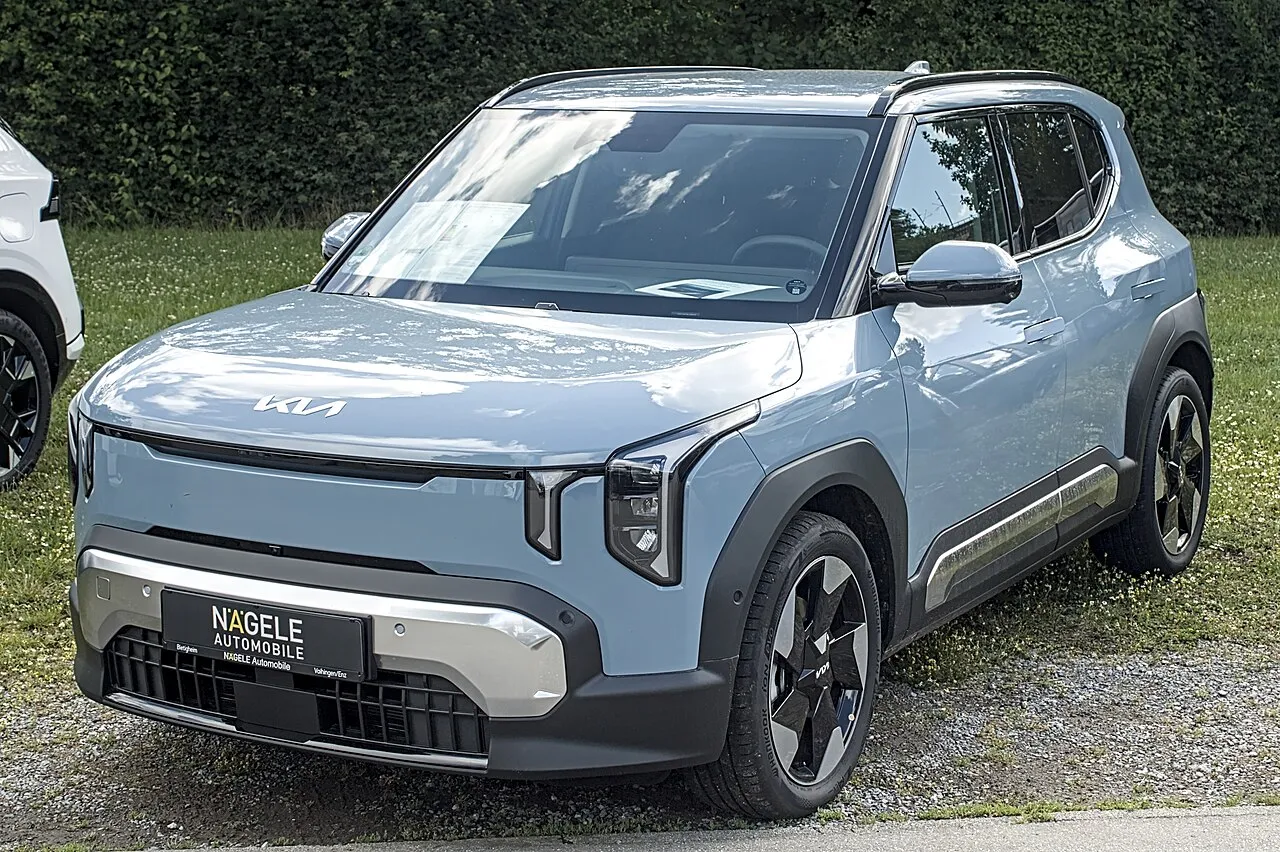
Kia Plans Entry-Level EV With $22,000–$24,000 Price Aim
Kia's planned European electric hatchback could start around $22,000 to $24,000, pairing a lower price with new software and a shared Hyundai platform.